
The Journal of Foreign Affairs at Carolina
Get the latest from our undergraduates at
The Column at JFAC
Foreign Policy on the Ballot in 2024
The idea that the 2024 presidential election will be an unprecedented spectacle is not novel.
One aspect that makes this election cycle unique is the focus on foreign policy.
Traditionally, American voters do not prioritize foreign policy issues and instead base their vote on domestic economic or social topics. Recent polling contradicts this precedent, suggesting that American voters increasingly prioritize foreign policy when considering how to vote this November.
Contributing to the stakes of this election and its residual global impacts are the stark differences between the platforms of the prospective candidates, President Joe Biden and former President Donald Trump. Trump has not been shy in threatening existing relationships, proclaiming an “America First” platform. Biden has supported the opposite ideology, basing his campaign on a global pro-democracy crusade.
Thus far, Biden’s stance on foreign policy during his presidency has been characterized by his commitment to sending aid to Ukraine and signifying the administration’s continued support of Israel’s war in Gaza. Biden justifies U.S. involvement overseas to preserve democracy both at home and across the globe.
However, with Russia's continued occupation of Ukraine, voters, especially among younger demographics, question the necessity of America's presence in international conflicts. They are also displeased with how the Biden administration has handled issues of human rights violations in Gaza.
The hesitation surrounding Biden’s views on foreign policy is not to say that voters are clearly siding with Trump’s campaign. Many are wary of Trump’s affairs with North Korea and his controversial views on bringing the U.S. closer to Russia and China, whom Biden contrastingly poses as the greatest threats to America.
America's commitment to NATO also hangs in the balance of the election. Trump, consistently NATO’s loudest critic, has stated that, if elected, his administration will continue to “fundamentally reevaluate” NATO’s purpose and mission.
“Fundamentally,” meaning that the U.S. will abandon NATO entirely should Trump be elected.
On the other side of the ballot, Biden has publicly slammed the Trump administration’s “dangerous,” “shameful,” and “un-American” views on NATO, emphasizing his value of America’s continuation in the partnership.
Finding one issue of common ground, both Biden and Trump have signaled their support of Israel with the conflict occurring in Gaza. However, seemingly avoiding extreme controversy this early in the election cycle, neither candidate has fully elaborated on what “support” would entail, erring on the side of caution by keeping details relatively vague.
The 2024 election and the two candidates have served to divide America further.
One aspect of this election cycle that many Americans agree on is the gut-wrenching feeling that casting a vote merely chooses the lesser of two evils.
While the two opposing foreign policy stances will likely not cause any positive change to this dismal sentiment, one positive that may come from this presidential election is an increase in American interest in international relations.
Belgrade’s Trojan Horse? China on Brussels' Border
When a global authoritarian superpower 8,000 miles away starts pouring investment into one of the most corrupt countries in Europe, a small landlocked state attempting to join your economic union, it should set off a few alarm bells.
I imagine many of these same bells rang in the heads of the Trojans as they watched a great wooden horse arrive on their doorstep.
In January 2024, a Chinese firm finalized a deal investing €2.2 billion for renewable energy and a hydrogen production facility outside of Belgrade. This brings the total Chinese investment in Serbia to €20.9 billion since 2009, an especially large sum considering Serbia’s GDP of €58 billion. Though divided between public and private origins, even private investment begs scrutiny: the state-controlled nature of large Chinese firms means that even private investment takes on a distinctly government-associated flavor.
Serbia has an uncertain future. They have joined Poland and Hungary in concerns of democratic backsliding, and within Europe they maintain one of the worst cases of corruption. As far as Serbia’s EU relationship, to call it slow-moving would be an understatement (the EU changed the name of their candidate states’ yearly “Progress reports” to just “Reports” for a reason). Serbia has been in the accession process since it joined the “Stabilization and Association Agreement” in 2003, officially becoming a candidate in 2012. Since then, progress has been minimal, and in some areas, it is regressing. It doesn’t help that the continual conflict over the statehood of Kosovo (which five EU member states do not even recognize) has been a serious barricade towards accession progress.
Chinese goals in Serbia are believed to be twofold, but both facets revolve around China’s aspirations to become a regional competitor to the EU.
Most clearly, China sees Serbia as its economic route into the EU. In 2016, Chinese state-owned COSCO firm acquired a majority stake in Greece’s largest port, Piraeus, on the outskirts of Athens. This is one of the crucial pieces in the European branch of Beijing’s famous Belt and Road Initiative. Having secured a major port in Greece, the only state between China and mainland EU access is Serbia.
Taking this into consideration helps contextualize China’s investments in Serbia, which center around industrial development and, crucially: transportation. The cornerstone of these are high-speed rail and highway projects, most notably the high-speed Belgrade-Budapest rail line.
By building a route directly from the Mediterranean into the heart of the EU, China can support greater trade with the EU, and become a much more substantive regional competitor in both breadth and depth, accessing new markets as well as deepening ties with preexisting ones.
This goal, in and of itself, is not particularly troublesome. However, the second set of goals could be more concerning.
Serbia is one of the most corrupt countries in Europe and still holds significant gravity over the Western Balkans. On top of this, Serbia’s longtime President Aleksander Vućić, who has led the nation’s ruling nationalist party for 12 years, first as Prime Minister and now as President, has been widely accused of democratic backsliding and authoritarianism. It is no secret that between weak rule of law and widespread corruption, of the billions of euros China is investing in Serbia, millions never make it to their destination, instead lining the pockets of politicians and greasing the palms of high-level businessmen along the way.
For Beijing, this could very well be part of the plan.
Despite its issues with corruption, Serbia is one of the frontrunners for EU accession. The EU has shown a willingness to cut corners before, notably in its acceptance of neighboring Croatia, Romania, and Bulgaria, all of which were accepted while still having glaring deficiencies in the EU’s “Copenhagen Criteria” or accession standards. Romania and Bulgaria in particular struggle with corruption and rule of law as Serbia does. Even Bosnia and Herzegovina, a former Yugoslav Republic, was awarded candidate status after eight years, despite virtually zero progress toward the EU’s accession criteria.
Should Serbia be accepted to the EU, this could become a major concern. Unless the trends of corruption and democratic backsliding are reversed, the millions of euros skimmed from infrastructure projects into the pockets of Serbian elites could soon be put to work by Beijing, buying political and economic influence. Influence that could be used to steer EU policy from within.
We have already seen how powerful the spoiler effect can be with the case of Hungary and their ever-apparent sympathies toward Moscow. A second spoiler within the EU, one which Beijing could use to influence (or block) EU policy, would be an Achilles’ heel that Brussels cannot afford.
Maybe the influx of Chinese investment continues to corrode and corrupt Serbian politics and business. Maybe the EU, overeager to continue building the Union, compromises and prematurely welcomes Belgrade into the fold. Maybe the EU becomes one state less functional, Hungary becoming only the beginning of a larger EU crisis of cohesion.
Or maybe not.
Maybe Belgrade uses its Chinese investment to build infrastructure, industry, and modernize the country. With this could come democratization, Serbians demanding reform and democratic values (it wouldn’t be the first time they’ve done so). Maybe Serbia can weather the gambit of Chinese investment and become a regional leader, reinvigorating the Western Balkans on their similarly lengthy path to accession.
The EU needs to learn from the Trojans and take a hard look at the great Serbian horse on their doorstep: does it hold opportunity and promise for Belgrade and Brussels, or is it a vessel for Chinese influence and Serbian corruption?
Congo's Conflict, Cobalt and ... China?
On February 20th, the United States warned two countries that they “must walk back from the brink of war” or face the continuation of one of the world’s worst humanitarian crises. This statement was not in reference to a conflict occurring in the Middle East, or in Eurasia, two of the most currently highly publicized world regions. Instead, the US was referring to the tensions between the Democratic Republic of Congo, and its neighbor Rwanda. Since the First Congo War in 1996, over six million people have been killed, and millions more have suffered displacement due to this conflict between the Hutu and Tutsi ethnic groups. One of the most prominent Tutsi groups, M23, had been dormant for over a decade but re-emerged in 2022. Rwanda has been accused of backing M23, with Ugandan president Felix Tshisekedi saying Rwandan leader Paul Kagame “will end up like Adolf Hitler.” The Congolese government and the Tutsi Rebellion have been locked in an escalating battle for DRC territory, with citizens as collateral. However, beyond the harm to civilians, looting, and displacement, control over the DRC will have worldwide implications.
The victors of conflict in the Democratic Republic of Congo have the ability to cause the disruption of technology production on a global scale. The DRC is responsible for producing around 70% of the world’s cobalt, a mineral used in virtually every device, from cell phones to the batteries of electric vehicles. The chase for this precious mineral has led to evictions and the displacement of Congolese citizens to ensure access to mines. Rebel groups and foreign actors, like the neighboring countries, have much to gain from territorial conflict and the money and power that comes from the acquisition of cobalt.
While the M23 rebels and other local groups battle for the minerals, international countries fight to keep their ownership. Companies in the United States once owned an ample portion of the mines but sold their share to Chinese ownership during the Obama and Trump Administrations. Due to China’s practice of funding its companies through state-owned banks, they were able to gain rights to 15 out of the 19 Congolese cobalt mines. In fact, the Diplomat reports that the five largest of the Chinese mining corporations have been granted access to state-bank credit lines that total $124 billion dollars. The conflict with M23 has caused China to offer to train the Congolese military or provide security in order to protect their mines. Furthermore, China has negotiated arms deals and equipped the Congolese military with drones and other weapons to fight M23.
China’s fervid enthusiasm to control the Congo’s cobalt supply and its monopoly on the mines should rouse concern in other industrialized nations. The United States should have retained its ownership and listened to the top diplomats during the time of the key trading of the mines. For example, diplomats such as Tom Perriello and André Kapanga implored the State Department through emails, phone calls, and pleas to beg the American ambassador to realize their grave ‘mistake,’ Now, China has a huge advantage in the technology race toward clean energy and global electrification. Over 50% of the cobalt extracted in the Congo is used for rechargeable batteries but also military ammunition, jet engines, and, most worrisome, stealth technologies. China’s policymakers have claimed that reaching sustainability goals will help transform China into a “modern socialist country” as soon as 2049. So, China’s unlimited access to cobalt will also allow for the mass production of military and “clean” technologies, boosting their economy. The United States must also recognize its stake in having a stable Congo and pay attention to Chinese movements for cobalt domination, or risk falling behind on the international stage.
Air Quality Possibly Linked to Increasing Menstruation Challenges in Developing Nations
"The cheapest [sanitary pad] is retailing at 50 shillings (approximately 32 cents)...the cheapest painkillers cost around six cents, or ten Kenyan shillings, for a pack of two,” says Senator Gloria Orwoba, a leading advocate for menstrual policy reform in Kenya. According to reports from the US Agency for International Development, 65% of women and girls in Kenya cannot afford the basic tools necessary to manage their periods, resulting in many of them missing days of schooling. Lack of access to sanitary pads and pain management medication is compounded by the ostracism girls face if they bleed through their clothing or are forced to use makeshift supplies.
New research, however, has suggested that diminishing air quality is potentially exacerbating the issue. In the United States, researchers discovered that girls with high exposure to air pollution in-utero and in childhood experienced “a 3-fold increased likelihood of menarche (first menstruation) before the 11 years of age.” Furthermore, studies have also linked air pollution in adulthood to an increased risk of developing endometriosis, a condition that, among several other challenges, can cause severe pain and heavy bleeding during menstruation. In 2021, researchers in Taiwan discovered that women who experienced high levels of pollution were over 30 times more likely to develop dysmenorrhea, or “painful periods.”
While research has not been formally conducted on the effects of air quality on women's health in Kenya, the results of these studies from more developed nations are extremely concerning. Many developing nations suffer from dangerous levels of air pollution–with levels in some places regularly reaching several times above thresholds determined to be “safe” by the WHO. In parts of Kenya like Nairobi, pollution levels are currently 2.9x the WHO guidelines. This demonstrates how imperative it is that the Kenyan government and global actors address the potential impact of air pollution on women's menstrual cycles.
Supporting research to understand how pollution affects women's reproductive health could open the door for the creation of more effective policies to approach period management and pollution concerns. Prioritizing these policies would significantly benefit the over 65% of women and girls in Kenya who face challenges due to lack of support in managing their periods. By providing solutions to menstrual health management, more girls would have the opportunity to attend school consistently, contributing to the overall empowerment and education of women in Kenya. This, in turn, can help contribute to a more educated population, positively impacting the nation's development and well-being.
Being originally from Nepal, I understand the plight of a developing nation with extremely poor air quality, and significant stigmas surrounding menstruation. It is clear that once the global stage prioritizes menstruation policy and management in developing nations, significant strides in gender equality can be achieved. Ultimately, addressing the intersectionality of pollution and menstrual health is a vital step towards creating a healthier, and more equitable global society.
Will Congress Kill Ukraine?
Nearly a week after the death of Alexei Navalny and almost two years since Russia’s invasion of Ukraine, the White House appears adamant in its efforts to strangle the Russian economy financially.
President Joe Biden recently announced the implementation of more than 500 new sanctions set to hold Russia accountable both for the death of Navalny and Russia’s persistent presence on Ukrainian soil.
The new sanctions target individuals connected to the Navalny conspiracy, Russia’s manufacturing industry, prominent businesses, central banks, and 26 entities outside Russia, including China, the United Arab Emirates, Vietnam, and Liechtenstein.
A subsequent wave of sanctions aims to intensify the hardship inflicted by the initial round, swiftly implemented at the onset of the Russia-Ukraine conflict. However, the new restrictions raise questions regarding the efficiency of American aid in this conflict.
While the initial rounds of sanctions served their purpose as an additional obstacle for Russia to face in this war, it is unclear whether this adversity is more than a mere nuisance to the state.
The Russian economy has slowed and taken blows from the ambush of sanctions. However, it has just as readily adapted and found loopholes, showing better-than-anticipated growth associated with a productive war-time economy.
While the new rounds of sanctions promise to pester Russian oligarchs, they are not damaging enough.
Despite Biden’s enthusiasm behind the new sanctions, it is no secret that his administration is frustrated with the lagging legislature barring any further action.
Ukraine suffers from ammunition shortages and dependency on promised American aid, which lingers unsteadily in the House.
Biden has declared his administration’s support for a bipartisan national security supplemental bill. If passed, this $95.34 billion bill would grant Ukraine $60.06 billion of aid.
Despite the support of both Biden and Ukraine, this bill struggled to pass through the Senate. The bill finally made it to the house, full of comprises and amendments, to be further torn apart in that chamber. However, the future of the bill is murky. Republican House Speaker Mike Johnson has not yet put forward a plan for passing it in the House and does not appear optimistic about the bill’s ability to progress in its current state.
America has proudly added to its list of sanctions implemented against Russia. However, these restrictions appear now as a last-resort effort to signify support for Ukraine, a state more threatened than ever by the pace of a divided, inefficient American government.
Greece Becomes the First Christian Orthodox-Majority Country to Legalize Same-Sex Marriage
On February 15, Greece made history as the first Christian Orthodox-majority country to legalize same-sex marriage. According to an article published by BBC, the bill needed a simple majority to pass through the 300-member parliament. At a 176-76 vote in parliament, the bill passed with an extremely clear majority, thus illustrating how progressive Greek political culture has become in recent years.
However, this new law does not necessarily reflect the entire Greek population’s view of what marriage should be. The Greek Orthodox Church led a strong resistance against the bill, with its head, Archbishop Ieronymos, stating that this new law would “corrupt the homeland’s social cohesion.” This comment follows a pattern of similar ones the archbishop has made in the past regarding same-sex marriage; he has previously been quoted describing homosexuality as a “deviation” from God and the Church. Others involved in the Church took to the streets in Athens to protest the bill and were pictured holding up crosses and Bibles to show their belief that same-sex marriage violates Christian morals.
These demonstrations of resistance toward the bill are unsurprising, given the Church’s official stance on LGBTQ+ policy. The Greek Orthodox Archdiocese lists homosexuality, among other things, as “immoral and inappropriate forms of behavior in and of themselves, and also because they attack the institution of family.” What is surprising, though, is that Greece was able to pass this bill despite the majority of the country’s population being Christian Orthodox. This shows that despite heated opposition to the bill, there is far more support for same-sex couples present throughout the country.
Furthermore, the law is groundbreaking not only in that it will permit gay men and lesbian couples to marry, but it will also allow them to adopt children and have their own families. Prime Minister Kyriakos Mitsotakis spoke of his country’s incredible progress in a heartfelt speech that he delivered to parliament: “People who have been invisible will finally be made visible around us, and with them, many children will finally find their rightful place.” He continued, saying that the “reform makes the lives of several of our citizens better, without taking anything away from the lives of the many.”
The prime minister’s speech could very well be interpreted as a direct call-out to those involved in protests against the new bill, and even the Greek Orthodox Church itself. The policy proves that state law in Greece is distancing itself further and further away from religious influence. This should be happening, considering that Church and State are intended to be separate institutions that do not interfere with one another or their individual actions, according to a 2018 policy. As more progress is made in Greece to modernize the country and its living standards for the people that live there, it is hopeful that other countries will soon follow suit. It is highly possible, now that Greece permits same-sex couples to marry and have children, that other Christian-Orthodox countries will move toward establishing more progressive policies, thus establishing equality for their people.
The US Needs Decisions on the Middle East, the World
It now appears that the notion of a moderately stabilized Middle East is already outdated. Following the Hamas invasion of Israel, a humanitarian crisis looms as Israel plans its invasion of the southern city of Rafah, and Egypt is fortifying its border to prevent any influx of refugees.
Meanwhile, according to a Wall Street Journal article, Iran-aligned militias have attacked U.S. military personnel over 170 times since October 7th. As of late, one particular group, the Houthis, has fired almost 95 drones and missiles at more than 45 commercial and military ships in the Red Sea, causing shipping traffic to decrease by 67% since October.
So far, in response to attacks on military personnel, the US has launched retaliatory strikes on the facilities of Kataib Hezbollah militants, according to the Associated Press, and the US and select allies have executed nearly two dozen airstrikes on Houthi targets in Yemen since January.
The US fears escalation into broader conflict because, so far, its strikes on militant group targets have done nothing to deter their attacks. It appears that the US is doing everything possible to keep itself from entering the Middle East more than it already is. In that case, many would argue that a fear of escalation is only going to breed more problems that will eventually force the US deeper into the region, which requires harsher action now, but the issue is more interdependent.
The Houthis and other groups, which are known to be supported by Iran, have justified their attacks as in retaliation for the Israeli invasion of Palestine, for which the US and the West continue to lend their support. The issue is that the case of Palestine is increasingly isolating the West’s influence, as many countries in the developing world, some of which have the increasing potential to be hostile, are in support of Palestine. For example, included in a report from Reuters, Brazilian President Luiz Inacio da Silva recently asserted that “What is happening in the Gaza Strip with the Palestinian people has no parallel in other historical moments. In fact, it did exist when Hitler decided to kill the Jews.”
With each multilateral action taken by the West under the lead of the US, the popularity of the West declines in parts of the world. That being said, popularity does not matter when respect is in place, but with American reluctance for escalation with Iran, increasing verbal reprimands of Israel, and reluctance to escalate the war in Ukraine, it seems that it is having a difficult time deciding between popularity and respect.
Therefore, in a world that is again becoming increasingly divided between West and East, the US must decide now whether it will maintain the status quo through the power of an American-led West, or through courting popularity around the world by keeping to itself. There are certainly arguments for both, as many countries can find another option for leadership in China. Still, if the US wants the status quo in the former option, then all substantive action must be taken on Ukraine, Iran, and Taiwan without fear of escalation. Only then will challenges from groups like the Houthis be deterred. Until then, keep getting the airstrikes ready.
Alexei Navalny’s Legacy and the Future of Russia
The death of Alexei Navalny raises questions about the future of Russia, mainly if resistance to Putin is possible. Navalny, “undoubtedly the leader of the Russian opposition,” has left a considerable gap to fill as the opposition figurehead against Putin’s regime, and one that doesn’t have an obvious current or near-future successor.
Alexei Navalny, most likely killed either directly by Putin or indirectly as a consequence of earlier poisonings, died while serving a 19-year prison sentence in Russia’s remote “Polar Wolf” Colony in the Arctic on February 16th. Following his death, Russians bravely and boldly held demonstrations in cities throughout Russia, including Moscow and St. Petersburg. At least 366 of these demonstrators, many only paying tribute or exhibiting sympathy for Navalny by laying flowers to the Solovestsky Stone, were detained by Russian police. Protestors throughout the world—from California to Armenia—followed their lead, demanding an end to Putin’s regime of terror and memorializing the life and death of Navalny.
Navalny, age 47, was the most significant Russian opposition leader to Putin, and his death came as “ a significant blow” to those against Putin’s regime. Navalny first made headlines when he utilized his law degree and legal skills as a corruption investigator to launch political campaigns in 2013 and again in 2018. Further, he developed his own YouTube channel, which could reach millions of Russians, and established the largest Russian anti-corruption organization, the Anti-Corruption Foundation. His launchings of publications detailing corruption and the extravagant, wasteful spending of Putin and other elites, despite the daily economic struggle faced by the majority of the population, characterized him as “a thorn in Putin’s side” in his launchings of publications detailing corruption and the extravagant, wasteful spending of elites and Putin, despite the daily economic struggle faced by the majority of the population. Despite the challenges raised, Putin never saw Navalny as a realistic victor in the elections, but Navalny represented a challenge to his authoritarian, dictatorial regime nonetheless. In 2020, the highly toxic nerve agent Novichok poisoned Navalny. With the suspicion that the poisoning was the Kremlin, he recovered in Germany and returned to Russia, knowing that he would be detained upon arrival. He was imprisoned again in January 2021.
Navalny’s most obvious successor, who seeks to challenge Putin, is his now-widowed wife, Yulia Navalnaya. On Monday, Navalnaya vowed to continue where her husband left off in the fight against Putin. However, outsiders may question the viability of her promise, and her new position puts her at risk of being killed or imprisoned like her husband. Navalny’s organization, the Anti-Corruption Foundation, vows to continue to fight for the values Navalny pushed for, with confident statements about their success now under the guidance of Yulia Navalnaya.
Navalny’s “legacy is one of tragedy,” yet—with the exception of Yulia Navalnaya—his fellow members of the opposition movement either are too scared of death or imprisonment to speak out or are in exile from Russia. Various ideological groups are anti-Putin but lack a unifying presence like Navalny. Those on the political left or right, liberals, communists, and ethnic republics all find different points of contention against Putin but find problems agreeing among themselves. Similarly, with Putin’s corruption and dishonorable political practices, or “the reputation of a politician who kills to stay in power,” Putin “has less to lose” against killing whoever rises to take Navalny’s place, another deterrent to any would-be successor.
Navalny’s death occurred during a contentious period for Russia. With Western sanctions, the almost 2-year war in Ukraine, and less than a month until the Russian election that will mark Putin’s third decade as President, tensions are high. However, not all is lost. European Commission President Ursula von der Leyen stated on X that Navalny’s death demonstrated that “Putin fears nothing more than dissent from his own people.” With Alexei Navalny as a martyr, a potent political tool, perhaps his death will inspire a new generation of Russians to seek freedom and continue their fight against Putin despite full knowledge of the repercussions of doing so.
The Environmental Cost of Valentine’s Flowers
Roses are a universal symbol of romance. This year, around 224 million roses are grown specifically for Valentine’s Day, which accounts for 30 percent of annual cut-flower sales, surpassing Mother’s Day and the holiday season.
Valentine’s flowers are relatively easy to obtain, even if you wait till the last minute. They are available at almost every local grocery store. But such convenience comes with large costs.
The intricate and lengthy journey these flowers undergo from the greenhouse to local stores and then to your lover’s hands is associated with huge environmental costs due to mass production and substantial emissions from air shipping.
As stated by the Sustainable Floristry Network, modern floristry can be unsustainable in many ways, particularly by excess packaging and harmful chemicals.
First, to keep the flowers fresh, florists have been using plastic floral foam since the 1960s, additionally with wraps, ribbons, bags, and vessels. These materials combined far exceed what florists need for packaging, leading to excessive plastic waste that harms the environment. Meanwhile, the foams could also leach the water supply, causing microplastic pollution in waterways.
Moreover, florists widely used pesticides to protect crops against pests. And some of these pesticides are very harmful to the health of those who work in agricultural settings. Since most of the Valentine’s flowers are imported from foreign countries, these flowers must be treated with fungicides to prevent foreign microbes from affecting domestic agriculture.
The National Retail Federation estimates that Americans will spend $2.6 billion on Valentine’s Day flowers this year, and The Society of American Florists states that 250 million roses were produced for the holiday. The Washington Post reports that 80 percent of these roses were imported from Colombia, Ecuador and the Netherlands, and weeks prior to Feb. 14, over 30 flights were transporting flowers from Colombia to Miami every day.
The senior aviation researcher, Brandon Graver, shares with The New York Times that transporting Valentine’s flowers from Colombia alone burns 114 million liters of fuel and emits 360,000 metric tons of carbon dioxide.
The environmental cost multiplies when the industry is global. Today, the floricultural industry is a $36 billion global industry, and flights filled with flowers fly around the globe every day.
There are ways for the industry and customers to reduce the environmental impacts.
The first is to diversify the energy sources. This is particularly crucial for the Netherlands, which is the world’s largest exporter of cut flowers. In the Netherlands, the majority of greenhouses are powered by fossil fuels and electricity; however, recently, the Dutch government has claimed to reduce its emissions from these greenhouses.
Second, the industry needs to rely less on air freight. Shipping flowers by sea can reduce emissions substantially while keeping the flowers fresh.
Lastly, customers play a crucial role in sustainable shopping, too. Debra Prinzing started the “Slow Flowers movement” in 2013 after publishing her book, “Slow Flowers: Four Seasons of Locally Grown Bouquets From the Garden, Meadow and Farm.” The main idea is to encourage people to buy in-season flowers from small growers in the area, though most of them won’t be roses. A number of programs in Colombia and Ecuador are also making environmental progress by identifying flowers grown by farms that meet local environmental standards.
It is convenient to grab a plastic-wrapped bouquet from a local grocery store for your loved ones. But romance isn’t limited to a bouquet of roses. It is time to get creative and make more sustainable gift choices for the greater good.
The Fall of Avdiivka
As the sun set on the afternoon of February 17, Ukrainian forces withdrew from the embattled town of Avdiivka, located northwest of the major eastern city of Donetsk. Following months of attritional fighting that put Ukrainian and Russian artillery capabilities and resolve to the test, Ukrainian positions seem to have become untenable. Ukrainian units, possessing less manpower and hindered by a force regeneration structure that struggles to meet operational demands, chose to live to fight another day. This assessment, while far from exhaustive, integrates a discussion of core issues related to the defense of Avdiivka.
Avdiivka took center stage in October 2023 in assessments of the ongoing positional fighting in eastern Ukraine. Over the following months, the Institute for the Study of War (ISW) has routinely noted marginal but persistent Russian gains in the meager heights and industrial areas along the outskirts of town. Until the past week, fighting around Avdiivka produced only marginal gains (one facility, the Avdiivka Coke Plant, was contested for months), at a high cost for Russian offensive units (Ukrainian, British, and American sources assess tens of thousands of Russian casualties).
In addition to high human costs, open source analysts have calculated Russian armor losses in the battle for Avdiivka as totaling north of 220 tanks and 350 armored fighting vehicles. This, Forbes notes, constitutes nearly an entire mechanized division (as conceptualized in Soviet design) worth of tanks. Ukrainian losses, according to the same analyst, total 20 tanks and 16 armored fighting vehicles. These highly attritional figures were partly the result of a series of disastrous mechanized attacks in October. Such attacks are emblematic of frequent Russian failures to utilize armored assets to achieve operational success without accepting high losses, as demonstrated throughout the war.
Though high Russian losses make the capture of Avdiivka a Pyrrhic victory at best, this development will likely mark an informational and morale victory for Putin’s forces. The capture of Avdiivka is reminiscent of the fall of Bakhmut, where each inch of Ukrainian soil was fought over for months, resulting in unfathomable Russian losses but eventual territorial capture. Though Russian milbloggers and pundits may rejoice for several weeks over this apparent success, there is little evidence to suggest that the Russian capture of Avdiivka will lead to significant shifts in the operational environment.
Avdiivka has been a point of contention since the conflict in eastern Ukraine began in 2014; its proximity to Russian-held Donetsk City placed it along the frontlines of the low-intensity conflict fought since the first invasion. As a result, the towns lying to the immediate west have long been fortified, and evidence strongly suggests that Ukrainian forces are now pulling back to prepared defensive positions. The very nature of the Russian capture of Avdiivka, characterized by slow advances and an inability to conduct more advanced encircling maneuvers, suggests that a newfound Russian ability to make significant battlefield advances in this sector of the frontline is likely nonexistent. For a variety of reasons that cannot be covered here due to space constraints, it is unlikely that either Russian or Ukrainian forces will manage significant rapid advances in this sector in the short term (as defined by the next two months). Former General Zaluzhny’s November essay on positional warfare is a solid starting point for understanding the lack of advances that now defines the conflict. Thus, while Putin may have a victory to tout to the Russian people ahead of the upcoming presidential election, the fall of Avdiivka is unlikely to be strategically decisive.
What will prove strategically decisive, however, is the outcome of the seemingly endless political wrangling over Ukraine aid currently taking place in the U.S. House of Representatives. Due to the determination of some elements of the Republican Party to obstruct vital aid shipments to Ukraine, allegedly in the name of border security, Ukraine is now contending with a “critical shortage” of air defense missiles. As the New York Times notes, American officials believe Ukraine will run out of interceptor missiles for critical air defense systems in March.
Ukraine has also confronted artillery shortages, especially in NATO-standard 155mm rounds, for weeks. Though this is partly due to Ukraine’s European partners falling behind in shell production and deliveries, both France and Germany this week signed defense agreements with Ukraine. The German package, notably, includes advanced howitzers, 122mm artillery ammunition, and additional air defense assets. Its French counterpart represents the largest annual sum provided by the nation to Ukraine since the 2022 invasion. Though Ukraine’s European allies continue to make significant contributions to the war effort, American financial and military aid is, as German Chancellor Olaf Scholz recently reiterated, “indispensable.”
The fall of Avdiivka, an eventuality expected for several weeks to become reality by some in defense circles, thus comes at a high cost to Russian forces. Due to the broader dynamics of the conflict, this Russian advancement is unlikely to mark the beginning of a period of Russian operational successes. The fall of Avdiivka is situated within a strategic environment marked by continued positional warfare, tactical stalemate, and shrinking Ukrainian munition levels. Over the next few months, Ukrainians will continue fighting to defend their families and independence, making do with dwindling stocks of ammunition and seeking to retain hope that their most critical allies will once again rise to the occasion to support their defense.
Author’s note: This assessment only scratches the surface of the complex operational environment Ukraine’s troops now find themselves in. As such, the author recommends further reading on related topics for those who wish to bolster their understanding of the issue, including but not limited to: the delay in provision of F-16 fighter jets, the bipartisan border legislation tied to Ukraine aid, the Ukrainian military command shakeup (1), (2), and potential Russian capability to establish short-term, local air superiority (rare in this conflict).
The P5 should stay 5
A lot of things are deserved in this world, but that doesn’t mean that they should happen.
India is a strong and populous nation. India’s growth has brought it to the top ten countries not just in economic, but military might. It is undeniable that India deserves a seat on the security council.
However, not only would adding India to the P5 upset the fragile balance in the Security Council and Asia, but it would also further divide the world. India does not act as a great power should. Great powers should align around values, not issues. The liberal order’s democratic values promote human security and prosperity across the globe. If India is to be considered for membership, it should align more with the values that benefit the world, not just India.
First, consider Asia. Adding India to the P5 would mean a disaster for regional balancing. I remind you of India’s geopolitical conflicts. The Pakistan issue remains at the top of the minds in Delhi. The XV and XVI Corps, along with the core reserve, remain in Kashmir. This is not a signal of a nation with internal security. Igniting these tensions would start a conflict that is not decisive, despite cold-start doctrine. Furthermore, Pakistan maintains that its nuclear arsenal is for both deterrence and warfighting. Containing warheads smaller than the tactical level, Pakistan believes that nuclear conflict is winnable. Even if these actors were to settle a new imbalance, that does not extend to individual actors. The India-Pakistan border is riddled with terrorist groups. Today, targeted killings of Hindus in Kashmir continue. The assassinations of Sikh leaders need no address. Adding India to the P5 would overall decrease human security.
An India seat on the P5 does not address greater disparities within the UN, but merely introduces a new power into a hierarchy. Not only would other actors in Asia, such as the middle power Indonesia, take issue with their increased marginalization, but other groups would take this poorly. Nonaligned groups, such as the G77 and Uniting for Consensus, fear they would be overshadowed if any seats were given in the security council#. Additionally, more rotating seats would have to balance the council, creating a larger body with more potential for alignment groups.
Rather than expand the current disparities, the United Nations needs to invigorate faith in the rules-based order. There is a need for real reform that would allow the G77 to have a voice and feel like participants in the rules-based order. G77 countries see a greater incentive to align with unruly actors who do not promote global prosperity. For example, Bolivia has switched to the yuan, leaving the dollar behind. Rather than reinforce the current system that does not serve the promotion of the rules-based order, we should turn to other institutions for reform. Such a plan could consist of reforming the World Bank and beating the BRICS-aligned New Development Bank. Loans from this axis promote lower environmental and labor standards, hurting human welfare in these regions. If there is to be hope in the rules-based order, we must invigorate faith in these systems, not reinforce existing hierarchies.
India’s muddy track record does not promote values, but issues. In 2011, India was one of the first countries to ratify the Russian annexation of Crimea. In 2014, India abstained on the vote to take action in Libya. India remains neutral on the Russian invasion of Ukraine. Combined with their dismissal of the humanitarian crisis in Burma, India does not care to preserve peace. In the nature of this great competition, the world cannot afford an actor who pursues their national interest rather than the values that bring prosperity and human rights to this world.
India also has close ties with maligned actors. India has a clear incentive to lie in a Russian embrace. Note India's reliance on Russian arms. With 60% of its equipment requiring Russian parts, India has a clear incentive to support Russia. Additionally, India would have an incentive to align further with Iran, which also sees a threat in Pakistan. Adding India to the Security Council further strengthens the BRICS axis, which upsets human security across the globe.
Consider what is practical, not what is deserved.
Migration Studies: UNC is the Place to Be
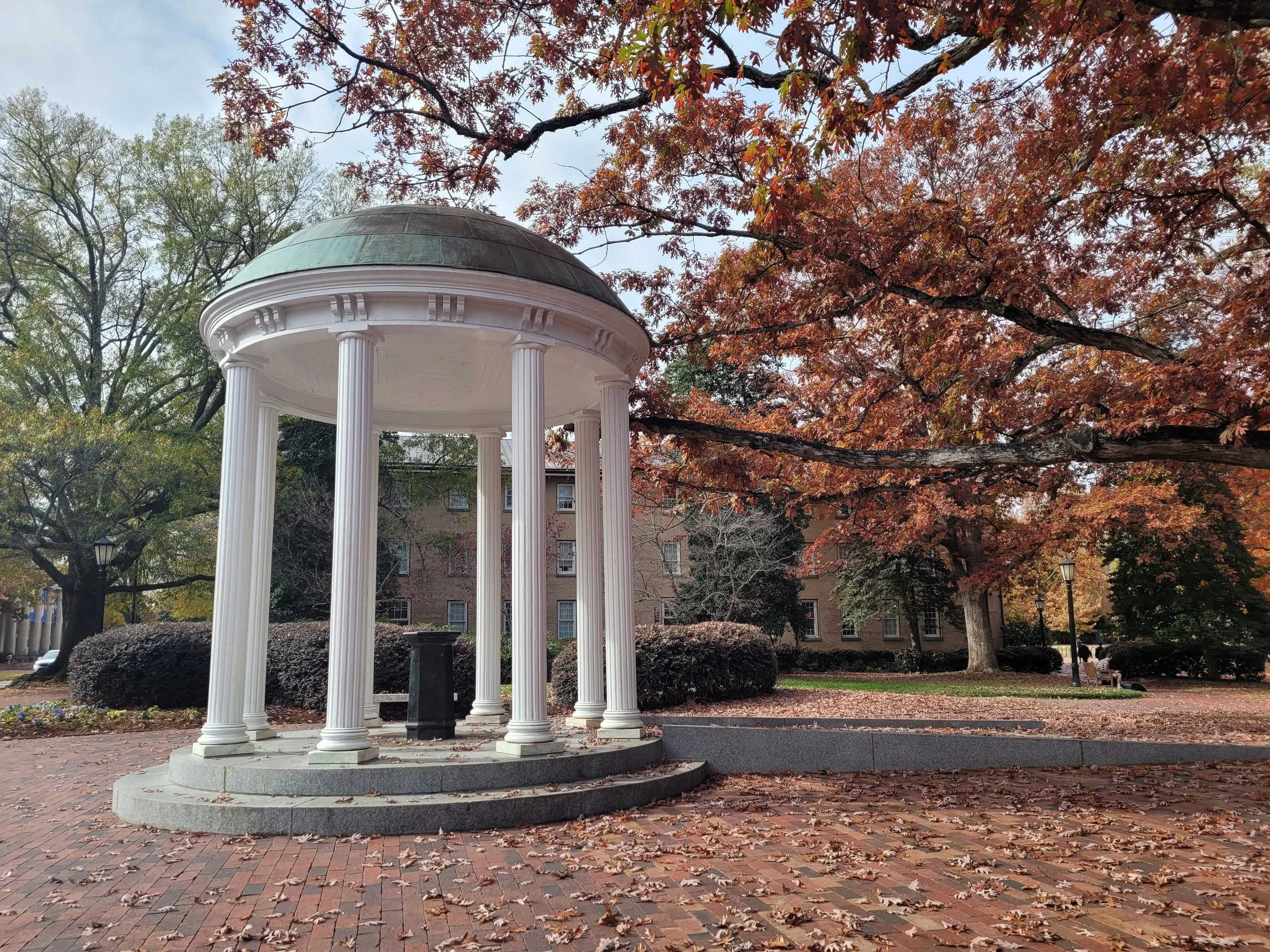
Photo by Daniela Paris.
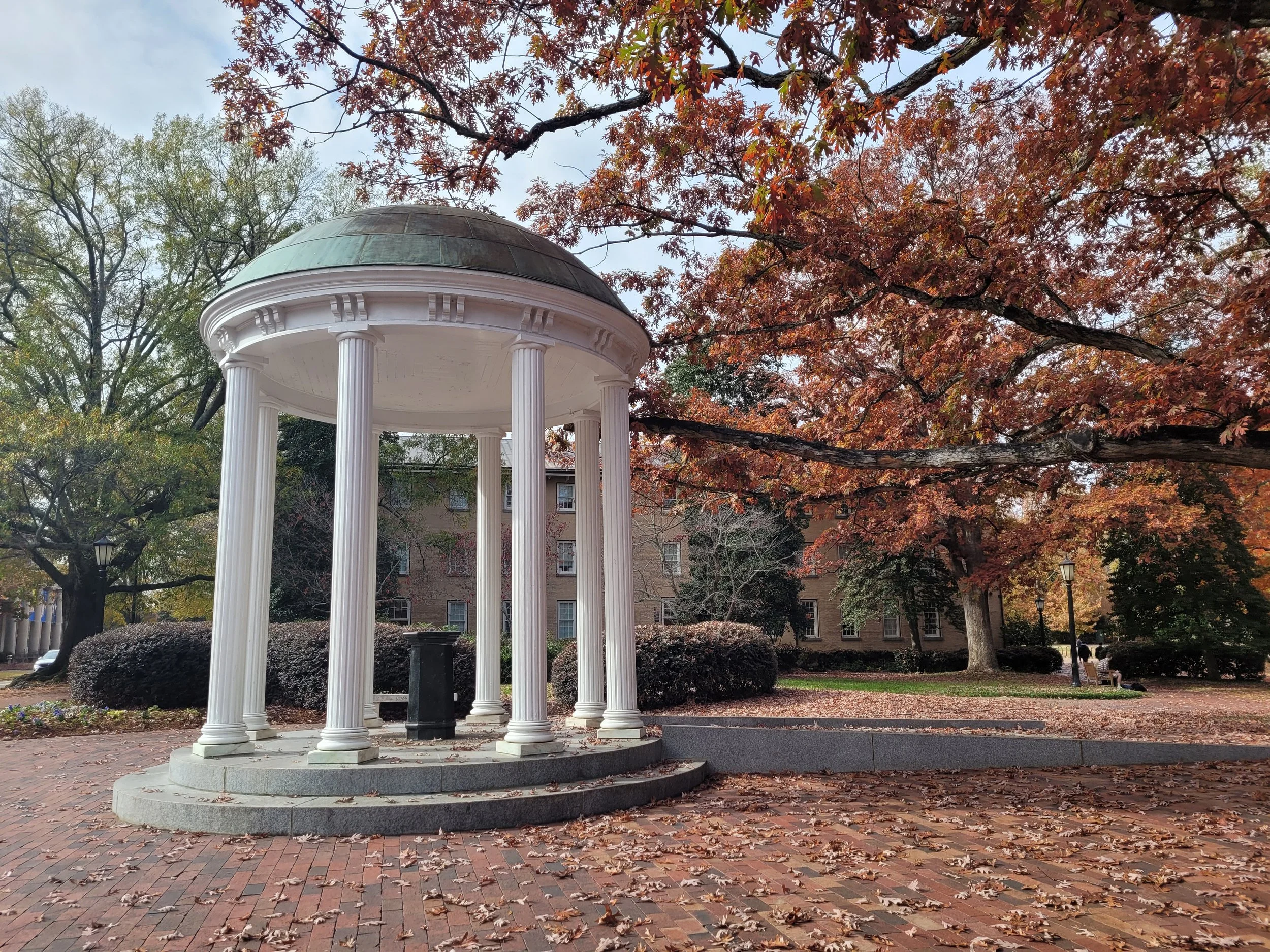
From one south to another, North Carolina is a primary destination for migrants from South and Southeast Asia and Latin America. According to Carolina Demography, the applied demography unit of UNC’s Population Center, 11% of new NC residents in 2019 moved from another country, with Mexico, Honduras, and India being most common. Between 2010 and 2020, Facing South found that NC’s AAPI (Asian American and Pacific Islander) population increased by 64%, and Hickory, NC hosts a high population of Hmong Americans, an indigenous group from Southeast Asia (SEA) who largely arrived from the Laos and Vietnam area. These ever-changing demographics in NC’s backyard showcase the critical need to invest in a thorough academic and cultural understanding of the forces shaping NC migration, from and to the global south.
Luckily, UNC has jumped to answer that call. Proud to be the people’s university, UNC’s programs seek to match the needs and interests of its diverse student body and reflect NC’s population. Through the Bringing Southeast Asia Home initiative, New Roots Oral History Project, and Refugee Community Partnership, UNC has demonstrated its commitment to the field of migration studies, an interdisciplinary field drawing from history, cultural and linguistic studies, economics, law, and more.
The Bringing Southeast Asia Home Initiative, funded by the Henry Luce Foundation, seeks to expand course offerings, study abroad locations, language programs, and research grants focused on SEA. Aptly named, the five-year project reflects the growing ties between NC and SEA, physically and culturally For the interested student, multiple funding opportunities exist for graduate and undergraduate research alike, including the SEA Research Awards and Summer Undergraduate Research Fellowship for SEA.
Next, the New Roots Oral History Project is “a bilingual oral history archive that explores Latin American and Caribbean heritage in the U.S. South.” Started in 2006, the ongoing collection is a collaborative effort between the Latino Migration Project and the Southern Oral History Program at UNC’s libraries. About 20 new interviews are recorded each year between migrants, children of migrants, or community leaders working to assist with settlement. The archive covers a huge range of topics relevant to the migrant experience, ranging from religion, culture, and gender to citizenship, war, and activism.
Finally, UNC students have also built a thriving relationship with Refugee Community Partnerships, a grassroots organization working to connect recent migrant families to resources and friends in the community. 49% of the families RCP works with are from SEA and most are from Burma, all representing diverse ethnic groups. Students at UNC can join RCP to volunteer as a family advocate or tutor, and work to “redefine the resettlement process in North Carolina.”
These three programs are just the tip of the iceberg when it comes to migration studies, but any one of them is a great way to explore this critical field. UNC must continue to prioritize this area, both as NC demographics evolve and climate-induced migration becomes a more common phenomenon. As UNC students, we are members of the global south and have a warm-weather bond that goes deeper than country, language, or ethnicity.
The Election of the ‘World’s Coolest Dictator’
It’s election season—not only in the US, but also in other countries in the Americas, with El Salvador the latest to have the population mobilize and vote for their next President.
The result? The re-election of the self-proclaimed, “world’s coolest dictator,” Nayib Bukele. On Monday, February 5, Bukele was officially elected for a second term. But even early Sunday, despite problems with vote recording, the win was guaranteed for the 42-year old tech-savvy leader, who identifies as a “philosopher king” on X. Bukele won re-election with 83% of the votes, the adoration by much of the population stemming from his effective but controversial crackdown on gang activity in his previous term as president, a trend he is sure to continue in his second term.
Nayib Bukele served as mayor of two Salvadoran towns, including the capital of San Salvador, before tackling the challenge of running for President. Bukele truly came to power following his expulsion from his former party (The New Ideas Party) in 2017, and became an outsider, winning the 2019 elections by pledging to purge El Salvador of corruption. Since his election in 2019, Bukele became known as a “disruptor and innovator,” adopting Bitcoin as the legal tender of the country in 2021, bringing El Salvador into a technology-focused era. However, economic and technological policies are not the reason for 80% of the population of 6.3 million Salvadorans choosing to cast their vote for Bukele.
To understand the appeal of Nayib Bukele, we must look back at the history of gang violence and homicides in the country. In 2015, El Salvador had 107 homicides per 100,000 people, a scale warranting the country the title of the “world’s murder capital.” Gangs had an unequal holding on the country. According to the UN Development Program, the total annual cost of gang violence equaled 16% of the country’s GDP. Barrio 18 and MS-13 are such gangs who have “tormented” communities for decades in campaigns of murder and rape, turf wars, and extortion. Before Bukele, previous leaders responded by forming pacts with gangs, or by implementing security policies that simply led to more violence. Citizens lived in fear for the safety of themselves and their loved ones.
With the election of Bukele, everything changed. Bukele declared a state of emergency in 2022 following a surge of gang violence and issued a subsequent state of exception that loosened criteria needed to make an arrest and a suspension of rights, including free speech and the right to protest. With these changes, El Salvador’s Justice and Security Minister Gustavo Villatora stated that El Salvador boasted the second lowest murder rate in the Americas, the title for the lowest rate being Canada. With this, Bukele declared himself a ‘harbinger of democracy,’ stating on Sunday that, as President, it is the “first time in history that El Salvador has democracy,” an untrue statement. Those tormented by gangs, from the residents to owners of small businesses, found comfort in Bukele and his “war on gangs” and restoration of security, and the hope for the safety of their future generations, as demonstrated by his landslide win.
In March 2022, the deadliest gang violence outbreak during Bukele’s presidency led Bukele to respond by introducing emergency powers, ultimately building a penitentiary complex that could hold 40,000 people, dubbed the “Terrorism Confinement Center”. In August 2023, Bukele deployed 10,000 troops to further reinforce the gang crackdown. The use of emergency powers by Bukele has led some to criticize the level of control he has over state institutions and the overall lack of checks and balances in El Salvador. Even his second term is considered breaking the one-term constitutional ban, but vice chancellor for social outreach at a local university, Omar Serrano, comments that the “unconstitutional” re-election doesn’t matter, with the “main pillar on which [Bukele] has built his popular backing is what the government has done on security.” In fact, Bukele boasted a 90% approval rating during his first term. Reduction of crime, rather than the checks and balances of their President, is what truly matters to the people of El Salvador.
Bukele’s actions have not gone without controversy, and protest. A year after Bukele announced the state of exception, families gathered in San Salvador’s center, demanding the release of their loved ones who were arbitrarily detained. With the state of exception, hearings for over 300 defendants occurred simultaneously, meaning legal decisions were not made for individual cases as much as for groups of people. Since March 2022, according to the Human Rights Watch, over 73,000 people have been arrested, around 1% of El Salvador’s population. This includes 2,800 minors detained, with permission granted for children as young as 12 to be imprisoned. According to Statista, as of January 2024, El Salvador is the country with the largest number of prisoners per 100,000 people, and conditions in the prisons are dismal, inhumane, and deadly. Prisoners have no hope for reintroduction to society, despite around 57,000 of those arrested and held in the mega prison still awaiting formal charges or a trial.
El Salvador, and many other countries in Latin America, face a dilemma. The debate: to allow an erosion of checks and balances and centralization of power that may lead to human rights abuses, or retreat from authoritarianism but have the country suffer under gang violence, murder, and fear. Throughout Latin America, we see the “Bukele Plan '' admired, trending with citizens and politicians from South and Central America, including Guatemala and Honduras, who wish to follow El Salvador's, or rather, Bukele’s, lead. Particularly, right-wing leaders find his policies admirable.
These policies come at the expense of some civil liberties, and the issue of mass incarceration of people, both innocent and guilty, that drives holes in families and can perpetuate the problems of inequality and poverty. While effective, Bukele fails to truly explore the corruption within the government that has allowed the gangs so much power for so long, as well as cutting the gangs off from the top, instead of the bottom. However, this is easier said than done, and as for now, a majority of Salvadorans are satisfied with the Bukele’s handling of crime and are willing to sacrifice some civil liberties for their personal security.
Who really won the 2024 Taiwan election?
With the end of Tsai Ing Wen's eight-year presidency, a new era is emerging in Taiwan.
In the 2000s, Kuomintang (KMT) leadership under Ma Ying-Jeou strengthened relations between Taipei and Beijing. Then Tsai Ing-Wen took over, beginning an eight-year Democratic Progressive Party (DPP) presidency. As The New York Times noted, Ing-Wen's administration carefully tiptoed around ties with China while an emerging national identity implicitly challenged China's cross-strait dominance.
Tsai's "quiet pragmatist" attitude towards foreign policy reflected the deep fear running through the veins of the Taiwanese people. That same fear deeply bled into this year's contentious election, but subtle political changes are occurring.
The popular discourse surrounding Taiwan emphasizes the election of a DPP president, Lai Ching-Te, which consequently extends DPP policies that advocate lessening economic dependence on Beijing. But the elections' unnoticed, arguably more significant consequence, is the emergence of the Taiwan People's Party, a third party that challenges the KMT, DPP binary.
Lai Ching-Te did not win the election with a majority of the primary votes. The DPP actually received approximately 16% less of the vote than when DPP candidate Tsai Ing won with 56% eight years ago, exemplifying a growing dissatisfaction with the establishment in Taiwan. Most of the DPP's lost votes went directly to the Taiwan People's Party (TPP), an emerging Populist party in Taiwan that speaks to young, middle-class voters. In the presidential election, KMT won 33.5%, the DPP won 40%, and the TPP won 26.5%. While you might see this as a clear win for the DPP, it's not.
President Lai Ching Te will face significant obstacles to implementing his policies because, in the election for Taiwan's 113-seat Legislative Yuan, the KMT gained the advantage. The KMT gained 14 seats in the assembly, with 52 seats overall, while the DPP had 51. According to the Center For Strategic and International Studies, the TPP won the remaining 8, meaning for legislative action to occur, the DPP or KMT will have to cooperate with the TPP.
The rise of the TPP has emerged out of growing disengagement with the established government amongst young Taiwanese people. Much of this can be attributed to TPP presidential candidate Ko-Wen Je's utilization of social media influence, as described in an article by The Diplomat. Ko-Wen Je's administrative campaign involved many social media influencers who grabbed the attention of disenfranchised young voters struggling with domestic issues such as housing prices. The Ko Wen-Je campaign's ability to garner support reflects the power of politically charged social media in today's increasingly digital society. Throughout history, the direction of young social movements has always led to political action, and Ko-Wen Je's campaign success solidifies this trend.
The DPP's ability to win the presidency despite attempted interference from Beijing demonstrates the larger narrative underscoring the national election: a strengthening indigenous identity. Lai Ching-Te has leaned close to "secessionist" ideas in the past. While he won't take concrete measures to advance those goals, he will want to push an agenda that generally decreases economic dependence on China and further perpetuates Taiwan's distinct democratic identity, which will antagonize China. To advance these policies, he must accumulate leverage in the legislature, and that will be decided by whom the TPP chooses to cooperate with.
Taiwan has been stuck in a middle ground between radicalism and complacency for decades. Constantly torn between the KMT and DPP, the Taiwanese have become somewhat disillusioned with hyper-partisan politics. In the face of these trends, most Taiwanese still remain highly critical of CCP influence. A recent Pew Research study identified a growing dissatisfaction with China and a growing national identity. But at the same time, part of the TPP's growing influence can be attributed to its hesitancy to echo the DPP's more radical pushes towards complete independence. Even within the DPP, politicians still carefully maneuver PRC pressure, avoiding direct or explicit challenges to Beijing's dominance.
While Taiwan's attitudes are complex, one thing remains certain across all parties in light of the newest election results. The social trends we have seen in the past decade since the last KMT presidency have demonstrated with relative conviction that, while Taiwan is still afraid to provoke China, they are finished with the "one country, two system ideology."
How this new administration will balance the internal discrepancies between partisan policy attitudes while responding to China's gray-zone tactics will be critical in the coming months. China will be highly reactive to Lai Ching-Te's decisions. The People's Liberation Army's signal balloons have already been spotted encroaching on Taiwanese borders throughout the election process, and Beijing recently coerced the tiny nation of Nauru to shift its allegiance to the PRC and cut ties with Taiwan as a separate entity. The Chinese government was also outspokenly critical of the U.S Department of State’s press release on the election results. China shows no sign of slowing its aggressive campaign to suppress Taiwan's growing global influence, both with military intimidation and political influence.
I talked to my great-uncle who lives in Taipei about the prevailing political attitudes amongst the people of Taiwan. He described the atmosphere as leaning towards “political indifference,” especially among young people. Young Taiwanese voters no longer have a deep allegiance to the mainland, yet they also do not have a radical desire to be completely independent. In an article by the Taipei Times, youth leaders list economic and domestic issues as the main concern.
But young voters cannot remain in the middle ground when it comes to foreign policy forever. The TPP now finds itself directly caught in the crosshair between the KMT and DPP. Whether they decide to continue the "quiet pragmatist" narrative that prioritizes stability or to allow Lai Ching Te the opportunity to enact a more progressive stance will drastically shape the future of the Taiwan Strait. In a way, the young, disillusioned TPP voters are now the real power holders in Taiwan.
A New Era For Northern Ireland
In a historic turn of events, Michelle O'Neill, representing the Sinn Fein political party, has become the first nationalist politician to hold the position of Northern Ireland's first minister, marking a significant milestone for the party and region. Sinn Fein's journey from a “fringe party that was once the Irish Republican Army’s political wing” to winning the most seats in the 2022 elections reflects the transformative impact of the 1998 Good Friday Agreement.
The Good Friday Agreement ended decades of conflict once known as the Troubles by establishing a framework for power-sharing between unionists and nationalists in Northern Ireland. This agreement has since served as an example of a democratic and peaceful means of cooperation. Sinn Fein President, Mary Lou Mcdonald, believes this new move suggests that a united Ireland is within “touching distance." Despite this optimism, experts believe reunification is still a distant goal. The power-sharing arrangement persists, with unionists and nationalists jointly governing Northern Ireland. The collapse of this arrangement over post-Brexit concerns was also resolved through concessions—indicating the delicate nature of the peace-preserving process.
The appointment of Michelle O'Neill as the first minister, a title historically held by unionist politicians committed to British rule, reflects the changing political dynamics in Northern Ireland. O'Neill's commitment to reconciliation and moving forward resonates with the post-conflict era. The party's focus on social issues and its appeal to a younger demographic have also contributed to its popularity in Northern Ireland and the Republic. Demographic shifts in Northern Ireland, with Catholics outnumbering Protestants for the first time in 2022, and a growing secularism, also contribute to the changing political landscape. The labels of Catholic and Protestant have become less relevant, with nearly 40% of the population identifying as neither nationalist nor unionist.
The rise of Sinn Fein is seen more as the consequence of fractures among unionist parties post-Brexit rather than a widespread “surge” in Irish nationalism. As discussions about reunification gain momentum, more urgent issues demand attention in the restored government, including a recent public sector strike, and rising living costs. As the Sinn Fein party continues to rise in popularity, international leaders must continue to pay attention to and analyze how the budding government addresses these concerns.
Free Trade v. Fair Trade: Why Ethical Steel Trade is Impossible on a Global Scale
As the global industry increasingly focuses on mass production and consumption, states desperately try to keep up. Industry breaks up production and distribution into different steps; these steps are often performed by a variety of states in what is called a global value chain (GVC). In GVCs, former Western imperial states utilize cheap labor and production in developing states.
Anti–globalizers point out GVCs as exploitative; however, numerous economists, like Martin Wolf, recognize that GVCs are inevitable and necessary means of integrating developing states into the global economy—a step necessary for their survival in the contemporary capitalist system. Wolf expresses in Incesed about Inequality that “the notion that international economic integration necessarily makes the rich richer and the poor poorer is nonsense.” Further, it is essential for states to integrate into this system if they wish to grow economically, as global value chains allow for a rising share of international trade, global GDP, and employment.
Professor of Sociology and Director of the Global Value Chains Center at Duke University, Gereffi Fernandez explains in Global Value Chain Analysis how “for many countries, especially low–income countries, the ability to effectively insert themselves into GVCs is a vital condition for their development.” Fernandez also shared how it’s not only a question of participating in the global economy, but doing so in the right way, such that a developing state uses access to GVCs to capture gains and reduce unemployment and poverty. If Fernandez’s wisdom holds true, how do developing states become drivers of GVCs? The answer to this question is simple: trade.
Free trade allows countries to rapidly transform their economies and raise their living standards. Jagdish Bhagwati, an Indian-American economist, in his work Poverty and Reforms: Friends or Foes? argued that unrestricted trade between nations would improve quality of life while preserving the environment. Bhagwati recognized that trade is the best way for states to integrate into the global economy. For example, the increase of free trade in China’s markets allowed for it to become a driver of GVCs and successfully integrate into the global economy; the IZA Institute of Labor Economics shared how in China, the “increasing participation in the global trade helps China reap the static and dynamic benefits, stimulating rapid national economic growth.”
It is trade that transformed China into a global economic power. However, China’s start to international trading presents an ethical dilemma, in which the U.S. used opium to open Chinese markets. According to the U.S. Department of State in the Office of the Historian, “Following the First Opium War in the 1840s, the Western powers concluded a series of treaties with China in an effort to open its lucrative markets to Western trade.” Further, western powers encouraged Chinese addiction to opium in order to meet trade interests. Although this method allowed for the development of China’s influential power in the contemporary global economy, the ethics of this tactic remain wrong and ill-conscious. Thus, we must ask– what is ethical free trade?
When it comes to the question of poverty and economic development, different backgrounds shape the perspectives of those who argue for or against free trade as a solution. However, even ideological opponents Martin Wolf and Robert Hunter Wade—who do not agree on the effects of globalization on inequality—share a desire to find the morally right answer to solving poverty. Thus, our focus is not a debate of whether or not free trade is the solution, but rather it is a question of how trade policies can be ethically and efficiently shaped.
This brings us back to my latest question—what is ethical free trade? First, let me define the goal of what we would consider ethical free trade. Ethical free trade is a trade agreement between two or more countries that protects workers and fair labor while preventing global powers from inhibiting the economic growth of developing states. An idea that meets part of this goal is fair trade. Fair trade can be described as:
“A movement that values the freedom and dignity of individuals who make, grow, and supply products to consumers over the cost and convenience of acquiring products in the global marketplace. Fair trade seeks to help workers and producers—specifically in developing countries—achieve better trading and working conditions”
The World Trade Organization declared that fair trade began in 1958 when Ten Thousand Villages began buying materials from poor, southern communities in Puerto Rico and sell these finished goods in the U.S. This event sparked a movement that would forever change the way goods are labeled and marketed, with public support growing for the idea of fair trade branded coffee, groceries, and other materials. However, even with the development of fair trade, arguably unethical free trade policies persist. Let us look at the example of steel production in the U.S. and China.
Steel became a major product in global commerce in the 19th century; later in the 20th century, steel production also became a defense priority as world wars raged on. Countries like the U.S. and China looked to mass-produce steel; however, the mass production of steel in China during Mao Zedong’s Great Leap Forward led to severe environmental and health effects. According to the Association of Asian Studies, farmers created ‘backyard steel’ in which they produced cheap, poor-quality steel in their backyard furnaces, causing an estimated 10 percent of China’s forests to burn down. Wood became so increasingly scarce that “peasants resorted to burning their doors, furniture, and even raiding cemeteries for coffins.”
Farmers, now with their time divided between steel production and farming, could not keep up with Zedong’s collection plans. An estimated thirty million people in China perished from starvation. Today, China produces over 50 percent of the world’s crude steel and engages with the U.S. in an ever-changing dynamic over steel trade policies. Both the U.S. and China still cause long-lasting effects on the environment with steel production and exploit laborers.
Lewis Leibowitz, a well-known international trade attorney, shared how “steel and aluminum currently emit large amounts of carbon based on production processes. Some countries, including the United States, are considering a carbon border tax to penalize dirtier producers. But, as some have pointed out, the US has dirty sectors too.”
Although the U.S. advocates for fair trade, it does not always follow fair trade principles when its economic interests– like steel production for military building—are at stake. Thus, it is impractical to debate free trade versus fair trade, as fair trade—regardless of its ideal nature and promising ethics—is followed until it does not suit states’ economic needs.
Michael J. Hiscox, representative from Harvard University at the conference on Europe and the Management of Globalization at Princeton University, explained how “higher labor standards make production in developing nations more costly, multinational firms are likely to invest less in those locations, slowing the pace of economic growth and the spread of technology.” Moreover, not only are states less likely to follow fair trade policies when their economic interests are at stake, but so are multinational corporations.
In 2016, China claimed the U.S. steel probe violated the standards upheld by fair trade by moving towards protectionist policies, as shared by ChinaDaily. However, the U.S., as explained by the Wall Street Journal, also is upset from a different perspective. U.S. producers and firms complained that China was “selling products below production cost to improperly gain market share” and thus creating illegal subsidies. Which state is right—the proponent of fair trade or free trade policies? My previous claim stands: fair trade is followed until upholding it threatens states’ economic interests, which is exemplified by the U.S. returning to protectionist policies in steel importation above all else.
With the increasing concern about the impact of globalization in developing nations, scholars like those discussed in this essay debate solutions to poverty and inequality. Free trade is widely seen as a way in which developing states can successfully integrate into the global economy, though downsides exist. Yet, the positives of free trade outweigh the negatives; policy-making institutions can look towards developing trade policies based on the principles of fair trade to protect developing nations from the potentially harmful effects of globalization. However, these fair trade policies will only exist in areas where global powers allow them to. Fair trade shall never take over the global stage nor reach the effectiveness or efficiency of contemporary free trade.
Why the United States should think more about the Roman Empire:
Lessons for the Indo-Pacific
Though America has little resemblance to Rome in values, Rome offers valuable strategic lessons. The Roman hegemonic system offers valuable strategic lessons for the Indo-Pacific and American grand strategy.
As the United States promotes the rules-based order in the Pacific, it would be wise to look back at Roman alliance systems. In his book “The Grand Strategy of the Roman Empire”, Edward N. Luttwak argues that Juleo-Claudian Rome used political coercion to protect the empire, opting to “conserve force” and “use military power indirectly.” Like Rome, America has more than one issue to address. With tensions growing across the globe, it would be wise to look at the economy of force in the Roman hegemonic system.
America must deter China. Currently, China's gray-zone tactics whittle will in the Indo-Pacific. Between election manipulation, invasive military drills, and floating sea barriers, China challenges the values that allow globalization to flourish. Not only does bolstering deterrence help other actors in the region, it also helps promote U.S. interests. With $ 1.9 trillion of U.S. trade coming through the region in 2019, America must pursue democratic values.
Rome opted to use the border state's standing armies instead of the legion to protect the outskirts of the empire. This allowed Rome to address more threats to Rome proper. Rather than using American forces in the Indo-Pacific and mere mutual defense treaties, America ought to start more dialogue, cooperation and technology-sharing between democracies here. Though the promise of a returned American threat does help deter China, we can strengthen deterrence by bolstering the individual capabilities of these nations. By enhancing the capabilities of these nationals against a China threat, America can improve its economy of force.
Current partnerships already contain this idea of integrated deterrence, or building a defense ecosystem. AUKUS, an alliance between the US and UK centered around nuclear-powered submarine acquisition and multi-domain capabilities and intel sharing, is a model of this relation.
The U.S. ought to pursue partnerships like AUKUS further. This means loosening regulations on arms sales and expanding the Quad.
Arms sales contain heavy bureaucracy, yielding delays and inefficiency. Regulations like ITAR slow down these crucial sales and endanger the rules-based order. If we reframe how we conduct arms sales, we can better deter a China threat.
America needs to bolster and expand the Quad. The Quad, a loose grouping of India, Japan, Australia, and the United States, is less of a military alliance than it needs to be. Currently, the Quad focuses on a plethora of issues, such as climate change and supply chain resilience. While important, the Quad ought to take more of a security-aligned axis. Like AUKUS, the Quad should share more military technologies between states. By developing the individual capabilities of these nations, the U.S. can deter China with less of a threat to the American economy of force. Furthermore, expanding the amount of Indo-Pacific democracies in this grouping will help protect them from Chinese gray-zone tactics as well.
Though Chinese gray-zone tactics will continue, bolstering the defense capabilities of these nations will prove worthwhile. Not only will they be better equipped to deter a China threat, but better technology will also bolster their political will and undermine Chinese compellence.
By pursuing more integrated deterrence in the Indo-Pacific, the U.S. can sleep better at night. Like Rome, America must use the alliances and prosperity established in these nations to protect democratic values rather than disperse her forces in a tumultuous world.
Resisting Milei: Extraordinary Argentine Mobilization
Throughout much of the Americas, we have seen a trend of economic policy failures, resulting in mass inflation and poverty, generating a rise in populism and leaders espousing ideals and promises to the people. The promises that the economic woes of the average citizen will be remedied by electing a leader who will fight for them have fueled anti-establishment and libertarian political parties’ policies and the successes of “populist'' leaders. However, just about a month into Argentine President Javier Milei’s term, the Argentine population mobilized unprecedentedly, demonstrating that not everyone is happy with how Milei’s reforms and policies have impacted the economy.
Argentina has been a stunning example of the trend of poor economies resulting in political change. With the late November election of 53-year-old ‘far-right’ Javier Milei as president, the status quo was disrupted, with Milei securing 56% of the votes, the most votes in any election in the history of Argentina. From the start, Milei expressed his rejection of typical politics in his speech delivered to his supporters outside of the National Congress building instead of to lawmakers, as typical. This act demonstrated Milei’s “commitment” to the laypeople and his anti-establishment view.
However, Milei’s electoral success wasn’t wholly unexpected, with the COVID-19 pandemic fueling the rise of isolation, political radicalization, and shutdown of businesses, schools, and other spaces worldwide. Like many other countries, the former Argentine president, Alberto Fernández, issued a nationwide lockdown at the beginning of 2020. Still, by 2022, the public opinion on President Fernández in late 2022 had 60% of respondents stating high disapproval, according to Statista. Milei criticized Fernández’s policies, particularly those concerning the economy and restrictions, with the rhetoric of asserting himself as a true representative of the majority. For much of the population, Milei’s commitment to dismantling the old political and economic system was warranted, with a projected 150% inflation rate and 40% of the population living in poverty. At the end of 2023, this annual inflation rate amounted to 211.4%, the steepest rate in Latin America.
The policies and win of Milei were celebrated by other far-right leaders, including former President Donald Trump and Jair Bolsonaro of Brazil. In fact, Trump congratulated Milei on Truth Social for his win, declaring that he would “Make Argentina Great Again.” Colombian, Chilean, and European far-right politicians further commended the victory in Argentina, believing Milei’s presidency would issue an era of “right-wing conquests.”
It is still just the beginning of Milei’s campaign, as Milei has only been in office for a little over a month, so we have yet to see how the rest of his presidency will pan out. However, Milei has acted fast in implementing his policies and reforms. He started by cutting federal spending by laying off thousands of government workers and reducing the number of federal ministries by half. Further, he devalued the Argentinian peso by 54%, increasing inflation. However, Milei had warned this would happen in his inauguration speech - declaring that the situation would worsen before it improved, stating that “there will be light at the end of the road” in an attempt to soothe and give optimism to the Argentines.
In recent news, on Wednesday, January 24, amid two major reforms pushed by Milei, tens of thousands of workers protested the economic austerity reforms in a strike started by the most prominent national union, Confederación General del Trabajo. The day-long strike demonstrated the biggest show of opposition to Milei’s plans since coming into office and the “unprecedented mobilization” of the Argentine people. The first reform, the extensive Omnibus bill, would reduce regulations, privatize companies, weaken unions, and other controversial measures. The sheer size and amount of content in the bill mean that it is likely a large number of Argentines are unaware of what exactly Milei has proposed, where some say the anti-regulatory administration is driving the country into a “grave crisis.” Still, others see the economic freedom that could result from the bill.
Milei’s other proposition, his “Mega-decree,” focuses on economic deregulation and further privatization of state-run companies. Workers in many sectors - including transportation, construction, and energy - attended the Buenos Aires protest, proclaiming the overhauls would “weaken protections” for workers and those in poverty. In response, Milei declared to local media that the strike organizers proved that there were “two Argentinas.” “One wants to stay behind, in the past, in decadence,” he said, referring to his protestors.
Milei’s campaign exhibits the importance and success of running on a predominantly economic platform, where a recent trend displays that voters tend to care more about the economy over other issues. In the U.S., for example, the priorities of the people are demonstrated in a 2023 survey conducted by the Pew Research Center, where the percentage of people who say inflation is a very big problem was 65%, followed by the affordability of healthcare, at 64%, higher than that of gun violence (60%), climate change (39%), and terrorism (34%).
While Milei’s policies seem to align with populism, a question remains: Is Milei’s success due to embracing the policies of the far right, or is it more so a consequence of intense economic malaise? The rise of proclaimed populist leaders, including Trump and Bolsonaro, coincided with their predecessors’ role or presence during a period of economic strife, including high inflation and unemployment. The rise of Trump, for instance, who is described as a populist president, followed the 2008 financial crisis under Barack Obama. The low approval ratings for leaders during times of economic hardship have fueled populist rhetoric claiming that non-elites are hurt by left-wing policies, particularly those that affect the economy and lead to high prices for both inferior and normal goods. As demonstrated by Wednesday’s strike, many workers are unhappy with Milei’s reforms, meaning much of the Argentine population is mobilizing to form a resistance to Milei’s “anarcho-capitalist” policies. However, whether the momentum by the Argentines amounts to real change, remains to be seen.
Economics Entering 2024
In Argentina, newly elected president Javier Milei has committed himself to reviving Argentina’s financial crisis and inflation-ridden economy through radical free-market reforms. Speaking at the World Economic Forum in Davos, Milei declared, “Thirty-five years after we adopted the model of freedom, back in 1860, we became a leading world power. And when we embraced collectivism over the course of the last 100 years, our citizens started to become systematically impoverished, and we dropped to spot number 150 globally.” Milei received a standing ovation.
Entering 2024, the world balance of power is beginning to shift, as China rises, Europe stagnates, and America spreads itself thin between its innumerable commitments. Thus, it would be relevant to examine the relative trajectory of these power-centered regions of the world in terms of their ability to grow their economies and produce the newest technology.
Beginning with the backdrop to the conference in Switzerland, the European economy continues to stagnate as it excessively regulates its economy and effectively thwarts innovation. European regulators are so obsessed with preventing mergers that European companies are simply unable to grow to the extent of American companies that are producing the next generation of technology. For example, economists at the University of Maryland found that Europe’s General Data Protection Regulation reduced European venture capital investment compared to the US. According to a Wall Street Journal article, in 2021, while American artificial-intelligence related venture-capital investment was $69.30 billion, in China it was $24.78 billion, and in Europe it was just $16.73 billion despite having an internal capital market almost as large as the US’s and larger than China’s. According to the same article, American firms invest 80% more capital in research and development and receive a 30% higher return on capital.
Meanwhile, China does not seem to do much better, as it continues to buoy its economy with government spending and easy credit for massive development projects that simply do not have a corresponding demand. Within the Chinese economy, it is essentially impossible to acquire a skilled job with a recent college degree and without years of experience, which is why the government ceased to publish youth unemployment data when it exceeded 25%. According to another Wall Street Journal article, the most startling thing to see in any economy is that private investment in China fell by 0.4% in the last year. In another article, foreign investment in China has hit the lowest level in decades, and foreign companies have extracted approximately $160 billion in earnings. None of this should be surprising as the Chinese government continues to assert more control over the private sector as well as harshly enforce security measures amongst foreign businessmen.
In summary, as the world order seemingly shifts in 2024, one thing has not quite yet changed: “America innovates, China replicates, and Europe regulates.” The outcome of great power competition in this century will continue to be determined by whose government can get out of the way of its people the fastest.
Germans take stand against far-right
“Nie wieder ist jetzt” (never again is now). So read the placards hoisted by hundreds of thousands of Germans during recent protests against the far-right. For the past two weeks, German liberals, centrists, and center-right conservatives have united to oppose a far-right scene mobilizing around the immigration issue. Following a secretive November meeting of Alternative für Deutschland (Alternative for Germany - AfD) party leaders, leading figures in the ethnonationalist Identitarian movement, and affluent supporters of such groups’ policies, this opposition to Ausländerfeindlichkeit (xenophobia) has taken center stage in German political discussion.
As first reported by the German investigative outlet CORRECTIV on January 15, the November meeting at the heart of recent outrage centered around a plan of “re-migration,” which proposes encouraging or compelling those with migration backgrounds to leave Germany. Austrian far-right activist Martin Sellner, according to undercover CORRECTIV journalists, presented the “masterplan,” drawing attention to supposedly “unassimilated” holders of German citizenship in his speeches at the meeting. These individuals, Sellner argued, should be pressured via “customized laws” to leave the country; AfD members in attendance reportedly did not object on principle, though a member of the right-wing Verein Deutsche Sprache (German Language Association) questioned the plan’s feasibility.
According to CORRECTIV, Ulrich Siegmund, the AfD parliamentary group leader for the eastern federal state of Saxony-Anhalt, was present at the Potsdam hotel and argued that the owners and patrons of foreign restaurants should be pressured. It should be noted that the AfD’s regional branches in Saxony-Anhalt, Saxony, and Thuringia have been classified as right-wing extremist groups by German domestic intelligence services and are thus subject to increased covert surveillance.
Within days of news breaking over this meeting and the “masterplan,” which reportedly includes a proposition to “move people to” a “model state” in North Africa, protesters took to the streets in Cologne and Frankfurt before demonstrations spread to smaller towns throughout the country. With more than 100,000 protestors demonstrating against the AfD by the end of the first weekend following CORRECTIV’s publication, the size and scope of the movement has increased since. Protests in Hamburg and Munich, for example, grew exceedingly large, leading organizers to call off the actions to avoid overcrowding. Rather than remaining a short-term movement, the protests have continued into February, with 150,000 Germans from across the country gathering outside the Bundestag in Berlin on February 3 to denounce the far-right axis.
The AfD, for its part, has claimed that the CORRECTIV report and following media coverage are only the most recent examples of misleading and targeted media action against their movement. Co-chairwoman Alice Weidel insisted that the AfD was being “defamed and slandered” by the mainstream media. Despite the bravado, the party has sought to distance itself from the meeting, quickly firing Roland Hartwig, a top aide to Weidel who was present at the Potsdam hotel, and arguing that its members who attended the event did so in a “private capacity.”
The size, scope, and makeup of these protests are all notable in a country where large-scale political mobilization is relatively uncommon. However, perhaps most interesting are the anti-AfD demonstrations in small communities, especially those in rural eastern Germany where AfD support remains strong. As Deutsche Welle reported on January 26, around 3,000 people convened in Eitorf, a small western town, to confront an AfD member of parliament, Roger Beckamp. Beckamp, the town’s representative in Germany’s federal legislature, implied that the AfD sees the CORRECTIV report as responsible for introducing the “remigration” term into political discourse, a win in their eyes. Emerging from a party meeting, Beckamp was met with a shouting crowd, undeterred by the cold and rainy weather.
With European Parliament elections approaching in June and three regional elections in eastern Germany to follow, discussion over potential impacts of the growing controversy on AfD success at the ballot box abound. In the midst of the recent protests, an AfD candidate heavily favored to win a district-level runoff in Thuringia lost to his center-right CDU opponent. A cross-party mobilization driven by widespread concern over the Potsdam meeting’s discussions is credited with delivering the electoral blow in the AfD-leaning region. Nationwide polls indicate a drop in AfD support following the anti-extremist protests; the party’s support dipped below 20% for the first time since July in a Forsa poll. POLITICO’s “Poll of Polls” similarly recorded a decline for the AfD in national parliament voting intention, with the right-wing party falling from an early January high of 22% to 20% as of January 31. While potential impacts on the major upcoming elections are yet to be seen, such a drop in polling is meaningful, as nationwide support for the AfD had crept upwards in recent months amid ever-growing dissatisfaction with the current “stoplight” governing coalition.
Though protests against the AfD are not new in Germany, this widespread movement, driven by civil society groups, trade unions, and churches and lent unambiguous support by Chancellor Olaf Scholz, represents the most outspoken opposition to the group in recent years. With its involvement in the November Potsdam meeting, the AfD seems to have taken a step too far in a nation where Vergangenheitsbewältigung (accounting for the past) remains an ever-present element of the public conscience. While AfD voters are expected to dig in to defend their positions, many Germans have demonstrated over the past weeks that they will stand up for their democracy and for the right for all those who hold German citizenship to live in peace.