

The Journal of Foreign Affairs at Carolina
Get the latest from our undergraduates at
The Column at JFAC
Edmundo González's Forced Exile and the Future of Venezuela's Opposition
On September 7th, 2024, a secret plane departed Venezuela bound for Spain, carrying opposition leader and recent presidential candidate Edmundo González into exile. His departure came just days after a Venezuelan judge issued an arrest warrant for González on September 2nd, following the disputed July 28 presidential election. The warrant included serious charges such as usurpation of public office, falsification of documents, and incitement to disobedience.
González, a relatively unknown diplomat, had become the face of the Venezuelan opposition after María Corina Machado, the prominent opposition figure often referred to as the "Iron Woman," was barred from running. Machado's disqualification was widely seen as a move by the Maduro regime to neutralize a formidable challenger.
Allegations of widespread fraud tainted the July 2024 election. Many countries called for the release of detailed voting records, with tally sheets collected by opposition volunteers suggesting that González had won by a margin of more than 2-to-1. However, the Maduro-controlled National Electoral Council refused to disclose any results, citing an alleged cyberattack. In the aftermath of the election, Venezuela witnessed a brutal crackdown on the opposition, with reports of over 2,400 arrests and 27 fatalities. This wave of repression forced many opposition figures, including Machado, into hiding.
González's exile represents a significant blow to the Venezuelan opposition movement, depriving it of a key leadership figure who was widely recognized as the legitimate winner of the election. As the candidate who reportedly secured nearly 70% of the votes in the contested election, his departure creates a leadership vacuum and potentially demoralizes supporters. This setback raises questions about the opposition's ability to challenge Maduro's rule effectively, especially with other prominent leaders like Machado facing severe restrictions on their activities.
The exile of Edmundo González shines a harsh light on the failures of the international community to protect democracy in countries like Venezuela. Despite widespread condemnation of the fraudulent election and calls for transparency, global efforts have done little to bring meaningful change or safeguard the rights of Venezuelans. González’s exile leaves the opposition in an awkward and demoralizing position, creating a leadership vacuum just when the movement needs direction the most. With domestic efforts to incite a peaceful transition of power now put on pause, if not scrapped entirely, this situation exposes the weaknesses in international systems designed to prevent democratic backsliding and the rise of authoritarian regimes. Meanwhile, it’s the Venezuelan people, especially the millions in exile, who continue to bear the brunt of these failures, unable to return home or reunite with their families.
Resurgent Threats from Central Command
As wars rage in Ukraine and the Gaza Strip while tensions persist in the South Pacific, it has been the prerogative of US security policy to begin disentanglement from the War on Terror. The Islamic State was largely defeated in 2019, and the withdrawal from Afghanistan was completed in August 2021. This trend is certainly a defensible one, and it is still too early to adopt a position of urgency on its reversal, but attention must remain on a combination of developments that are not likely to subside.
Islamic militants have been advancing across West Africa, causing close to 38,000 deaths in the past seven years, according to the Wall Street Journal. As they occupy villages and regions, they successfully destabilize the country and cultivate the grievances of various groups, weakening the governments that have the support of the US in counterterrorism.
The resulting coups in Mali, Burkina Faso, and Niger merely breed further terrorism. For example, after the military coup in Niger last year, the US was forced to evacuate and is now regrouping in nations along the Gulf of Guinea. The word “regroup” is merely a cover for the reality that the US is losing ground while Islamic militants, specifically Al Qaeda and the Islamic State, advance.
According to the same article, the US was forced to evacuate drones from a $110 million base constructed just five years ago. As the US cannot provide security aid to such military governments, they merely turn to Russia for aid. Russian-provided mercenaries from the Wagner Group then proceed to ravage West African villages and commit atrocities, which allows militant groups to foment discontent and recruit more fighters and resources to their cause. Furthermore, through its support, Russia is able to create an anti-West posture in the region. For instance, due to its being the former colonial power there, France is technically the coalition leader on counterterrorism in West Africa, but following the military coups, it too has been forced to evacuate from Mali, Burkina Faso, and Niger. Even as the US and France consolidate into Benin and the Ivory Coast, it would appear that stemming the spread of Islamic militants in West Africa is a losing battle.
Meanwhile, according to another article in the Wall Street Journal, the US has reached an agreement with Iraq to withdraw troops by the end of 2026. As has been noted, it has been a widely-supported prerogative over the past several years to decrease American commitments in the Middle East. However, similar to the developments in West Africa, the theme that is not emphasized enough is that the reason for American evacuation is because of the influence already possessed by militant groups in Iraq. Pro-Iranian militia groups hold considerable influence within the Iraqi political and security apparatus and have been pressuring for the end of the US-Iraqi coalition.
Therefore, it would appear from this perspective that the US is not in a position to completely disengage from its wars against militant Islam. Yet, to adopt an even broader perspective, it is clear that the West’s influence is being expelled from multiple directions, whether it be Ukraine, Iran’s Axis of Resistance, or China in the South Pacific. As Europe continues to struggle building its military establishment, the notion that the US can “shift attention,” “refocus,” “consolidate elsewhere,” or in the case of West Africa, “regroup,” is a luxury that can no longer be considered an option. The only option is the continued expansion of military influence, expenditure of resources, and increased rather than decreased commitments.
The Broader Political Implications of the Thuringia State Election in Germany
On the first of September in the German state of Thuringia, worrying election results were released. The mainstays of Eastern German state governments—that being the center-right Christian Democratic Union (CDU) and The Left political parties—had suffered a striking defeat. While the far-right Alternative for Germany (AfD) party has been on the rise in eastern German states since its victory in the 2017 national elections, a surprising new contender has seen success. This new party is known as the Sahra Wagenknecht Alliance, or BSW. A wholly new fixture in German politics, the BSW entered the political scene in January 2024. Composed of a socially conservative sect of The Left party, they promote left-wing economic policy with a very conservative anti-immigration and pro-Russia policy.
Regarding the election in Thuringia, the AfD and BSW have been ascendent. The AfD took home the largest vote-share, with 32.8% of the vote, trailed by the CDU at 23.6%, and surprisingly, the BSW at 15.8%. While only a state-level election, it signals a broader trend spreading throughout Germany—but especially the eastern, formerly communist, half of the nation. With much of AfD’s voter base being in the East, the rise of anti-immigrant, socially conservative, and populist rhetoric has a clear advantage in the region. Despite this, the popularity of the Left party there cannot be understated. But with the ascendancy of the BSW in Thuringia, the social-policy tide in German politics is shifting increasingly further to the right.
Because of this shift, we will continue to see socially far-right parties obtain victories in Germany, with the BSW playing a new defining role. As a party that holds both left and right-wing positions, they are liable to play a vital role in the growth of AfD political power. Coalition building has been incredibly difficult for AfD, as the German political mainstream has opted to refuse to form any government with AfD. But, with the increasing growth of the BSW, they may not have the same scruples as the German political establishment. While it is too early to tell the ultimate impact that the recent BSW victory will have, the party will no doubt have an important role to play in the growth of socially far-right politics in an increasingly extreme German political sphere.
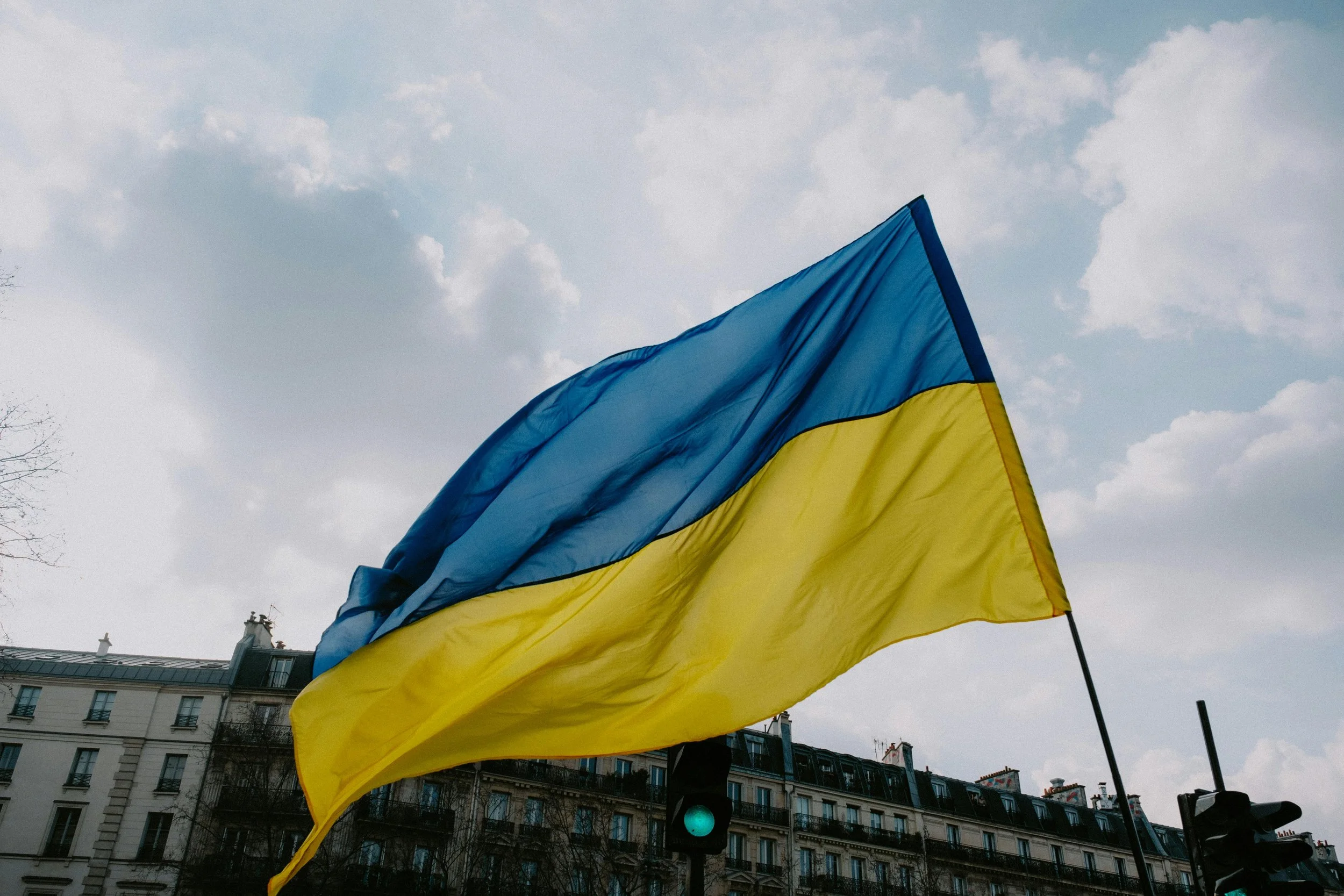
The US’s Yellow Light for Ukraine
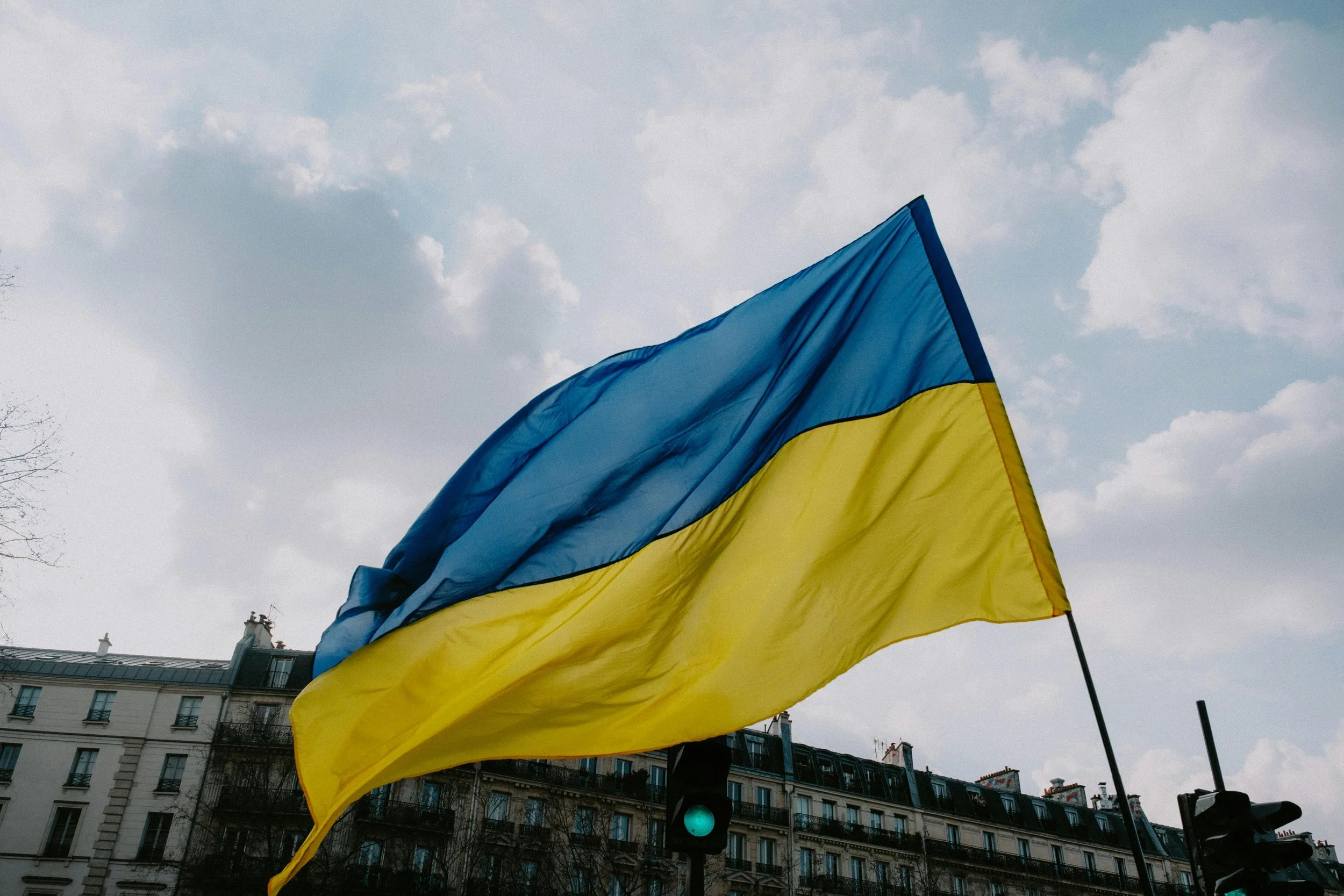
Photo by Mathias Reding.
The Russia-Ukraine war has culminated in two and a half years of defense spending, hundreds of thousands of deaths, destruction of critical infrastructure and homes, and a political debate surrounding the role of the NATO Alliance, Russia, Ukraine, and Iran.
And the war doesn’t seem to be slowing down anytime soon.
On Friday, September 13, UK Prime Minister Keir Starmer and President Joe Biden met to discuss a wide range of topics that included Ukraine, hinting at a potential decision that would permit Ukrainian President Volodymyr Zelensky to fire the long-range missiles provided by NATO countries into Russian territory. It initially appeared the meeting signaled that the two leaders would choose to lift their restrictions on the missiles, but no such decision was made.
The UK and the US disagree on this matter, and it must be a joint decision, as many of the components of the Storm Shadow Missile are manufactured in the US. Storm Shadow missiles are cruise missiles that can reach a target about 155 miles away, with the ability to penetrate Russian bunkers and other infrastructure, such as ammunition holdings. They have been successful in the past in targeting Russia’s Black Sea Naval Headquarters, stopping the Russian naval forces in their tracks.
Zelensky finds the inability of the West to decide on the course of action for the weapons as signaling cowardice, a nod to the US approach of similarly helping Israel. He believes air defense and long-range missiles can bring an end to this war, and that Ukraine’s current capabilities are not enough to turn the tide of the war. He also argues the asymmetric nature of the war, and that not having permission to hit Russian air attack bases leaves Kyiv essentially “fighting a war with one arm tied behind its back.” British officials agree, stating that Ukraine can’t fight effectively, with Starmer pointing out that Western support for Ukraine is critical in “this vital war of freedom.”
The US sees it differently.
The reason for the Western indecision, and Biden’s hesitation, is the legitimate fear of escalation in the war. Putin has issued a warning to the West that if they permit Ukraine to fire long-range missiles into Russian territory, there would be retaliation. Biden, and other high-ranking US officials, take that threat seriously.
With the 2024 election less than two months away, Biden’s decision to delay making a definitive choice is strategic, especially given the criticism surrounding NATO’s spending on Ukraine, which has become a point of contention for the Biden-Harris administration.
Ignoring Putin’s threat could prove dire for NATO and the West, with a potential response from Moscow coming in the form of an attack on weapon supply points in Eastern Europe, such as a Polish airbase. An attack on Poland, a member of NATO, could trigger Article V of the North Atlantic Treaty governing NATO, and thus escalate the war in an unpredictable, unprecedented manner.
The Pentagon also believes that allowing Ukraine to use these long-range weapons will not make a strategic difference on the battlefield. Moscow, anticipating such a decision, has already moved much of its infrastructure further into Russian territory, meaning that it might now be too late for the strikes to destroy anything or change the course of the war. Similarly, with the war in Ukraine being that of a War of Attrition, Russia has a huge population and manufacturing advantage over Ukraine, has built a coalition of support from other leaders, and now possesses the capability to launch Iranian-made drones.
Many US officials see the risk of escalation as outweighing the military benefits, and believe that in authorizing these missiles to be shot, the US risks further depletion of its weapon reserves and takes on the financial burden at a time when the economy is at the forefront of many Americans’ minds. Each missile costs almost $1 million, which is no small price.
A decision could potentially be made at the upcoming UN General Assembly meeting, with a larger range of world leaders available to discuss this dilemma. As for now, however, Biden has made a strategic call to wait and hear the alternatives—and perhaps let Harris make the decision should she win the November election. However, the US’s hesitation—its “yellow light”—in authorizing Ukraine to use these long-range missiles might turn into a firm, unyielding red.
Iran and Russia Solidify Military Alliance, Prompting International Apprehension
An alleged nuclear deal between capitals Tehran and Moscow is in the works as head Russian security agent Sergei Shoigu’s plane touched down in the Middle-Eastern nation earlier this week.
The makings of this deal stem back all the way to 2022 at the height of the Russo-Ukrainian proxy war. Picture this: Russia was in dire need of Shahed drones, an Iranian-originated weapon known for its long-range stealth and accuracy capabilities. Iran, quietly recovering from foreign sanctions, was flying under the radar, cultivating a brand new assortment of Iranian ordnance. Meetings between foreign leaders from their respective regions were held under the radar, destitute of any media coverage or Western attention. Finally, in the blink of an eye, the unthinkable occurred: an unexpected alliance between two power-hungry nations.
Iran has been developing its nuclear stockpile over the past three and a half years, according to U.N. watchdogs from the International Atomic Energy Agency (IAEA). The main catalysts in acquiring such large units of uranium to craft the bombs are gas centrifuges, an Iranian technology that spins the simple molecules of uranium into usable fission power.
The IAEA has called upon the Middle Eastern country to bring its production to a halt following its public condemnation of Russia’s brutalities toward Ukraine, but alas, no compromise has been made. Despite the countries’ bond taking a giant leap forward through the transaction of these weapons, this alliance has extended farther than a client-to-benefactor relationship.
The Iran-Russian alliance has taken a defensive approach both politically and militarily. With no backing from the U.N. nor from the West, the two countries are inevitebly relying on each other for support. This notion brings up the dreaded question of whether or not Putin will ever succumb to increasing pressures from the US. If Washington has any hope of bolstering Ukraine’s defensive standing in the war, it is imperative that significant measures are taken to undermine these off-the-grid deals and weaken their power through strategic economic penalties.
Paging Danger: Exploding Pagers in Lebanon
An anxious and uneasy cloud hangs in Beirut after a series of explosions rocked Lebanon and portions of Syria. The explosions were carried out through the use of pagers and walkie-talkies that were in possession of Hezbollah fighters and militants. The exploding devices have left multiple people dead and thousands injured. Many Hezbollah members in possession of an exploding device were left maimed and blind.
Hezbollah holds significant influence in Lebanon as a political party and militant group and violently opposes Israel and all Western powers operating in the Middle East. Hezbollah essentially functions as a proxy for Iran, their largest benefactor. US policymakers see Hezbollah as a global terrorist threat.
Israel has not publicly stated that they were responsible for these attacks; however, reports from Washington indicate Israel as the perpetrator. Israel is encircled by hostile and potentially hostile nations with superior resources and larger populations. Israel also faces multiple terrorist organizations within their defined borders, primarily Hamas in the Gaza Strip. Israel also has to contend with Iran-backed Hezbollah in the North.
Israeli military-strategic culture sees the acquisition of weapons more sophisticated than those of the enemy as the key counterbalance to the state's insecurity and the numerical superiority of Israel’s adversaries. Thus, Israel’s investment in state-of-the-art technology has become paramount to its strategy of victory. Israel is the only country in the region with both the motive and technological ability to carry out such a sophisticated attack.
It is important to note that this attack is not an isolated event, but rather a continuation of the Israel-Hamas war that began almost a year ago on October 7th with Hamas’s deadly and vile terrorist attacks in the south of Israel. For nearly a year, Hezbollah has been targeting sites in the north of Israel in support of their ally, Hamas. Notably, one of Hezbollah’s more deadly attacks left twelve children dead in the town of Madjdal Shams in Israeli-controlled Golan Heights. Israel responded to this attack by bombing and assassinating top Hezbollah leader, Fuad Shukr "Sayyid Muhsan, in Beirut.
The attacks in Lebanon were most likely the result of a supply chain interference, presumably in which members of the Israeli Mossad (Israel’s version of the CIA) tampered with the internal components of pagers destined for Hezbollah insurgents. An attack of this scale and precision would've been planned months or years in advance and required the accumulation of vast intelligence. These attacks have sewn fear in Lebanon as Hezbollah wonders to what extent Israel has infiltrated their supply chain.
Israel has, in many ways, used fear and randomness to their advantage. The strategy of terrorist groups like Hamas and Hezbollah has typically been to rely on incidents of random brutality and shock to promote a violent response from Israel that confirms preexisting options and fears about Israel. Strangely, this attack by Israel, while highly sophisticated, mirrors strategies often employed by guerilla fighters. Israel is essentially using the guerilla strategy of shock and randomness against Hezbollah as a way to sew chaos, fear, and disorganization amongst the already disjointed cells of Hezbollah.
Unfortunately, the ongoing war between Israel and Hamas shows no signs of slowing, and more innocent blood will be spilled before the conclusion of this brutal war. Following the pager attacks, Hezbollah has vowed to take revenge and refuses to back down in support of Hamas. This risks a more all-out war between Hezbollah and Israel.
Global Econ-Insights #1: Germany on the Brink
We have always known the nation of Germany for its sausages, its soccer team, and the wonderful celebration of Oktoberfest, but what about something more substantial? While Germany has played an essential role in several social areas over time, perhaps the most relevant right now is its economy.
Germany used to be the China of current times. Whereas now, the vast majority of products across the globe are manufactured in China, the previous home base for such activity was Germany. Why so? Germany’s transportation sector in particular has always been a thriving one. Cars and railroads are a staple of the German economy and a testament to the nation’s strong prosperity. They have served as Germany’s key assets in several international transactions and given it a significant leg up when facilitating trade agreements.
However, recent economic missteps are gradually beginning to toss this previously colorful nation into a state of great economic turmoil. There are a few primary factors contributing towards this disruption the most. First, Russia’s recent invasion of Ukraine has precluded Germany from accessing cheap Russian gasoline. We see right now that the United States suffers from severe gas price inflation, but in Germany, even obtaining the gas and bringing it within national boundaries is a lofty task. Second, simply within the last year, Germany has suffered from a substantial loss of political hegemony, especially due to its post-covid response to social issues. As a result, with far less political influence over other nations, countries like the United States and China have begun to significantly outcompete Germany to the extent that the so-called ‘secret sauce’ of German production is slowly evaporating. The United States and China have used their covid-ridden economic crises as fuel for adding to their developmental fires, while Germany has been given no such recent incentive to continue to advance itself. Even promising foreign investments, such as Intel’s agreement to inject 30 billion dollars into the German economy and create 30,000 new jobs, have never left the realm of hypothetical rumination. Finally, the German population is much more rapidly aging than average, lowering worker productivity significantly and contributing to rising unemployment rates. Because there are way more people emigrating from Germany than immigrating to it, the size of the workforce has been even further reduced, hindering economic growth.
Despite all the recent stagnation, I do wholeheartedly believe that Germany has a way out. While it may have shot itself in the foot a little, there is most definitely a light waiting for the nation at the end of the tunnel. In my opinion, because the most bustling sector of the German economy historically has been transportation, it only makes sense for those seeking to boost German economic development to focus their solutions on that area first. The most recent foreign development which indicates some sort of promise for German rejuvenation is the German Minister Habeck’s vocal desire to, ‘get the [German] market going again.’ Minister Habeck has started to become vocal about the idea of financial aid to German carmakers, a move that certainly would inject new life and purpose into the German economy. Specifically, the Minister has expressed a desire to assist the company of famous car brand Volkswagen with cutting costs without an unnecessary closure. For a sense of scale, Intel had previously entertained the prospect of generating 30,000 new jobs in the German economy. By comparison, Minister Habeck plans to keep Volkswagen, a firm that employs over 300,000, financially afloat. While on the part of the Minister, a politician driven by his own motives, this may only be a clever chess move made to advance an independent agenda, one cannot deny the supposed mass economic benefits of such aid to German carmakers, especially Volkswagen. With the automobile sector up and much better running than before, Germany could return to its form as one of the world’s largest economic hegemonic powers.
Justice on Trial: The Democratic Cost of Mexico’s Judicial Overhaul
In September 2024, Mexico’s legislature passed a controversial law to reform the nation’s judiciary. The vote came with overwhelming support from President Andrés Manuel López Obrador’s (AMLO) ruling party, Morena, despite harsh pushback from the judiciary, which attempted to block this move with three separate court injunctions. This law changes the judiciary from being appointed to being directly elected by the people, and the changes take place in 2025 despite no explicit guidance on judicial campaign regulations or finance regulations. Additionally, this reduces the judge’s terms to 12 years and limits their salary.
This law emerged at the end of AMLO’s one-time, six-year term, which was defined by his concentration of power and subversion of checks and balances. President-elect Dr. Claudia Sheinbaum, the winner of this summer’s presidential election from the Morena party, takes office in October 2024.
Proponents argue this reform shifts the power to the people, as the judiciary would be selected by popular vote, thus, the judiciary is more representative of the people’s needs. Advocates also argue that changing to this model combats a corrupt, technocratic bureaucracy.
However, this approach undermines the separation of powers and politicizes an institution that was created to be apolitical; Additionally, the opportunity for corruption, bribery, and drug cartel interference becomes a possibility in the politicization of the judiciary. Further, concern that unfair or unfounded legal principles will be put forth is raised, as the new judiciary would be composed of politicians, rather than technically trained and experienced legal experts.
Aside from suppositions and hypotheticals, Bolivia’s judicial system offers a glimpse into the reality of changing a judiciary to be directly elected: In 2009, Bolivia instituted a reform where federal judges became elected by popular vote, and aside from more diversity in the courts, there were no profound effects on countering corruption. Following the reform, Bolivians were proved to be more skeptical and less confident in the courts, because they became politicized.
The passage of the reform has already had effects: The value of the Mexican Peso dipped following the announcement, and the credit rating agency, Moody’s, warns that some investments and funds could be at risk, as a political judiciary may not offer legal certainty that collateral could be collected legally in the event of a default. The potential adverse economic effects that this reform brings discourages investment in Mexico, something the country must be wary of given the 100+ billion U.S. dollars invested in Mexican stock in 2022, along with an additional $855 billion in trade that same year.
The judicial reform is a concerning step towards power consolidation, which is a tactic used by authoritarian leaders. Power consolidation facilitates single party domination, which is not new for Mexico.
For 71 years, the Partido Revolucionario Institucional, or PRI party, held unmatched political and economic power. Under that rule, the quality of life improved for many Mexicans, yet corruption, inequality, and lack of political freedoms created difficult circumstances for many. A reversion to this style of leadership and tactics jeopardizes the democratic progress that the country has achieved in the past few decades.
Mexico is not alone in the erosion of democracy: populist leaders like Hungary’s Viktor Orbán, Donald Trump from the U.S., Narendra Modi of India, and Nayib Bukele from El Salvador all represent a global shift toward right-wing populism, which poses a threat to democracy. 2024 is a critical year, because by the end, almost half of the world’s population will have undergone national elections; just over two months remain before we will have a complete picture of what the next generation of political rule will look like.
The Global Mental Health Epidemic
As the month of September flies by, we reach a sort of midpoint on the annual global campaign for mental health. The World Health Organization (WHO) coordinates two days a year in recognition of the impact that mental illness has had on the modern world: World Suicide Prevention Day, which was on September 10th, and World Mental Health Day, which will be on October 10th. While it is essential that an entity as big as the UN works to recognize and address the current mental health crisis plaguing the world, it seems that every year, these dates come by. I think not of a bright future but of our present, where unawareness and stigma continue to draw innocent blood. In light of this, I find it necessary to distinguish fact from reality in this crisis: there is an ongoing mental health epidemic, there are groups at risk from it, and it will only get worse if it is left to decay.
A lot of people in the world do not truly grasp the global impacts that mental illness has produced. The WHO reported that in 2019, approximately 1 in 8 people, or 970 million people, suffered from some mental disorder or disease. In addition to this, the organization reports that up to 2022, there was a reported 26% increase in anxiety disorders and 28% increase in major depression disorders, results of the COVID-19 pandemic whose impacts not only stretch out to other kinds of mental health disorders but continue to contribute to the crisis today. At the same time, however, it’s fair that many of us don’t understand this situation thoroughly because of how global stigma has conditioned many into believing that mental health is an “imaginary” issue, not needing actual treatment. And it's this lack of awareness that keeps positive progress for mental health restrained.
Similar to physical health, mental illnesses have unique symptoms, factors that can either alleviate or exacerbate the condition and treatments that can either suppress or mitigate these symptoms. However, unlike physical health, many of the conditions that worsen mental health, such as social, anxiety, or depressive disorders, are intricately linked to changing socio-cultural and economic climates. An article from The Lancet reveals that about 22.1% of all assessed populations in a conflict zone were susceptible to mental disorders like depression, anxiety, post-traumatic stress disorder, bipolar disorder, and schizophrenia. Furthermore, a study from the Journal of Social Science and Medicine reviewed 115 studies on poverty rates and the prevalence of mental health illness, finding that 80% of those studies demonstrated a relationship between mental illness and poverty. These significant factors contribute to a global decline in mental wellness, and even seemingly unrelated factors like the climate, political situations, and social atmospheres can be breeding grounds for mental illness.
What’s more, poverty, among other negative environmental qualities, can contribute to poor mental wellness in youth and adolescents. In 2021, the WHO reported that 1 in 7 people aged 10-19 experienced a mental health disorder, accounting for 13% of all mental illnesses in the world. This complexity of factors underscores the gravity of the global mental health crisis.
Yet the biggest ally of mental illness, and in turn the biggest enemy of positive mental wellbeing, are ourselves. It’s hard for people to comprehend why mental health creates the impact it does. When people don’t know things, they fear them, and it encourages them to make assumptions and lead themselves into deceit to make it easier and less painful. But when that blissful ignorance is placed and forced on others, it creates an environment where these issues remain untreated and can plague, hurting more people, without many of them knowing what is happening even while the problem is hurting themselves. A research article from Cureus in 2023 highlighted how different cultures around the world can perpetuate different types of stigma towards mental health. The journal points out that Latin American and Asian Communities may see mental health as being derived from personal failure and lack of self-control. At the same time, African and Arab Communities may view mental health as divine punishment. Yet it is the Western World where these beliefs merge, culminating in more apparent forms of social exclusion and outright discrimination in society. When these community beliefs dictate not only the family and community spaces of individuals with mental illnesses but also shape government policy and stances towards it, people with mental illnesses feel trapped and void of hope for the future in a world that is uninterested and unwilling to assist them.
And the issue is only prone to worsen. Social media continues to worsen mental well-being by providing unchecked, warped perceptions of reality conducive to creating isolation, self-doubt, and even self-hate. As restrictions on privacy, personal freedoms, and prosperity increase in times of worsened poverty and increased autocratic rule, people are brought to environments by which mental illnesses can thrive and wreck the lives of families and their communities. And what’s worse is that regardless of if the person has mental disorders at birth or if it is received at a later age, they don’t get better. Because they lack the resources to better themselves or the initiative to get help, they feel like it’s not worth it, that they aren’t worth it.
From this, our path to improving global mental well-being is evident. If you or someone you know needs help and can get help, get it. It will only help you in the long run and may encourage others to do the same. Furthermore, we must educate, educate, educate. Learn more about mental health and mental illnesses, and do your best to educate those around you. Stigma feeds on misinformation and assumptions, so if everyone works to become more educated, then people, communities, and governments will finally be able to escape the stigma that blocks them from being able to assist those with mental illnesses. However, this fight cannot only be in the United States or the Western World. Regardless of where you are, the battle to break the stigma and bring awareness to mental health must be everywhere because anyone, regardless of who you are or where you come from, deserves the ability to gain treatment. You deserve to have someone to help you. You deserve to have hope.
Anime and Japan’s Cultural Diplomacy
It is no secret that Japan is a powerhouse in global influence, especially in popular culture. From the devastating aftereffects of the atomic bombings of Hiroshima and Nagasaki during World War II, Japan has been able to build itself back up to be "the second-largest industrialized democracy". While most of Japan’s power can be attributed to its advanced technological innovations, its influence on culture and media is largely due to the rise and global spread of anime.
It is obvious, especially in America, that anime make a large impact on popular culture. More recently, this is exemplified through Megan Thee Stallion’s new song, "Mamushi". In it, she collaborates with Japanese rapper Yuki Chiba, and the music video pays tribute to Japanese culture and films.
So how does this connect to cultural diplomacy? To understand that, we must first know what cultural diplomacy is. Cultural diplomacy is more commonly known as soft power in which it refers to the ability to spread influence based on the "exchange of ideas, values, traditions and other aspects of culture or identity". For Japan, it is clear that anime contributes greatly to their soft power. Modern anime can be traced back to 1956 and evolved into international success at the start of the 21st century. Animes such as Pokemon, Sailor Moon, and Dragon Ball Z launched Japan's cultural diplomacy and influence on the world. This idea is further supported by the Japanese government as they started the "Cool Japan" initiative in 2010. “Cool Japan” aims to strengthen ties between Japan and other countries by promoting Japanese culture through channels such as media and food.
Furthermore, the popularity of anime has helped shape global perceptions of Japan. Japan has solidified itself, not only as a leading technological innovator, but as a rich cultural center. The vast variety of anime has allowed Japan to illustrate it’s deep history and culture (through animes such as Demon Slayer) while staying relevant on a global field by incorporating universal themes such as friendship, love, and resilience. Moreover, the expansive choice of genres (action, romance, slice-of-life etc.) ensures the appeal anime has to a diverse global audience which only furthers Japan’s global impact.
All in all, Japan’s rise as a global powerhouse is linked to its ability to utilize soft power through cultural diplomacy, where anime plays a pivotal role. The widespread appeal of anime has gone beyond simple entertainment, as it has shaped global perceptions of Japan, not only as a leader in technology, but as a cultural hub. The reach of Japan’s cultural diplomacy is evident through its impact in popular culture, even just within America, as evidenced through many aspects with the aforementioned Megan Thee Stallion song only being the beginning. Through its diversity in genre, theme, and overall storytelling, anime has allowed Japan to connect with global audiences, making it clear that it is a cornerstone in Japan’s diplomatic outreach.
Why the US Shouldn’t Leave Iraq and Syria
The United States has invested blood, treasure, and time into Iraq and subsequently, Syria for the past 20 years. As the US “pivots” from CENTCOM to the Indo-Pacific, it should maintain a sustainable military presence in both nations to counter Iran, Russia, and China, support indigenous allies, and safeguard human rights in the region.
With the Syrian civil war at a de facto end, the ongoing conflict between Israel, Hamas, and Iranian proxies, and the rising Chinese threat in the East, the US is uncertain of how to adapt its Middle East policy to a rapidly changing environment. With the region in turmoil, the US must double down on its deterrence vis-à-vis Iran by maintaining its military forces in Iraq and Syria. The 2,500 American troops in Iraq and 900 in Syria serve a dual purpose. The first is an explicit mission to prevent another rise of the Islamic State (IS) and to eliminate any forces that still remain under its command. The second is containing Iranian influence and deterring Iranian military action in the region, while acting as a backstop to Chinese and Russian interests.
The fight against IS began in earnest with Operation Inherent Resolve in 2014. US forces, largely relying on Kurdish groups like the Syrian Democratic Forces (SDF) and well-trained partner forces such as the Iraqi Counter Terrorism Force (CTF) did a remarkably effective job of dismantling IS’s then-powerful “caliphate,” with their final stronghold falling in 2019. After the general defeat of IS, US and partner forces switched to a containment policy, supported by raids and intelligence sharing–that effort is still ongoing and has taken on new importance given the possibility of an IS resurgence. Contrary to Iraqi Prime Minister Shia al-Sudani’s view on IS, the group surpassed its total number of attacks inside Iraq from 2023 during January to June 2024 alone. Rather than seeing the IS threat whittled down to something akin to “drug trade” or “criminal offenses,” there has been an uptick in large-scale IS attacks outside of Iraq, including in Iran and Russia. With an almost complete US withdrawal from Iraq agreed upon, it is plausible that IS will take the opportunity to begin rekindling its operations in Iraq and Syria, and increase its ongoing efforts to radicalize and recruit the tens of thousands of IS families stuck in disparate refugee camps like Al-Hol, Syria. Additionally, the small number of US forces in Iraq have consistently illustrated their value to the Iraqi government, including through a recent raid on IS in Iraq’s Anbar desert which killed 14 militants, 4 of whom were key IS leaders. Such operations allow the Iraqi government to focus on preventing democratic backsliding and provide assistance to its citizens to rebuild after decades of war. Without US forces, the Iraqi military would be left without vital reconnaissance, air support, training and funding, a risk that US military leaders have consistently warned could lead to an IS resurgence.
Not only do US forces act as a counter-terror strike force, but they also act as a counterweight to Iranian influence. Iraq has long had to balance its Iranian neighbor with the US as its strategic partner. The clerical regime in Iran has sought to influence Iraqi politics since the 2003 US invasion and is now bringing pressure on the Iraqi government to force a complete US withdrawal. This pressure has proved far more potent in the backdrop of US support for Israel amidst the Hamas-Israel conflict, causing more extreme Iraqi factions to pressure the Iraqi government. Just last year Prime Minister Sudani claimed to support an indefinite US presence in Iraq, changing tack this year after greater political pressure from anti-US militias in the Iran-backed Coordination Framework and the Iraqi Government's Popular Mobilization Forces. The Iraqi government has also quietly expanded relations with both Hamas and Hezbollah, bending to Iranian pressure as Tehran attempts to expand its “Axis of Resistance.”
US forces in the region provide greater leverage to the US in dealing with Iran and reassure important allies in the region, namely Saudi Arabia. Such political and strategic capital lends the US greater heft during negotiations regarding Arab-Israeli normalization, the ongoing conflict between Hamas and Israel, and the overall direction of the region. They project US power to stabilize regional relations and provide tangible backing to US deterrence, as proven by Iran’s carefully measured response to Israeli actions. Without US forces present in Iraq and Syria to counter Iranian influence and reassure US allies, American influence and power will wane in the Middle East. This is particularly important amidst allied concern about the US pivot to the Indo-Pacific. As Russia and China continue to gain a larger foothold in the region, the US must maintain its presence in the Middle East, while simultaneously learning to deal with its pacing and acute threats. As illustrated by China’s continued attempts at diplomacy between Iran, Saudi Arabia and the Palestinian factions, and its economic ties with Iraq, US engagement in the region is not only vital for global stability but also for US-Sino competition.
With Bashar Al-Assad’s brutal government in Syria largely readmitted into the Arab world, Russia has also emerged as a significant strategic threat in the Middle East. The burgeoning Iranian-Russian relationship contributes to instability and war around the world, including in Ukraine and the African Sahel region, again illustrating the importance of the Middle East to both strategic competition and global stability. Withdrawing troops from Syria in particular would leave an important US ally–the Kurdish people–vulnerable to attack from the Syrian regime, which has proven its willingness to use chemical weapons, torture, and other inhumane tactics to achieve its goals. It would also encourage a US ally, Turkey, to pursue its unilateral goals against the Kurds along the Syrian-Turkish border.
Abandoning the Kurdish people would deal a blow to the US’s reputation and be an act entirely out of line with US values. It would serve only to hurt US interests in the region and create yet another opportunity for an IS resurgence. While the withdrawal agreement between Iraq and the US accounts for US support to its Syrian forces, it indicates a desire to fully withdraw from the region and encourages action contrary to US interests.
The United States has always had a complicated relationship with the Middle East, characterized by a lack of understanding of the region’s politics, history, and culture, and inconsistent strategic decision making influenced by the American democratic process. With the Middle East now at an inflection point, the US must ensure its actions are in line with its strategic goals and take efforts to ensure partisan politics don’t affect sound decision making. With growing instability in the Middle East, rising competition in China, a resurgent extremist threat, and domestic and foreign pressure to decrease regional engagement, the US must prevent reactionary decisions from becoming its Middle East strategy.
Escalating Humanitarian Crisis in Gaza: Urgency for a Global Response
Despite headlines, vicious military strikes are not the only attacks plaguing Gaza’s people. While drones and missiles steal the attention of political leaders, Gaza’s population continues to fight its widespread, long-lasting humanitarian crisis. Between mass food shortages, rising disease rates, and depleting access to health care, Gaza and its citizens are seemingly on their way to ultimate catastrophe, if they have not reached it yet. That is unless humanitarian aid can intervene to restore humanity and health within the Strip.
While the recent war between Israel and Hamas has certainly exacerbated Gaza’s humanitarian disaster, it is not the primary cause of the crisis. In 2007, the Gaza Strip fell victim to the power of Hamas - an Islamist militant group that has now been designated a terrorist group by the United States and the EU. Following this, the Gaza Strip was essentially isolated from the rest of Palestine by Hamas, creating a blockade that has led to Gaza’s social deterioration. Hamas currently controls regions in Palestine while rejecting the existence of Israel, leading to Hamas’ first attack that notoriously began the war almost a year ago, in October 2023.
Despite humanitarian aid efforts attempting to prevail in the wake of the war, “Attacks on humanitarian aid workers and shelters, as well as strikes on or near health and humanitarian facilities, continue,” a UN article states. Evidently, the violence inflicted on aid workers has made progress in the crisis difficult. Additionally, coordination and notification methods seemingly lack effectiveness, and security in Gaza limits what aid workers can do without being put at extreme, mortal risk.
So what is the solution for Gaza? Experts have noted that even if/when the war with Israel comes to an end, the amount of humanitarian crisis relief work that needs to be done on the ground is immense. It seems evident, from both sides, that a ceasefire agreement needs to be implemented to ensure the lives of both innocent Palestinians and Israelis do not continue to be lost in war. International mediators cannot fear getting involved in such conversations, as they are the key to resolving violent tensions. For example, in 2014, a ceasefire agreement between the two actors, brokered by Egypt, resulted in halting violence that provided a platform to rebuild and fund on-the-ground aid to innocent civilians. Additionally, Rafah’s border crossing, an essential path in and out of Gaza, continues to remain blocked off; it is a key entry point for humanitarian relief resources to offer aid and needs to be reopened for organizations to provide necessary support. Additionally, in times of crisis, humanitarian corridors have been used to provide civilians with essentials such as food, water, and medicine - the border crossing is a prime location for such transports.
While these offer quick solutions, the true, sustainable solution is seemingly political. The amount of aid required at this point for Gaza necessitates more than just a humanitarian corridor or a two-week ceasefire. Instead, leaders' political will is essential in the coming weeks to ensure Gaza’s survival.
Drones and the Gamification of War
Unmanned aerial vehicles (UAVs) or drones have an extensive history of global conflicts in the modern era. From the Austrians deploying unmanned incendiary balloons in 1849 to radio airplane deployments in World War 1, it took a little less than 200 years to go from the drone’s humble beginnings to the modern concept conceived in the late 20th century. However, with Ukraine losing approximately 10,000 drones a month since the war started, the Russo-Ukrainian War has seen the largest-scale application of drones in history. While these drones have been crucial to the Ukrainian defense, their successes shouldn’t be seen with complete optimism. When it comes to further gamification of war, caution should not be thrown to the wind.
The gamification of war has enabled complex concepts in military strategy and technology to be understood more easily. However, simultaneously, it can create a sense of isolation that desensitizes the layer from the reality of the situation that they’re in. In the book and movie “Ender’s Game,” Ender and millions of other children participate in what they think is a computer simulation game but is actually an assault and genocide of another race. They don’t know this and are traumatized upon realizing that the game they eventually led is the extermination of an entire species. With the accuracy and precision of drones, fewer humans are necessary on the battlefield, more on the sidelines, away from the horrors of the conflict at hand.
An article from the Guardian reports that a US drone operator was encouraged to think eliminating targets in Afghanistan was like stepping on ants without thinking another thought, viewing their targets as “just black blobs on a screen.” While the goal of these soldiers was to take out insurgents, it was explained as “pulling the weeds before they overrun the lawn.” This would not only put direct targets in sight but any expected “insurgents,” including innocent men, women, and children. This is especially the case if human observers cannot sustain a clear vision of targets.
The US has seen its “counterterrorist campaign” become highly dependent on UAVs or remote-planed aircraft. However, a report from the Center for Strategic and International Studies has emphasized that lack of human observation has often led to unnecessary collateral damage when trying to damage terrorist organizations and their affiliates. Not only were innocents targeted, but the victims were also a lot more likely to get involved in extreme terrorist groups. While it may seem nice to remove humans from the battlefield, removing humans from the battlefield eliminates humanity from the battlefield. The rare moments of warm humanity are at risk of being wiped out by the complete terror of war.
What is even worse is that, like in “Ender’s Game,” governments around the world, like the United States, are looking to recruit young people with gaming experience to join their fights. The Guardian reveals how US military recruiters often look to pull in gamers of young ages who are interested in games with guns or military content. While it may seem beneficial to stock up their reserves with committed personnel, these individuals often lack the mental strength and maturity for combat. With many of these individuals being prepped to man UAVs, it seems we are condemning a generation to be unaware of their bloodshed until it is far too late to save them from the trauma it will bring. When that time comes, we will have the government and society to blame for making kids grow into adults far too quickly.
While military innovation has often proven to be connected to relative technological progress in society, we must consider morality above all else when making future decisions. We cannot allow the fields of war to dominate with robots because the only humans that will be present are the innocent casualties who will die without being able to say anything about it. In addition, with all our advancements, we have now reached the time to consider if war is genuinely worth it in this world of ours. If war was a means of conflict among people, how could such a thing be dominated by something that is not our own? Something that cannot negotiate or show kindness but can only follow and kill?
U.S. Involvement in Ukraine and Israel According to the September 10th Presidential Debate
“And I want to ask you a very simple question tonight. Do you want Ukraine to win this war?”
“I want the war to stop. [...]”
“Just to clarify the question, do you believe it’s in the U.S. best interests for Ukraine to win this war? Yes or no?”
“I think it’s in the U.S. best interest to get this war finished and just get it done. All right. [...]”
56 days out from what may be the most consequential election in American history, citizens tuned in to watch presidential nominees Donald Trump and Kamala Harris in their first debate on September 10.
With conflicts unfolding in Palestine and Ukraine, the candidates were drilled on their platforms regarding foreign involvement, a subject typically nonessential to voters more focused on domestic issues. However, polls from this election suggest voters are increasingly concerned with American affairs overseas.
As the spotlight shined on the candidates' differing foreign policy platforms, inequality between the candidates' diplomatic comprehension was highlighted.
Vice President Harris began the conversation regarding efforts in Palestine with a reiteration of her support for a two-state solution, prioritizing Israel’s “ability to defend itself.”
Donald Trump’s position on the Israel-Hamas conflict was murky.
Rather than explain his administration’s policies regarding Israel and Palestine, former President Trump rambled about how Vice President Harris “hates Israel,” and that when he was president, Hamas had “no money for terror.”
How Trump would reassess U.S. involvement in Gaza was not explained further.
The discourse of the debate traveled from conversations of hostages in Gaza to discussions regarding aid packages sent to Ukraine.
Harris utilized her allotted response time to reiterate her involvement in collaborating with other states to send aid to Ukraine supporting defense against Russia. However, she did not miss the opportunity to goad Trump into discussing his friendly relations with Vladimir Putin.
The allusion to Trump’s bond with Russian leadership spiraled into one key takeaway: Trump refused to agree that it was in his best interest or the best interest of the United States for Ukraine to win the war.
Trump’s concepts of a foreign policy plan paled into Kamala Harris’ eloquent responses, sharing her administration’s platforms with concerned citizens. The former president’s evasiveness has hurt him in the polls, allowing Harris to regain a slight lead.
Following Trump’s disastrous performance on September 10, it is clearly in American’s best interest to consider the global implications of their vote before casting a ballot this November.
Could Jordan Fall Into Iran’s Grasp?
How The Most Recent Election Provides Insight
Preliminary results in Jordan’s most recent parliamentary elections came as a surprise to many, as the largest opposition party, the Islamic Action Front, took 32 out of 138 seats after boycotting previous elections in 2013 and 2010. What makes this interesting? Previous analysis suggested that domestic issues would play a far more important role, and with the IAF running on a platform of support for Hamas and discontent with Jordan’s cooperation with Israel, they would be unlikely to sway voters more concerned with unemployment, poverty, and corruption.
To provide a little context on Jordan’s system of government: the parliament is composed mostly of tribal and pro-government factions, with 41 seats allocated for other political parties. Jordan’s king, however, controls foreign policy, with parliament mostly dealing with domestic issues. Surely a party running for parliament seats trying to sway voters with aggressive foreign policy stances wouldn’t have much success?
Especially when you consider the IAF’s previous electoral performances, it makes sense why many analysts initially wrote them off. Despite this, the IAF seemed to capitalize on public sentiment – mostly on discontent with the current government. Jordanians are fed up with the war in Gaza, and despite Jordan’s denouncement of the Israeli military’s conduct, the country remains not only an important ally to the U.S. but also to Israel directly – even helping the U.S. and allied countries to intercept an Iranian missile attack.
Continuing on this path of cooperation and partnership would keep Jordan away from Iran’s influence for the time being, as Israel (and the U.S.) would surely want to provide for Jordan’s protection in return for their helpful defensive efforts. But the resurgence of the IAF might complicate the partnership. Perhaps not yet, without a true majority in parliament. But results like this, especially when they follow the trends of public sentiment, often indicate the direction a country takes. Even if Jordan’s approach to Israel doesn’t yet change, Amman will still have to contend with increased expressions of opposition towards the conflict in Gaza – enabled by the IAF’s rhetoric.
Short-term, Iran doesn’t have much chance of putting together the kind of resistance they’ve funded in Lebanon and Yemen. But if the goal is regional hegemony, Iran certainly won’t be disappointed with these election results. Jordan must strike a delicate balance if it hopes to maintain partnership with the U.S., bargain with Israel for a change in their conduct of the war in Gaza, and fix its worsening domestic issues; all while IAF-enabled tensions will only continue to rise.
Alberto Fujimori’s Death and its Legacy in Peru
The recent death of Alberto Fujimori, president of Peru from 1990 to 2000, marks the end of a deeply polarizing era in Peru’s history, yet his legacy remains divisive. Widely known for his hardline response to the Maoist guerrilla group, the Shining Path, and his ability to stabilize Peru’s economy amid a severe financial crisis in the 1990s, Fujimori is both celebrated and condemned. His administration's success in cracking down on insurgencies and revitalizing the economy starkly contrasts his authoritarian methods and involvement in widespread corruption.
One of the darkest aspects of Fujimori’s legacy is his role as the intellectual author of the Colina Group, a military death squad responsible for human rights violations during the fight against the Shining Path. His government not only suppressed the guerrilla threat but also dissolved Congress, reshaped the military, and intimidated the judiciary, journalists, and political dissidents—signaling the collapse of democratic norms. Fujimori’s tenure is often referred to as “electoral authoritarianism,” where elections existed but were manipulated, and democratic institutions were systematically undermined.
Despite these authoritarian practices, many Peruvians still support and praise Fujimori. In fact, following his death, the country declared 3 days of mourning to honor his memory. In my opinion, this reflects a broader global trend of declining satisfaction with democracy. Across various countries, including Peru, the erosion of trust in democratic institutions has led to the rise of strongman leaders. Fujimori’s popularity is rooted in his ability to deliver results in areas crucial to people’s lives, particularly security and economic stability. For many, these achievements justified his dictatorial behavior and human rights abuses.
This phenomenon is not unique to Peru. Around the world, citizens facing crises are increasingly willing to trade democratic freedoms for strong, decisive leadership that addresses their immediate needs. This can also be exemplified by the case of Nayib Bukele, also known as the “World’s Coolest Dictator” in El Salvador, where his results from building a mega prison and lowering crime rates by 70% overshadow his successful rewriting of the constitution to be able to serve a third term.
These examples of strongmen leadership highlight the vulnerability of countries where dissatisfaction with democratic processes can lead to the rise of authoritarian figures who promise to solve pressing issues like insecurity and economic hardship, even at the cost of civil liberties and institutional integrity. It is crucial that while citizens prioritize issues that affect them greatly, we as a global community also uphold the values of democracy and its institutions. Promoting democratic principles is essential for ensuring long-term stability and fostering comprehensive civilian participation in governance, thus safeguarding against the erosion of democratic norms.
The Four No’s
South Korea currently holds the lowest birth rate in the world.
At 0.78, the amount of children per woman is vastly below the replacement threshold of 2.1 and the global average of 2.3. As a result, the South Korean population is declining. If the trend continues, the Korean population will halve by 2100.
The Korean government has taken drastic steps towards combating this issue. Hospital bills and IVF treatments are covered by the government for married couples and after having a child, families are provided financial benefits such as subsidized housing and free taxi rides. Men may now even be exempt from the compulsory military service if they father three children before the age of 30.
Try as they might, though, none of these solutions will work. What the government is failing to address is that at the core of Korea’s population problem is not a financial issue, but a gender one.
In 2019, YouTubers Jung Se-young and Baeck Ha-na popularized what is known as the ‘4B movement.’ The 4 ‘B’s’ are as follows: bihon (no marriage), bisekseu (no sex with men), bichulsan (no child-rearing), and beonae (no dating men). This new feminist movement seeks not to fight the patriarchy, but to remove themselves from it completely. Korean women are reacting to pervasive sexism among young Korean men by withholding the actions they have been reduced to. Thousands of women have become adherents to the movement and actively practice its tennents. But 4B did not happen in a vacuum.
The movement has been a response to rampant and sometimes violent misogyny. The amount of women who have experienced violent or sex based crimes has increased dramatically in recent years. Women have taken to online spaces to find safety and affirmation by sharing experiences, methods for protecting oneself, and a fear or even hatred of men.
This movement, however, has sparked a vocal countermovement of men’s rights activists. Men are shifting the blame back to women by arguing that feminism is causing higher male death rates. Seoul city councilor Kim Ki-duk claimed that Korea’s “change into a female-dominant society” is responsible for many male suicides. According to one survey in 2021, 79% of Korean men in their 20s believe that they are victims of ‘reverse discrimination.’ These sentiments have given rise to and been spurred on by internet activism.
Bae In-gyu, the leader of a men’s rights group known as “New Men on Solidarity” has described feminism as a ‘mental illness.’ Men in these movements have a vitriol for women, going so far as to call them ‘kimchi-bitches.’ Men’s rights sympathies have even reached the highest level of government—the current president Yoon Suk Yeol has pledged to abolish the ministry of gender-equality, citing feminism as “hurting healthy relationships between men and women.”
Korea’s sexism problem is evidence of a larger, global, gender divide. In the US, Korea and other parts of the world, the gap between the beliefs of young men and women is growing rapidly. As young women become more liberal/progressive, many young men become increasingly conservative, according to recent polling. Many men and women are feeling growing resentment or even hatred for each other as this polarization continues. While they are certainly not equivalent, both of these groups lack empathy for the other side of the conversation. Both men and women are victims of the patriarchy (to varying degrees) and a successful movement for feminism must address that.
When we generalize about another group, especially one based on biology, we come dangerously close to essentialism (the belief that a group is inherently and unchangeably a certain way). When men reduce women to sexual objects, they view them with an entitlement that leads to violently taking what they believe is theirs. When women characterize all men as uncontrollably, inherently dangerous, we come frighteningly close to perpetuating the core beliefs of the patriarchy itself.
The pressure on men by male dominated society to suppress their emotions is what truly leads to male suicide, not women. And it is not that men are biologically programmed to be violent, but that they have been raised and conditioned in a way that leads them to believe they are entitled to be. This is not to skirt responsibility or to make excuses for men who commit crimes against women, but, rather, to explain how we have arrived at our current problem. The safety and lives of women must take priority over men’s feelings, but we should not ignore them either. The only way to make meaningful lasting change in our society and save our population is to build a world based on empathy, compassion and equality, not hatred, violence, or revenge. To love is radical, to hate is not.
The Slavic Philippic
Over the summer, a prominent politician stood in front of a democratic assembly, desperately lamenting the danger which his country faced. An imperialist power was descending upon it, led by a dictator who had spent his career invading his neighbors and campaigned along the borders of the politician’s nation for years. The politician warned that his state alone could not stand against the rising hegemon, and that the democratic world had to put aside its differences in order to defend against the imperialistic ambitions of their neighbor. He stressed that their war was not against the people of the nation, but its leader, for it was he who drove the war and only his power held the empire together.
In the summer of 341 BCE, the politician, Demosthenes, stood on the stairs of the Athenian Acropolis and delivered this warning about Philip of Macedon. In the summer of 2024 CE, the politician, Volodymyr Zelenskyy stood at the podium of Congress and delivered this warning about Vladmir Putin.
You’ve heard plenty about Ukraine by now, so let’s start with a history lesson: the Greeks.
Before Alexander the Great, there was his father, Philip of Macedon. Philip built Macedonia, a state in what is now Northern Greece, from a backwards borderland whose government was closer to a mafia than a monarchy, into a regional superpower. When Philip came to power, he killed or bought off his rivals, consolidated his rule, and began conquering Albania, Bulgaria, and most importantly, Greece.
As Philip campaigned, he built a professional military, funded his army with Macedonian silver mines, and built excellent leadership in his army (including his son, Alexander!). By the time he reached northern Greece, Philip was able to sweep through the region with ease. While the major Greek city-states suspiciously glared at each other, still reeling from their Peloponnesian War self-destruction, no one was willing to confront Philip, the Darth Vader-like figure (analogy thanks to Dan Carlin!) who was swallowing up Greece piece by piece.
As the Imperial March sounded and Philip descended upon Greece, Demosthenes sounded the alarm.
Demosthenes refused to ignore Philip as he razed Athenian colonies along the Aegean. He gave a series of speeches, the Philippics, to the assembly of Athens, pleading to the Greeks that Philip cannot be ignored, and that the survival of Greek democracy and freedom was at stake. He urged Athens to form alliances with the other Greek cities, as they could not stand alone against Philip. Demosthenes called back to the legendary Persian invasion when the Greeks had allied to defeat the Persian “King of Kings,” claiming Philip was of equal danger. His pan-Hellenistic invocations were meant to strike a chord across Greece, but only Thebes answered the call.
The similarities between Zelenskyy and Demosthenes extend beyond context and into content. Ukrainian President Volodymyr Zelenskyy has delivered a strikingly similar message. He has reinforced the idea that Russia’s imperial ambitions will swallow Europe piece by piece, that the democracies of his world must put aside their differences, not after a generation of war as the Greeks had, but after a generation of crises: COVID, immigration, financial, climate, and now illiberalism.
Zelenskyy, like Demosthenes, called back to the triumphs of democracy: WWII and the American Revolution. Like Demosthenes, Zelenskyy claimed that any promise of peace would not last, compatriots of the democratic world must defend each other against empires or face annihilation by their tyrant aggressor. They even close similarly, stating that the borderlands (Ukraine/Northern Greek Cities) alone cannot hold back the invader, and that democracies must stop trying to convince themselves that the borderlands can handle such a threat alone.
Personally, I am no enthusiast of “History repeats itself.” History is too big and too complex to compare so directly. However, I am a bit partial to Mark Twain’s revision: “History never repeats itself, but it does often rhyme.”
Demosthenes’ speech rallied Thebes and Athens under one banner, but Philip would conquer them both. When the Macedonian king died, the Greeks rejoiced at the death of the tyrant who held together the unstable politics of Macedon. However, the Greeks were wrong to assume it was Philip’s persona alone which built Macedon, and within a year, Alexander had succeeded him and silenced any resistance from the Greeks.
For many watching the Russian invasion of Ukraine, we hope that the tumult of a (so far) failing invasion might lead to the end of Vladimir Putin. It’s worth considering that when Philip died, he handed the keys of a military Maserati (thanks again, Dan Carlin) to a man who used them to conquer the world. While NATO will someday rejoice in Putin’s departure from power, he has had 20 years to build his own military machine (though maybe not Maserati), and his successor may not be any less dangerous.
Reckoning with Climate Devastation in Myanmar
In Myanmar, over 113 people are dead with many more missing due to the flooding and mudslides of Typhoon Yagi. The typhoon has proven itself to be the most powerful storm in Asia this year and has already claimed the lives of 287 people in Vietnam, Laos, the Philippines, and the island of Hainan. Myanmar has been hit hard as 66,000 homes, 375 schools, and monasteries have been obliterated by the storm. The death toll remains in question as social media accounts in Myanmar have suggested that 230 people have died in just the Mandalay region. Currently, the information ministry of Myanmar has reported that emergency and health workers have been positioned in flood-affected areas, funds have been allocated for food and water for evacuees, and responders have started repairing the roads and bridges.
In addition to the devastation of this flood, the country has been wrecked by a three-year civil war which has crippled its economy, necessitating more foreign aid. For context, the Myanmar military staged a coup d’etat against the democratically elected government in February 2021. Since then tens of thousands of people have been killed and 2.7 million people have been displaced. The country’s military has previously thwarted attempts to provide humanitarian aid, like suspending travel authorizations for aid groups after Cyclone Mocha. Agencies like the International Committee of the Red Cross are impeded by the immense security risks and cannot reach the 55 million people (one-third of the population) who require aid.
The US government under the Biden Administration has imposed sanctions on the military regime and funded NGO projects to provide humanitarian assistance and promote democracy. Additionally, the US attempted to coordinate actions against the junta using the UN Security Council, the G-7, and the Association of Southeast Asian Nations.
Yet, perhaps the United States also has a responsibility to address the current crisis caused by Typhoon Yagi and similar climate catastrophes. Since 1750, the US has been the leader in cumulative carbon dioxide emissions produced by fossil fuels and industry. The US has released over 400 billion cumulative tons, while the entire European Union and China trail at around 300 billion tons and 250 billion tons, respectively. These carbon emissions trap the sun’s heat leading to global warming and more intense, destructive, and deadly storms, like Typhoon Yagi.
A report released by Georgetown University has identified climate change as an exacerbator of Myanmar’s armed conflict. The article writes, “ Violent conflict… increases vulnerability to climate change by aggravating societal vulnerability and making populations more vulnerable to weather shocks. This suggests a plausible feedback loop of violence and vulnerability, worsened by climate change.”
The United States must reconcile its impact on Myanmar’s conflict and ‘developed’ nations must rectify their impact on the climate crisis as struggling, developing nations bear the brunt of the damage.
Overtourism off the Mediterranean
Overtourism, or too many people in one place at a given time, usually occurs in the most popular destinations and will only continue to increase as the world’s population grows. Unfortunately, with overtourism comes a host of negative consequences, including financial, social, and environmental problems which seem inevitable with a large influx to a place not intended to hold so many people.
European countries, specifically Spain, Italy, France, and Greece on the Mediterranean coast, are seen as ideal travel destinations from other European countries, such as the United Kingdom and Germany, and by countries outside Europe. Particularly, tourists have begun flocking to the Spanish Canary Islands rather than the more popular Mallorca, with 13.9 million tourists visiting the Canary Islands in 2023, up 13% from 2022.
The Canary Islands, off the coast of Morocco, are composed of seven sunny volcanic islands. The resident population of the Canaries is only 2.2 million, with tourism making up 35% of the GDP of the archipelago and four out of ten residents working in the tourism industry. Tourism is massive in Spain, composing 12.8% of the economy, with many other cities, including Barcelona and Madrid, serving as hubs for travelers.
Tensions in the Canary Islands erupted this past week as residents protested the influx of tourists. Tens of thousands rallied against mass tourism, wanting limits on the number of tourists entering the island and the subsequent commercial development they encourage. The recent protests had a turnout of between 20,000 and 50,000 demonstrators. With 34% of Canary Islanders at risk of poverty or “social exclusion” in 2023, it is no wonder the rising costs of living and housing shortages that come from a tourist-dominated workforce have created unrest.
The protest movement Canaries Se Agota, “The Canaries Have Had Enough,” has inspired some protestors to go on a hunger strike. Other acts of protest included graffiti and demonstrations outside of the parliament building against the construction of new developments. Activists link tourism to degradation in many aspects of life, including housing crises, water shortages, and environmental disasters.
Tenerife, the largest and most populous island in the Canaries, has been a hot spot for protest, with activists holding anti-tourist banners and storming hotel construction sites. What the protestors want is not an end to tourism, which would devastate their economy, but a limit on the number of visitors, an eco-tax, and fewer properties sold to non-residents. The activists believe that the Canaries have reached a point where tourism is unsustainable, and social welfare has broken down.
To curb growing resentment toward tourists in places like the Canary Islands, tourists should consider looking elsewhere to prevent overcrowding and further degradation. They should also respectably conduct themselves, remain aware of their actions and their surroundings, and leave no trace of their visit upon the environment. Beyond that, governments of countries with high levels of tourism need to focus more on accommodating the tourists without it being at the expense of the local population and their daily lives.
Locals supporting better infrastructure to accommodate the expansion of tourism should focus mainly on sustainability and local well-being. What should not decide the fate of tourism in these areas are big development companies and foreign stakeholders. Instead, local businesspeople, shop owners, and citizens who have to deal with the consequences of tourism are the ones who have a stake in the game and who must ultimately decide where to draw the line in the tourism industry.