
The Journal of Foreign Affairs at Carolina
Formerly known as The Internationalist
Get the latest from our Undergraduates at
The International Relations Column
A Region on the Brink
Israel and its neighbors stand on the edge of a slippery slope—one wrong move could plunge the region into all-out war. Over the past two weeks, this alarming prospect loomed large. Following Israel’s pager attacks against Hezbollah members, an aggressive bombing campaign of Hezbollah arsenals, and Israel’s assassination of the group's leader, Hassan Nasrallah, Israel has launched a ground invasion of Lebanon. Iran, which backs Hezbollah, fired nearly 200 Fatah missiles into Israel, which were partially repelled with assistance from the U.S. military.
Tensions between Israel, Lebanese Hezbollah, and Iran have escalated drastically. Israel has seemingly shifted from a more defensive standpoint in terms of Hezbollah to a more offensive position. This could stem from psychological fears that manifested after the October 7th attacks from Hamas—a significant failure of Israeli intelligence. If a much less organized Hamas could infiltrate Israel and kill approximately 1200 Israelis, what damage could a better-armed and more capable Hezbollah inflict?
Historically, Israel has preferred short, quick wars on enemy soil to mitigate the risk of considerable civilian casualties. In the 1967 6-day war, Israel, fearing imminent attack, launched a preemptive strike against the Egyptian and Syrian air force, resulting in nearly all of Egypt's aerial military assets being destroyed. Israel’s pressure towards Hezbollah could be seen as an extension of this longstanding military strategy.
Hezbollah is reeling politically from Israel’s various intelligence successes against them and desires to gain back some of the reputation points they lost to Israel. One way to do this would be to launch credible military operations against Israel—which would heighten the chance of all-out war. However, the risks for Hezbollah would be significant, as the Israeli response would not be tamed, and many Lebanese would blame Hezbollah along with Israel for the destruction.
While the US is not necessarily pressuring Israel to refrain from military retaliation against Iran’s latest attacks, they are encouraging careful consideration of the potential consequences of any response. Because of the looming prospect of all-out war, the US must push for a ceasefire in Lebanon.
The Middle East is approaching a dangerous precipice where even the slightest escalation could trigger a catastrophic conflict. Israel will always protect its citizenry and territory; however, their recent escalations threaten regional peace. Iran and Hezbollah’s bold attacks also risk pulling the entire region into chaos. Hezbollah needs to balance its desire for political redemption with the potential devastation of Lebanon. It is a time for restraint, not revenge, and diplomacy, not destruction.
Desperation, Destruction, and Division:
What Netanyahu’s Poll Rebound Means for the Trajectory of the War

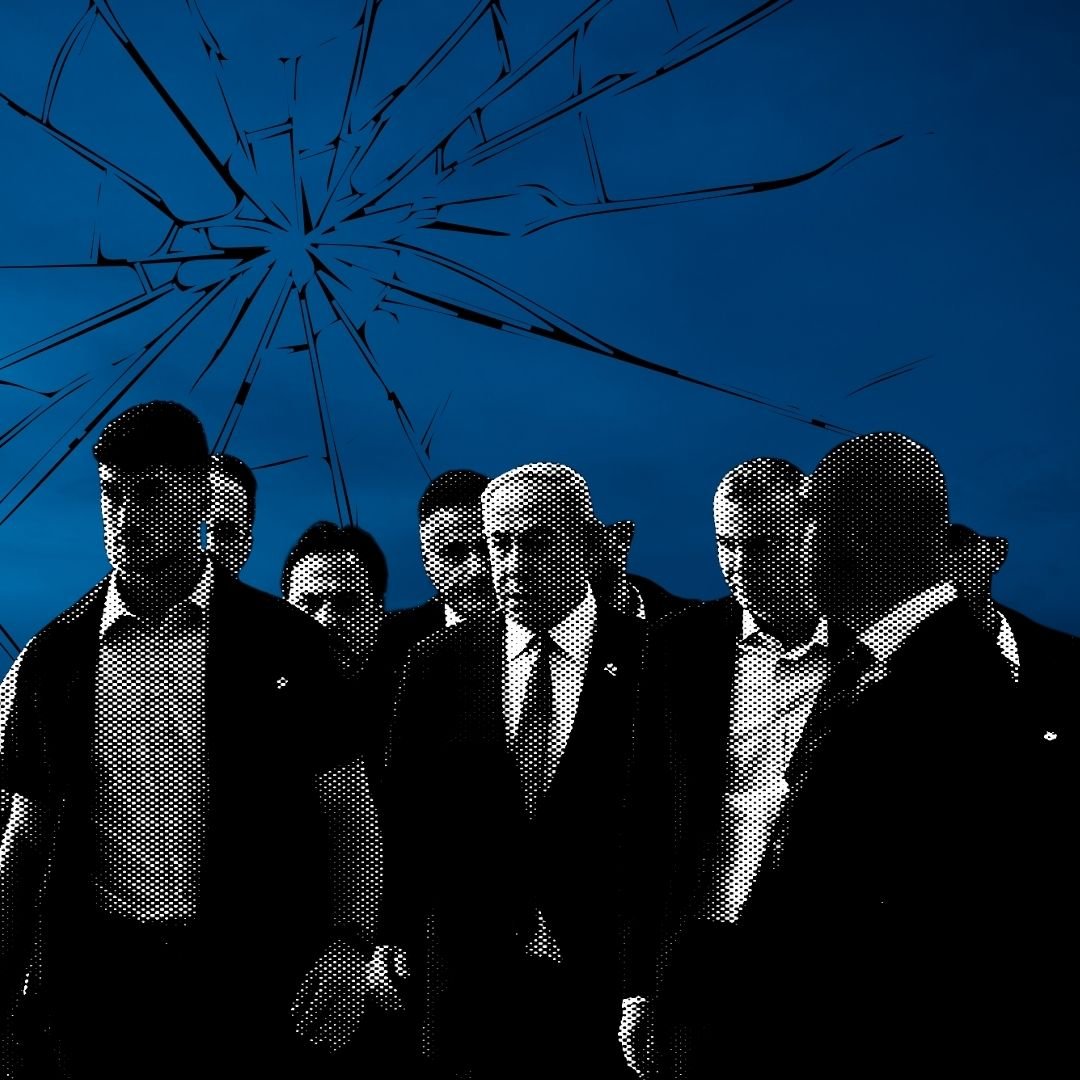
Graphic by Kayla Giset.
On October 7, 2023, the people of Israel were left at a crossroads. Benjamin Netanyahu, Israeli prime minister and leader of the Likud party, was once revered as a charismatic, bully pulpit-esque authority figure, even being coined “Mr. Security” by foreign diplomats. However, after the tragedy that occurred on the Gaza strip left 1,200 Israelis dead in the hands of Hamas, the right-winged politician’s military decisions have been scrutinized by Israeli citizens and international media alike. How could a terrorist group that had been flying under the radar infiltrate one of the world’s most advanced intelligence networks within hours– and more imminently, why did Netanyahu let it happen? As the polls continue to fluctuate, so do the priorities of the Israeli people. Now, the question arises as to whether or not they should restore their trust in the prime minister for the sake of ending, or at least putting a patch on, the war; and recent polls speak for themselves.
Political analyst Dahlia Scheindlin found that Netanyahu’s recent rebound in the polls is likely due to his regional military offensive efforts. After initiating a limited ground operation in Lebanon, killing several leaders of the Hezbollah, Netanyahu was found to be the favorite candidate for prime minister over his centrist opposition leader, Yair Lapid, with a staggering 38% favoring him over a mere 27%. Coalitions amongst parties within the circuit have also strengthened the Likud party’s legitimacy toward the next election.
Despite this boost in support amongst voters, hostility toward the current prime minister still stands, as he failed to compromise a truce with Hamas that would release the hostages trapped in the Gaza border. Additionally, many Israelis believe that Netanyahu’s promises of “total victory and peace” are geared toward his political success rather than public interest. This extends even further on the international stage with Netanyahu’s confrontational approach to resolution raising ethical concerns amongst members of the U.N.
The future is uncertain for Netanyahu’s political standing as he continues to develop defense strategies post-Hezbollah attacks. In terms of the upcoming referendum, however, his objective is clearer than ever. He does not have to win the election in the eyes of the people; the candidacies are so spread out amongst party divisions— the extremists, the Orthodoxes, the left-wing— that he just needs to secure enough support from the moderates to stay in power by default. A nation divided has no choice but to settle in times of desperation and destruction.
Don’t Say “Ukraine”
A quick rundown of words you can’t say on live TV:
Derogatory terms for genitalia
Slurs and hateful language
Anything that might make your grandma clutch her pearls in church
And now, a new addition: Ukraine.
During the hour-and-a-half Vice Presidential debate on October 1, 2024, candidates Governor Tim Walz and Senator JD Vance managed to avoid saying “Ukraine” even once.
This is despite an active conflict still raging between Russia and Ukraine and the looming question of whether the U.S. should keep footing the bill. Somehow, neither the candidates nor the moderators thought to bring up the ongoing invasion.
The topic, so masterfully avoided, left me wondering: Can we even say “Ukraine” out loud anymore?
If we don’t acknowledge issues beyond our border, do they disappear?
The debate kicked off with a question about Israel and Palestine. Governor Walz fielded a question on whether he’d “support or oppose a preemptive strike by Israel on Iran.” He delivered the usual Harris-Walz response: We stand by Israel and, by the way, Trump sucks at foreign policy.
Senator Vance chimed in with a tale about his childhood, some blind praise for Trump, and an ominous pledge to support Israel against “the bad guys.”
Then, after three minutes of vague talk about the Middle East, they drifted to China. But even here, the focus felt censured to discourse about tariffs, mostly. No talk of Taiwan, the South China Sea, or the fact that tensions between our two superpowers are hotter than ever.
At the start of the debate, Vance gave a nod to the viewers, admitting that VP debates usually don’t draw a crowd or change poll numbers. He thanked those tuning in for caring about the country.
So was anything gained for those watching who care about the nation's state?
Without a single mention of Russia, sanctions, Ukraine's dire situation, or the U.S. budget for supporting allies, how are viewers supposed to feel? Those who care enough to tune in to see a guy with perfect eyeliner and an ex-football coach sparring on stage deserve more than radio silence on our involvement in a war.
Or maybe there’s just a new rule for TV:
*Don’t say “Ukraine.”

Israel vs. Hezbollah – A New Crisis on the Horizon
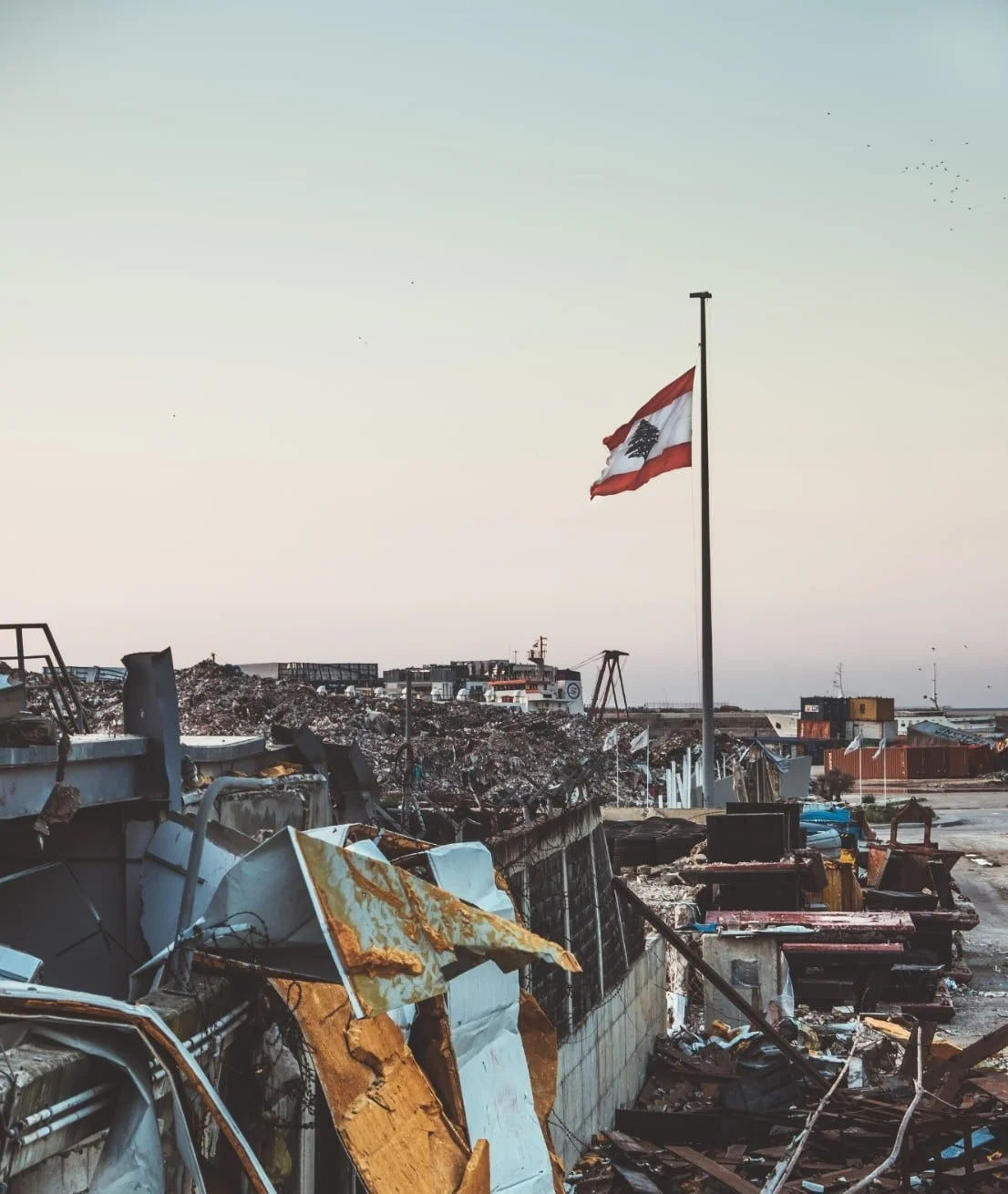
Photo by Joe Kassis
Last week’s targeted attack using walkie-talkies and pagers rigged with explosives by Israel marks a new phase of war as the conflict with Hezbollah intensifies. It seemed as though both sides were previously wary of engaging in anything more than preventive attacks - displays of force that aren’t quite substantial enough to draw a more devastating counterattack that triggers an all out war. But the problem with this logic is that if one side strikes, the other side responds with something just a little more aggressive. The cycle continues until restraint ultimately breaks down, and the conflict escalates – exactly what has just happened. This is bad for a whole number of reasons, but first some context and background: who are the players, when did this start, and what’s at stake?
Hezbollah is an Iranian backed militant group as well as a Shiite Muslim political party in Lebanon. The group originated during the Lebanese Civil War that lasted from 1975 to 1990, releasing their first manifesto swearing violent opposition to Israel and Western influence in 1985. As a proxy of Iran, they have been involved in global terrorism plots and border skirmishes with Israel, as well as rocket attacks and cross-border exchanges. Many civilians in Lebanon also rely on Hezbollah for the provision of social services such as infrastructure, schools, healthcare, and youth programs, essentially operating as a separate government (which the Lebanese authorities nor military seem to be able to deal with). Lebanese civilians in Hezbollah - controlled territories have felt in the past as though the group’s military operations caused them to neglect their duties domestically, and a war with Israel could cause those same tensions to ignite again – not to mention many civilians being left without critical support from the governing body they rely on.
Immediately after the devastating Hamas attack on October 7th of last year, Hezbollah fired missiles at Israel in a show of solidarity with the Palestinian cause. The two sides have been engaged in conflict ever since, but with Israel occupied with the war in Gaza and Hezbollah fearful of retaliation, major escalation had been avoided.
Now, the two sides seem to be on the brink of an all out war (if whatever has already been going on for decades doesn’t count as a war), as Hezbollah has promised revenge for Israel’s Operation Exploding Pager and Israel seems to be preparing for a potential ground assault into Lebanon. Israeli airstrikes followed the initial attack, taking out top Hezbollah leadership, but this doesn’t seem to have deterred Hezbollah from firing off rocket attacks of their own (which have all been intercepted, obviously). A ground assault is only more likely if the air attacks continue. All the while, civilians in both northern Israel and southern Lebanon/Beirut are becoming increasingly more vulnerable as neither side seems willing to deescalate.
Israel now risks fighting on two fronts, which for many reasons does not bode well for Benjamin Netanyahu’s political career. Firstly, it’s just bad strategy. The U.S. has already urged Israel to use diplomacy in Lebanon rather than force, as the general international consensus seems to be that an all out war is not ideal. If the goal for Netanyahu is to return civilians to their homes in northern Israel, heavy machine gun fire and rockets exploding everywhere does not make that very feasible. Secondly, Israeli citizens are already fed up with Netanyahu’s inability to secure the hostages taken by Hamas, and beginning a new phase in a broader regional war is certainly not convincing anyone that a hostage deal is being worked on. Furthermore, Israel might be prepared to unleash the same destruction and disregard for human life on Lebanon that it has on Gaza, but the military opponent is now entirely different. Hezbollah’s capabilities are far more advanced compared to those of Hamas, in terms of fighting experience of personnel, technology, rocket arsenal, and leadership. Israel may be able to intercept airstrikes for now, but Hezbollah’s estimated full arsenal of 150,000 to 200,000 rockets would be much harder to stop. Israel doesn’t face much of a threat with Hamas, but a war with Hezbollah on top of the existing conflict is certainly cause for concern.
If it hadn’t been already, the latest episode of “How Bad Can I Make the Situation” for Netanyahu really calls into question what Israel’s endgame actually is here. If they wanted the hostages back, they would work with the U.S. and Hamas to get a ceasefire deal. If they wanted to return civilians to their homes in northern Israel, they would not escalate the conflict with Hezbollah. The only goal it seems they have any interest in achieving is causing as much damage to surrounding territory as possible. Hezbollah will undoubtedly use the same tactics as Hamas, and Israel will probably oblige them by killing the civilians that they hide behind. Even if they are able to take out Hezbollah leadership, we’ve seen time and again that this has little effect on the enemy’s capabilities and is really just more politically useful. The U.S. needs to recognize the pattern and really start to consider putting some conditions on its unconditional support for Israel (especially because the U.S. recognizes Lebanon as a sovereign country). A peaceful resolution is the only way to prevent further suffering, but it will require the cooperation and perhaps compromise of all the involved parties. The current outlook for this happening, however, seems to be grim.
Asylum Roulette: How Bureaucracy and Bias Shape Refugee Futures
In the aftermath of World War II, policy surrounding refugees and displaced people was high on the international agenda. During the 1951 Convention Relating to the Status of Refugees, 144 countries ratified a universal definition, specifying a refugee as a person who “owing to well-founded fear of being persecuted for reasons of race, religion, nationality, membership of a particular social group or political opinion, is outside the country of [their] nationality and is unable or, owing to such fear, is unwilling to avail [themself] of the protection of that country." The definition has been amended only by the 1967 Protocol, which removed the geographical and time limits set by the 1951 Convention. Even so, this definition is strict. Designed under the auspices of the Cold War, the terms place emphasis on persecution based on political and social affiliation, rather than general suffering. When you picture a refugee, scratch the images of those fleeing natural disasters or abject poverty. Neither situation in isolation warrants asylum.
Although the United States was a party to the Refugee Convention and Protocol, the internationally agreed-upon definition was not officially codified into US law until the passage of Carter’s Refugee Act of 1980. Despite the relatively neutral (albeit narrow) conditions for asylum, the United States has wielded it as a weapon of foreign policy. Interpretations of who qualifies as a refugee and who doesn’t tend to correlate to who is fleeing from US enemies, US allies, or the turmoil the US helped cause. The US overwhelmingly offered asylum to migrants fleeing communist and post communist-blocs (i.e, Cuba), while denying these same privileges to migrants trying to escape countries with US-backed dictators (think Guatemala).
Obtaining asylum status is a Byzantine administrative process. In short, asylum seekers must fill out an I-589 form, write an affidavit recounting their past persecutions or fear thereof, complete a biometrics and medical exam, then undergo the daunting interview with an Asylum Officer. The Asylum Officer then determines if the migrant has demonstrated a “well-founded fear” of persecution (per the strict definition), thus meriting official refugee status. If the officer believes asylum is not justified, they defer the asylum seeker to immigration court. Referral to immigration court is essentially a euphemism for deportation. Immigration courts are extremely backlogged and tend to be adversarial, with a high likelihood of denial.
It's not an asylum officer's job to determine if conditions in a country are dangerous. It's their job to determine if the asylum seeker is a direct target of the danger. Officers are also actively screening for asylum fraud, the act of knowingly misrepresenting information to obtain asylum status. This is done through rigorous questioning, asking applicants to recount the traumas they faced or the threats they received in graphic detail. Although there are no charges at stake, asylum interviews can often feel like a criminal trial, with the officer asking leading questions to prove your credibility. In the documentary “Well-Founded Fear", an exposé on the decision making processes of officers in the New York Asylum Office, an officer denied asylum to someone claiming persecution on the grounds of being Anglican, because she was unable to name the sacraments of the Anglican church.
The burden of granting someone refuge in the US vs potentially sending them back in harm's way is not a decision that Asylum officers take lightly. It's a Herculean task, having to play detective, judge, and administrative assistant all at once. Officers also must balance their empathy with duty. This high pressure and inextricably human system makes some degree of subjectivity and bias, intentional or not, virtually unavoidable. However, “just another day in the office” for an asylum officer can mean life or death for an asylum seeker.
A study by the University of Maine School of Law’s Refugee and Human Rights Clinic dove into some of these biases. The study focused on the Boston Asylum office, an office with notoriously low asylum grant-rates of around 15.5%. One finding concluded that an officer’s novelty impacted their willingness to grant asylum, with jaded officers experiencing high levels of burnout and even compassion fatigue. Greener employees were more likely to approve claims. During an interview for the documentary “Well-Founded Fear”, one officer admits to becoming desensitized and cynical, claiming “you learn to stop taking crap from people.”
Language differences are one of the most significant barriers to asylum approvals. In the Boston Asylum office case study, non-English speakers were referred to immigration courts 80% of the time, while English speakers were referred only 58% of the time. In a situation where accuracy and clarity are paramount, non-native or non-English speakers are at a clear disadvantage. Even with translators, details and key verbiage can be lost. Other biases may arise. As seen in "Well-Founded Fear”, one officer from the New York Asylum officer admitting that he's more likely to grant asylum to someone with a PhD, than someone who's “probably cooking in a kitchen somewhere.”
Getting asylum is tricky. Granting asylum is tricky. However, with livelihoods on the line, approval for asylum shouldn’t come down to which asylum officer you are assigned, or even if your asylum officer had their morning cup of coffee. With systems like this, we must not resign ourselves to the status quo and take their existence as finalized. It is critical to recognize its flaws and push for improvement.

Mahraganat and the Egyptian Public’s Struggle for Artistic Freedom

Photo by Yan Krukau.
Since the 2011 Arab Spring, Egypt has undergone profound cultural and political shifts. Emblematic of these changes is the political struggle surrounding the rise of mahraganat; a raw, energetic, and unapologetic blend of hip-hop and techno that emerged from the working-class neighborhoods of Cairo. This genre is driven by Egypt’s youth, who mix their music using pirated software, secondhand equipment, and free music samples, spreading it through the streets via self-taught DJs. Mahraganat captures the spirit of post-revolution Egypt, reflecting not only its people's frustration but also its disenfranchised youth's aspirations and realities.
Much like the role of graffiti art during the 2011 protests against Former President Hosni Mubarak’s dictatorship, mahraganat serves as an outlet for expressing frustration and bringing people together. The genre began as "festival" music, the word directly translating to festivals, with artists holding large performances in lower-class neighborhoods that welcomed everyone. This power to unite communities and its growing popularity in voicing public grievances have made mahraganat a target of government repression, as it challenges societal norms and the state’s grip on artistic expression.
The Egyptian government has imposed a strict regulatory system on mahraganat musicians, requiring them to obtain official performance permits. In 2015, new laws granted authorities the power to deny permits and ban entire music genres, including mahraganat. By 2018, additional legislation made it extremely difficult for musicians to hold concerts or festivals, as the culture minister was given the authority to cancel events at will. In 2020, the government further tightened restrictions by banning mahraganat artists from performing in public venues like clubs, universities, and concerts without these permits. This effectively limited their ability to reach larger audiences and restricted them from performing at weddings, which are a vital source of income.
Since President Abdel Fattah el-Sisi's rise in 2014, Egypt’s media landscape has become increasingly monopolized by the government, with state-controlled outlets regulating artistic narratives. This media control, combined with heavy-handed restrictions on artistic content, has led to an environment where cultural production is closely tied to state propaganda. The repression of mahraganat is rooted in the Egyptian regime’s broader attempt to regulate the culture and artistic production of Egypt. The Egyptian Musicians' Syndicate, led by famous pop artist Hany Shaker, has become the face of this cultural clampdown. Despite not being a direct arm of the state, the syndicate operates under state laws, using government supervision to decide which artists can perform and what music is deemed acceptable. According to Tarek Mortada, the syndicate's spokesman, through their crackdowns on mahraganat they are confronting “the face of depravity and regression.”
One stark example of violent repression is the case of mahraganat artist Essam Sasa. His 2018 song “Balaha,” which mocked President Sisi by calling him a “shiny, brown date,” drew from Sayed Darwish's iconic anti-colonial song "Ya Balah Zaghloul," a century-old piece ridiculing political despots. After the release of “Balaha,” seven men involved in its production were arrested on terror-related charges. Shady Habash, the video editor, tragically died in prison that year after his health mysteriously deteriorated in solitary confinement. Even Darwish’s classic "Ya Balah Zaghloul" was banned that same year, despite its vast historical and cultural significance in Egyptian culture, further illustrating how far the regime is willing to go to suppress dissent and artistic expression.
One artist who has successfully navigated these restrictions is Mohamed Ramadan. Despite his music being categorized as mahraganat and addressing socially transgressive themes like sex and drugs, Ramadan continues to perform due to his connections with wealth and his alignment with the government, which includes a willingness to deliver government-approved propaganda. In a 2019 track, he raps, “What do you know about the salt of our earth? What do you know about the safety provided by the police and the army?” This line appears to be a direct jab at exiled musicians, such as the "Balaha" rock artist Essam. Ramadan’s ability to perform is bolstered by his relationships with influential figures like billionaire Naguib Sawiris. His situation reveals the class dynamics in the government’s crackdown on music: while wealthy artists like Ramadan can afford the privilege of performing and exploiting the genre for more profit, working-class mahraganat musicians face increasing repression and violence.
Despite this repression, mahraganat continues to thrive due to digital platforms like YouTube. These platforms, outside the direct control of the state, allow artists to bypass traditional gatekeepers and reach millions of listeners. The rise of mahraganat is tied to the growth of digital media, which provides a space for artists to challenge the state’s narrative and engage with issues affecting everyday Egyptians, from poverty to political disillusionment.
Mahraganat’s popularity shows that the state cannot fully control cultural expression. Despite the bans and restrictions, the genre continues to resonate with Egyptians, particularly the youth, who can form community and share expression through this music. As Egyptian journalist Yasmine el-Rashidi notes, “What is interesting, important, and powerful about mahraganat is that it gives voice to a generation that the government has tried to silence.”
The repression of mahraganat music is emblematic of the broader struggle for artistic freedom in Egypt. While the regime seeks to control cultural production through censorship and propaganda, the rise of digital platforms has allowed mahraganat to thrive, offering a glimpse of hope for artistic expression in a climate of repression. This genre, with its roots in Egypt’s working-class neighborhoods, continues to challenge the status quo, providing a voice to those marginalized by the political establishment.
Macron’s Choice for Prime Minister, a Victory for the French Right?
It is no secret that French President Emmanuel Macron took a gamble in calling an election earlier this year. With the French far-right ascendant in European Union elections, Macron’s gamble paid off—revealing that the far-right had not as much popularity domestically. Despite this, his gamble still backfired, with the far-left coalition beating out Macron’s center. Recently, bucking the left majority in the government, Macron appointed a center-right Prime Minister by the name of Michel Barnier. Barnier represents an attempt by Macron to prevent a left government, with the new PM himself being a member of the center right-wing Les Républicains and a staunch right-winger himself. The PM has an outspoken opposition to non-European immigration and possesses a similar economic policy to that of centrist Macron.
In the French left, there is no love lost for Barnier, with leftist leader Jean-Luc Melenchon describing the new government as, “a government of the general election losers”. To the left, the appointment seemingly shuns their electoral victory, ignoring the fact that they received the largest share of votes—instead viewing the move to appoint Barnier as a means by Macron to keep the left out of power.
While the French far-right has criticized Barnier and his government, arguing that it has no future, it has become a veritable deciding factor in the future of Macron and Barnier’s government. As a result of the lack of an absolute majority by any political blocs post-election, and the left’s opposition to Barnier, the far-right will have the deciding power in the formation of a government. Because of the current unwillingness of the left to form a coalition with Barnier, the center may be forced to court the far-right, potentially forcing Macron’s center into bed with the right.
Ultimately, while it is too soon to tell what the effect of Macron’s appointment of Barnier will entail, there is no doubt that Macron’s refusal to hand the left the victory of their own Prime Minister will force him to work more and more with the right, providing the losers of the snap election with outsized power—and sidelining the electorally victorious left.
Anti-Tourism Protests in Spain Continue
Recently, the Spanish city of Malaga made headlines for promoting basic standards for tourists to follow when visiting and participating in local activities. These standards outlined simple expectations such as that they should be dressed appropriately in public places, refrain from littering, keep noise volumes at a considerable level, and be mindful of locals. Though these expectations are nowhere near difficult to uphold, they have been increasingly violated in recent months, causing widespread backlash from Malaga locals who are desperate to preserve their beautiful city and its unique culture. The Malaga Tenants’ Union, a civil society organization that was created with the intention of fighting back against harmful tourist activities, has been particularly motivated recently to reset the standard quality in their city. Over the summer thousands of Malaga locals took to the streets in protest, carrying banners and shouting in unison against tourism and the harm that it causes. Kike España, himself a Malaga local and member of the Malaga Tenants Union, spoke with the BBC on the issue: “The situation is so saturated that Málaga has really reached a turning point at which people feel that the city is collapsing,” he says. He also remarked that tourism makes the city feel like a “theme park.”
This is part of a larger trend that has existed in Spain this year; in the northern city of Barcelona, which receives approximately 32 million visitors each year, locals took to more direct measures to protest the tourism industry. Certain locals went viral for shooting at visitors with water pistols and yelling at them to leave, while posters with anti-tourism messages could be seen throughout the city outside of windows and atop apartment buildings, according to AP news. Spanish locals continuously point to several problems that have been caused by tourism, perhaps most often the housing crisis that it has caused. Throughout different Spanish cities, owners of apartments are increasingly charging more as the demand for short-term rentals for tourists has gone up, causing housing to become outrageously expensive for local citizens. Unions have formed throughout the country fighting for more affordable housing, such as the one that has gained momentum recently in Malaga.
Other problems in Spain caused by tourism have been overcrowded streets, with locals citing that they have become “unbearable for residents,” and the discontinuation of small businesses, which have been overrun by larger franchises favored by visitors. The events that have occurred across the country are truly devastating; Spaniards should of course have the fundamental right of feeling safe, comfortable, and protected within their own country, but the wishes of tourists have continuously been prioritized over theirs by the Spanish government. This is absolutely unacceptable. Though this tourism industry is excellent for Spain’s economy, and though most Spaniards want others to enjoy their beautiful country, the current situation with tourists is out of control, which is why it must be addressed. It is unclear when, or if, issues over tourism will be resolved soon, but it is clear that social organizations are more than willing to continue the fight, so that the needs of locals can be the utmost priority once again.
Disappearing Women (and Frightened Men)
The women of Afghanistan are being systematically erased from the public sphere in the country. Women cannot show their faces, raise their voices, or recite the Quran outside of their homes. In the name of religious adherence, the Taliban has imposed these increasingly draconian restrictions on the very presence of women.
Women and girls have long been prohibited from schooling above 6th grade and from attending university and the regime has been limiting the rights of women to participate in society for years. Now, however, the Taliban is coming ever closer to eliminating female presence in society entirely.
Men, though, are now too facing the consequences of supporting this authoritarianism and they are realizing that they are not the benefactors of this system either. As women are banned from riding alone in taxis, the revenue that these drivers' livelihood depends on plummets. Men whose beards are deemed too short have been barred from entering work. Some government officials have even had their salaries withheld over facial hair. Those who supported the Taliban early on with the thought that only the lives of women would change, are coming to grips with the fact that they were wrong.
Many who willingly follow oppressive regimes believe that their support will save them. The logic often goes, “if I put down others, I will be lifted up.” This is not the case. Unless you are at the very highest point of the social structure, your loyalty only gains you safety for as long as it is productive to that top group. Authoritarianism, ironically, doesn’t discriminate. It infects every aspect of everyone’s life underneath it at one point or another, and your compliance does not guarantee your future status in something so turbulent and seeping. Especially if you are in any way a member of a marginalized group, your willingness to sell out a different one is the same as the regime’s willingness to sell out you. Men who supported the Taliban have learned this the hard way. In the end, you are only guaranteed dignity if we are all guaranteed dignity. Dissent and resistance for the well-being of all people will keep you safe, not selfishness.
Thailand Legalizes Same-Sex Marriage
A historic moment from Southeast Asia’s most LGBTQ+ Country
Thailand, the home country of the famous Moo-Deng, the pygmy hippo turned internet sensation, celebrated a historic moment last week by becoming the first Southeast Asian country to legalize same-sex marriage. The bill had already been passed by the Thai Senate in June. However, since Thailand is a constitutional monarchy, the bill needed to get royal endorsement before becoming a law. Earlier this week, King Maha Vajiralongkorn gave his approval. The bill is expected to go into effect in 120 days or early January 2025. This bill will allow for same-sex couples to be legally married, granting them full legal, medical, and financial rights just like any other married couple. It also amends the country’s Civil and Commercial code to replace gender-specific terms such as “woman” and "man” with more inclusive terms such as “individual.”
This bill makes Thailand the first country in Southeast Asia and the third country in Asia to legalize same-sex marriage. Taiwan became the first Asian country to legalize same-sex marriage in 2019 and Nepal followed suit in 2023. Last year, India was close to legalizing same-sex marriage until its Supreme Court declined to do so and left the decision up to a government committee, a devastating blow to queer activists. Conservative religious and societal beliefs continue to shape policies of many Asian countries. Therefore most do not legally recognize same-sex marriage. Despite the ongoing efforts by activists, there remains little hope for same-sex marriage recognition in other parts of the region anytime soon. This makes Thailand’s historic bill all the more significant.
Thailand, however, has long been known for its image of LGBTQ+ acceptance and tolerance. With so many of its neighboring countries being conservative and unwelcoming, Thailand stood out as an LGBTQ “haven.” This is especially evident in tourism campaigns. This can be seen by the “Go Thai, Be Free” campaign pushed by the Tourism Authority of Thailand. When you click on the website, you are immediately greeted with colorful images showing same-sex couples on vacation in Thailand. The website stresses how the country proudly accepts all people regardless of orientation. In a world where many queer people continue to face homophobia, there is a strong appeal to travel to a country where you are welcomed. This appeal has proven to be very powerful and has drawn in millions of LGBTQ+ tourists each year, especially those from countries such as China, where they were often ostracized.
Additionally, Thai dramas known as “BL Dramas” or Boy Love Dramas, have gained immense popularity globally. These dramas are love stories revolving around male same-sex couples and have become extremely popular following the Covid-19 pandemic. In response to their success, the Thai government has invested more money into producing these dramas and their continued promotion abroad. All of these aspects feed into the image Thailand has created of being very LGBTQ friendly. So why has it taken so long for same-sex marriage to be legalized?
Well, the reality does not always match what is portrayed in the media and advertisements. While Thailand is very welcoming to LGBTQ+ tourists—who bring in large amounts of money for the tourism industry—the local Thai LGBTQ+ population still faces backlash and homophobia, especially in daily lives. The sentiment is often described as “tolerance but not inclusion.” The population is still made up of a largely conservative Buddhist and Muslim population, which has impacted governmental policies. However, these perceptions are slowly changing over the years. The current ruling party made equal marriage a large priority in their policies and the bill passed through the Senate with little backlash.
So this new law is a major victory for LGBTQ+ activists who have spent years lobbying for it. Equal marriage rights to same-sex couples is moving Thailand towards more acceptance and tolerance. A direction that one day, other neighboring countries will one day follow.
China's Growing Investment in Africa
Over the past two decades, China’s presence in Africa has grown significantly, driven by extensive investments in infrastructure, natural resources, and technology. While these ventures have solidified China as a pivotal economic partner for many African countries, simultaneously, this rapid flow of Chinese capital has led to concerns about whether this influx was the catalyst for economic growth or a potential “debt trap” that could jeopardize Africa’s long-term stability and sovereignty.
The Belt and Road Initiative (BRI), which is often referred to as the New Silk Road, aims to connect Asia, Africa, and Europe through financing key infrastructure projects like railways, ports, and highways. Projects like the Mombasa-Nairobi Standard Gauge Railway in Kenya and the Addis Ababa-Djibouti Railway have notably enhanced connectivity and trade, emphasizing China’s commitment to Africa’s economic development.
Beyond its focus on infrastructure, China has made significant investments in Africa’s natural resource sectors. Countries like Angola, Nigeria, and the Democratic Republic of Congo have witnessed a surge in Chinese activity in their oil and mining industries. These ventures have been crucial in harnessing Africa’s resource wealth, which is vital for China’s industrial development. This concentration on extractive industries has sparked concerns on whether Africa is reaping substantial benefits from these collaborations. According to a blog post by the London School of Economics, while it may be widely perceived that China’s ambitions in Africa are primarily focused on resource extraction in a similar manner to neo-colonialism, this perspective may fail to account for the nuanced reasons driving Chinese investments.
Supporters of Chinese investment argue that it is transforming Africa’s development landscape, bridging critical infrastructure gaps, and driving economic growth across the continent. Africa’s scarcity of critical essential facilities has stifled its progress, limiting economic development and growth. However, Chinese-financed projects have begun bridging these gaps by building modern transportation networks, enhancing energy infrastructure, and expanding digital connectivity, creating a strong foundation for sustainable growth. President Xi Jinping’s commitment to generating “at least” one million jobs in Africa reinforces China’s intent to be a reliable partner for development in the Global South. Promoting job creation and economic integration has played a crucial role in swaying the support of many African leaders who see these investments as a pathway to poverty reduction and development. Through addressing these challenges, China has positioned itself as a preferred partner for countries seeking to improve living conditions and modernize economics for their population.
Nevertheless, caution surrounds these investments due to the mounting debt burdens. African countries have accumulated substantial debt to Chinese banks, often under non-transparent conditions. For instance, Zambia’s recent deal to restructure $1.5 billion of debt with two Chinese state-owned lenders. This agreement, while crucial for Zambia’s finances, highlights the risk of losing control over critical assets. The dependence on Chinese loans can undermine economic independence and sovereignty, potentially forcing countries to make political or economic concessions. These scenarios also reduce a nation’s ability to negotiate favorable terms with other international partners, trapping them in a cycle of dependency that can stifle long-term development and limit policy flexibility.
China’s non-interference policy, which differs from the West’s conditional aid tied to governance reforms, is appealing to many African leaders. However, this strategy can undermine initiatives aimed at improving governance and human rights across this continent. For instance, when loans and investments bypass local accountability structures, they can embolden corrupt leadership and erode democratic institutions.
The United States has raised concerns about China’s increasing influence in Africa, seeing it as a potential threat to American interests. U.S. officials criticize China’s investment approach for its lack of transparency and for fostering dependencies through debt. As reported by Voice of America, while the U.S. has scaled down its military presence in regions like Niger, China has expanded its military cooperation across the continent, including a recent pledge to spend $140 million to train 6,000 African military personnel. This action, viewed by U.S. defense officials as advantageous for China’s own economic growth and strategic goals, highlights the escalating rivalry between the two superpowers in Africa.
In response to China’s expanding influence, the U.S. introduced initiatives such as Prosper Africa and the Build Act to enhance American investment and fortify economic connections with African countries. Prosper Africa, which involves 17 U.S. government agencies, seeks to boost two-way trade and improve business environments across the continent. Despite initiatives like the USAID Africa Trade and Investment Program and support for the African Continental Free Trade Area (AfCFTA), critics contend that these efforts are reactive and inadequate compared to China’s extensive investments. The U.S. needs to present a more compelling alternative that genuinely supports Africa’s sustainable development and economic resilience.
China’s financial engagements in Africa offer both prospects and dangers. While these investments have undoubtedly advanced development in significant areas, the long-term impact on African sovereignty and economic independence remains ambiguous. As China and the United States continue to vie for influence on the continent, African nations find themselves at a pivotal juncture. They must navigate these relationships carefully to ensure that the partnerships they forge today do not compromise their future growth and autonomy.
Change for the Better: Sri Lanka’s New Beacon of Hope
Prior to the election of the next president, Sri Lanka was experiencing an unparalleled economic crisis, the worst since its independence in 1948. The crisis was triggered by a toxic combination of high foreign debt, corruption, and economic mismanagement, resulting in significant shortages of critical supplies such as food, fuel, and medication. Inflation then skyrocketed, foreign reserves plummeted, and everyday living became difficult for ordinary Sri Lankans. Long lines developed at gas stations and power outages became increasingly frequent, which negatively impacted public services. The suffering people experienced resulted in widespread protests in the country that united Sri Lankans from all class and religious backgrounds together against the government. The turning point was in July 2022 when protestors invaded the presidential palace due to the administration’s incompetence with governing the country. Former President Gotabaya Rajapaksa, whose family had dominated Sri Lankan politics for decades, was compelled to quit and flee as a result. He was the one who had brought about the economic crisis in the nation.
Amid this backdrop of economic hardship and political upheaval, Sri Lankans voted in a presidential election on September 23, 2024. Anura Kumara Dissanayake, a Marxist-leaning politician and leader of the National People’s Power (NPP) coalition, was chosen to be the president. His win constituted a significant departure from the traditional political dynasties that had long dominated the country, particularly the Rajapaksa and Wickremesinghe families. Dissanayake’s campaign capitalized on popular dissatisfaction with the ruling class, vowing to confront corruption, undertake genuine economic changes, and rebuild trust in public institutions.
The rise of Dissanayake offers hope for a potential ideological shift in Sri Lankan politics. In contrast to the neoliberal mindset of previous leaders, Dissanayake’s Marxist worldview emphasizes social fairness, public welfare, and wealth redistribution. These are essentially democracy’s traits that the new president hopes to achieve during his time. One of Dissanayake's first challenges will be managing the IMF deal signed by the previous president, which requires enforcing stringent austerity measures in exchange for financial assistance. While the IMF-backed austerity program helped stabilize the economy in the short term, it also deepened the suffering of ordinary Sri Lankans, making Dissanayake’s task of balancing austerity with economic recovery particularly delicate.
Moreover, Dissanayake must navigate complex international relations to secure continued support from key players like India, China, and the IMF, whose financial aid remains critical to Sri Lanka’s recovery. By balancing these relationships, Sri Lanka can better pave its path toward economic stability. At the same time, he faces the task of rebuilding public trust in the government, addressing deep-rooted corruption, and creating long-term economic stability.
Mexican President Claudia Sheinbaum and the Issue of Reestablishing U.S.-Mexico Relations
In October, the reins of the Mexican government will be passed to Claudia Sheinbaum Pardo following a landslide election. She will inherit the seat from President, and notable judiciary reformist, Andrés Manuel López Obrador. Notably, President Obrador’s reforms and pausing of ties with the U.S. Embassy failed to appease the unstable relations with the United States. Still, many believed Sheinbaum, the first female leader of Mexico, would be the best individual to lead the nation into the future, as she was practically handpicked to be Obrador’s successor. Sheinbaum also brings personal experience in the United States, as she received her Master's and Doctorate degrees in California in the '90s, living there for years.
If success for Mexico is Sheinmaum’s intent, it is in her best interest to solidify a stronger, lasting bilateral connection with the United States–quite the challenge. So what steps should Claudia Sheinbaum take to create such a relationship with the United States?
Here are a handful of things to focus on if you're Claudia Sheinbaum:
Reinstate U.S. economic investments
Increasing diplomacy and calming negative discourse surrounding the border
Cracking down on immigration, drugs, and crime across Mexico
In 2023, Mexico became the United States’ number-one global trading partner, and millions of jobs and hundreds of billions of dollars depend on the neighbors’ bilateral relationship. According to Americas Quarterly, Donald Trump and Kamala Harris are both likely to promote local investment and a more protectionist approach, so Sheinbaum must work tirelessly to create a sounder trade environment. Stabilizing Mexican markets and alleviating foreign investor concerns, along with developing international trust concerning threats to USMCA (trilateral trade agreement between the U.S., Mexico, and Canada) are in the President’s best interest. Mexico simply cannot afford another hit to its reputation.
During his Presidency, The Heritage Foundation states, Joe Biden successfully pleaded with Mexican officials to crack down on migrant caravans as they reach the border, but this showed no serious results. Claudia Sheinbaum will likely seek to follow in the footsteps of her predecessor and continue using this limited cooperation regarding migration as leverage to distract the U.S. from Mexico’s recent democratic backsliding and regional [left-wing, dictatorship] sympathies. A game of trade-offs. This posture is unlikely to succeed, though, following the November elections, as both candidates are expected to apply more pressure on border issues–Trump more so than Harris. With this, Sheinbaum must treat lightly in the next few years of her presidency, properly balancing a populist-based conservative approach to migration, along with reopening cooperative dialogue with the U.S. The problem will rest on domestic pressures in Mexico, as former president Obrador’s ability to keep the rising right-wing voices quiet is not expected to be reflected in the new President. Sheinbaum will need to earn the respect of those who hope to find independence from U.S. influence and uphold bilateral relations with their Northern neighbor.
Sheinbaum would also be served well to aggressively [within means] attack crime and drug movement throughout the country. Although this would help relations with the United States, it would also benefit those who reside in Mexico, giving them a reason to feel safe at home. During her campaign run, The Dispatch reported that false videos circulated, implying Sheinbaum allowed migrants to claim inhabited houses across the nation. One could imagine how the right-wing populists of Mexico felt about this. Put simply, Sheinbaum needs to first apply more pressure politically and garner a better immigration operation at home— increased vetting and security measures, for example. This would ensure the legitimacy of the heavy flow of migrants coming in and could limit the draw of those coming to Mexico for reasons of concern. Sheinbaum would also grow relations with the U.S. if she were to cooperate more than her predecessor in investigating cartels, increasing international trust. Start at home, then collaborate with the U.S.
As Vice President Kamala Harris made a trip to the U.S.-Mexico border in Arizona to appeal to American voters early Friday, Sept 27, and former President Trump continued his exuberant rallies across the United States, bolstering threats of 200% tariffs over John Deere production in Mexico last week, the complex relationship with our Southern neighbor remains a contentious conversation to be had. It is clear, despite the leadership and political division across the United States and Mexico, that the pursuits Sheinbaum hopes to accomplish will require some form of cooperation with the States. It will be intriguing to see how this bilateral situation evolves in the coming months.
Edmundo González's Forced Exile and the Future of Venezuela's Opposition
On September 7th, 2024, a secret plane departed Venezuela bound for Spain, carrying opposition leader and recent presidential candidate Edmundo González into exile. His departure came just days after a Venezuelan judge issued an arrest warrant for González on September 2nd, following the disputed July 28 presidential election. The warrant included serious charges such as usurpation of public office, falsification of documents, and incitement to disobedience.
González, a relatively unknown diplomat, had become the face of the Venezuelan opposition after María Corina Machado, the prominent opposition figure often referred to as the "Iron Woman," was barred from running. Machado's disqualification was widely seen as a move by the Maduro regime to neutralize a formidable challenger.
Allegations of widespread fraud tainted the July 2024 election. Many countries called for the release of detailed voting records, with tally sheets collected by opposition volunteers suggesting that González had won by a margin of more than 2-to-1. However, the Maduro-controlled National Electoral Council refused to disclose any results, citing an alleged cyberattack. In the aftermath of the election, Venezuela witnessed a brutal crackdown on the opposition, with reports of over 2,400 arrests and 27 fatalities. This wave of repression forced many opposition figures, including Machado, into hiding.
González's exile represents a significant blow to the Venezuelan opposition movement, depriving it of a key leadership figure who was widely recognized as the legitimate winner of the election. As the candidate who reportedly secured nearly 70% of the votes in the contested election, his departure creates a leadership vacuum and potentially demoralizes supporters. This setback raises questions about the opposition's ability to challenge Maduro's rule effectively, especially with other prominent leaders like Machado facing severe restrictions on their activities.
The exile of Edmundo González shines a harsh light on the failures of the international community to protect democracy in countries like Venezuela. Despite widespread condemnation of the fraudulent election and calls for transparency, global efforts have done little to bring meaningful change or safeguard the rights of Venezuelans. González’s exile leaves the opposition in an awkward and demoralizing position, creating a leadership vacuum just when the movement needs direction the most. With domestic efforts to incite a peaceful transition of power now put on pause, if not scrapped entirely, this situation exposes the weaknesses in international systems designed to prevent democratic backsliding and the rise of authoritarian regimes. Meanwhile, it’s the Venezuelan people, especially the millions in exile, who continue to bear the brunt of these failures, unable to return home or reunite with their families.
Resurgent Threats from Central Command
As wars rage in Ukraine and the Gaza Strip while tensions persist in the South Pacific, it has been the prerogative of US security policy to begin disentanglement from the War on Terror. The Islamic State was largely defeated in 2019, and the withdrawal from Afghanistan was completed in August 2021. This trend is certainly a defensible one, and it is still too early to adopt a position of urgency on its reversal, but attention must remain on a combination of developments that are not likely to subside.
Islamic militants have been advancing across West Africa, causing close to 38,000 deaths in the past seven years, according to the Wall Street Journal. As they occupy villages and regions, they successfully destabilize the country and cultivate the grievances of various groups, weakening the governments that have the support of the US in counterterrorism.
The resulting coups in Mali, Burkina Faso, and Niger merely breed further terrorism. For example, after the military coup in Niger last year, the US was forced to evacuate and is now regrouping in nations along the Gulf of Guinea. The word “regroup” is merely a cover for the reality that the US is losing ground while Islamic militants, specifically Al Qaeda and the Islamic State, advance.
According to the same article, the US was forced to evacuate drones from a $110 million base constructed just five years ago. As the US cannot provide security aid to such military governments, they merely turn to Russia for aid. Russian-provided mercenaries from the Wagner Group then proceed to ravage West African villages and commit atrocities, which allows militant groups to foment discontent and recruit more fighters and resources to their cause. Furthermore, through its support, Russia is able to create an anti-West posture in the region. For instance, due to its being the former colonial power there, France is technically the coalition leader on counterterrorism in West Africa, but following the military coups, it too has been forced to evacuate from Mali, Burkina Faso, and Niger. Even as the US and France consolidate into Benin and the Ivory Coast, it would appear that stemming the spread of Islamic militants in West Africa is a losing battle.
Meanwhile, according to another article in the Wall Street Journal, the US has reached an agreement with Iraq to withdraw troops by the end of 2026. As has been noted, it has been a widely-supported prerogative over the past several years to decrease American commitments in the Middle East. However, similar to the developments in West Africa, the theme that is not emphasized enough is that the reason for American evacuation is because of the influence already possessed by militant groups in Iraq. Pro-Iranian militia groups hold considerable influence within the Iraqi political and security apparatus and have been pressuring for the end of the US-Iraqi coalition.
Therefore, it would appear from this perspective that the US is not in a position to completely disengage from its wars against militant Islam. Yet, to adopt an even broader perspective, it is clear that the West’s influence is being expelled from multiple directions, whether it be Ukraine, Iran’s Axis of Resistance, or China in the South Pacific. As Europe continues to struggle building its military establishment, the notion that the US can “shift attention,” “refocus,” “consolidate elsewhere,” or in the case of West Africa, “regroup,” is a luxury that can no longer be considered an option. The only option is the continued expansion of military influence, expenditure of resources, and increased rather than decreased commitments.
The Broader Political Implications of the Thuringia State Election in Germany
On the first of September in the German state of Thuringia, worrying election results were released. The mainstays of Eastern German state governments—that being the center-right Christian Democratic Union (CDU) and The Left political parties—had suffered a striking defeat. While the far-right Alternative for Germany (AfD) party has been on the rise in eastern German states since its victory in the 2017 national elections, a surprising new contender has seen success. This new party is known as the Sahra Wagenknecht Alliance, or BSW. A wholly new fixture in German politics, the BSW entered the political scene in January 2024. Composed of a socially conservative sect of The Left party, they promote left-wing economic policy with a very conservative anti-immigration and pro-Russia policy.
Regarding the election in Thuringia, the AfD and BSW have been ascendent. The AfD took home the largest vote-share, with 32.8% of the vote, trailed by the CDU at 23.6%, and surprisingly, the BSW at 15.8%. While only a state-level election, it signals a broader trend spreading throughout Germany—but especially the eastern, formerly communist, half of the nation. With much of AfD’s voter base being in the East, the rise of anti-immigrant, socially conservative, and populist rhetoric has a clear advantage in the region. Despite this, the popularity of the Left party there cannot be understated. But with the ascendancy of the BSW in Thuringia, the social-policy tide in German politics is shifting increasingly further to the right.
Because of this shift, we will continue to see socially far-right parties obtain victories in Germany, with the BSW playing a new defining role. As a party that holds both left and right-wing positions, they are liable to play a vital role in the growth of AfD political power. Coalition building has been incredibly difficult for AfD, as the German political mainstream has opted to refuse to form any government with AfD. But, with the increasing growth of the BSW, they may not have the same scruples as the German political establishment. While it is too early to tell the ultimate impact that the recent BSW victory will have, the party will no doubt have an important role to play in the growth of socially far-right politics in an increasingly extreme German political sphere.
The US’s Yellow Light for Ukraine
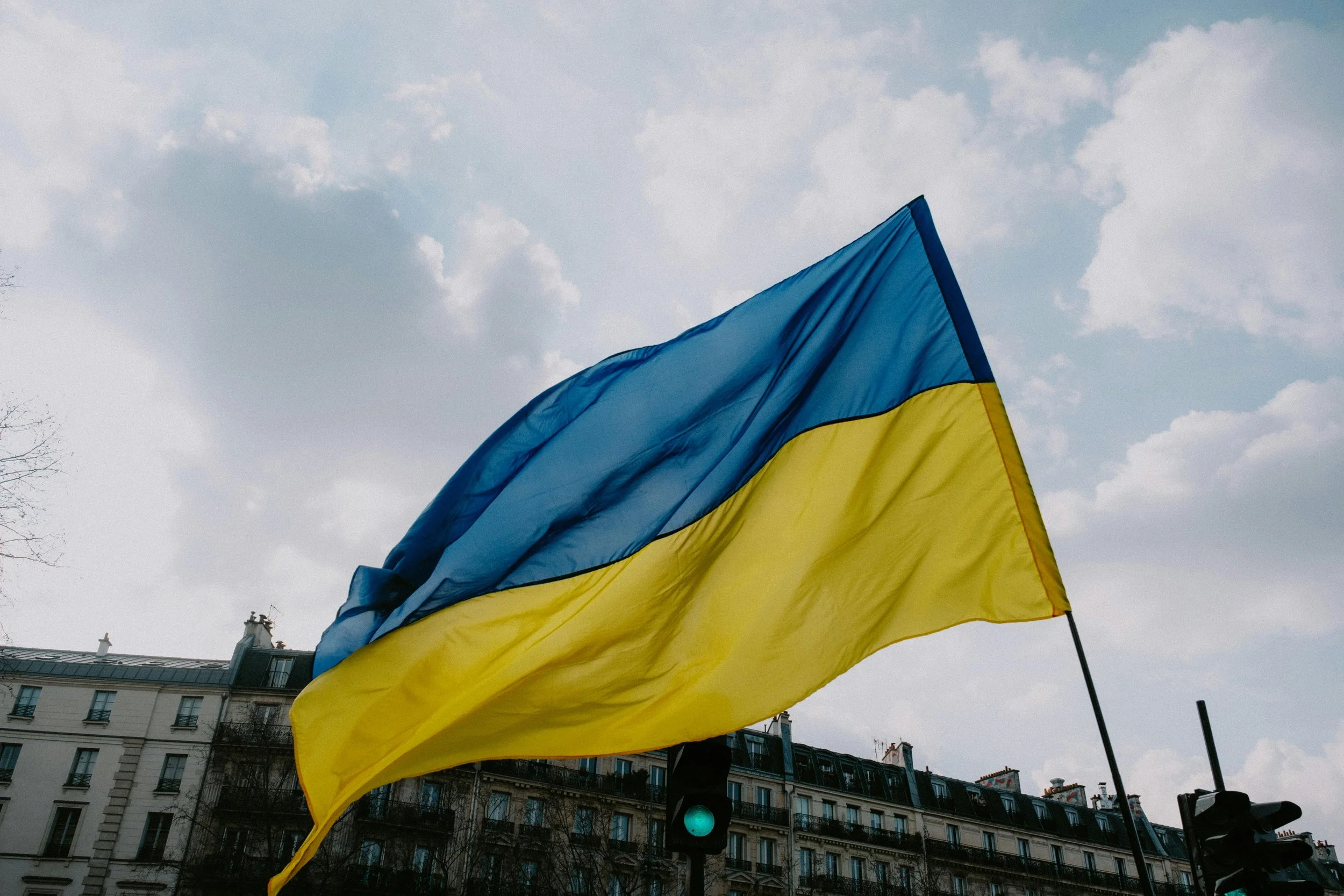
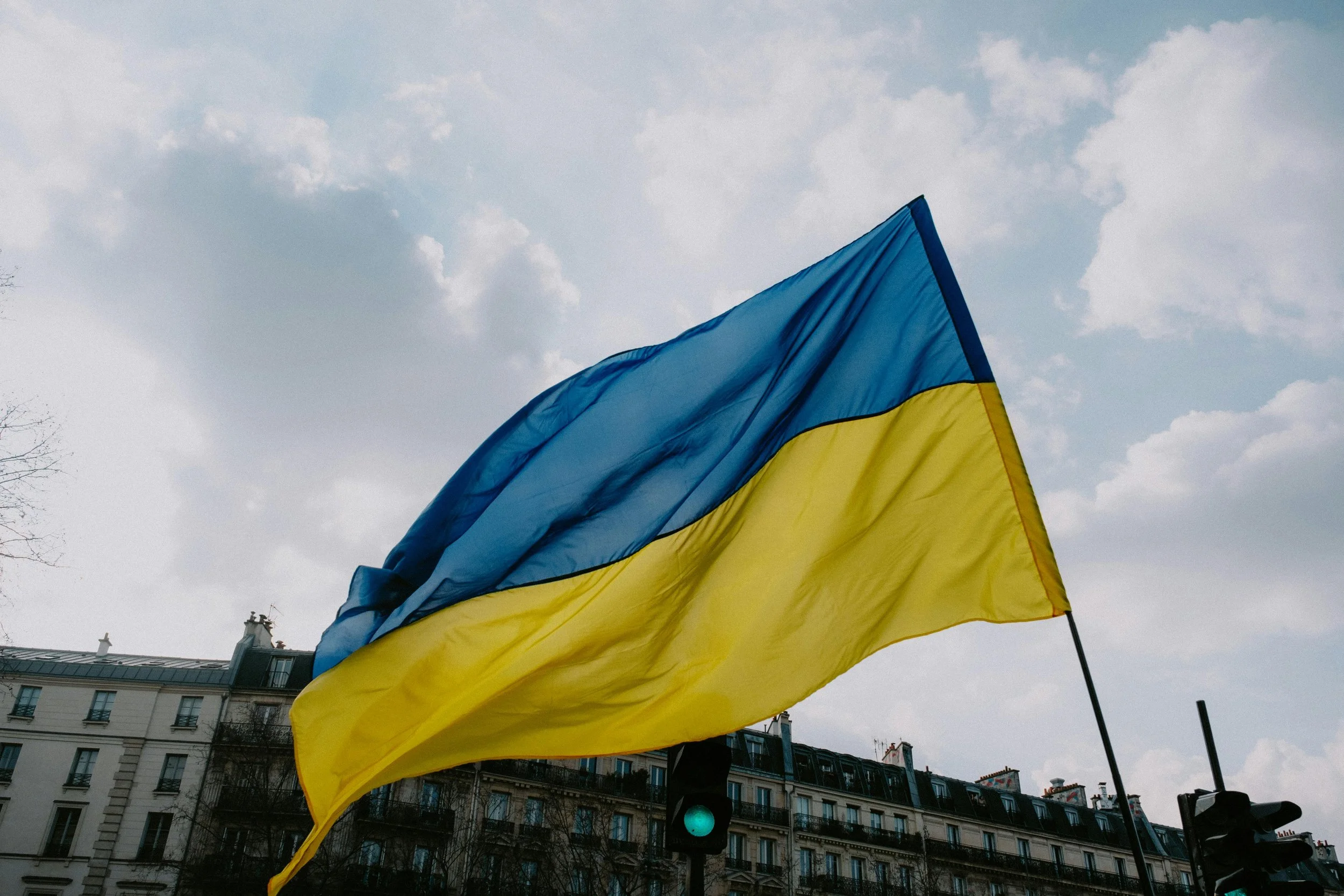
Photo by Mathias Reding.
The Russia-Ukraine war has culminated in two and a half years of defense spending, hundreds of thousands of deaths, destruction of critical infrastructure and homes, and a political debate surrounding the role of the NATO Alliance, Russia, Ukraine, and Iran.
And the war doesn’t seem to be slowing down anytime soon.
On Friday, September 13, UK Prime Minister Keir Starmer and President Joe Biden met to discuss a wide range of topics that included Ukraine, hinting at a potential decision that would permit Ukrainian President Volodymyr Zelensky to fire the long-range missiles provided by NATO countries into Russian territory. It initially appeared the meeting signaled that the two leaders would choose to lift their restrictions on the missiles, but no such decision was made.
The UK and the US disagree on this matter, and it must be a joint decision, as many of the components of the Storm Shadow Missile are manufactured in the US. Storm Shadow missiles are cruise missiles that can reach a target about 155 miles away, with the ability to penetrate Russian bunkers and other infrastructure, such as ammunition holdings. They have been successful in the past in targeting Russia’s Black Sea Naval Headquarters, stopping the Russian naval forces in their tracks.
Zelensky finds the inability of the West to decide on the course of action for the weapons as signaling cowardice, a nod to the US approach of similarly helping Israel. He believes air defense and long-range missiles can bring an end to this war, and that Ukraine’s current capabilities are not enough to turn the tide of the war. He also argues the asymmetric nature of the war, and that not having permission to hit Russian air attack bases leaves Kyiv essentially “fighting a war with one arm tied behind its back.” British officials agree, stating that Ukraine can’t fight effectively, with Starmer pointing out that Western support for Ukraine is critical in “this vital war of freedom.”
The US sees it differently.
The reason for the Western indecision, and Biden’s hesitation, is the legitimate fear of escalation in the war. Putin has issued a warning to the West that if they permit Ukraine to fire long-range missiles into Russian territory, there would be retaliation. Biden, and other high-ranking US officials, take that threat seriously.
With the 2024 election less than two months away, Biden’s decision to delay making a definitive choice is strategic, especially given the criticism surrounding NATO’s spending on Ukraine, which has become a point of contention for the Biden-Harris administration.
Ignoring Putin’s threat could prove dire for NATO and the West, with a potential response from Moscow coming in the form of an attack on weapon supply points in Eastern Europe, such as a Polish airbase. An attack on Poland, a member of NATO, could trigger Article V of the North Atlantic Treaty governing NATO, and thus escalate the war in an unpredictable, unprecedented manner.
The Pentagon also believes that allowing Ukraine to use these long-range weapons will not make a strategic difference on the battlefield. Moscow, anticipating such a decision, has already moved much of its infrastructure further into Russian territory, meaning that it might now be too late for the strikes to destroy anything or change the course of the war. Similarly, with the war in Ukraine being that of a War of Attrition, Russia has a huge population and manufacturing advantage over Ukraine, has built a coalition of support from other leaders, and now possesses the capability to launch Iranian-made drones.
Many US officials see the risk of escalation as outweighing the military benefits, and believe that in authorizing these missiles to be shot, the US risks further depletion of its weapon reserves and takes on the financial burden at a time when the economy is at the forefront of many Americans’ minds. Each missile costs almost $1 million, which is no small price.
A decision could potentially be made at the upcoming UN General Assembly meeting, with a larger range of world leaders available to discuss this dilemma. As for now, however, Biden has made a strategic call to wait and hear the alternatives—and perhaps let Harris make the decision should she win the November election. However, the US’s hesitation—its “yellow light”—in authorizing Ukraine to use these long-range missiles might turn into a firm, unyielding red.
Iran and Russia Solidify Military Alliance, Prompting International Apprehension
An alleged nuclear deal between capitals Tehran and Moscow is in the works as head Russian security agent Sergei Shoigu’s plane touched down in the Middle-Eastern nation earlier this week.
The makings of this deal stem back all the way to 2022 at the height of the Russo-Ukrainian proxy war. Picture this: Russia was in dire need of Shahed drones, an Iranian-originated weapon known for its long-range stealth and accuracy capabilities. Iran, quietly recovering from foreign sanctions, was flying under the radar, cultivating a brand new assortment of Iranian ordnance. Meetings between foreign leaders from their respective regions were held under the radar, destitute of any media coverage or Western attention. Finally, in the blink of an eye, the unthinkable occurred: an unexpected alliance between two power-hungry nations.
Iran has been developing its nuclear stockpile over the past three and a half years, according to U.N. watchdogs from the International Atomic Energy Agency (IAEA). The main catalysts in acquiring such large units of uranium to craft the bombs are gas centrifuges, an Iranian technology that spins the simple molecules of uranium into usable fission power.
The IAEA has called upon the Middle Eastern country to bring its production to a halt following its public condemnation of Russia’s brutalities toward Ukraine, but alas, no compromise has been made. Despite the countries’ bond taking a giant leap forward through the transaction of these weapons, this alliance has extended farther than a client-to-benefactor relationship.
The Iran-Russian alliance has taken a defensive approach both politically and militarily. With no backing from the U.N. nor from the West, the two countries are inevitebly relying on each other for support. This notion brings up the dreaded question of whether or not Putin will ever succumb to increasing pressures from the US. If Washington has any hope of bolstering Ukraine’s defensive standing in the war, it is imperative that significant measures are taken to undermine these off-the-grid deals and weaken their power through strategic economic penalties.
Paging Danger: Exploding Pagers in Lebanon
An anxious and uneasy cloud hangs in Beirut after a series of explosions rocked Lebanon and portions of Syria. The explosions were carried out through the use of pagers and walkie-talkies that were in possession of Hezbollah fighters and militants. The exploding devices have left multiple people dead and thousands injured. Many Hezbollah members in possession of an exploding device were left maimed and blind.
Hezbollah holds significant influence in Lebanon as a political party and militant group and violently opposes Israel and all Western powers operating in the Middle East. Hezbollah essentially functions as a proxy for Iran, their largest benefactor. US policymakers see Hezbollah as a global terrorist threat.
Israel has not publicly stated that they were responsible for these attacks; however, reports from Washington indicate Israel as the perpetrator. Israel is encircled by hostile and potentially hostile nations with superior resources and larger populations. Israel also faces multiple terrorist organizations within their defined borders, primarily Hamas in the Gaza Strip. Israel also has to contend with Iran-backed Hezbollah in the North.
Israeli military-strategic culture sees the acquisition of weapons more sophisticated than those of the enemy as the key counterbalance to the state's insecurity and the numerical superiority of Israel’s adversaries. Thus, Israel’s investment in state-of-the-art technology has become paramount to its strategy of victory. Israel is the only country in the region with both the motive and technological ability to carry out such a sophisticated attack.
It is important to note that this attack is not an isolated event, but rather a continuation of the Israel-Hamas war that began almost a year ago on October 7th with Hamas’s deadly and vile terrorist attacks in the south of Israel. For nearly a year, Hezbollah has been targeting sites in the north of Israel in support of their ally, Hamas. Notably, one of Hezbollah’s more deadly attacks left twelve children dead in the town of Madjdal Shams in Israeli-controlled Golan Heights. Israel responded to this attack by bombing and assassinating top Hezbollah leader, Fuad Shukr "Sayyid Muhsan, in Beirut.
The attacks in Lebanon were most likely the result of a supply chain interference, presumably in which members of the Israeli Mossad (Israel’s version of the CIA) tampered with the internal components of pagers destined for Hezbollah insurgents. An attack of this scale and precision would've been planned months or years in advance and required the accumulation of vast intelligence. These attacks have sewn fear in Lebanon as Hezbollah wonders to what extent Israel has infiltrated their supply chain.
Israel has, in many ways, used fear and randomness to their advantage. The strategy of terrorist groups like Hamas and Hezbollah has typically been to rely on incidents of random brutality and shock to promote a violent response from Israel that confirms preexisting options and fears about Israel. Strangely, this attack by Israel, while highly sophisticated, mirrors strategies often employed by guerilla fighters. Israel is essentially using the guerilla strategy of shock and randomness against Hezbollah as a way to sew chaos, fear, and disorganization amongst the already disjointed cells of Hezbollah.
Unfortunately, the ongoing war between Israel and Hamas shows no signs of slowing, and more innocent blood will be spilled before the conclusion of this brutal war. Following the pager attacks, Hezbollah has vowed to take revenge and refuses to back down in support of Hamas. This risks a more all-out war between Hezbollah and Israel.
Global Econ-Insights #1: Germany on the Brink
We have always known the nation of Germany for its sausages, its soccer team, and the wonderful celebration of Oktoberfest, but what about something more substantial? While Germany has played an essential role in several social areas over time, perhaps the most relevant right now is its economy.
Germany used to be the China of current times. Whereas now, the vast majority of products across the globe are manufactured in China, the previous home base for such activity was Germany. Why so? Germany’s transportation sector in particular has always been a thriving one. Cars and railroads are a staple of the German economy and a testament to the nation’s strong prosperity. They have served as Germany’s key assets in several international transactions and given it a significant leg up when facilitating trade agreements.
However, recent economic missteps are gradually beginning to toss this previously colorful nation into a state of great economic turmoil. There are a few primary factors contributing towards this disruption the most. First, Russia’s recent invasion of Ukraine has precluded Germany from accessing cheap Russian gasoline. We see right now that the United States suffers from severe gas price inflation, but in Germany, even obtaining the gas and bringing it within national boundaries is a lofty task. Second, simply within the last year, Germany has suffered from a substantial loss of political hegemony, especially due to its post-covid response to social issues. As a result, with far less political influence over other nations, countries like the United States and China have begun to significantly outcompete Germany to the extent that the so-called ‘secret sauce’ of German production is slowly evaporating. The United States and China have used their covid-ridden economic crises as fuel for adding to their developmental fires, while Germany has been given no such recent incentive to continue to advance itself. Even promising foreign investments, such as Intel’s agreement to inject 30 billion dollars into the German economy and create 30,000 new jobs, have never left the realm of hypothetical rumination. Finally, the German population is much more rapidly aging than average, lowering worker productivity significantly and contributing to rising unemployment rates. Because there are way more people emigrating from Germany than immigrating to it, the size of the workforce has been even further reduced, hindering economic growth.
Despite all the recent stagnation, I do wholeheartedly believe that Germany has a way out. While it may have shot itself in the foot a little, there is most definitely a light waiting for the nation at the end of the tunnel. In my opinion, because the most bustling sector of the German economy historically has been transportation, it only makes sense for those seeking to boost German economic development to focus their solutions on that area first. The most recent foreign development which indicates some sort of promise for German rejuvenation is the German Minister Habeck’s vocal desire to, ‘get the [German] market going again.’ Minister Habeck has started to become vocal about the idea of financial aid to German carmakers, a move that certainly would inject new life and purpose into the German economy. Specifically, the Minister has expressed a desire to assist the company of famous car brand Volkswagen with cutting costs without an unnecessary closure. For a sense of scale, Intel had previously entertained the prospect of generating 30,000 new jobs in the German economy. By comparison, Minister Habeck plans to keep Volkswagen, a firm that employs over 300,000, financially afloat. While on the part of the Minister, a politician driven by his own motives, this may only be a clever chess move made to advance an independent agenda, one cannot deny the supposed mass economic benefits of such aid to German carmakers, especially Volkswagen. With the automobile sector up and much better running than before, Germany could return to its form as one of the world’s largest economic hegemonic powers.