
The Journal of Foreign Affairs at Carolina
Get the latest from our undergraduates at
The Column at JFAC

ICC Arrest Warrants for Netanyahu and Gallant: Is Accountability on the Horizon?

Photo of the International Criminal Court Building in The Hague, Netherlands by Jan van der Wolf
On Thursday, November 21, 2024, the International Criminal Court (ICC) issued a historic ruling calling for the arrest of Israeli Prime Minister Benjamin Netanyahu, former Defense Minister Yoav Gallant, and Hamas military commander Mohammed Deif. The arrest warrants for Netanyahu and Gallant are particularly significant since they are the first time the ICC has targeted senior officials from a Western-aligned nation.
The Israeli leaders are accused of "crimes against humanity and war crimes," in Gaza. These crimes include withholding vital resources needed for survival such as, “food, water, medicine and medical supplies, as well as fuel and electricity,” alongside blocking humanitarian aid, and knowingly directing attacks against civilians—all clear violations of international law. The charges span from October 8, 2023, to May 20, 2024, and have emerged amidst a cascade of scathing reports on Israel’s conduct in Gaza from several credible organizations committed to maintaining international peace.
This historic move comes at a time when a United Nations committee stated that Israel’s conduct in Gaza has been consistent with genocide, largely due to its purposeful starvation of Palestinian civilians. In tandem with this ruling, a recent report from the London-based human rights organization Amnesty International found Israel guilty of genocide, with their Secretary General Agnès Callamard stating “Our damning findings must serve as a wake-up call to the international community: this is genocide. It must stop now.”
The most recent death toll indicates the Israeli military has killed around 45, 515 Palestinians in Gaza since October 2023— the majority of these victims being women and children, with hundreds of thousands more suffering from displacement, illness, and injury. While these crimes against humanity appear to have no end in sight, the ICC’s arrest warrants mark an important shift in the international community's tolerance for these actions and growing changes in public opinion regarding Gaza.
The ICC, established in 2002 under the Rome Statute, is tasked with prosecuting individuals for the gravest offenses: genocide, war crimes, crimes against humanity, and acts of aggression. While 124 nations are party to the Rome Statute, key states like Israel, the U.S., China, and Russia have refused to join, significantly hindering the ICC's enforcement capabilities.
Furthermore, the ICC has faced strong opposition and outright hostility from the United States. In 2020, the Trump administration imposed severe sanctions on ICC officials, including then-Chief Prosecutor Fatou Bensouda, in retaliation for investigating U.S. war crimes in Afghanistan. These sanctions froze assets and banned family entry for ICC officials, infringing on their abilities and unabashedly undermining the court's purpose.
While President Biden lifted these sanctions in 2021, the U.S. continues to dismiss the ICC’s jurisdiction, with the Biden administration’s stance on the latest ruling against Israeli officials being dubbed as “outrageous.” The U.S. has further reinforced its support for Israel, despite extensive evidence documenting the Israeli leadership's blatant disregard for human life in its conduct in Gaza. Biden has also shown no signs of slowing support for Israel, both in message and through military aid, as he stated "There is no equivalence—none—between Israel and Hamas. We will always stand with Israel against threats to its security."
Additionally, Republican lawmakers like Senator Lindsey Graham went further, calling the court a "dangerous joke" and threatening sanctions against any ally cooperating with the ICC.
In a powerful opening address on Monday, December 2nd — ICC President Judge Tomoko Akane responded to these threats of sanctions from the U.S., stating, “The court is being threatened with draconian economic sanctions from institutions of another permanent member of the Security Council as if it was a terrorist organization."
Despite the U.S. attempts at undermining the court, the implications of the ICC warrants remain significant. If any of the accused set foot in a member state, that nation is obligated to arrest and surrender them to the court. Some member states, including Canada, Italy, Ireland, and the Netherlands, have pledged to comply with ICC rulings. While others, like France, have said it would "respect its obligations" but are still taking into consideration Netanyahu's immunity possibilities. This stance aligns with the hesitation expressed by other European countries, such as Germany, in upholding these arrest warrants.
While the ICC’s actions against Netanyahu and Gallant indicate a growing willingness to hold Western-allied figures accountable, they also expose deep flaws in the global justice system. Words from an op-ed by journalist and author Ramzy Baroud have stuck with me in light of this ruling, as he noted that the ICC’s decision reflects “a desperate Western attempt at salvaging whatever little credibility it had maintained up to that moment.”
Further, Al Jazeera columnist Belén Fernández critiqued the structural impunity granted to Israel, stating, “At the end of the day, the state of Israel as a whole bears criminal responsibility for usurping Palestinian land and engaging in 76.5 years (and counting) of ethnic cleansing, displacement, and massacres.”
As the conflict in Gaza continues, the ICC’s arrest warrants mark a historic step toward accountability, but justice for Palestinians remains uncertain. With the U.S. continuously backing Israel despite mounting evidence of atrocities, the international legal system’s ability to hold powerful nations and their allies accountable is further called into question. This moment serves as a litmus test for the global community’s commitment to justice and whether our institutions, both nationally and internationally, truly uphold the foundational laws that they espouse.
China’s New Port in Peru Shakes Up South America and Sends a Warning to the U.S
On November 14th, Chinese President Xi Jinping inaugurated the new Chancay port in Peru.
Worth 1.3 billion US dollars, the investment project is part of China’s infamous Belt and Road Initiative (BRI). Often called the new Silk Road, the BRI claims to increase infrastructure interconnectedness across all continents through land and maritime projects.
Located centrally on the coast of Peru, Chancay was chosen for China’s BRI initiative in 2019 during an agreement between a Chinese shipping port company COSCO, and Volcan Compañia Minera S.A.A, a public mining company.
The Chancay port, owned majorly by China, is one of China’s largest initiatives in South America and is projected to become the new hub for South American and Chinese trade.
In the last decade, China has begun to focus on critical mineral extraction opportunities in South America. The 15-berth port will allow China to export critical minerals, like Peruvian copper for electric vehicles, faster while avoiding U.S. and Mexican ports that typically have increased.
American national security officials are worried because of China's increasing economic power in South America. Before China took large initiatives to increase its presence in South America, the United States held the strongest relationship with the continent. As the United States threatens tariffs, and rhetoric around action against illegal immigrants increases, the relationship between the two countries is far more distant.
Outside of stronger trade and economic connections between South America and China through the Chancay port, China will also be positioned to have a strategic military position at the port if it needs to or chooses to do so.
The port's geographical location has also caused warning bells to go off for American national security officials. Since China’s greater shareholder investment influences leadership and decision-making, the possibility of the Chancay port serving as a navy base and hub for intelligence services is a real threat to the United States. Furthermore, if war started between the US and China, the Chancay port could send and receive military cargo while holding submarines and warships.
The Chancay port is a big win for China and its interaction with South America. With increased Chinese interaction, positive perception and reliance on the United States decreases. As China strengthens its ties with South America through projects like the Chancay port, the U.S. risks losing its longstanding influence in the region, prompting a shift in the balance of power.
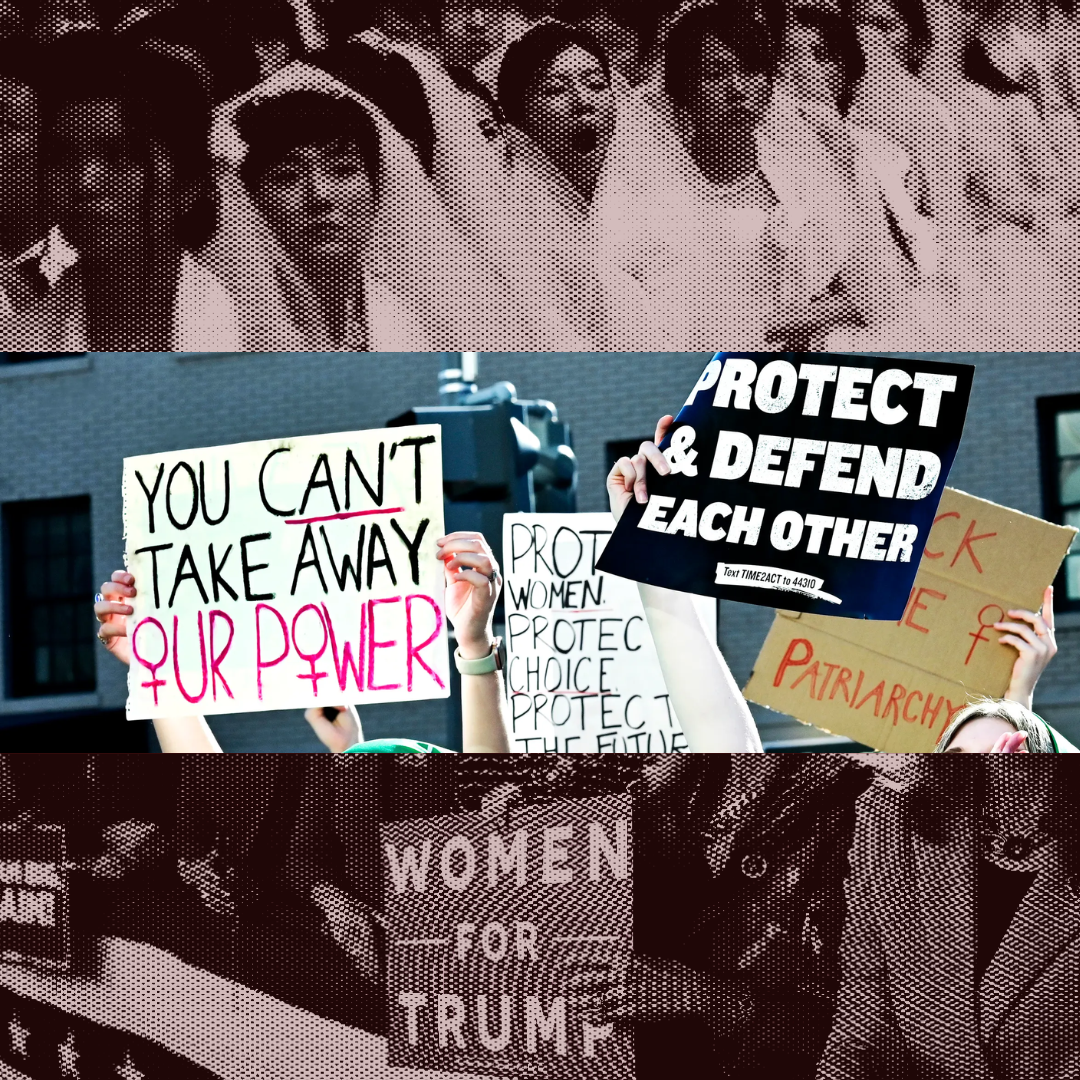
“Your Body, My Choice”
Finding Refuge in the 4B Movement
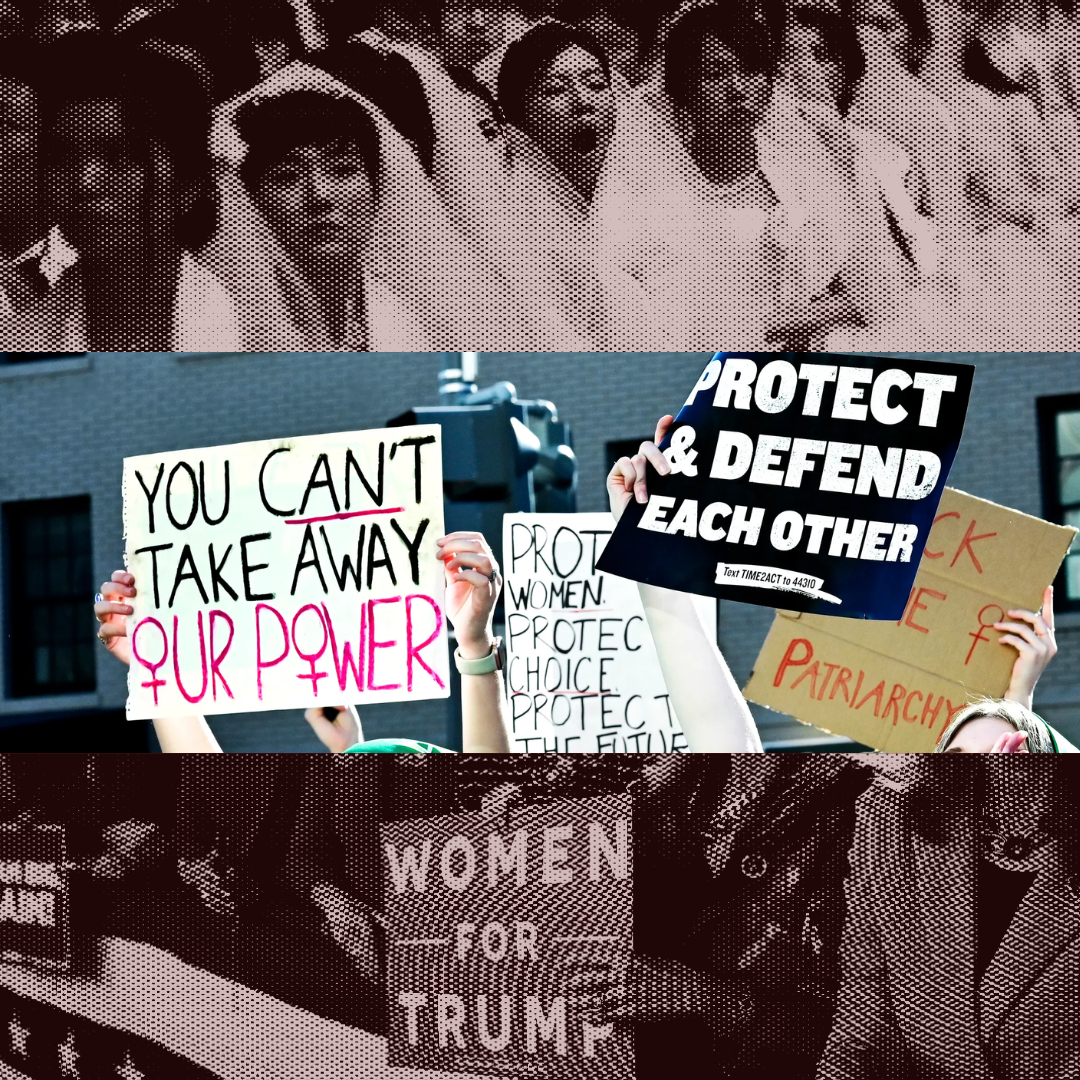
Graphic by Salma Mourad.
In the wake of Donald Trump’s sweeping 2024 re-election, many American women have voiced feelings of fear and betrayal — especially regarding the fight over reproductive rights and gender equality. Numerous political commentators have partly attributed this victory to the growing influence of right-wing “manosphere” content and its popularity amongst young men— the new up-and-coming face of conservatism in the US. This growing sphere has even emboldened white-nationalist figures like Nick Fuentes who created the now-famous X-post “Your body; my choice” which is spreading like wildfire. The post has been viewed over 90 million times and reposted over 35,000 times. On Facebook, the phrase “your body, my choice” was trending a couple of days after the election, with 52,000 posts within 48 hours of the results. One parent stated: “Today my daughter was told three separate times on campus ‘your body, MY choice.’ The third group of boys told her to ‘sleep with one eye open tonight.’” Calls for women to "get back to the kitchen" and to "repeal the 19th" also peaked shortly after the election before dropping.
55 percent of male voters supported Trump whose tenure has been marred by allegations of sexual misconduct, inflammatory rhetoric, and the appointment of Supreme Court justices pivotal in overturning Roe v. Wade. The loss of federally protected abortion rights has left many women in precarious, even life-threatening, situations. Tragically, deaths have already resulted from restrictive abortion policies which have heightened anxieties about the future under a conservative-controlled government— the surge in emergency contraception and abortion pill sales reflects the desperation many feel in the wake of the election results.
In response to feeling trapped by these powers at bay for the next four years, conversations about methods of feminist resistance have intensified online. One point of growing interest is the 4B Movement, a radical feminist initiative originating in South Korea. Its name derives from four Korean words: “no sex” (bisekseu), “no dating” (biyeonae), “no marriage” (bihon), and “no childbirth” (bichulsan). These principles represent a rejection of patriarchal structures and expectations, arising in response to persistent gender-based violence. The movement gained particular momentum after the 2016 murder of a 23-year-old woman in Seoul’s Gangnam district by a man who claimed he acted out of resentment toward women who “ignored” him throughout his life. This tragedy became a catalyst for feminist activism, galvanizing broader resistance to patriarchal norms.
The 4B Movement also aligns with other feminist initiatives in South Korea, such as the “escape the corset” campaign, which challenges the nation’s deeply harmful beauty standards. It also addresses South Korea’s stark gender disparities: the nation has the widest gender pay gap among developed nations, with women earning 31 percent less than men as of 2022. Beyond economic inequality, South Korean women frequently face digital sex crimes, including voyeuristic “molka” spy-camera recordings and the proliferation of AI-generated deepfake pornography.
It is important to acknowledge that while the 4B Movement has resonated with women all over the world it has sparked controversy for being transphobic. Critics argue that the movement perpetuates bio-essentialist views and risks excluding trans and nonbinary individuals, through perpetuating a gender binary. Furthermore, many members have been accused of creating a hostile environment for trans women, echoing criticisms of Western radical feminist movements which are also widely known as TERFs.
In the United States, interest in the 4B Movement has surged following Trump’s re-election. Platforms like TikTok feature over 100,000 videos about the movement, and Google searches for the term have spiked. One viral X post with 17.8 million views says “It’s time to close off your wombs to males. This election proves now more than ever that they hate us & hate us proudly. do not reward them.”
Other similar viral posts have urged women to abstain from sex as a form of protest, echoing similar calls during Trump’s first term. This growing resonance reflects broader discontent with systemic gender inequities and a desire for radical change. However, as with previous calls for “sex strikes,” the effectiveness of such actions without clear goals remains contested. While Aristophanes’ Lysistrata dramatized women withholding intimacy to end war, successful modern iterations—such as Leymah Gbowee’s Nobel Prize-winning efforts during Liberia’s civil war—emphasize the necessity of collective, actionable demands.
Critics of American women’s interest in conducting a “sex strike” often trivialize these actions as performative or hysterical. Conservative and liberal commentators alike have dismissed women’s anger, ignoring the systemic injustices that fuel these movements. Headlines ridiculing the discussions sparked after the election—such as “liberal women swear off marriage”—only serve to obscure the legitimate concerns driving them. Many commentators are also quick to note that young women represent a growing conservative demographic and point out the 53 percent of white women who voted for Trump. However, framing the issue solely through this lens oversimplifies the conversation and neglects the disproportionate impact of restrictive policies on marginalized women, including women of color and trans women.
While movements like 4B and calls for sex strikes have captured public attention, they highlight the need for broader, more comprehensive strategies to address gender inequality. Psychologist Peggy Drexler has critiqued sex strikes, arguing they risk reinforcing the notion that women’s sexual agency exists solely in relation to men. Historical examples, such as Lysistrata, suggest that withholding sex is just one aspect of collective resistance. As classicist Helen Morales notes, meaningful change often involves multifaceted action—seizing economic resources, withdrawing unpaid labor, and challenging structural inequalities. However, while these movements may not represent the most organized efforts to demand women’s rights, they highlight the deep frustration many women feel about the election results and the direction the nation seems to be heading.
Movements like 4B reflect a rational response to pervasive injustices. Rather than dismissing feminist anger as irrational or performative, we must interrogate the systemic conditions that drive it. Feminist resistance, whether through radical movements or symbolic protests, demands serious consideration as a response to entrenched inequities. Acknowledging and addressing these concerns is essential to fostering meaningful and lasting change.
The Romanian Presidential Election
On November 24th, Romania held the first round of its presidential election. Voters are set to return to the polls to vote in parliamentary elections on December 1st and for the second round of presidential elections in the coming weeks. The series of elections will reveal if Romania joins the growing trend of Europe’s shift to the right and Russia’s growing influence in Eastern European election results, and so far, that appears to be the case.
Calin Georgescu, a far-right populist, surprisingly garnered the most votes in the first round and will advance to the second round of the presidential election, despite polls predicting he would not win more than 10% of the vote. Contrary to expectations, Georgescu came out ahead with almost 23% of the vote, followed by Elena Lasconi of the Save Romania Union party with nearly 20% of the vote. Current Prime Minister Marcel Ciolacu of the Social Democratic Party was eliminated in the first round of voting. This unexpected result means that for the first time in Romania’s post-communist history, the Social Democratic Party does not have a candidate advancing to the second round.
Georgescu’s preliminary success is even more unusual because he did not have the support of a political party behind him in this election and mainly ran his campaign on TikTok. Many have credited his popularity to his promise to “restore Romania’s dignity” and his opposition to international organizations like NATO and the European Union. Economic conditions have also contributed to his victory. The country is facing a growing cost of living, the largest share of people at risk of poverty, the highest inflation rate, and the largest budget deficit in the EU.
Fears of external interference have called into question Georgescu’s surprise win. The Romanian Constitutional Court has ordered a recount of the election. External actors are alleged to have played an important role in the results of this election. The Supreme Defence Council has stated it has found evidence of interference by Russia.
Allegations of Russian interference are not a new phenomenon in European elections. Russian goals have been to expand its influence into Eastern Europe and weaken the power of the EU and NATO, especially as they incorporate more Eastern European countries. Recent elections in Moldova show this trend. Despite pro-Western President Sandu’s victory in the early November 2024 election, Russia reportedly funded pro-Russian factions and spread disinformation within the country in an effort to influence the results of the election in its favor. The vote on enshrining Moldova’s desire for EU membership in its constitution barely passed, a closer result than expected suggesting outside influence.
Russia’s growing influence in European elections, especially Romania’s election, is consequential to its relationship with Ukraine. Not only does Romania share a border with Ukraine, but it also hosts a strategic NATO military base. Georgescu has expressed his concerns with Romania’s ongoing relationship with NATO, calling it the “world’s weakest alliance,” and ending aid to Ukraine, despite Romania serving as a historical ally to Ukraine.
Upcoming parliamentary elections are set to see wins by the far-right and Romania’s shift toward the right has not occurred in isolation, especially in Europe. In September 2024, the far-right Freedom Party took power in the Austrian Parliament for the first time in its history and the far-right Alternative for Germany party gained significant regional election wins in Germany. The European Parliament election results that occurred earlier in June 2024 did not present as large a shift to the right as initially expected, but two far-right alliances have become the third and fourth largest groups in Parliament and the traditionally centrist parties have moved further right.
As Romanian voters return to the polls in the coming weeks, they will likely determine whether Romania follows the trend of other European countries to the right. The election may also impact Romania’s relationship with NATO and its longstanding ally Ukraine.
China's Growing Influence in Latin America: Challenging U.S. Power
For more than a century, the United States has exercised significant power in Latin America, influencing the region's political and economic landscape. However, with the recent opening of a Chinese port in Peru, the recent contract that allowed a Chinese-owned company to build the subway in Colombia’s capital, and the growing trend of nearshoring of Chinese companies in Mexico, the historical dominance of the United States in Latin America is increasingly being challenged by China's strategic investments. As Latin American countries welcome this new alliance, it is important to consider whether turning away from U.S. dependence will only result in reliance on another superpower– China.
On November 14th, President Xi Jinping attended the inauguration of the Chancay port on the coast of Peru. Once operational, the port has the potential to create a direct connection to Asian markets by allowing products from Chile, Ecuador, Colombia, and Brazil to bypass entirely North American trade channels. This project not only highlights China's desire to acquire more of Latin America’s raw materials, such as Brazilian soybeans and Chilean copper, but also represents a potential military component. As some U.S. analysts warn, the port could serve as a gateway for Chinese naval vessels, posing “the most dangerous regional threat to U.S. national security since the Cuban Missile Crisis”.
In Mexico, the nearshoring trend—that is the relocation of US and Asian firms from China to northern Mexico to bypass US tariffs on Chinese exports —illustrates another dimension of China’s growing influence in Latin America. Facing U.S. tariffs and the prospect of a trade war, Chinese firms have turned to northern Mexico to continue their operations. In the state of Nuevo León alone, Chinese companies accounted for 30% of foreign investment in 2021, second only to the U.S. Although this influx of foreign capital certainly helps Mexico's economy, it risks undermining U.S.-Mexico relations as Mexico could find itself caught in the crossfire of a potential trade war between the U.S. and China.
Further south, in Colombia’s capital, the Bogotá metro project represents yet another significant Chinese investment. The Chinese state-owned companies, China Harbour Engineering Company and Xi’an Rail Transit Group, were awarded the contract to build and operate the system, a significant achievement in one of Latin America’s largest economies. The system's construction and operation by Chinese state-owned enterprises represent a symbolic shift for Colombia, a longtime ally of the United States, toward closer ties with Asia.
Taken together, these developments suggest a potential change in the world order, with China positioning itself as a viable alternative to U.S. influence in Latin America. For many, China has managed to fill the void left by the U.S. government's failure to address the region’s issues under previous administrations that prioritized immigration and drug control over broader regional engagement. Yet, this change in direction makes one wonder if trading one dependency for another truly represents progress for Latin America.
he idea of independence from the United States is compelling, especially in a region where anti-American sentiment has historically persisted. However, as Chinese investment grows, so too do concerns about a new form of neocolonialism—one where infrastructure and resources serve China’s strategic geopolitical interests rather than fostering genuine autonomy for Latin America. This certainly raises a critical question for Latin American leaders, but it also poses a significant threat to Washington as it directly challenges the historic U.S. hegemony over the Western Hemisphere.
Global Econ-Insights #3: A Recessive Russia
Russia—what used to represent a thriving hub of financial activity and technological advancement during the Soviet Union’s reign in the Cold War—is now simply a mark of economic backsliding. Right now is not an era in which the country is just casually putting the world’s first-ever satellite and human into space or being one of the first nations to develop the atomic and hydrogen bombs. Rather, currently, all the Russian people are really getting to experience is an age of economic recession that is very reminiscent of the United States’ own period of the Great Depression during the 1920s. There are a few key reasons as to why Russia faces its current devastating economic recession.
Firstly, Russia’s Central Bank has just recently raised its interest rate to 21% as a monetary policy mechanism to fight inflation. This inflation, in conjunction with the pressure of economic sanctions being placed in Russia and record amounts of funding being diverted towards the defense sector are placing a new type of strain on the Russian economy that was never an issue for the country before. Because so much money that should be spent on investing in the population’s welfare and lifting ordinary citizens out of poverty is instead being poured into more arbitrary monetary policy instruments, the nation suffers from a significant misallocation of funds and therefore an entire economic recession.
Second, Russia’s invasion of Ukraine is another alternative money-sucking venture by the Russian government that takes funds away from investing in the lives of the nation’s actual people. Russia is so focused on asserting its own dominance over Ukraine that it resultantly fails to account for the wellbeing of its own native population. However, Russia is in this uncanny position where not only is continuing the conflict bad for its economic position, but ending it is too. It’s a lose-lose situation for the country. All of Russia’s military spending on the invasion of Ukraine has provided so many new riches to wealthy oligarchs and rejuvenated much of domestic demand, injecting a new type of energy into the Russian economy despite its current recession. Right now, to some it seems that the war is a reason for the recession, while to others it appears that the war is the solution to it. Ending the invasion would mean removing a huge fiscal stimulus, significantly tanking the average disposable income of Russian citizens and damaging the region’s overall economic resilience.
Third, Russia’s National Welfare Fund is being driven into the ground, with export revenues decreasing significantly due to even more economic sanctions being placed on Russia and a huge limiting of resource extraction. The result has been Russia’s unemployment rate plummeting to a ghastly 2.5%, indicating a gargantuan labor shortage in the Russian economy. Even Russian government entity Rosstat has recognized this labor shortage in conjunction with the massive inflation wave and reduced activity in certain economic sectors. The Russian Central Bank wants to reduce inflation to 4% in 2025 but has not outlined any sort of plan for making this goal actually practical or feasibly attainable.
Lastly, Russia isn’t just faced with typical inflation, but rather stagflation—“the simultaneous appearance in an economy of slow growth, high unemployment, and rising prices.” Food has become 25% more expensive in 2024 as compared to 2023, the overall inflation rate is 10% and being driven by a huge wage raise, endless funds are being poured into military industries for financing the invasion in Ukraine, and so the spiral of economic recession and the resulting poverty in the local population continues indefinitely. The central bank’s monetary policy measures in response to this distress are inefficient and insubstantial in nature. The labor shortage—with construction requiring 600,000 people and manufacturing being 250,000 people short of what is needed—is only further exacerbating these already existing economic obstacles within the Russia economy. The military budget will rise by 25% in 2025, becoming a third of all government spending, 40% of the federal budget, and 6.3% of Russian GDP, taking even more money away from the people.
In conclusion, while Russia is suffering from a plethora of violent economic issues, I do believe that it has the tools available for remedying its economy. However, what the Russian Central bank is doing right now by raising the interest rate arbitrarily simply isn’t working. Rather, I believe that the Central Bank’s monetary policy should focus more on the actual allocation of funds in collaboration with sectors of the Russian government. Together, these entities must unite and devise policies which put more money into the hands of the people and cease to keep blindly throwing funds away towards invading Ukraine and keeping the war going via excessive military spending. Doing so will be the key to retaining Russian economic stability and going back to as close to Russia’s previous past era of successful innovation as possible.
The Belt and Road Initiative’s Newest Trojan Horse
On November 14, a new deepwater megaport opened in Chancay, Peru, the largest of its kind on the western coast of South America which is expected to completely transform global trade to the benefit of China, who funded the project. The port, which cost $3.5 billion, is part of China’s Belt and Road Initiative (BRI), an infrastructure project which invests heavily in developing countries around the world.
The development of this project followed a very similar pattern to other Chinese port-construction projects: the investment didn’t come all at once. According to AidData, China has been active in Peru since as early as 2000, with over 140 loan and grant-financed development projects, particularly in the mining sector. Peru has incredibly vast mineral reserves, and this project is a further example of China tightening its grip on the global supply chain for crucial inputs in the production of more advanced technology.
While the Peruvians may view this as a win, due to a predicted uptick in agricultural exports, BRI projects tend to bear hefty costs. The long-term financial relationships established by China with the construction of seaports is a not-so-subtle attempt to gain geopolitical leverage over the countries that participate in BRI: the larger the investment, the larger the debt owed to China. The contracts often contain clauses that restrict restructuring, and China often reserves the right to demand repayment at any given time. This leaves poorer countries at the mercy of China, with their economies becoming increasingly dependent on Chinese investment and imports. It also means they have less of a choice in who to export resources to.
This might all seem unfortunate, but there’s a real possibility of it getting even worse. In pure economic terms, China dominates the global maritime scene. This relative advantage could translate to military power, with the construction of overseas naval bases to support China’s rapidly growing navy. In terms of philosophy, China has historically maintained non-interventionist policies, which is why of all military implementations, the naval base would be the best choice to avoid signaling aggression. Navies are the most diplomatic military instrument, so constructing bases in ally countries justified by the need to protect shipping routes is far less threatening than an army base constructed on land. Promoting the free flow of trade is also a cause that the US values, which could mean less pushback against the new bases. As China already invests heavily in foreign countries to construct seaports such as this one for economic applications, it is a fair assumption that already existing ports could serve as locations for future naval bases.
Chancay is not the first of these suspiciously militarily-capable megaports, and it is unlikely to be the last. While the port may be advertised as for commercial use only, other locations of Chinese deepwater ports have been flagged as potential locations for military application by possessing several characteristics also possessed by Chancay, such as the high amount of Chinese investment, the strategic value of the location, the strength of the relationship with the host country, and the physical characteristics of the port itself that make it dually applicable for economic and military use. If China sees the global South as up for grabs, what response can the U.S. offer? Economic bullying is one thing, but military implementations would signal a whole new level of aggression.
All’s Fair in … War ?
Escalation Policy in Ukraine
Following Donald Trump’s re-election, the US and Russia anticipating an upcoming foreign policy change, have been going tit for tat to redefine weaponry procedures for Ukraine.
In Trump’s previous interviews, he declared that he would “settle the war in 24 hours” as president. Despite his general wariness of US involvement in foreign conflicts, to Trump’s critics, he has been seen as Russian President Vladamir Putin’s ally, supporter, and friend.
Even with the Trump administration reluctantly providing weapons to Ukraine in 2019, before the onset of the conflict, the general consensus now among the GOP is to cut US funding for this war - or at least to reexamine the continuation of funding. VP-elect J.D. Vance has also provided his solution to the problem: force Ukraine to give up Russian-occupied territory to end the war.
Despite Trump’s apparent support for Russia, Ukrainian president Volodymyr Zelenskyy was one of the first world leaders to publicly congratulate Trump for his election victory. Issuing a statement on X, Zelenskyy stated his admiration for Trump’s “peace through strength” approach to foreign affairs. Putin, on the other hand, was not as quick to praise, largely due to the US’s $108 billion spending on military, humanitarian, and economic aid to support Ukraine since the beginning of the war over 1,000 days ago.
President Joe Biden has had to deal with the Russia-Ukraine War for nearly his entire presidency, and has thus witnessed the Russian strikes wiping out cities, towns, and energy grid, and destroying much of Ukrainian livelihood.
Despite this, Biden was staunch in withholding permission for Ukraine to fire the US-made ballistic missile system ATACMS into Russia, largely out of fear of escalation, cost, and logistical concerns over the efficacy of this weapon.
However, on November 17, a few weeks following the confirmed addition of up to 10,000 North Korean troops aiding Moscow’s war effort, as well as the stationing of nearly 50,000 Russian troops in the southern Kursk region, Biden made a remarkable shift in his policy. He gave Ukraine the green light to fire ATACMS in Russia. This decision would allow Ukraine to strike infrastructure and military targets within Russian territory, as well as potentially prevent the deployment of more North Korean troops.
This decision, while applauded by Zelenskyy and even EU High Representative Josep Borell, concerned many Republicans, including Donald Trump Jr. Trump Jr. described Biden as dangerously leveraging the burden of the war over his father and aiming to “get World War Three going”. He isn’t alone: Kremlin’s spokesman Dmitry Peskov described the decision as adding “oil to the fire and provoking the buildup of tensions.”
Following this decision, the Russian Defense Ministry announced that Ukrainian forces fired six of these missiles into Russian territory, but all were either shot down or damaged. Foreign Minister Sergei Lavrov indicated that this attack using ATACMS signified that the West “want escalation.” This statement comes even though many Ukrainian officials and Western analysts believe that the missiles will not mark a significant shift in the war, and that the Kremlin’s response was predictable.
In response to Biden’s policy change, Putin moved from issuing threats to taking action, officially signing a document on November 19 to lower Russia’s threshold for using a nuclear weapon.
Spokesman Peskov described the updated doctrine as a “requirement” given the “current political situation.” The doctrine now states that Russia can launch a nuclear attack against a country assisting a non-nuclear country in aggression against Russia that has potential to threaten Russian “sovereignty and territorial integrity,” or when “the very existence of the state is at risk.”
This doctrine turns the US into a direct target for a Russian nuclear strike.
While lowering the requirements for nuclear warfare is worrisome, there are a handful of logistical concerns, such as mutual destruction and NATO response. Further, there is general doubt that Russia, the “boy who cried wolf” when issuing nuclear weapon threats, will follow through on this doctrine.
Biden’s quick policy shift means that Trump will encounter a great deal of both domestic and foreign policies when deciding how to move forward on inauguration day.
Russian MP Maria Butina expressed her hope that “Trump’s people…can overturn [Biden’s] decision” on the ATACMS missile policy. However, Trump also faces pressures from Zelenskyy to be unyielding to Russia and provide unwavering US support for Ukraine.
Domestically, Trump is also influenced by the GOP and many American citizens’ concern about government spending on Ukraine, as well as by his cabinet’s general disregard for US involvement in the war.
It is likely that one of Trump’s first foreign policy moves will be the overturning of Biden’s decision to permit Ukrainian usage of ATACMs in Russian territory, but we shall see.
The Balkan Tinderbox: Is Trump a Match?
Few European leaders have been as giddy about Trump's election as Serbian Prime Minister Aleksandar Vucic. While visiting Baku for the COP 29 global climate change conference, Vucic told reporters that Donald Trump’s victory has “brought hope to the world.”
A few days after Trump’s victory was announced, the two (self-proclaimed strongmen) shared a phone call, which Vucic claimed was “very cordial” and also noted that Trump “knew many things about Serbia,” (he even mentioned Serbia’s sports successes!).
Vucic took this opportunity to express his desire to work closely with the Trump administration and improve US-Serbian relations in all areas. What might that look like?
Disclaimer: Any sort of claim about Trump's future moves in the Balkans would be speculation. However, we can draw from his actions, attitudes, and his last appointments to try and guess how the next four years might shake-up. It's also important to recognize that times have changed since Trump took office in 2016. On February 24, 2022, Russian troops crossed the border into Ukraine, sparking an ongoing war of attrition and rattling the region. Democratic backsliding in states such as Serbia and Hungary has accelerated. Moves have been made to actualize Serbian nationalist sentiments.
Decades after the official end of the wars in Yugoslavia - the region remains a tinderbox of tensions. In recent years, Serbia’s government and Serbian nationalists across the Balkans have continued their efforts to consolidate power. On June 9th, 2024, the Serbian Government and the Government of the Republic of Srpska (the majority ethnically Serb entity of Bosnia and Herzegovina) assembled. Together they drafted the “Declaration of the Protection of National and Political Rights and the Common Future of the Serbian People.”
The declaration raises many red flags: it makes a clear distinction between Serbs and other nationalities represented in its state bodies and refers to Kosovo as an “inalienable part of Serbia.” The document also calls on international actors to revisit the Dayton Agreement, which established the new government order in Bosnia and Herzegovina. During talks about Dayton, Milorad Dodik, President of the Republic of Srpska, has mentioned the unification of Serbia and the Srpska, to further pan-Serbian ambitions.
Critics are worried a Trump presidency may upset this delicate situation. Trump's envoy to Kosovo-Serbia relations and staunch supporter, Richard Grenell, has made himself close with Vucic. In 2023, Vucic decorated Grenell with the “Order of the Serbian Flag,” an extremely high honor.
A year later, Grenell opposed the adoption of a UN resolution designating July 11th as an international day of reflection and commemoration of the Srebrenica Genocide. The Srebrenica Genocide, which claimed the lives of 8,372 men and boys in Bosnia and Herzegovina across 6 days in 1995, is continuously denied by Serbian state-controlled media.
Grenell also helped facilitate business talks between the Serbian government and the Trump family. This past May, the Serbian government approved a contract with Jared Kushner (Trump’s combination son-in-law and senior advisor), pushing forward plans to build a luxury hotel on the grounds of the former Yugoslavia Ministry of Defense in Belgrade. Ironically, the defense complex was bombed in 1999 by US-backed NATO forces, as a result of Serbia’s campaign against Kosovo. In addition to a grand hotel, the proposed development also includes retail space, housing units, and (don’t worry) a memorial complex and museum dedicated to the lives lost during the bombings.
Trump's former ambassador to the UN, John Bolton, is a supporter of a land swap between Kosovo and Serbia. This proposed exchange would transfer the ethnically Serbian northern region of Kosovo to Serbia, and Serbia’s ethnically-Albanian Presevo Valley to Kosovo. The notion of the swap is highly controversial. Proponents hail it as a practical solution to end a decade-long stalemate between the states (the term “state” depends on who you ask). Some opponents view it as a step backward, believing a swap negates the idea that people of different ethnicities can live together peacefully, and promotes further tensions. There are also fears that it could set a dangerous precedent for the Republic of Srpska, which is itching to separate from Bosnia and Herzegovina.
The Biden administration has responded to corruption and revisionism in the Republika Srpska through a series of individual sanctions imposed on Dodik and his closest allies. On November 6th, 2024, the U.S. expanded these sanctions, targeting Vladamir Perisic, an ally of Dodik and the director of Prointer ITSS company. The U.S. Treasury Department claims he has utilized this company to facilitate Dodik’s ongoing corruption. These sanctions came the day Trump’s presidency was officially called. It's unclear if Trump will roll back these measures, but the possibility remains on the table.
Much remains to be seen. Trump’s warmer relations with Moscow may push Serbian leadership even deeper into Putin’s pocket. Trump may also largely ignore the region, if he doesn't view it as a pressing or strategic matter, potentially giving more influence to the EU. It seems doubtful that even though Trump has voiced his skepticism about NATO, there will be any serious NATO troop withdrawals from the region. Perhaps he will take a stronger economic stance on negotiations in the region, pushing concerns of nationalist tensions aside.
In a region where history casts dark shadows and scars remain tender, Trump’s return to power could reignite old flames or simply leave the Balkan tinderbox to smolder—only time will tell which spark catches first.
America Sinks, China Sails Ahead
America currently dominates global trade; it exports trillions of dollars worth of goods and boasts the world’s largest GDP. Yet, will America be pushed to the side as burgeoning nations seek to create new trade routes to circumvent the nation? Recent elect Donald Trump’s promise of a 60% tariff on Chinese goods may encourage China to strategically cut the US out of its trade. This month, Peru revealed a new “mega-port” in Chancay created by a 1.3 billion dollar investment from China. During the port's inauguration, Chinese President Xi Jinping identified it as part of the Belt and Road Initiative, calling it the start of a “21st century maritime Silk Road.” This port would allow China to access resources throughout South America like Peruvian blueberries, Brazilian soybeans, and Chilean copper. Before this construction, Peru’s exports to Asia had to be shipped through Central or North America. Now, the phrase “From Chancay to Shanghai” is well-known throughout the locals.
The Chancay port will drastically cut down shipping times by almost a week while also allowing for larger ships, a growing concern for some in the US military. General Laura Richardson calls the area a “future multi-domain access… [with] strategic naval chokepoints” and potentially part of China’s ‘long game.’ Her comments reflect a fear that the Chinese Navy will use the port for intelligence collection or to dock larger vessels like Chinese warships. In response, a Chinese state-backed news source, the Global Times, called these concerns ‘smears’ and said the port was “by no means a tool for geopolitical competition.”
The port has also been an opportunity for China to display its green technology and environmentally friendly pursuits. The Chancay Port will be a ‘green,’ low-carbon, modern smart port that already has electric container trucks directed by autonomous driving technology. This heavily funded, modern technology stands in harsh contrast to the regional fishing town where a third of the residents do not have running water. One fisherman, age 78, said “Our fishing spots no longer exist here. They destroyed them.” While Xi Jinping has promised 4.5 billion in annual revenues and 8,000 ‘direct’ jobs, it is unclear if this would truly benefit the local population.
Despite Chinese media’s attempts to allay US suspicion, the Chancay port represents a piece in the puzzle of China’s bid towards global domination. China will have greater supplies of South American heavy metals like iron and copper, quicker access to the Americas, and a larger port to tactically harbor warships. These factors should not be ignored and should be analyzed in light of China’s movements towards other precious resources, such as the Congo’s cobalt supply (see “Congo's Conflict, Cobalt and ... China?”). The US must invest in diplomatic relations in South America and make efforts to stay competitive in global trade markets or risk being cast away by more calculated nations.
Global Press Freedoms Under Fire
What Hong Kong's Journalistic Crackdown Means
On September 26th, Former Stand News editors and Hong Kong natives Chung Pui-kuen and Patrick Lam were sentenced to 21 and 11 months in jail, respectively, after being convicted of conspiring to publish seditious materials under Hong Kong’s sedition law. Both had been detained for nearly a year before trial, meaning Lam’s sentence is already served, while Chung will remain in custody. The case centered on 17 articles, including news reports and opinion pieces, deemed seditious by authorities. For context, Stand News, a non-profit digital outlet, shut down in December 2021 following a police raid involving over 200 officers. The aftermath of the disassembly of the company consisted of this trial, which began in October 2022 and faced multiple delays, essentially marking the first sedition-related conviction of a media outlet and journalists since Hong Kong's 1997 handover to China. Now, with Donald Trump as the anticipated president-elect, the global stage shines a light on the US as a voice of reason to determine how lenient a journalist's freedom of the press truly is. But what happens when this so-called “voice of reason” considers the media an enemy of the state?
Trump’s combative relationship with the media has been ongoing since the 2016 election. Labeling journalists as "the enemy of the people" and dismissing unfavorable coverage as "fake news," Trump has painted a negative image for journalists that has resonated in many Western-esque regions, including Hong Kong. During his presidency, the U.S. dropped significantly on the World Press Freedom Index, ranking 45th in 2020, with Reporters Without Borders citing hostility toward journalists. Trump’s rhetoric and actions have been compared to authoritarian regimes, demonstrating how press freedom faces threats not just in overtly authoritarian states but also in democracies.
The sentencing of former Stand News editors in Hong Kong sets a global precedent. It creates a gray area allowing authoritarian governments to use legal frameworks to silence dissent. The Hong Kong case, involving accusations of sedition over journalistic content, merely hints at the vulnerability of independent media in politically charged environments that is to come, especially following Trump’s next four years and the future of journalistic freedoms in the US. Further, Donald Trump’s reelection also raises significant questions about the U.S.’s role as a global advocate for press freedom. During his first term, Trump’s antagonistic stance toward journalists contributed to a global erosion of trust in the press, with nations such as South Africa, Saudi Arabia, and now the region of Hong Kong, crackling down on its reporters. A second Trump presidency would mean further weakening the U.S.’s position as a champion of free speech, furthering authoritarian regimes to justify crackdowns on journalists by pigeonholing them to the “fake news” rhetoric at the cost of more debilitated nations.
Gaza’s Future in Trump’s Shadow
Kamala’s supporters watched their TV screens with shock and disbelief. Pre-election polls in the United States had indicated a tight race, with both Kamala Harris and Donald Trump competing fiercely in key battleground states. After a few hours, the TV screen was a blur of red as Trump snagged victory, winning both the electoral college, and the popular vote.
It is difficult to make concrete foreign policy predictions based on a leader as erratic, bombastic, and volatile as Donald Trump. The state of the middle east is also different than it was during Trump’s first term, with the Israel-Hamas war raging. During Trump’s first term we saw the implementation of the Abraham Accords which normalized relations between Israel and Arab nations United Arab Emirates and Bahrain. One of the first foreign policy decisions we can expect from Trump in this second term is to attempt to finalize the normalization deal between Israel and Saudi Arabia, started under Biden – this is largely the extent of Trump’s plan for ‘peace in the middle east.’ Given Israel’s treatment of Gaza with the backing of the United States and the outraged public opinion in the Arab-Islamic world, it is unclear whether the Saudi’s will even entertain this as an option.
Trump’s first term in 2017 was almost completely positive for Israel. The White House recognized the Golan Heights as Israeli Territory – a somewhat disputed geostrategic asset. Whoever controls the Golan, Israel or Syria gains a strategic high ground advantage if conflict where to surface. Trump’s White House also declared that Israeli settlements in the West Bank consistent with International Law.
Biden’s administration created an “environment of permissibility” that Israel and Donald Trump will exploit. Biden’s administration, while completely supporting Israel by providing aid and weapons, was on the surface somewhat critical of Israeli annexation, and pretends to support a two-state solution, while deep-down the Biden administration might really believe these things, Biden’s administration allowed Israel’s treatment of Gaza to happen. It enabled the same forces which will only be accelerated by Trump.
Smotrich, a minister in Israel’s Defense Ministry sees a second Trump Presidency as a green light to claim sovereignty over portions of the west bank, refereeing to them in their biblical names as “Judea and Samaria.” Hawkish members of Netanyahu’s government are rejoicing over Trump’s election. Under his presidency, Israeli settlements in the west bank will only increase. Settlers in the Westbank are part of a deliberate Israeli strategy to make a two-state solution less viable. The more territory that Israel “claims” the harder it is to reach an agreement on the division of land between Israel and Palestine. In the long run, the biggest beneficiaries will be the forces of radical Islamic extremism who will gain new recruits as the region sinks further into conflict and misery.
Gaza’s future looks unstable and while Trump will inevitably push for an end to the war in Gaza – He will also support Israel’s quest to cripple UNRWA (the main humanitarian agency in Gaza and the West Bank), due to suspected involvement in terrorist activities. This would basically give Netanyahu a free hand to annex the North of Gaza along with the inevitable annexation of the West Bank.
Just when you think you have hit rock bottom, and it can’t get any worse, think again. It can and it will get worse.
Bitcoin’s Price Surge: Hedge Against Instability or Threat to Sovereignty?
On November 13, 2024, Bitcoin reached an unprecedented $92,000, marking an over $10,000 increase since President Donald Trump’s re-election. This rise has sparked debates about the connection between political developments and economic trends in the cryptocurrency market. Bitcoin’s recent rally reflects a confluence of political endorsements, institutional adoption, and broader economic dynamics, offering insight into its evolving role in the global financial landscape.
The Trump administration’s pro-cryptocurrency stance has been a significant catalyst for Bitcoin's recent price surge. Promising to establish the United States as the global hub for cryptocurrency, Trump’s rhetoric has bolstered investor confidence. Commitments to creating a national Bitcoin reserve and revisiting stringent cryptocurrency regulations have further fueled optimism in the market. These developments signal potential institutional acceptance of Bitcoin, positioning it as a key player in the U.S. financial ecosystem. As Nick Twidale, chief market analyst at ATFX Global in Sydney, noted, “Obviously [it’s] a clear Trump trade as he is so supportive of the industry, and this can only mean more demand both for crypto stocks as well as the currencies themselves.”
The anticipation of leadership changes within the Securities and Exchange Commission (SEC) has amplified market enthusiasm. Gary Gensler, the current SEC chairman known for his strict approach toward cryptocurrencies, may soon be replaced, leading investors to expect a more favorable regulatory environment. Such shifts could pave the way for innovation and growth within the crypto space, reinforcing Bitcoin’s value proposition. Reflecting on his tenure, Gensler stated, “I was proud to serve as SEC Chair and to have advanced an agenda focused on investor protection and market integrity.”
Economic factors underpinning Bitcoin’s ascent reveal the relationship between macroeconomic conditions and market behavior. The Federal Reserve’s recent interest rate cuts, aimed at stimulating economic activity, have inadvertently reduced the attractiveness of traditional savings mechanisms. This has driven investors to seek alternative assets, with Bitcoin standing out due to its decentralized nature and potential for high returns. Additionally, concerns over inflation and the perceived instability of fiat currencies have amplified Bitcoin's appeal as a store of value, positioning it as a modern hedge against economic uncertainty.
The introduction of Bitcoin exchange-traded funds (ETFs) marks a pivotal development in financial markets. By providing a regulated framework for investment, ETFs mitigate the perceived risks associated with direct cryptocurrency trading while simultaneously legitimizing Bitcoin in the eyes of institutional and retail investors. This regulatory backing not only broadens Bitcoin’s investor base but also enhances its integration into mainstream financial systems. As ETFs gain popularity, they catalyze demand for Bitcoin, creating a feedback loop that reinforces its position as a credible alternative asset within a volatile economic landscape. This dynamic illustrates how policy shifts and financial innovation converge to influence asset adoption and valuation trajectories.
Institutional interest in Bitcoin has further cemented its position as a leading asset. Companies such as MicroStrategy have made substantial Bitcoin investments, signaling confidence in its long-term value. These investments not only increase demand but also lend credibility to Bitcoin as a mainstream financial asset.
Bitcoin’s rise has far-reaching implications for the global financial landscape. Governments worldwide are grappling with how to regulate and integrate cryptocurrencies into their economies. While some countries, like El Salvador, have embraced Bitcoin as legal tender, others have imposed stringent regulations to curb its use.Furthermore, Bitcoin’s role as a hedge against political and economic instability raises questions about its long-term sustainability. The cryptocurrency’s volatility, while attractive to speculators, poses challenges for its adoption as a stable financial instrument. As nations navigate these complexities, the regulatory landscape will play a crucial role in shaping Bitcoin’s future.
Bitcoin’s surge to $92,000 reflects a multifaceted connection of political support, economic trends, and institutional adoption. The Trump administration’s pro-crypto policies and promises of regulatory reform have significantly influenced market sentiment, while broader economic factors like inflation fears and financial innovation have driven demand. However, Bitcoin’s continued success will depend on its ability to navigate regulatory challenges and maintain its appeal as a hedge against instability. As the cryptocurrency market evolves, Bitcoin remains at the forefront of this financial revolution, symbolizing both opportunity and uncertainty in an increasingly digital world.
Leading by Example
America's Role in Global Democracy
“The best way to enhance freedom in other lands is to demonstrate here that our democratic system is worthy of emulation”
Countries, like impressionable youth, learn best from observing and copying the actions of others. On the global stage, the United States has proclaimed itself a self-proclaimed teacher of democracy.
The recent presidential election in the U.S. sparked conversations concerning what a second Donald Trump presidency means for democracy within and beyond the nation’s borders.
“He tried to overthrow the constitutional order with violence,” reports MSNBC anchor, Chris Hayes.
“...admirers of the long arc of the United States’ democratic journey, if not necessarily all its global policies, now fear what might come next for the country and, by extension, democracies across the world,” says American political sociologist, Larry Diamond.
What role model does the United States then serve as for the rest of the world? When the U.S., a long-term symbol of democracy, faces disruption in its own practices, it sends waves of distrust across the globe.
The international influence of American democracy rests on the belief that it can uphold its standard; an ideal that is watched closely by allies, emerging democracies, and even authoritarian nations around the world.
The world’s democracy is already under attack—a term known as ‘democratic backsliding’. Democratic backsliding attacks the principles of transparency and accountability, threatening the foundations that uphold democratic societies. As authoritarian rule rises, citizens and leaders have to remain watchful, holding their governments accountable to protect democratic ideals from further erosion.
To protect global democracy, the U.S. must embody its own ideals at home, reinforcing that its system is worth emulating and preserving against forces that threaten democratic integrity.
Who’s to Blame for Cuba’s Blackouts?
On Friday, October 18th, a nationwide power outage impacted Cuba, an island nation with a population of approximately 11 million people. The blackout ironically followed just hours after the government announced energy conservation measures aimed at alleviating the country’s ongoing energy struggles. The immediate cause of the outage was attributed to operational issues at the Antonio Guiteras power plant in Matanzas, yet this crisis is a symptom of far deeper issues. Cuba has been grappling with critical fuel shortages for weeks, a challenge compounded by its long-decaying energy infrastructure that has suffered from years of neglect. Though the island is used to food and fuel shortages, this is the worst energy crisis to hit the country.
Cuban Energy and Mines Minister Vicente de la O Levy has pointed to the island’s crippling energy infrastructure as a consequence of its inability to obtain essential parts and supplies, largely due to U.S. sanctions that have been in place for decades. These sanctions restrict trade, travel, and financial transactions with the United States, limiting Cuba’s access to various necessary goods and services. Cuban officials have consistently argued that the U.S. sanctions severely impact the country’s economy and infrastructure, leaving them unable to import key resources required to maintain essential services.
However, in the case of the recent blackouts, some have pointed the blame toward the Cuban government. They say that the government’s prioritization of heavy investment in the tourism sector has diverted funds and attention away from critical domestic needs, including infrastructure maintenance and improvements. Truly understanding the inner workings of the Cuban government, however, is a challenge, as the government ranks poorly in transparency and safeguards against corruption.
While the root causes of Cuba’s current crisis are complex and may not have easy solutions, one thing is certain: the Cuban people are struggling from the power outages and recent hurricanes, and they need help.
Foreign Policy Under Trump 2.0
Donald Trump has been elected as President of the United States once again, in a decisive electoral college and popular vote victory. His previous foreign policy record was abysmal by the standards of most experts, and he will enter the Oval Office in January faced with unprecedented global challenges in addition to a highly polarized and divided America. If Trump is to accomplish anything substantive, here is a brief list of recommendations he ought to consider (and what from his previous term to avoid):
Don’t start another trade war with China.
While the Biden Administration may have maintained Trump’s protectionist approach to trade, Trump will likely go even further in his second term in an attempt to completely dismantle the U.S.’ reliance on Chinese goods. In his first term, tariffs were imposed in order to reduce the trade deficit, but it escalated into an all out trade war which massively harmed American consumers and companies. The deficit with China eventually decreased, but the overall deficit did not: unilateral tariffs diverted trade flows from China, causing the U.S. trade deficit with Europe, Mexico, Japan, South Korea, and Taiwan to increase as a result. Increasing the tariffs to a proposed 60% on all imports from China in his second term would be even worse for American households and exporters, and strain U.S-China relations even further.
Don’t let Russia get away with Ukrainian territory.
Trump has promised to end the war in Ukraine swiftly, but his proposed deal is laughably unrealistic. Forcing both sides to negotiate with the threat of withholding military assistance would likely end up with a deal where Ukraine retains sovereignty, but they would essentially give up 20% of their territory and also promise not to join NATO (an institution that Trump is less than fond of). Ukrainian President Volodymyr Zelenskyy is not likely to agree, and even if he did, who’s to say that Putin won’t just simply invade again? A deal like this scarily resembles the strategy of appeasement employed by Britain in the 1930s, which allowed Hitler to expand German territory through force. Ending the war in such a manner would be nothing more than a political victory, and set a dangerous precedent for American global cooperation.
Be more firm on denuclearization.
Nuclear non-proliferation has historically been non-partisan, and pursued by U.S. presidents for almost 60 years. The 1968 Treaty on the Non-Proliferation of Nuclear Weapons is held up by America’s commitment to protect allies in the event of conflict under the condition that they do not develop nuclear weapons. But Trump, being highly skeptical of alliances, undermined commitments to this so-called “nuclear umbrella” in his first term. He failed to reach a nuclear deal with North Korea, and pulled the U.S. out of its nuclear deal with Iran. It only makes logical sense then, that allies should have nuclear weapons, too, if enemies obtaining them is obviously inevitable. Nuclear deterrence only works until someone actually uses one, and failing to pursue non-proliferation could have destructive implications.
A second Trump presidency is rightfully worrisome to our foreign allies, but the damage could be lessened with adherence to a diplomacy forward, multilateral approach. It is not inherently partisan to suggest common sense strategies, and Trump does not necessarily have to sacrifice political gains in order to respect the rules-based international order. With global tensions rising, Trump in the driver’s seat of U.S. grand strategy could very well have the opportunity to redefine his foreign policy record and stave off chaos, for now.
Plundering the Depths
China’s Deep-Sea Mining Pursuit and the Environmental Cost
There’s a modern California gold rush. But instead of dashing to California, miners are diving into the ocean's deep sea.
The deep sea boasts large deposits of critical minerals for renewable energy technology and batteries. These minerals are contained within potato-shaped rock clumps called polymetallic nodules. Polymetallic nodules consist of manganese, cobalt, copper, nickel, and trace amounts of rare earth metals.
In the 1960s, an American geologist John Mero published The Mineral Resources of the Sea and a newfound interest in the possibilities of the deep sea came to light. Suddenly countries and companies were entranced by the potential of deep sea mining (DSM).
DSM started to become a viable alternative for extracting minerals from land and provided a solution to property rights debacles since there is no sole ownership of the ocean.
While these deposits are mineral-rich and could easily fulfill industry needs for batteries and renewable energy sources, there are environmental risks associated with DSM.
To create a common law of how oceans and their materials should be managed, the United Nations Convention on the Law of the Sea (UNCLOS) was established in 1982. This international treaty also established the International Seabed Authority (ISA). Since 1982, ISA has controlled all activities regarding mineral resources in international waters.
Today, there are 170 parties in UNCLOS and 31 DSM exploration contracts have been granted to 14 nations. China, which formally ratified in 1996, currently has the most DSM contracts and has taken a special interest in DSM for its national security interests.
Currently, the United States has yet to ratify UNCLOS. Due to the Republican rejection of the ratification of UNCLOS in the Senate, the United States has virtually zero role in the actions of China within ISA.
The U.S. absence in UNCLOS and DSM has allowed China to become the most powerful country within the treaty.
China’s influence within ISA has allowed them to reject DSM moratorium efforts proposed by other parties of ISA due to environmental concerns. Furthermore, it established the “Three Dragons System” to boost its research in the deep sea frontier and increase its naval intelligence. The Three Dragons System includes human-occupied vehicles, autonomous/unmanned underwater vehicles, and remotely operated vehicles.
Despite the vital minerals that DSM can provide to boost China’s economy through increased energy production, scientists warn the Three Dragons System and similar machinery have severe environmental consequences.
DSM involves shifting sediment on the ocean floor and pumping it out to surface polymetallic nodules. Plumes created by this machinery cause biodiversity loss. For many parties supporting the moratorium, the ecological lack of understanding in the deep sea is especially troubling.
China’s highly influential role in developing DSM policies and practices not only further exacerbates the delicate relationship between China and the United States, but further exploits the already fraught environmental crisis, something that many countries are acutely aware of in regards to deep-sea mining.
Japan’s Recent Election: What This Means For Japan’s Democracy
On October 27, 2024, Japan held a “key parliamentary election” that resulted in the governing party losing the majority in the lower house (House of Representatives) of the Japanese parliament. The Liberal Democratic Party (LDP), “which has governed Japan for all but four years since 1955", recently selected Shigeru Ishiba as prime minister a month ago, making it all the more important for the LDP to secure a majority in the House of Representatives. The results of the election can be explained by recent controversies surrounding the LDP. For the longest time, the LDP has been able to maintain stability due to the popularity of former prime minister Shinzo Abe, however, after he was assassinated in 2022, public discontent rose. Emerging news revealed a “political finance scandal” which only intensified voter dissatisfaction.
This begs the question: what does this mean for Japan’s democracy? Japan’s political landscape has been relatively stable, especially given the stability of the LDP. However, the results of the election threw the stability into disarray. Minority parties were able to gain seats during the election, threatening the balance of power. Combined with the weakened status of the LDP, the political fragmentation introduces a level of political unpredictability that Japan is not familiar with. The elections’ results signal that voters in Japan are seeking to hold the government responsible as it emphasizes the importance of a healthy democracy.
However, this in turn causes fragmentation within the government which can lead to instability in reaching policy decisions that are crucial for the economy and democracy. This only goes to show the dangers of having a one-party dominance in a government. The dominance of the LDP limited competition for them for years, however, Japan is starting to see a change. While it may be troubling for the political landscape to be shaken up, it represents a chance for Japan to strengthen democratic practices as voters hold leaders accountable and promote greater transparency from the government.
No Easy Victory, No Simple Win: Moldova’s Election
Moldova has felt the weight of Russian influence, recalling its former role as a Soviet Republic.
This weight has been particularly prominent in determining the path of Moldova’s presidential elections.
Since gaining independence in 1991, Moldova has struggled to gain its footing, straddling the line between an independent European country and one still under the shadow of Russia.
The country has seen a a rapidly shrinking population, a poor agricultural economy, and an ideological, linguistic divide between those who are pro-Russia and those who are pro-EU, meaning its identity as a nation is blurry.
On Sunday, November 3rd, the pro-European, pro-West President Maia Sandu won her re-election campaign in a run-off vote against Alexandr Stoianoglo, who is described as “Moscow’s Man.” The snap election saw Sandu’s center-right Action and Solidarity party with a narrow majority of about 55%.
As a former World Bank official, and as a candidate backed by the West, Sandu promised to be a “President for all Moldovans,” despite the fact that Sandu lost the vote in the territory of Moldova itself. This is largely due to the deeply polarized nature of Moldova’s population, where Moldova’s large diasporic community primarily voted for Sandu, while the rural and pro-Russian population, primarily residing in the regions of Transnistria and Gagauzia, chose Stoianoglo.
Moldova has sought to draw closer to the West in recent years, beginning relations with NATO in 1992, and receiving support measures from the Alliance in 2022 and 2023 to strengthen its defense reform, modernization efforts, and overall long-term development. The country also began accession talks to the European Union under Sandu, setting an internal, not finalized deadline of 2030 to join.
In response to the election result, many Western leaders, including Biden and those in the EU, congratulated Sandu, and Zelenskyy promised to begin strengthening Ukraine’s relationship with Moldova.
Despite this celebration of a pro-Western win in a former Soviet Republic, Moldova can’t grow too comfortable. Sandu’s election cannot be a determinant of a shifting ideology in Eastern Europe, or as a sign of weakening Russian influence in the region. As seen with Georgia’s recent election, Russian interference in elections can be hard to prove, and even harder to combat. This election was no different, with accusations of Russian interference coming from all outlets. Cyberattacks and fake bomb threats targeted expat pro-Sandu voters. Authorities also accused Moscow of meddling with votes through its organized transportation effort of bussing and flying pro-Moscow voters to polling stations, and also warned about a fugitive oligarch spending millions on handouts to voters to “buy the election for Moscow.”
Like Moldova, the US has had its share of Russian interference in presidential elections, including in the 2024 presidential election. A joint statement from the Intelligence Community agencies calls Russia the “most active threat” amongst US adversaries, with good reason. So far, this year has seen Russian AI videos, misinformation, and alarming threats circulating social media and the Internet. This election day, polling locations in the critical battleground states Georgia and Wisconsin faced hoax bomb threats, said to originate from Russian email accounts. These efforts prove the significant lengths Russia goes to expand its influence in the US. These trends should be watched closely by Moldova, since if the US is facing increasing Russian interference, Moldova certainly will too. However, Moldova has much fewer resources set aside to combat Russian influence than does the US.
While Sandu’s win is a solid step forward when it comes to combating Russian influence, other former Soviet Republics need to demonstrate their commitment to halting the appeasement of the Kremlin.
Looking forward, Sandu must have a more successful presidency this year than in her previous term. Sandu should focus on targeting government corruption, largely linked to officials who have ties with Moscow. She then must turn to the economic woes facing Moldova, and win back some of the Moldovan expats to strengthen the country’s population.
In order to enact these two major policy goals, Moldova may need to look towards a future without Constitutional neutrality, and instead turn towards the EU for assistance, and perhaps, eventual membership. Only then, will Russian efforts to guide the future of Moldova be curtailed.
Canada and India: Expelled Diplomats Amidst Escalating Allegations
Both India and Canada have recently expelled diplomats from each other’s countries. Canada has specifically alleged the highest level of the Indian government has orchestrated an assassination within Canada. India has denied any involvement.
While this dispute began over a year ago, its origins seem to be much older.
The day before a gunman killed Sikh activist Hardeep Singh Nijjar on June 18, 2023 outside a Sikh temple near Vancouver, Canada, he made a call to fellow activist Gurpatwant Singh Pannun warning him of threats to his life. This wasn’t a surprise to Pannun. Nor was Pannum surprised when five months later, he received another message, this time from the U.S. Justice Department telling him of an assassination plot against him they foiled in New York.
Pannun and Nijjar started the referendum campaign to gauge public interest among Sikhs for the creation of an independent Sikh state, Khalistan. The call for this independent homeland stretched back to the 1980s when then Prime Minister Indira Gandhi ordered a military raid, Operation Blue Star, on Sikh separatists sheltering in the Golden Temple in Amritsar. Around 400 people lost their lives, but the number of fatalities is disputed as Sikh groups claim thousands were killed. Indira Gandhi’s assassination by her Sikh bodyguards was considered reprisal for the raid, and violence ensued against Sikhs that claimed 3,000 more deaths in the few days that followed.
At the time of Nijjar’s death, he was not only considered a terrorist by the Indian government, but he had been banned from the country and subject to an arrest warrant for his alleged role in the attack of a Hindu priest in India. Generally, the Indian government considers the Khalistan movement a threat to national security and considers those involved terrorists. Canada, on the other hand, has now accused the Indian government of directing attacks on Canadian soil.
Relations between the two countries took a downturn when Canadian Prime Minister Justin Trudeau first alleged links between the assassination of Nijjar and the Indian government last year. Over a year later, these allegations have turned into actions by both governments. In mid-October, Canada expelled six Indian diplomats, including the Indian high commissioner, on claims of their involvement in the assassination of a Sikh activist in Canada. India has denied involvement in the assassinations and expelled six Canadian diplomats in response.
On October 29, a top Canadian official alleged that a campaign against Sikh separatists in Canada could be traced to the highest levels of government in India, specifically the leader of the Ministry of Home Affairs Amit Shah, but have yet to share the evidence they have against him.
Canada isn’t the only country making these allegations. In mid-October, the U.S. Justice Department charged an Indian government employee with criminal charges over the foiled assassination plot against Pannun last year. Australia’s foreign minister also raised the allegations with India’s foreign minister when he visited the country in early November.
Canada-India relations have been strained for the last year but the recent expulsion of each other’s diplomats could create a new, harsher reality for these two countries and their relationship moving forward.