
The Journal of Foreign Affairs at Carolina
Get the latest from our undergraduates at
The Column at JFAC
The Price of Peace: Ukraine's Sovereignty Hangs in Balance
Editor’s note: This article was submitted on February 15, 2025.
In February of 2022, Russia launched a military incursion into Ukraine that many at the time, including the US government, thought would make quick work of the Ukrainian military and seize Kyiv within days. But while a solid chunk of territory is now occupied by Russian forces, the invasion has largely been a failure for Putin. By some miracle, Kyiv is still standing three years later.
This “miracle” is thanks to a variety of contributing factors, including strong political and military leadership from Ukrainian President Volodymyr Zelenskyy, home field advantage for the Ukrainian military, shockingly incompetent and under-provisioned Russian soldiers, and valuable strategical assistance from NATO. But the most crucial factor of Ukraine’s defense? The financial, military, intelligence, and humanitarian assistance from the US. Now, with Donald Trump once again at the wheel of US foreign policy, this all may come crashing down.
In a “lengthy and highly productive” phone call with Putin, Trump and the Russian President came to the agreement that negotiations to end the war will take place “immediately”, without mentioning Ukraine or Europe at all. Zelenskyy was informed of the call soon after, but it still played right into European fears that they would be left out of negotiations. Pete Hegseth, for his part, isn’t doing much to reassure the Europeans either. The newly confirmed Defense Secretary stated during a defense conference in Brussels that it was “unrealistic” to expect Ukraine to recoup its pre-invasion borders, and that Europe, not the US, should provide the “overwhelming” share of funding for Ukraine’s protection. No public concessions of sovereignty have been made by Zelenskyy, but he has recently said that Ukraine would be ready to negotiate on the condition that it do so from a position of strength.
So what does this mean? For one, the Kremlin is surely rejoicing. The US has the capacity to keep Ukraine in the war, but Europe would struggle mightily without US support. “Spend more on defense” has been the constant refrain from the American right, but the problem is that most NATO countries don’t even spend enough to protect themselves, let alone Ukraine. If they were to increase spending, it would probably go towards their own defense first. Because of this, the US cutting aid to Ukraine would be a massive Russian victory.
There’s also the issue of the power imbalance facing Ukraine should they take a seat at the negotiating table now, while Russia controls nearly ⅕ of Ukrainian territory. If Trump truly does not care about Ukrainian sovereignty, then it makes sense why he wouldn’t want them in NATO – Ukraine would just be one more country that the US is obligated, not just allowed, to defend and protect. Trump surely knows that Russia would not simply just agree to give back their occupied territory, so it begs the question: what does Russia lose from negotiating now, and what does Ukraine gain? The answer is nothing and not much, respectively. Yes, the war would be over and the bloodshed would stop, but that’s no guarantee of an end to Russian aggression.
The signaling from the US is extremely pro-Russian, which is not only just a change of pace for our European allies, but also a warning to Ukraine: the American appetite for war is waning. The way the war stands now, Ukrainian security won’t be guaranteed through peace talks, especially without NATO membership or the participation of other European countries in the negotiations. Unfortunately, it doesn’t seem like the current US administration has any issue with this, which may end up putting all of Europe at risk, if it wasn’t already.
When Aid Disappears
The Fallout of Dismantling USAID
So What?
For some, the dismantling of USAID might feel like the grand victory of a long-overdue reckoning. For others, it’s a heartbreaking loss of an agency that embodies America’s global generosity. And for most? They’re simply indifferent.
We’ve all heard the familiar refrain: America gives too much. Too much aid, too many resources, too much of our tax dollars to people far from home. But in all that noise, have we really stopped to ask: What is USAID actually doing? And what happens when the force behind billions in global development and humanitarian assistance is suddenly pulled apart?
On January 20, President Donald Trump signed Executive Order “Reevaluating and Realigning United States Foreign Aid”, which ordered a 90-day suspension of foreign assistance to assess the efficiency of the programs, as well as their alignment with American values. Just over a month later, the order’s fallout has had tremendous consequences.
Healthcare clinics across the globe have been forced to shut their doors on patients who once relied on USAID support. Overnight, programs that delivered clean drinking water simply stopped. A large faction of USAID funding is spent on healthcare programs overseas. Communities that depended on these programs are now defenseless against crises like disease and malnutrition. And while some might read this and think, “That’s far away, that’s someone else’s problem”, the reality is that in our globally interconnected world, the collapse of globalization and interconnectedness, the collapse of foreign healthcare systems and economies “can reach the US faster than ever”. The collapse of international development, an initiative spearheaded by the United States, will have everlasting implications for society.
So what?
So, the children who once received life-saving vaccines are left vulnerable. So, the communities that once had clean water now face the resurgence of preventable diseases. So, the fragile economies that USAID helped stabilize begin to crumble, fostering cycles of poverty, displacement, and conflict. And so, whether we acknowledge it or not, the ripple effects of this dismantling will find their way back to us—through public health crises, economic instability, and the erosion of American influence on the global stage.
Trump and Tariffs, Tariffs and Trump
In the weeks that have followed President Trump's inauguration, the public has been bombarded with various announcements and changes regarding domestic and foreign policy. It has been overwhelming and concerning. One such decision which has raised debate is his apparent love of tariffs.
Tariffs are widely misunderstood by the general public and become a “buzzword” that politicians throw around to appease voters. So let’s quickly look at how tariffs work. Tariffs are taxes on import goods and are often thought to help alleviate competition of foreign goods in the domestic market. In truth, there are several benefits to tariffs. Tariffs are typically used to protect specific domestic markets. These domestic markets are protected for numerous reasons such as national security concerns or combating monopolization of an industry in a foreign country. However, tariffs also have some negative effects. For starters, there are many misconceptions about who pays for the tariffs. Trump has stated that the foreign country will pay for it. The actual cost will most likely fall upon the American economy. The burden will fall on consumers if retailers increase their prices to offset the high import costs. Meanwhile, American companies that rely on imported materials for manufacturing have to reduce the amount of capital they have for other business investments, harming the overall American economy. Imposing a tariff on imports can also increase the value of the American dollar, which makes American exports more expensive and less attractive in foreign countries. So as we can see tariffs are not always effective and even have the possibility of harming the economy. So why is Trump such a big proponent of them?
President Trump has long promised to use tariffs to help raise the country’s revenue, balance out trade, and apply force to foreign countries. For example, his short-lived tariffs on Mexico and Canada were largely to put pressure on the US’ neighbors on issues such as illegal immigration and drug trafficking. However, if the threat of tariffs successfully makes a country agree to the US demands, then the question of how to raise US revenue still remains. In fact, the tariffs are predicted to have an adverse effect on the economy. The tariffs on Canada and Mexico were found to reduce long-run GDP by 0.3 percent while the tariffs on China would reduce the GDP by 0.1 percent. Trump’s goals with these tariffs seem rather contradictory. They feel more as if to prove he is following through with his campaign promises rather than enacting lasting benefits for the nations. On February 10, Trump imposed a 25 percent tariff on steel and aluminum imports. Now this move could see an increase in steel prices and jobs, but these gains would be offset by the losses in the manufacturing sectors that rely on steel for production. In fact, in 2018, Trump’s tariffs led to a loss of 75,000 manufacturing jobs.
The most recent headline in Trump’s love of tariffs– on Thursday, February 13, trust signed his plans for reciprocal tariffs on US trading partners with the goal of starting new trade negotiations and bringing manufacturing back to the United States. In the coming weeks, reports on each individual country will be produced and tariffs will be customized for each nation. However, there is the fear that countries might retaliate with their own tariffs, putting American consumers and businesses in an uncertain position. Reciprocity-based tariffs drastically altered the US trade policy as well as violated the W.T.O.’s non-discrimination for trade. What is also worrisome is Trump appears to be pushing through with this trade policy with seemingly little regard for the US and its international relations. If US trade partners feel threatened by these tariffs then this further sours relations and will ultimately weaken the US’ global power and reputation.
Tariffs are an economic strategy that has been used by policymakers for years. If used in the short term and focused on targeting specific industries, they can be very effective. However, Trump’s rapid announcements of various tariffs feel overwhelming and alarming with the potential of widespread consequences for both the economy and US global relations. It continues to push the country toward uncertainty, leaving us to wait and see how these policies will unfold.
Trump’s Federal Freeze: The Policy, The Politics, and The People Affected
On Monday, January 27, 2025, at 5:00 PM Eastern Time, the Office of Management and Budget (OMB) released a sweeping directive that sent shockwaves through federal agencies, state governments, and millions of Americans who rely on federally funded programs. The memo, signed by Acting OMB Director Matthew J. Vaeth ordered an immediate temporary freeze on all federal grants, loans, and financial assistance programs–a move that was justified as a review princess to ensure its alignment with the Trump administration’s policy priorities.
Within 48 hours, the White House rescinded the freeze, but by then, the damage had already begun. Medicaid portals malfunctioned, child care centers struggled with funding, and states braced for economic instability as federal payments stalled.
Although the freeze was short-lived, it signaled a broader shift in the Trump administration’s approach to federal funding–one that prioritizes ideological battles over essential services. By halting aid programs tied to health care, child welfare, and anti-poverty initiatives, the administration made its stance clear: government assistance would only flow to clauses that align with Trump’s agenda. This abrupt decision left agencies scrambling for clarity, raising concerns about the long-term stability of federal funding.
The implications of this policy shift extended beyond immediate funding concerns. Legal experts questioned whether the administration had the authority to unilaterally halt congressionally approved financial assistance, while advocacy groups mobilized to challenge the move in court. State governments, many of which rely on federal freeze for nearly half of their budget, faced mounting pressure to fill the gaps left by the freeze.
At the same time, economists warned that even a brief disruption in federal spending could have ripple effects across industries that are dependent on government contracts and funding systems. Ranging from healthcare providers to local food banks, the uncertainty surrounding future federal allocations left essential services in a limbo.
But where does that leave us, America as a nation?
The White House’s response to the backlash only deepened the confusion. While the administration insisted that the freeze was never intended to be permanent, officials failed to provide clear guidance on how agencies should proceed. Press Secretary Karoline Leavitt claimed that the directive had been misrepresented by the media and that the goal was to simply eliminate waste and inefficiency. However, the abrupt nature of the freeze which was then followed by an equal sudden reversal of it raised valid concerns about whether the administration had fully considered its own policy impact before implementing it.
Legal challenges quickly mounted. Advocacy groups like Democracy Forward, along with a coalition of 22 state attorneys general, filed lawsuits arguing that the freeze violated congressional authority over federal spending. A federal judge temporarily blocked the measure, stating that the administration had not provided a legal justification for its actions. While the White House hoped that rescinding the memo would put an end to these challenges, legal experts warned that the case could set a precedent for how future administrations handle federal funding.
But beyond the courtroom battles, the fallout extended to communities across the country. Nonprofits that rely on federal grants to support housing assistance, food programs, and healthcare initiatives faced immediate uncertainty. In several states, local officials scrambled to reallocate resources to prevent service disruptions, fearing that future federal aid could be just as unpredictable.
The instability also rattled financial markets, as investors grow wary of how the federal government might handle spending priorities moving forward. Economists noted that even a brief pause in federal payments could have long-term effects, particularly in industries that rely on government contracts. Businesses involved in infrastructure projects, education grants, and public health initiatives suddenly faced the prospect of delayed or lost funding.
As the dust settles, one question remains: Was this a temporary misstep, or a sign of what’s to come?
A Policy of Table-Clearing
We who are so focused on the world of foreign affairs seem laser-focused on the interactions, all or most of them increasingly hostile and competitive, between the United States and China. We study them in school: one, according to foreign policy pundits, a power ever on the rise, destined to blow the world order into smithereens; the other, the former champion of the Cold War, now desperate to hang up its “world policeman” hat and retire into the sunset of protectionism and domestic disorder. It would seem that the United States-dominated world order that has thrived throughout the last 75 years is in its death throes, especially after the inflammatory statements made by Defense Secretary Peter Hegseth and Vice President J.D. Vance at this week’s Munich Security Conference. The only thing left for us Westerners to do is wait for the dawn of a new, multipolar world in which China is on top everywhere and in everything, from Saudi Arabia to Sudan, from semiconductors to silk scarves.
But those who follow the dynamics of our changing world know that things are rarely so simple. For one thing, many China analysts have become more worried than ever about the continued growth of the Chinese economy, as slow economic reinvigoration policies and inadequate reform measures following Beijing’s disastrous response to the COVID-19 pandemic (and an increasingly aging population) have shown. And, as Yun Sun writes for Foreign Affairs, the CCP has been bracing itself for the Trump presidency by expressing eagerness for a revitalization of the Comprehensive and Progressive Agreement for Trans-Pacific Partnership (CPTPP), which the United States abandoned in 2017, and by diversifying its trade agreements to make up for the lost US markets on which it so heavily relies. The United States, standing from its bully pulpit, has been trigger-happy with trade policies of its own, including President Trump’s well-covered flurry of tariffs against friends and foes alike. But some indicate not a complete unwillingness to continue its expansion towards heretofore ignored states, exemplified by Secretary of State Marco Rubio’s forays into South America and South Asia. But make no mistake: China is here, the United States relies on them, and as Washington shifts its foreign policy focus towards battling the Chinese government, the average person is going to be hearing a lot more about them.
Dealing with our demanding—and occasionally belligerent—Pacific neighbor, however, has not been easy, to say the least. Xi Jinping has allegedly expressed his desire to have the People’s Liberation Army ready for an invasion of Taiwan by 2027, despite doubts both of his real timeline and his capability to do so. Publicly, the PLA has been infamous for its repeated invasions of Taiwanese airspace—a frequent scare tactic for the island China deems its own territory—as well as near-constant conflicts over territory in the South China Sea and other Pacific zones.
In times like these, and with competitors like this, it is necessary to develop a comprehensive plan for approaching the Chinese government, managing individual and group interests, and creating a good deal for the parties involved, and it is the opinion of the author that the current negotiating strategy of the United States has been ineffective. As it stands, the United States needs Taiwan for its semiconductors (which go into anything from cars to computers to medical equipment to refrigerators) and, with Taiwan under threat, that vital aspect of the American technology industry is unacceptably vulnerable. But what it also needs, as the world continues to shift towards the Asian-Pacific and away from the mistakes of the Middle East, is a stable Pacific region, one without the threat of Chinese territorial aggression, which will inevitably drive a wedge between America and its allies if Washington’s commitments to their defense continue to go uninvoked. And it isn’t difficult to understand some of the trepidation expressed by policymakers: all of the above problems represent a massive load on the plate of US Diplomats at home and abroad. What is necessary, then, is a policy of table-clearing.
Table-clearing is to be an approach to these multilateral problems between the United States and China in which one issue is approached at a time, with smaller issues coming before those pivotal, order-changing agreements that are likely to take months or years and leave no feather unruffled. Think of it like putting the plates and silverware away before ripping off the tablecloth in one fell swoop. Approaching such an important but competitive state like China with rapport-building agreements (say, reapproaching the CPTPP) will establish a working relationship with Beijing, allowing a good sense of familiarity, confidence, and one of the most under-rated tenets of relationship building, predictability. Maintaining strong, interpersonal ties between government officials such as these offer only gains for the parties involved, as the bonds of repeated contact dash away the clouds of suspicion and mutual adversity. We have yet only to see it happen, but the author is confident that America will grow stronger as a result.
What is the next move for TikTok?
TikTok's future in the United States is uncertain as the platform faces a looming January 19, 2025 deadline to divest its U.S. operations or risk being banned. With over 150 million American users, TikTok has become a leading force in social media, shaping digital culture and commerce. However, concerns about data security and Chinese ownership have led U.S. lawmakers to demand a sale, forcing ByteDance, TikTok’s parent company, to find a buyer. This situation has sparked interest from potential investors, tech giants, and even government-backed proposals.
One of the biggest names rumored to be interested in TikTok was Elon Musk, given his previous acquisition of Twitter (now X). However, Musk recently dismissed these speculations, stating that he has no plans to buy TikTok or integrate it into his business ventures. His stance suggests that acquiring social media platforms is not a priority for him beyond Twitter. With Musk out of the picture, other potential buyers are stepping in.
One of the strongest bids comes from billionaire Frank McCourt, who is preparing a $20 billion offer to acquire TikTok’s U.S. operations. McCourt envisions transforming the platform into a decentralized, user-owned model where individuals have greater control over their data. His Project Liberty initiative focuses on rebuilding social media to prioritize transparency and privacy. By migrating TikTok’s infrastructure to an open-source protocol, McCourt’s plan would move away from the traditional ad-based revenue model and shift toward e-commerce and AI-driven monetization. If successful, this approach could redefine how social media platforms operate.
Another proposal comes from Perplexity AI, which suggests merging TikTok’s U.S. operations into a new entity called “NewCo.” Unlike McCourt’s decentralized vision, Perplexity AI’s proposal involves allowing ByteDance to retain its recommendation algorithm while the U.S. government takes up to a 50% ownership stake after an IPO. This plan aims to address national security concerns by ensuring that the U.S. has some control over the company while keeping TikTok’s operations largely intact. However, this proposal raises concerns about government involvement in social media, which could lead to debates over privacy, free speech, and corporate independence.
Microsoft, which previously attempted to buy TikTok in 2020, is also back in discussions. With its experience managing LinkedIn, Microsoft could offer stability and expertise in handling a major social platform. However, negotiations will likely center on ByteDance’s algorithm, which is crucial to TikTok’s success. Without it, the platform’s appeal and engagement could decline.
Meanwhile, TikTok is not waiting for a sale to secure its future. The company is aggressively expanding its e-commerce initiative, TikTok Shop, integrating shopping directly into the app. By leveraging influencer-driven sales, TikTok hopes to diversify revenue beyond advertising, making itself more attractive to investors.
With the January deadline approaching, ByteDance must finalize a deal or risk being shut down in the U.S. Whether through a corporate acquisition, a government-backed merger, or legal resistance, TikTok’s next move will significantly impact the social media landscape. The coming months will determine who controls one of the most powerful platforms in the world and how it evolves in response to regulatory pressures and market demands.

Nicaragua's (Un)Constitutional Shift

Photo by Fabian Wiktor from Pexels
Since Donald Trump’s inauguration, the US government has experienced a constant flurry of international and domestic policy shifts and chaos. One area that has experienced such shifts is foreign policy, particularly in the US relationship with Latin American countries concerning trade and immigration. We’ve also seen a new, unprecedented relationship emerge in the White House—that between President Trump and entrepreneur and tech billionaire Elon Musk.
Nicaragua’s domestic, and international situation resonates with that of the new US administration. Mainly, the Constitution shift permitting Daniel Ortega’s utter takeover of the government follows a trend of a new wave of authoritarian Latin American countries. It also demonstrates a new way of governing a country from which Trump and Musk might draw inspiration.
Ortega became president following the Sandinista revolution that overthrew Anastasio Somoza, the US-backed dictator. Ortega won the subsequent 1984 election, and remained in power until 1990. He returned to power in 2007, and has served as Nicaragua’s President since. However, his role as an authoritarian was only recently solidified through his slow power-grabbing approach, and his now firm control of the state. His new constitution describes Nicaragua as a “revolutionary socialist state,” and includes a symbol of the FSLN guerilla group turned political party, which Ortega was a part of to facilitate the overturning of Somoza.
In 2018, mass protests in Nicaragua led to a government crackdown resulting in the death of over 300 people. Following these events, Ortega shut down over 5,000 NGOs. During this time, Ortega also pursued military cooperation with Moscow, which has since supplied the regime with equipment and training. Further, Ortega has pursued relations with China, including a strategic partnership in the business world and its membership under the Belt and Road Initiative, signalling willingness for Chinese investment.
If concerns over Russian and Chinese influence in the Western Hemisphere weren’t strong enough, the domestic situation in Nicaragua reached new levels under Ortega after his January 30th constitutional amendment ratified by the state legislature. This amendment granted Ortega control of state powers and issued his wife, Rosario Murillo, the position of “co-president.” This “bicephalous” and “nepotistic” dictator(s)ship pursued several other changes, including a lengthening of the presidential term from five to six years and the power to coordinate all legislative, judicial, electoral, and supervisory bodies. Despite Murillo’s claim of Nicaragua as “a model of direct democracy,” thousands of Nicaraguans have fled the country under the increasingly repressive activities that include legal cover for systematic human rights violations, including revoking citizenship of “traitors,” and expanding government influence over the media. Nicaragua has also pulled out of the UN Food and Agricultural Organization following a report that stating an increase in hunger in the country. Ortega has also called for nuns to leave their monasteries, described as a “night of terror” by nuns and other Catholics.
Recent events mark eerie similarities between the constitutional shifts in Nicaragua to the current political changes under the second Trump Administration. Shut-down of NGOs and the subsequent seizing of all other organizations expected to give aid and provide relief to Nicaraguans sound familiar to Trump’s shut-down of the U.S. A.I.D. and the Musk-run Department of Government Efficiency’s spending cuts, including downsizing the Department of Education, freezing federal worker hiring, and disintegrating DEI programs. Trump’s bureaucratic reorganization puts his men in leadership positions within these organizations, ensuring control over these various bodies.
Further, Elon Musk’s description by many Democrats as Trump’s “co-president” has been thought provoking, although Elon commented on X that he preferred the title of “Tech Support.” However, there’s no doubt that Elon’s role is Trump’s de facto number two. Trump has loosened the reins on Musk, so much so that the billionaire feels empowered to remake the federal government to his liking. While Trump would not give Musk an official position as co-president like Ortega did with his wife, some aspects of Musk's role certainly appear similar.
One area where Trump and Ortega have come head-to-head on is migration. The Nicaraguan government traffics migrants from Latin America, Asia, and Africa into the US, in exchange for remittance payments and issued predatory visa fees. With Trump’s crackdown on the border, these policies have drawn scrutiny from top White House officials, including Secretary of State Marco Rubio, who accused Nicaragua of causing a regional migration crisis, and criticized the larger Nicaraguan co-presidency. Within his first week as President, Trump eliminated humanitarian parole and cancelled the CPD One application, leaving over 47,000 Nicaraguans in imminent danger of deportation back to the authoritarian state.
To prove Trump’s commitment to migration, and to establish a stronger stance against authoritarianism, Trump’s readiness to put economic pressure on Latin American countries could hurt Nicaragua. Sectoral sanctions, similar to those passed under the first Trump Administration, would show a US commitment to democracy, but might also exacerbate the problem by increasing the emigration flow out of Nicaragua.
Trump and Ortega are both walking a fine line with their policies and reforms. While Trump attracts more attention, it’s important to keep a sharp eye on the trend of reshaping government and power in the West.
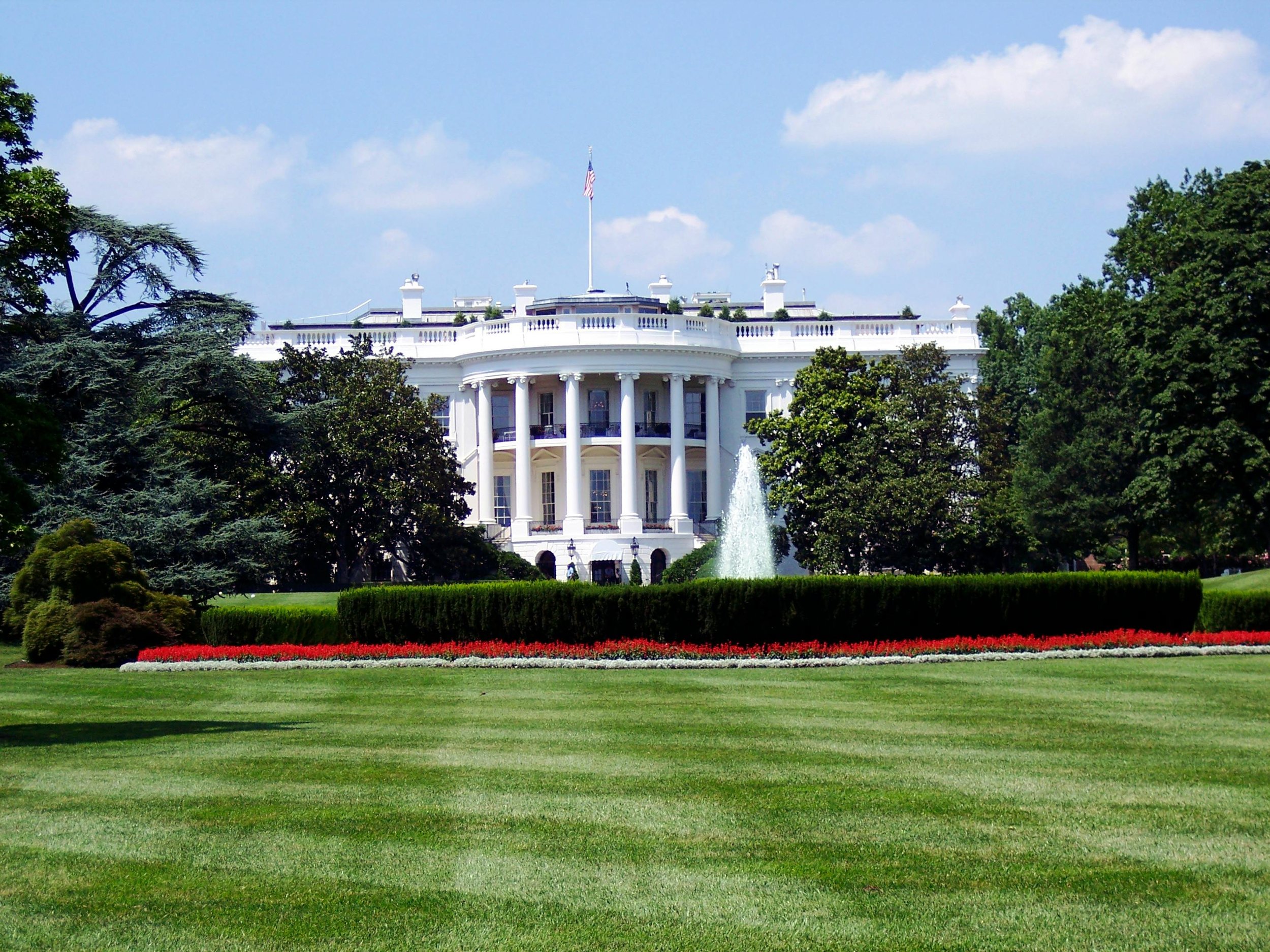
New Secretary of State Prioritizes Latin America
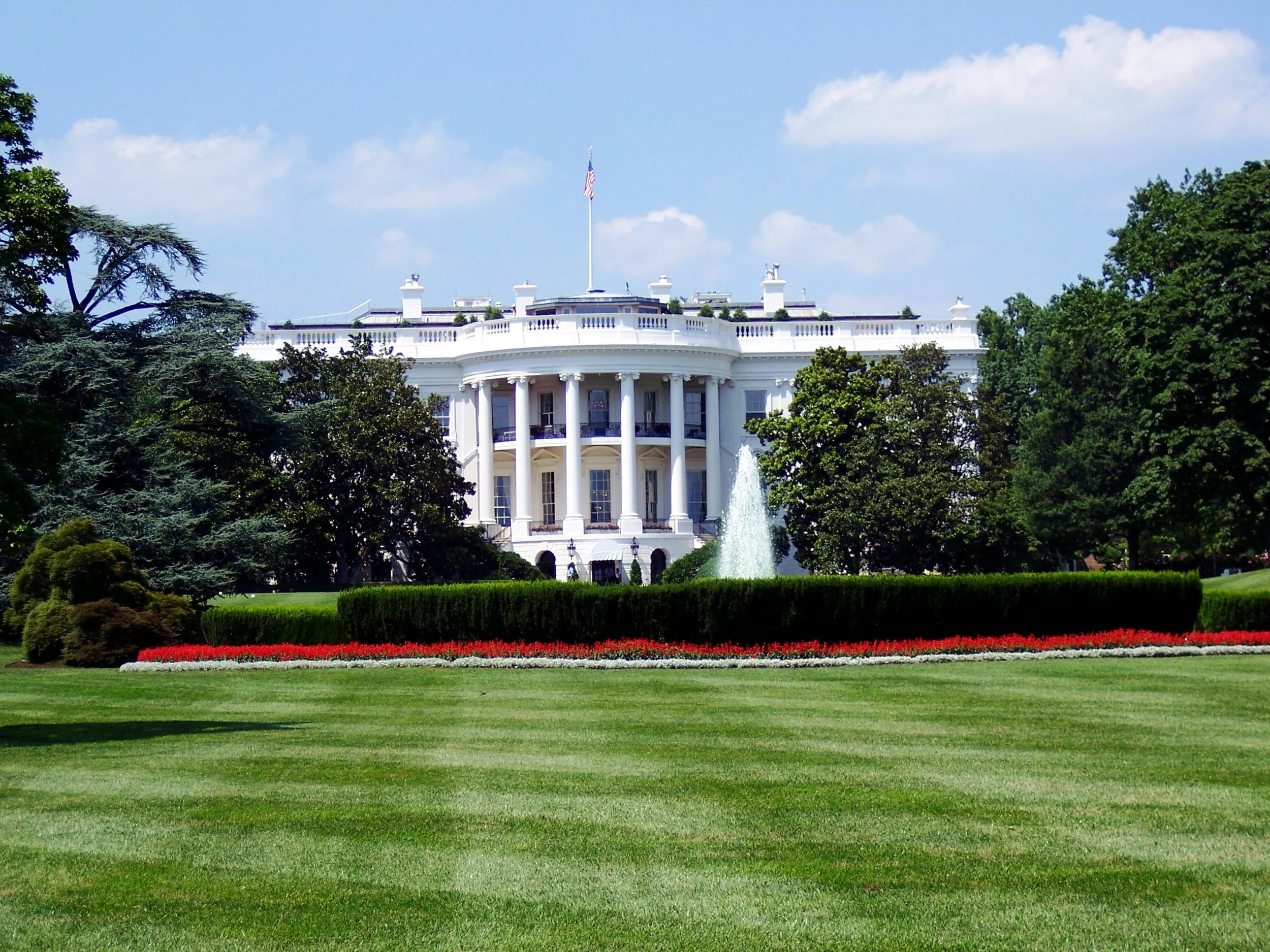
Photo by Aaron Kittredge
The new Secretary of State, Republican and former Florida Senator Marco Rubio, is embarking on his first overseas trip, which signals his focus on strengthening ties with Latin America. His itinerary includes visits to Panama, El Salvador, the Dominican Republic, Costa Rica, and Guatemala, which emphasizes the importance of U.S. relationships in the region, particularly around the issue of immigration—something President Trump has said he would prioritize.
The Secretary’s more level-headed and logical demeanor contrasts with the more combative and inflammatory style of his boss, President Trump. His approach seeks to engage in international dialogue and collaboration, a task made more challenging by tensions from moves such as the withdrawal from the World Health Organization and the Paris Agreement by President Trump. Nevertheless, his experience on Senate committees for foreign relations and intelligence positions him well to handle these challenges.
Immigration is expected to dominate discussions, with the Secretary aiming to address the root causes of migration. His immediate attention to Latin America is an immediate change compared to the Biden administration’s delayed focus on the region.
The trip also comes at a critical time for U.S. foreign policy globally. The Secretary faces pressing issues including the Ukraine-Russia conflict, the Gaza-Israel ceasefire, Sudan’s crisis, and growing Chinese global influence amidst also wanting to reestablish the State Department as a central player in U.S. foreign policy, after being sidelined by both parties in the past.
This trip also sends a message against President Trump’s controversial rhetoric, such as his suggestion to “retake” the Panama Canal. By fostering dialogue and partnership, the Secretary aims to build a foundation for long-term stability and cooperation in the hemisphere.
This visit sets the tone for his tenure as a diplomat who is dedicated to advancing U.S. interests abroad. And as the first Latino Secretary of State, his leadership carries symbolic importance especially when in engaging nations across Latin American.
Do Leaders Understand Trade Surpluses?
It is difficult to keep track of all of the recent developments in economic warfare prompted by the new Trump Administration. Much of the news coverage surrounding “tariffs” does little to point out the specific economic ramifications of Trumpian ideology, and I would argue that it is because neither journalists nor politicians have a complete understanding of international trade. There are certainly economists who do, but it would seem that either they are tired of engaging the public on the subject, or the public is tired of listening to economists. It is likely a mixture of both. Nevertheless, it is at this point unnecessary to merely repeat news articles concerning “Trump’s tariffs,” but rather wholly necessary to address some specific fallacies that seem to be the premise for much of the public debate around international trade policy.
My interpretation of the current political element to this debate is as follows: most people think that “crucial” American manufacturing jobs have been outsourced to poorer countries because companies can pay workers extremely low wages while subjecting them to extremely poor conditions, thereby reducing their costs but also hurting American workers. Therefore, to “save” American jobs, the proposed solution is to place tariffs on imports from these countries such that corporations are forced to conduct their manufacturing in the United States.
The only problem is that, for decades now, there has been bipartisan agreement that tariffs are overall destructive to the economy and promote distrust and hostility within the Liberal World Order. In other words, that argument by itself is too easy to debunk. Thus, beginning as early as 2016, President Trump took a new angle besides the “outsourcing to low-wage countries” argument by claiming that numerous other countries are “ripping off” the United States, which shifts the “victim” in this situation from poor Chinese workers, whom the average voter cares little about, to the United States as a whole. It is from here that one can analyze the ideology that has prevailed since 2016.
First, to briefly address the fallacy of “exploitation” of workers in poor countries as the explanation for why outsourcing occurs, it must be noted that throughout history, higher-wage countries have exported to lower-wage countries, and lower-wage countries have exported to higher wage countries. In his book Basic Economics, Dr. Thomas Sowell observes that “Britain was the world’s greatest exporter in the nineteenth century, and its wage rates were higher than those in most of the countries to which it sold goods.” This reality occurs because “higher wage rates per unit of time are not the same as higher costs per unit of output.”
The reason that manufacturing is outsourced today while other sectors are not is because the difference between labor cost per unit of time is less than the difference in output per time, or productivity, which is almost always higher in the more prosperous country because, to put it frankly as Sowell does, “There are, after all, reasons why one country is more prosperous than another in the first place—they are more efficient at producing and delivering output.” Moreover, outsourcing manufacturing has done nothing but net increase wages and standards of living in both poor and rich countries for the vast majority of workers outside those in sectors that have been import-substituted, which could include either a manufacturing worker in the US or a subsistence farmer in China who now eats food grown in Africa that can finally be sold on the world market, which increases the standard of living for the African farmer as well.
Now, turning to the idea of “ripping off” the United States, it can be assumed that Trump is referring to when foreign countries sell their goods at cheaper prices in the United States than they do elsewhere, thereby exacerbating America’s trade deficit. They are able to do this by subsidizing their own companies or granting them some other form of favorable privileges that make American companies uncompetitive.
This idea is especially easy to believe in the case of China. If this assumption is true, then it has been true at all times throughout world history, and at all times throughout world history that governments have attempted to increase their trade surplus through political manipulation, it has been purely due to domestic political interests and has not produced any overall economic benefit. The United States grants the most privileges to its agricultural producers of any country in the world, especially to sugar producers. Documented by Sowell, studies on American sugar import restrictions found that while they do indeed ensure that sugar is produced in the United States, they almost certainly ensure that sugar confection into products, such as candy, does not occur in the United States do the higher costs of American sugar.
In this case of “cheating,” as in every case, it is more detrimental to the country that cheats because, in reality, the confection industry produces three times as many jobs as the sugar industry. If it is true that foreign countries, such as China, “dump” their goods on the world market at lower prices than what they sell for in China, it would seem to be common sense that to do so is detrimental to China, so it is quite possible that in many of the situations to which Trump is referring, there is no cheating taking place at all.
Many people understand that goods cannot sell at the same price everywhere due to differences in demand, as in how much the good is needed, but many neglect that goods cannot be sold at the same price everywhere due to differences in purchasing power. China is able to sell goods so cheaply in the American market because there are so many buyers that can afford them, such that the goods can be produced, transported, and distributed at such a scale that their average cost decreases; whereas, even in China, there are fewer buyers who can afford to purchase the goods, such that every good produced to be sold within China will have a higher average cost associated with it, and, thereby, a higher price to accommodate for the fact that the company is selling that good in place that faces fewer potential buyers compared to where it could be selling it in the United States.
It is far less costly to conduct huge shipments of innumerable goods to the US than to distribute the same goods in smaller intermittent shipments to other countries or even within China. Therefore, the fact that foreign countries can sell their goods so cheaply within the United States should be celebrated as evidence of a superior level of prosperity. This discussion also poses the irony: why would any group of people complain about having access to cheaper goods than another group of people?
That question brings the discussion to the idea of trade deficits and surpluses, or the lack thereof. Trade deficits and surpluses are merely accounting phenomena; they do not reflect any sort of economic reality concerning economic surplus or cost. There can be no such thing as a “trade surplus” because the entire purpose of trade is equal exchange. Every export to the United States must be an equal transaction—to which of course someone could respond that the other half of the exchange is currency, or American dollars, which merely goes to China. Based on that logic, are millions of Chinese walking around with American dollars in their pocket? No. It goes to the company, which in this case can be a company producing toys. What does a Chinese company do with American dollars printed in the United States of America? It spends them in the United States. Does it spend them on producing toys? No. It spends them where they belong: the areas where they produce the greatest returns, which are those areas in which the United States possesses a comparative advantage, which is likely nothing physical at all. (When economists record trade deficits, they only include transfers of physical goods and materials. Thus, they are merely accounting numbers, and as with any number in accounting, it is irrelevant without the entire picture)
Going further, the American dollars are likely spent on the technology produced in the United States that allows the Chinese company to produce the toys, such as Microsoft software, and so long as an American company is producing technology, and the Chinese company is producing toys, the toys will be better, cheaper, and more accessible. Now, we are down to the classical economic principles of comparative and absolute advantage—principles that have been understood since the late eighteenth century. What is a primary consequence of this system? Net increased jobs. The problem is that these new jobs are likely scattered in numerous new businesses across the country specializing in areas attracting American dollars, while in the concentrated geographic area or sector that used to produce toys, there was a decrease in jobs. That sector is most certainly more consolidated or politically organized to demand protections, but it is most certainly not a large enough majority of any country to prompt all-out economic warfare.
This discussion could continue with centuries of anecdotal and statistical examples of failed international trade policy, ranging from the Hawley-Smoot Tariffs that turned a recession into the Great Depression to tariffs on steel imports in the 1980s that saved jobs in the steel industry but cost jobs in every industry that requires steel to make its products. As I was writing this blog, I saw an Amazon advertisement in which Leonardo da Vinci was attempting to build wooden airplanes, but he lacked the materials. Naturally, he placed an order on Amazon, and it promptly arrived in Florence. He was then able to design his airplanes. It is a good thing that Florence, in this scenario, did not place protections on wooden material products, or else da Vinci may have been spending his time making very good wooden beams.
In today’s world, those materials would have come from China, which prompts the question, do world leaders want to be making wooden beams, or do they want to be designing airplanes?
Islands Against the Tide
How the Pacific Islands Are Pioneering their Survival
The Pacific Islands face a great calamity. In August 2024, the World Meteorological Organization reported some horrifying statistics regarding the impacts of climate change in the Pacific. In the central tropical Pacific, the sea level has risen 5-10 cm, while in the western tropical Pacific, the sea level has risen by 10-15 cm since the metric was measured in the 1990s. Furthermore, the Pacific Islands have been experiencing more frequent and more intense marine heat waves, with the sea surface temperature rising 0.4 degrees Celsius per decade since the 1980s, 3 times faster than the global average.
Despite contributing only 0.02% of all global emissions, the Pacific Islands are an apparent and unfortunate microcosm of worsening climate change and its global impacts. Rising sea temperatures and rising sea levels go hand in hand, destroying marine life, creating worsening meteorological conditions, and deteriorating the quality of water and land used for development. For this reason, some of the most significant scale climate migration comes from the Pacific, where people are often situated close to the sea level and in houses at or under sea level, gradually sinking in the ocean.
However, the Pacific Islands have not stopped their fight against the tide. Spatial information modeling and decision-making systems have been developed collaboratively by the nations of Australia, Tonga, Samoa, Vanuatu, and Papua New Guinea. These systems use radar technology like Airborne Light Detection and Ranging (LiDAR) to map out and act upon inundation predictions, making this information ready to disseminate to local communities.
This vital information has also helped develop infrastructure that can mitigate the effects of rising sea levels. Over time, mangroves and sea walls are being used to artificially elevate these islands, protecting the quality of the land for farming and further development. In addition, many Pacific island nations have started reclamation projects to create elevated land for housing and industry by extending land artificially.
The strength of these efforts and others depends on constant awareness and connection. The Falepili Union and the Pacific Labour Mobility Arrangement are examples of global cooperation centered around relocating displaced individuals and providing job opportunities for workers who may have lost their industries to inundation. Furthermore, movements in person and through social media have worked to promote regional climate activism and innovations regarding this issue.
While these efforts have been practical, the long-term feasibility of this issue does come into question. Nations like Tuvalu have already worked to upload their history online, preserving their culture and their people in the face of the inevitable tide. There are lots of questions that the situation forces us to answer. The most prominent is how a nation can exist without a defined territory. However, the most important thing, and the one I would like to end this tale on, is, when the tide comes to us, will we be able to face it before it washes us away?
The Trump Administration’s Suspension of Refugee Resettlement
Among the many first-day executive orders issued by the Trump administration was another attack on refugee resettlement policy in the United States.
According to the order, refugee admissions would be suspended starting on January 27th. However, implementation took place immediately after the order was issued, stranding more than thousands of refugees who already had travel plans. Well before January 27, the State Department canceled the travel of more than 10,000 refugees set to enter the United States.
During his last term, Trump based a similar suspension of refugee resettlement on questionable national security grounds. This time, the executive order cites the inability of the United States to manage the strain on resources and security risks brought by the increased flows of migration as its reasoning and does not provide a date on which the suspension will be lifted.
The decades-old US Refugee Resettlement Program (USRAP) is a U.S. government program that works to resettle refugee populations in the United States. Typically, the administration would establish an annual number of how many refugees the United States would resettle that year. While the caps set for resettlement have differed among presidents over the past couple of decades, the belief that the United States had a global responsibility to take in a share of the world’s refugees was largely undisputed.
The first Trump administration permitted significantly fewer refugees than previous and subsequent administrations. In 2020, the number of refugees admitted into the United States fell to its lowest level of 11,000 in the final year of Trump’s first term compared to 85,000 resettled under the Obama administration in 2016 and a record high of nearly 100,000 during the Biden administration’s final year. In Trump’s last term, thousands of refugees who were scheduled for resettlement in the United States were stuck in refugee camps and kept from reuniting with family.
Many refugees, especially those still awaiting resettlement, have helped serve U.S. security interests abroad. With resettlement suspended, this could mean life or death for Afghans who worked alongside American military forces against the Taliban. This recent executive order goes against a promise made by both the Trump and Biden administrations to take in Afghan refugees who aided the United States and nongovernmental organizations in Afghanistan. There are more than 1,600 Afghans awaiting entry into the United States who are now unable to enter due to the executive order. To add to the severity, Pakistan is threatening to deport the 20,000 Afghans awaiting relocation back to Afghanistan if host governments, such as the United States, do not process their cases soon. Without seeking to offer Afghan refugees asylum, Pakistan has received hundreds of thousands of Afghan refugees over the past couple of decades, and the International Organization for Migration has stated that over 795,000 have been deported from Pakistan since September 2023.
There are already efforts at protecting Afghans who aided the United States in light of the suspension. Hundreds of veterans and U.S. officials have signed a letter urging the Trump administration and congressional leaders to continue funding resettlement for Afghans who aided the United States and their families and to approve another 50,000 Special Immigration Visas.
Trump’s order on refugee resettlement not only impacts those seeking refuge in the United States. It will also affect refugee communities within the United States. The administration has suspended federal funding for refugee resettlement agencies within the United States, stripping away the ability for tens of thousands of refugees to access basic necessities, such as housing and food.
The Trump administration has left many refugees with an uncertain fate, both here in the United States and abroad. His second term so far represents a new era of support for refugee resettlement and refugee communities within the United States. Whether the executive order suspending refugee resettlement remains in place and whether the commitment to resettling Afghan refugees in our borders is upheld will bring light to this uncertainty.

Latin American Presidents Aren’t Having It:
Petro vs. Trump and the Hypocrisy of U.S. Immigration Policy

Photo by David Peinado from Pexels.
On January 26th, Colombian President Gustavo Petro and President Donald Trump engaged in a tense standoff that nearly led to a trade war between the two nations. The issue? Two military flights carrying Colombian deportees were turned away by Petro, forcing one to turn back mid-flight. The incident came days after a huge controversy over Brazilian deportees in a harrowing flight marked by mechanical failures, extreme heat, and inhumane conditions, forcing an emergency landing in Manaus. Many were outraged by the sight of deportees shackled and chained while being escorted by U.S. immigration officers on Brazilian soil, to the point that even Brazilian President Lula da Silva and his government’s ministers publicly criticized the Trump administration’s handling of the deportees as “unacceptable” and “degrading”.
In response, Petro posted on his X account that his government would only accept deportees on civilian airplanes, ensuring they would not be treated as criminals." He emphasized that immigrating is not a crime and that deportees must be treated with dignity. His statement unleashed an aggressive response by President Trump, threatening to impose 25% tariffs on all Colombian incoming goods, which would be raised to 50% in one week, along with visa sanctions and enhanced customs and border security inspections for all nationals and cargo shipments from Colombia.
After a tense back-and-forth of tweets between the two leaders, where Petro also threatened to retaliate with a 25% increase in Colombian tariffs on U.S. goods and claimed that Colombia is “not anyone’s colony”, Colombia backed down and agreed to all of President Trump’s terms. The alternative would have had severe consequences for the Colombian economy, given that the U.S. is its largest trading partner. Potential impacts included significant disruptions for thousands of Colombian coffee growers, devaluation of the peso, and a decline in direct foreign investment.
However, it is worth noting that even within Colombia, this standoff was highly polarizing as many praised Petro for standing up for Colombian immigrants, while others criticized the double standards underlying his refusal to cooperate with right-wing authoritarian figures like Trump, while openly cooperating with left-wing dictators like Nicolas Maduro. Some argue that political pressure within Petro’s government was the real reason behind his decision to back down from the threats.
The situation suggests that Colombia was the first country to be openly humiliated by the new Trump administration. It’s unfortunate that when a government calls for its people to be treated with dignity and respect, this administration responds by threatening to destroy their economy. From my perspective, this situation raises a crucial question: Does President Trump view Latin American nations as strategic allies, or are they simply seen as problems to be dealt with, with their people unworthy of dignity or respect?
It’s unreasonable to dismiss Petro’s and Lula’s petitions as exaggerated, as they are simply asking for fair and respectful treatment of their deportees, especially considering the xenophobic and racist rhetoric that has characterized President Trump’s mass deportations. In fact, it was recently revealed that among the 200 deportees who returned to Colombia on Tuesday were two pregnant women and more than 20 children. Notably, none of its passengers had criminal records in the U.S. or Colombia.
This hostile narrative has been backed by the administration’s stand on policies against immigrant communities. It is no secret that President Trump ran on a protectionist and xenophobic campaign that singled out the immigrant community as the source of all the nation's problems. This administration has relentlessly demonized the immigrant community in the United States, despite the significant contributions they have made to the country. It is well known that the construction, agriculture, hospitality, healthcare, and manufacturing industries rely heavily on immigrant labor, not to mention the social, cultural, and academic contributions that these immigrants and their children have made to the country's progress. However, the use of terms like 'illegal aliens' dehumanize an entire population, portraying them as criminals in order to justify their unfair treatment. This perspective ignores the blatant hypocrisy of harshly persecuting foreign criminals while granting special treatment to white criminals, particularly those who tend to storm government buildings in insurrection attempts.
Don’t think that these actions won’t have consequences for how the U.S. is perceived in Latin America. Growing discontent towards Americans has been simmering for a long time over the unprecedented migration of U.S. citizens to the region. Yes, I’m talking about gentrification. Characterized by your everyday Digital Nomads and Passport Bros that move to Mexico City, Costa Rica, San Juan, Medellin, and other Latin American destinations to take advantage of the devalued peso, while raising the cost of living and displacing locals, but failing to contribute to the host nation’s economy in the same way Latino immigrants contribute to the U.S. Many of them don’t even have a legal status in the country they are in, according to a recent address by Petro, in Colombia alone, 15,000 Americans are living in the country without authorization.
So, my question is, should they be treated the same way? Put on military airplanes, chained at their hands and feet, and being profusely humiliated by a foreign government when all they wanted to do was a better life for themselves?
In case you’re wondering, the answer is no.
Because no one should be treated so horrendously solely based on their immigration status.
Now, add this to the administration's disregard and disrespect toward the Latino immigrant community, and it should come as no surprise if another wave of anti-American sentiment arises in the region. This could also validate experts' concerns that China may step in as an alternative imperial superpower for the region to rely on.
On a broader scale, however, this administration appears to follow a longstanding trend in U.S.-Latin America relations, where countries in the region are treated as problems to be managed rather than as allies and equal partners vital to the strategic development and growth of the Western Hemisphere. The discontent is evident in the resistance from Latin American leaders and their responses to some of Trump's comments and demands.
In the case of Mexico, this dynamic is evident in several instances. President Claudia Sheinbaum responded to the threat of tariffs by asserting that their relationship with the U.S. is “one of equals”. Her administration also categorically rejected U.S. accusations of cartel links within her government, instead arguing that if any such alliance exists, it is in the United States gun factories that sell high-powered weapons to these criminal groups. She even poked fun at the absurd renaming of the Gulf of Mexico.
Similarly, Honduran President Xiomara Castro pushed back against Trump’s mass deportation plan, threatening to expel a U.S. military base that has existed in the country for decades. Furthermore, Panamanian President José Raúl Mulino responded to Trump’s suggestion of reclaiming the Panama Canal by kindly reminding him that the sovereignty and independence of Panama are non-negotiable and that every square foot of the Panama Canal and its adjacent zones belongs to Panama.
This joint resistance by Latin American leaders, particularly from the left, makes me wonder if these countries will be able to resist the mistreatment of their people in the U.S. or if they will continue to be forced to comply with Trump's agenda through highly dangerous and disruptive economic threats.
Ultimately, this standoff between Petro and Trump demonstrates the imbalance of power in U.S.-Latin America relations, where economic leverage is weaponized to force compliance. While Petro’s attempt to demand dignity for Colombian deportees was outstanding, the backlash and severe retaliation from the U.S. demonstrated how little room Latin American leaders have to push back without facing economic devastation. The broader resistance from regional leaders suggests a shifting dynamic, but whether this defiance will lead to meaningful change, or simply more coercion remains uncertain. What is clear, however, is that the mistreatment of immigrants reflects a troubling disregard for human dignity that will have uncertain consequences as the Trump administration continues to attack its neighbors and closest allies.
Trump’s Executive Order Halts Foreign Aid Programs, Sparks Global Uncertainty and Potential Power Shift
On January 20th, 2025, President Trump signed an executive order halting most foreign development assistance programs. This executive order comes as the Trump administration aims to shift foreign interaction towards an “America First” agenda, highlighting that much of the foreign aid dispersed to countries goes towards initiatives that do not directly benefit the United States.
In 2023, the United States was the largest donor of humanitarian aid at around 9.5 billion dollars, almost 7.5 billion dollars more than the European Commission, the second largest donor. Aside from continued military and food assistance to Israel and Egypt, programs providing crucial aid to many countries have been halted for a 90-day review period. This abrupt suspension has induced panic in people and organizations domestically and globally.
The United States Agency for International Development (USAID), the largest U.S. government entity for development work, has been hit hard. Within a week of the order, roughly 400 internal contractors were laid off at USAID because of the stop-work order. It is expected that more employees at USAID and contracted agencies will be furloughed.
Many countries who receive assistance from U.S. government funding are scrambling to find ways to compensate for this new gap. Michael Schiffer, a former USAID assistant administrator, wrote in an article that without USAID, “Children will die. Our national security will erode. America’s alliances will suffer. U.S. partners will be at risk. And America’s enemies will rejoice.”
Effects of the stop-work order have already impacted Al-Hol, a Syrian displacement camp housing mostly women and children. Security, water, and sanitation efforts in the displacement camp have been paused and the threat of instability and violence is high. This cause and effect is not specific to Al-Hol with the threat of violence in displacement camps expected to grow.
Ending foreign development assistance programs will have drastic effects, leaving other world powers, such as China, an opportunity to create alliances with countries who once worked closely with the United States.
Global Econ-Insights #4: Trump’s Treasury
Donald J. Trump: profiteering persecutor, or economic exemplar? With the man who has been America’s greatest bane for some and knight in shining armor for others over the past decade recently being re-elected, there is no better time than now to unpack the economic implications of his second term of presidency. From analyzing Trump’s last several speeches, policy decisions, campaign actions, and even humorous gestures, I can confidently say that Trump’s presidency will likely have strong global financial consequences in regard to numerous major monetary policy mechanisms.
There are numerous tax policies which Trump has promised to implement. While pushing his economic and political agenda from 2025 onwards, Trump has proposed upwards of a 60% tariff on Chinese imports and 10% to 20% tariffs on imports from all other countries. Trump’s significant inflation of the tariff percentage for China reflects his Western biases and anti-oriental political views. By deliberately putting nations like China at an economic disadvantage among the United States’ multilateral relations, he is undeniably attempting to keep the U.S.’s hegemony while putting a strong power clamp over China’s power. This, in his mind, is the key to the U.S. reigning supreme in the global economy. Additionally, his anti-immigration tactics shine through via his announcement of a 25% tariff on imports from Mexico and Canada, the two nearest nations known for “burdening” the U.S. with large asylum-seeking numbers. What he doesn’t seem to realize is the broad-based economic implications of his own proposed tax and tariff policies. Domestically, these drastic increases in tariffs are predicted to significantly increase inflation across the entire U.S. These localized consequences will then trickle down into a domino-effect-like phenomenon which will likely inhibit economic growth in all major foreign countries that depend on American consumers for a significant chunk of their own fiscal revenues. Then, inflation will decrease as these American consumers become less willing and able to purchase foreign goods, and this will have a disproportionately harmful effect on China, especially due to the vast importance of the manufacturing sector to its economy, weakening the value of the Chinese yuan just as Trump intends.
While Trump’s anti-oriental rhetoric will most certainly translate into strong hegemonic economic policies on the part of his administration, certain subsets of foreign countries, particularly those in Europe, will likely suffer less by comparison. The U.S. inflation impact on the European economy will be minimal, as exports only make up around 3.2% of the continent’s overall GDP. Even with such high tariff increases, Europe’s service sector makes up 80% of its GDP, and this particular industry is known to be especially invulnerable to economic shocks from such monetary policies.
With that in mind, it must be made clear that Canada, Mexico, and China must watch out for Trump’s new trade penalties. According to Wending Zhang of Cornell University, Canada and Mexico would still feel the impact of these shocks to their economies much more severely than China due to their relative overreliance on the American consumers’ market. Trump himself told reporters, “You see the power of the tariff. Nobody can compete with us because we have by far the biggest piggy bank.” Trump is hedging his bets that raising such tariffs will not have major negative inflationary effects on the U.S. economy, yet it should be clear that even if it does, his political tactics will likely enable him to evade any sort of blame game that would potentially put himself at fault for such financial harms to the country. Either way, it is time for foreign countries to start gearing up for what could be an economic resource war, and thankfully, that is exactly what they are doing right now.
Former Canadian Prime Minister Justin Trudeau is endorsing a $900 million border plan to help Ottawa prepare to respond to Trump’s retaliatory tariffs and counteract the effects of U.S. penalties. Similarly, Mexican President Claudia Sheinbaum has publicized her intentions to reduce illegal border crossings and combat the illicit fentanyl trade around the U.S.-Mexico border. She is also vocal about her preparations to respond to Trump’s tariffs, citing a “Plan A, Plan B, [and] Plan C for what the United States government decides.”
In conclusion, while the Democrats are currently working to use the legislative process as a means of hampering Trump’s ability to impose these tariffs without the endorsement of Congress, we still need to do more. Beating Trump from the inside out is politically infeasible when the current makeup of the Congressional body is far Republican-leaning in both the House and Senate. The better strategy, in my opinion, would be to independently advise and facilitate the preparations of foreign countries like China, Mexico, and Canada to prevent the potentially globalized harms of such large-scale economic shocks resulting from Trump’s proposed trade, tax, and tariff policies.
Cold War 2.0: Arctic Edition
In the minds of many individuals, the Arctic is just a freezing desolate wasteland, home to polar bears, RedBull snowsports athletes, and the occasional doomed expedition. But thanks to climate change, this icy hellscape is melting at nearly four times faster than the global average. Because of this, many countries and corporations are begging to see what's beneath the Arctic’s seemingly endless mantle. The arctic is estimated to contain 13% of the world’s undiscovered oil and 30% of its untapped natural gas. Also, because the icebergs are melting, new shipping routes, especially in Canada’s Northwest Passage and Russia’s Northern Sea are opening up so you can get that pink and white Stanley cup with little gold flecks even faster. These climate induced changes have raised tensions among powerful global players such as the United States, The Russian Federation, China, and Arctic nations like Norway.
Climate change is stoking flames in the region and setting the stage for a theater of great power competition. Since the beginning of the Cold War, the Arctic has been an avenue of approach to the homeland. Soviet bombers would fly over the Arctic to strike America. Even today much of US missile defense infrastructure is in the Arctic. Russia currently holds about 50% of the Arctic coastline and has heavily invested in military bases and nuclear icebreakers (a really big boat that can cut through the frozen arctic waters). The US is lagging a bit behind in arctic investment and currently only has two icebreakers (Russia’s got 40…). The geopolitics were also further altered following Russia’s invasion of Ukraine, which caused two Nordic states, Finland and Sweden to apply for NATO membership. The arctic is an important priority for NATO because the north atlantic and the arctic would be the point for North American supplies flowing to European allies in a crisis.
Increasingly, countries outside the Arctic have become more active in the region, and China has called itself a “near-Arctic” power. Many countries are interested in access to new sources of resources and shipping routes. China is Russia’s largest trading partner (as it is for 120 countries). China has invested nearly $90 Billion into energy and resource projects in the Arctic over the past decade. Increased activity by China and Russia in the arctic are indicative of “great power competition in global spaces.” The next few years are prone to see increased activity in the Arctic as countries scramble to get a slice. The great powers are coalescing and I feel that a security dilemma could be brewing.
Addressing California’s Wildfire Crisis Through Economic, Social, and Climate Policies
On January 7, a fire broke out near the Skull Rock Trailhead along the Temescal Ridge Trail in Los Angeles' Pacific Palisades neighborhood. Residents reported the incident to CBS News, describing how the fire rapidly spread across the Los Angeles region. The blaze caused widespread disruption, forcing evacuations, endangering lives, and significantly strained local resources. While the exact cause of the fire remains under investigation, such events highlight recurring issues related to California's vulnerability to wildfires and their broader economic and governmental challenges.
Wildfires in California are not isolated incidents. The state experiences increasingly frequent and intense fires due to climate change, prolonged droughts, and expanding human development into wildfire-prone areas. According to Cal Fire, 2023 alone saw over 7,000 wildfires, burning hundreds of thousands of acres of land. These fires not only destroy property and natural ecosystems but also impose economic costs, such as rebuilding infrastructure, providing emergency services, and compensating for lost livelihoods.
The economic costs are not being effectively mitigated, as evidenced by the billions of dollars spent annually on recovery and insurance payouts. More proactive measures like improved forest management and stricter building codes could significantly reduce these costs. Controlled burns, forest thinning, and removing dry vegetation are proven strategies to lower fire risk, yet these practices are often underfunded or poorly coordinated. Additionally, stricter building codes that require fire-resistant materials and strategic zoning to limit development in high-risk areas would not only reduce the financial toll but also save lives. The state must prioritize prevention over reaction if it hopes to alleviate the financial burden of wildfires.
The economic impact of wildfires extends far beyond immediate damages. For instance, insurance claims surge after major fires, straining both residents and insurers. Also, insurance companies consistently bail out of their insurance agreements, destroying previous contracts with customers to further remain profitable. Agricultural productivity suffers when crops and livestock are destroyed, and tourism, a significant driver of California’s economy, takes a hit as travelers avoid fire-prone areas. Moreover, public funds must be diverted to emergency response and recovery efforts, often at the expense of other critical areas such as education and healthcare.
California’s approach to balancing emergency response with long-term investments in climate resilience and sustainable land use is insufficient. While the state has made strides in creating fire prevention programs, there are trade-offs that compromise other critical needs. For example, diverting public funds from education or healthcare to cover emergency wildfire response creates ripple effects that harm communities in other ways. A more balanced approach would involve sustained investments in wildfire prevention, such as upgrading infrastructure to withstand fires and expanding renewable energy projects to reduce climate change impacts, while maintaining funding for other essential services.
Wildfires also highlight broader challenges in climate policy. While state governments, including California, have been leaders in adopting green initiatives, critics argue that federal policies lag behind in addressing the root causes of climate change. Mitigating wildfire risks will require addressing greenhouse gas emissions, investing in renewable energy, and incentivizing sustainable land management practices.
Current U.S. climate policies are inadequate in addressing the root causes of wildfires. The federal government needs to adopt more aggressive measures to curb greenhouse gas emissions, such as implementing a nationwide carbon tax or cap-and-trade system. Additionally, funding for renewable energy projects and sustainable agriculture should be significantly increased to address systemic environmental issues contributing to wildfires. Policies incentivizing regenerative land management practices—like reforestation and soil conservation—are also crucial for creating long-term resilience against climate-driven disasters.
The social impacts of wildfires should not be overlooked. Marginalized communities, who often lack resources to recover, are disproportionately affected by such disasters. Housing insecurity, loss of employment, and limited access to government aid can exacerbate existing inequalities, raising questions about the equity of disaster recovery programs.
The government’s disaster recovery programs are neither equitable nor sufficient. Low-income and vulnerable populations often face barriers to accessing aid, such as complex application processes, inadequate outreach, and insufficient financial support. To better serve these communities, recovery programs should be streamlined and include targeted assistance, such as housing subsidies and job training for displaced workers. Additionally, establishing community-based recovery hubs that offer localized support and resources can ensure aid reaches those who need it most. Integrating equity into disaster recovery planning is essential for addressing the long-term social impacts of wildfires.
Resisting and Reinventing: Identity, Media, and U.S.-Mexico Relations
The UNC Journal of Foreign Affairs blog has the pleasure of publishing this longer-form guest blog post by UNC student Aaliyah Mitchell, who studied at El Colegio de Mexico in Mexico City over summer 2024. The article has been slightly modified from its original format, and was written for a class titled “El Norte/ La Frontera in Ten Essays.” The original bibliography can be found at the bottom of this article.

Photo of Pre-Hispanic dancers chatting after a performance, by Aaliyah Mitchell
In the Borderlands, where cultures fuse and harden into new cultural identities, we feel the spirit of the pachuco—cloaked by defiance and suspended between the pull of Mexican roots and the promise of what it means to be United Statsian. It is equally the emergence of the new mestiza, navigating the labyrinth of duality and forging her existence from the collision of two plains. The Mexican identity is alive! It is forged by the fires of revolution, shaped by the waves of reformation, tested by the trials of migration, and vividly alive through every unique exchange at the U.S.-Mexico Border.
As Mexican identity evolves, media plays an undeniable role in shaping public opinions by influencing how identity, migration, and crime are perceived. This piece combines two perspectives: the cultural dynamics of identity, as explored through the works of Octavio Paz, Gloria Anzaldúa, and Carlos Monsiváis, and the role of media in shaping narratives of migration and crime in Mexico, drawing insights from Ana Arjona, Enrique Desmond Arias, Rodrigo Peña, Sandra Ley, and Sergio Aguayo. These perspectives reveal how identity and narratives are forged, negotiated, and represented within the context of U.S.-Mexico interactions.
The Cultural Dynamics of Identity
Identity, at its core, is deeply personal; yet, relies on external perception. It is the blend of values, language, tradition, and experiences that shape how people and communities view themselves and how they are viewed by those around them. Language, as a fundamental aspect of cultural expression, plays a pivotal role in this dynamic; it serves not only as a mode of communication but as a reflection of heritage and identity. The phenomenon of Spanglish, a hybrid dialect and arguably its own future language, exemplifies how language can evolve in response to cultural, geographical, and/or social pressures. Spanglish represents a unique linguistic adaptation that blends languages to navigate the complexity of a diverse cultural landscape.
The pachuco represents cultural orphanhood, the internal conflict between maintaining cultural heritage and integrating into American society. Pachucos, characterized by their distinctive behavior and unique dialect known as Caló, represent the struggle to maintain identity with unrelenting pressures of Americanization. Octavio Paz’s The Labyrinth of Solitude highlights this tension, noting that the pachuco has “lost his whole inheritance: language, religion, customs, beliefs,” leaving only a body and soul to confront societal elements (Paz 17). Similarly, figures like Tin Tan transformed the pachucos image into one of cultural negotiation, bridging the gap between Mexican and American identities. As Carlos Monsiváis writes, Tin Tan’s humor and charm redefined the pachucos as an endearing character rather than a threatening figure of urban legend. This transformation from a symbol of defiance to one of cultural negotiation highlights how the pachuco has evolved to represent the nuances of cultural hybridity.
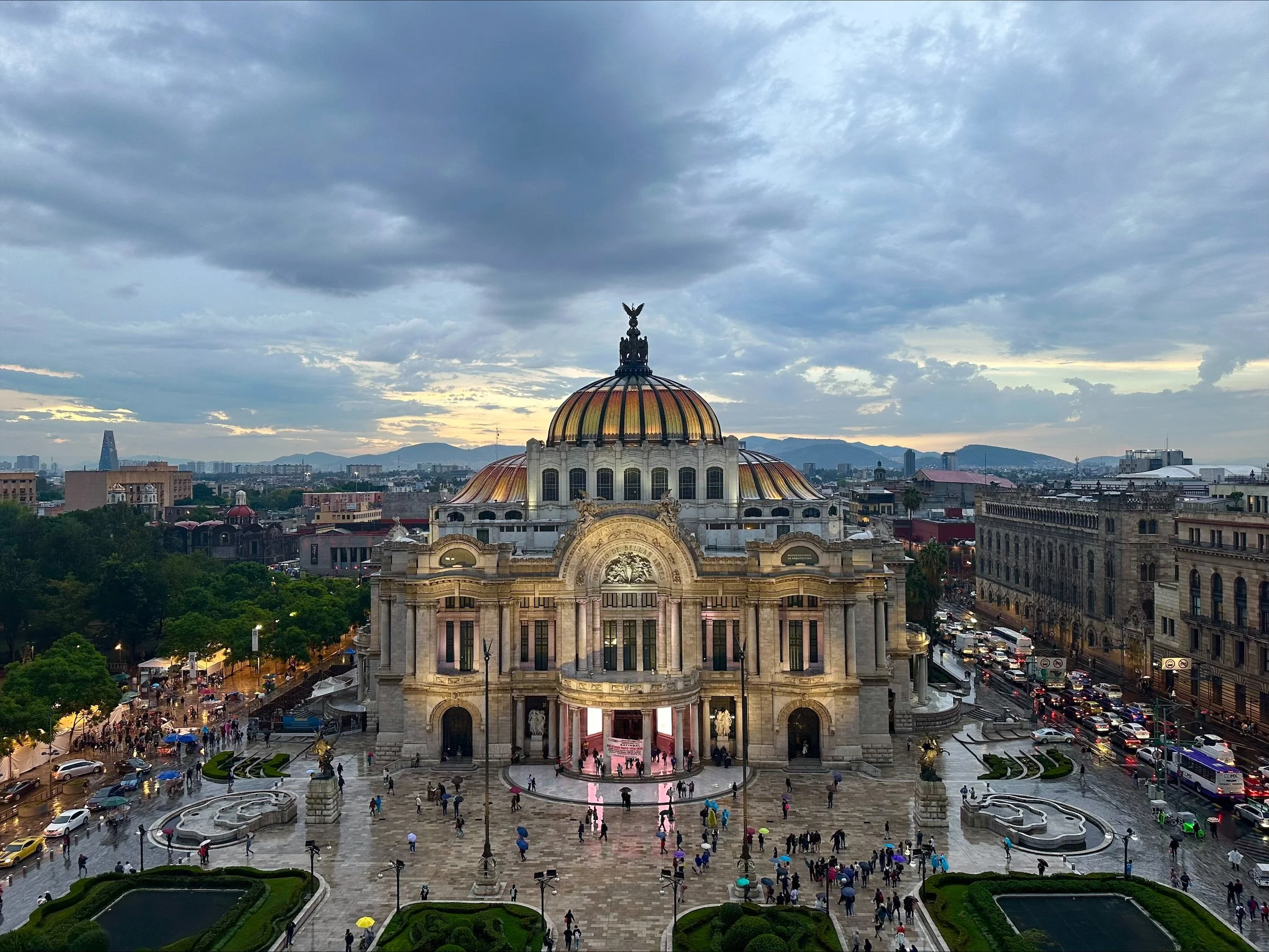
Photo of the Palacio de Bellas Artes in Mexico City, by Aaliyah Mitchell
Gloria Anzaldúa’s concept of the new mestiza in Borderlands/La Frontera: The New Mestiza describes individuals living at the intersection of multiple worlds—a sort of nepantla or in-betweenness that transcends geographical boundaries. Anzaldúa employs the metaphor of a turtle, carrying “home” on its back, to illustrate how cultural identity serves as both a source of strength and struggle (Anzaldúa 21). This metaphor resonates with modern Latinx communities advocating for bilingual education and cultural representation. These initiatives aim to honor cultural roots while preparing individuals to navigate a multicultural landscape, emphasizing the dual role of cultural preservation and integration. In this way, the United States is both the melting pot and the salad bowl—melting cultures into a cohesive mass while preserving distinct cultural elements.
An additional layer of identity is seen in language’s adaptability across generations. For instance, Latinx youth often embrace Spanglish as a bridge between their heritage and the predominantly English-speaking society they inhabit. Some Spanish-speakers in the United States claim Spanish as their mother tongue, despite some having been born or raised in an English-speaking society. This linguistic flexibility highlights the ongoing negotiation of identity. Scholars have noted that this phenomenon fosters a hybrid cultural framework where both languages influence one another. Such adaptations ensure that cultural heritage is not lost but rather transformed to reflect contemporary realities.
Media and the Narrative of Migration
Media portrayal can either humanize migrants or depict them as threats to social and economic stability. People migrate for many reasons: asylum, opportunity, family reunification, etc. Not all migrants are criminals, and not all migrants come with good intentions, but generalizing a group of people based on the actions of a few is unfair and overlooks the diverse motivations and contributions of each individual. The variation in coverage during the 2019-2020 migrant “crisis” illustrates this dynamic: some outlets highlighted the humanity of migrants, showing families in distress and children crying at the border, while others dehumanized them, framing them as criminals and robbers of “American jobs.” Similarly, language choices in headlines, such as “crisis” or “invasion,” frame the discourse in ways that influence public opinion and policy outcomes. This dichotomy influenced policies, such as the U.S. Migrant Protection Protocols, which required asylum seekers to remain in Mexico while their claims were processed. These policies placed immense pressure on the Mexican government to manage large migrant populations.
The media also shapes perceptions of crime, particularly organized crime and its connection to migration. Enrique Desmond Arias’s Criminal Enterprises and Governance in Latin America and the Caribbean explores how sensationalist reporting focuses on dramatic arrests and violence, diluting the complexity of criminal activity and its socioeconomic roots. Falko Ernst’s studies further show how such portrayals lead to ineffective policies, such as increased militarization, which fails to address underlying issues like poverty and marginalization. By focusing on spectacle rather than substance, media narratives can distort systemic problems and hinder meaningful solutions. Moreover, media coverage often overlooks the resilience of migrant communities. Stories that highlight migrant-led initiatives, like festivals, conferences, and rallies, are rare but essential. These narratives challenge stereotypes and generalization to provide a more balanced view of migration. In that same vein, highlighting immigrant-owned businesses that bring flavor and artistry to their communities could foster greater empathy and understanding, counteracting divisive ideals.
Media Coverage During Crises
The COVID-19 pandemic exacerbated vulnerabilities among migrant populations and highlighted the challenges of accurate media representation. Rodrigo Peña’s research on criminal governance during the pandemic reveals how organized crime groups exploited the crisis to strengthen their control. Often through coercion, they provided what the government couldn’t: stability, food, and resources, typically under the condition that these citizens would become involved or indebted to them. Media coverage during this period often sensationalized these developments, overshadowing the systemic issues at play.
Sergio Aguayo’s The Zeta Yoke offers another perspective on how media coverage during times of crisis can shape public discourse and criminal governance. Aguayo explains how journalistic sensationalism can obscure systemic issues, such as the relationships between criminal organizations and political actors. In the defense of journalists, when faced with the daunting task of reporting quickly, accurately, and under constantly changing conditions with limited access to reliable information, it can be extremely difficult to report as accurately and comprehensively as possible. Even so, it was and is absolutely necessary to have more nuanced and comprehensive media coverage that can influence more fitting and effective public and political responses.
While on the topic of the journalistic shortcomings during the pandemic, it is important to have context. Reporting on sensitive topics like migration and crime with accuracy can be difficult for journalists who are reporting on their lived experiences or, adversely, have little-to-no connection with the subject matter. Reporter Nikole Hannah-Jones in a podcast titled The Half Truths About Lynching discusses the idea that objectivity in journalism is a myth, as you cannot write about something you are not aware of nor can you completely remove yourself from what you have experienced. She emphasized that the only way to combat this phenomenon is with rigor. Our view of the world is shaped by our personal, lived experiences, and it takes rigor to broaden that view through research, hard work, and the willingness to be understanding. Additionally, journalists also work under dangerous conditions, facing threats from criminal organizations and government actors. These working conditions can limit the scope and depth of coverage, leading to reporting that lacks context and critical analysis or focuses on irrelevant or inaccurate material. The media has a responsibility to balance the need for compelling stories with the ethical necessity to report accurately and fairly.
The pandemic also highlighted how media can either exacerbate or alleviate social tensions. Reports that focused on the struggles of migrant workers during lockdowns, for instance, brought attention to their essential contributions but often failed to advocate for systemic change. In contrast, investigative journalism that exposed corruption or inefficiencies in government responses provided a crucial accountability mechanism. These examples underscore the dual role of media as both a reflection of societal values and a catalyst for change.
Synthesizing Identity and Media Narratives
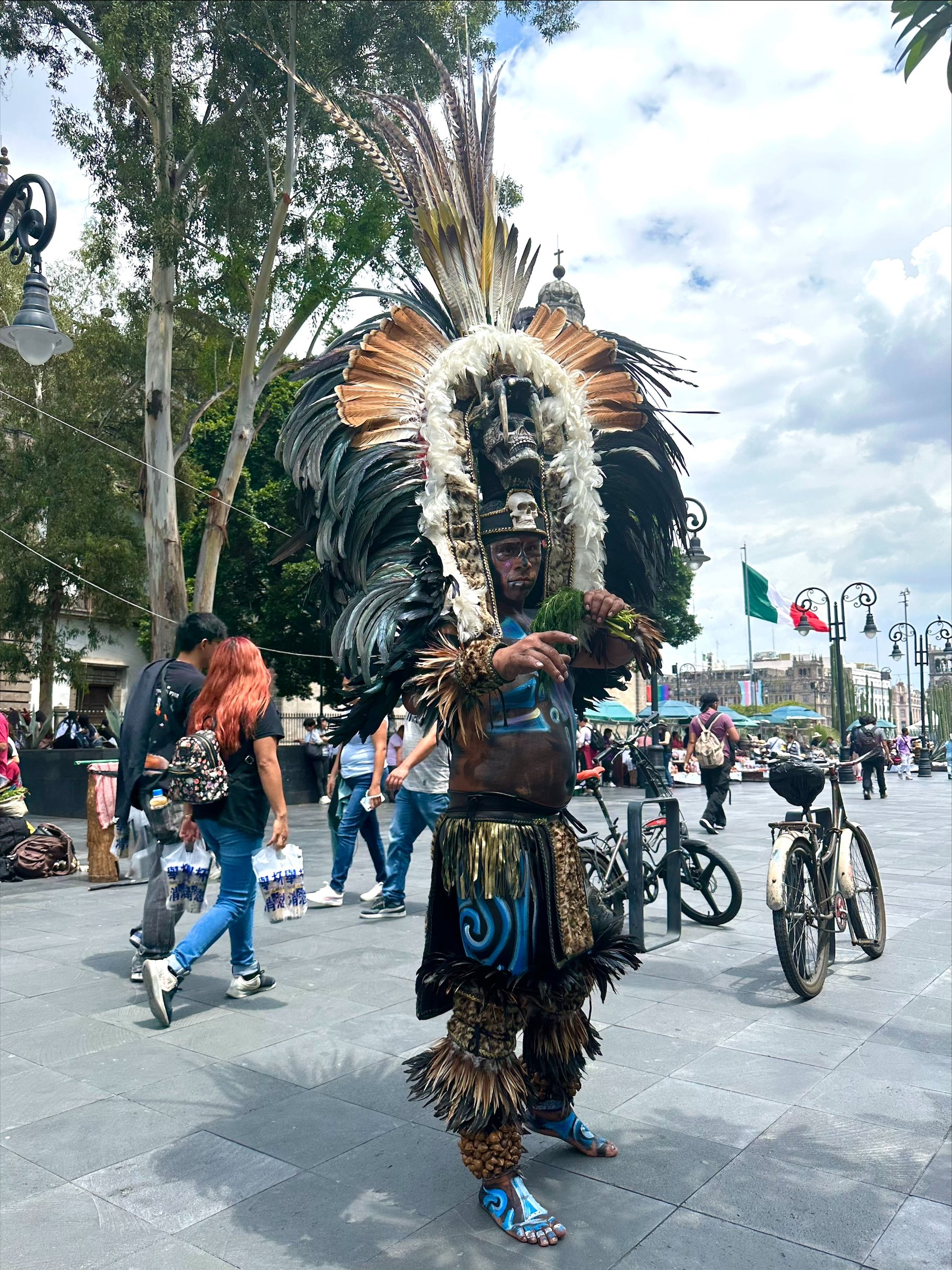
Photo of Pre-Hispanic dancer posing, by Aaliyah Mitchell
The interaction between Mexican and American cultures, as well as the media’s role in shaping perceptions of migration and crime, highlights the complexity of identity and governance. Octavio Paz’s exploration of the pachucos and Gloria Anzaldúa’s concept of the new mestiza highlight the fluidity and resilience of cultural identities. With this, the media must strive to reflect this complexity by avoiding sensationalism and generalization. Ultimately, Mexican identity and the perceptions surrounding migration and crime are not static constructs. They are living entities, shaped by cultural exchanges, media representation, and the policies they inform. By understanding these dynamics, we can work toward a more nuanced and equitable approach to identity and governance in the Borderlands and beyond. Simplified and sensationalized media coverage, especially during the COVID-19 pandemic can lead to policies that do not address the truly alarming causes of crime like poverty and marginalization. The integration of cultural insights and media analysis is essential for fostering dialogue and policy that reflect the realities of both migrant and host communities.
Works cited
Anzaldúa, Gloria. Borderlands/La Frontera: The New Mestiza. Aunt Lute Books, 1987, pp. 1–24, 77–91.
Paz, Octavio. The Labyrinth of Solitude. Translated by Lysander Kemp, Groove Press, 1961.
Monsiváis, Carlos. Mexican Postcards. Translated by John Kraniauskas, Verso, 1997, pp. 106–118.
Rascoe, Ayesha. “A New South Florida Dialect Is Forming in Real Time.” NPR, 18 June 2023, www.npr.org/2023/06/18/1182941050/in-south-florida-a-new-dialect-is-forming-in-real-time. Accessed 30 July 2024.
Aguayo, Sergio and Dayán, Jacobo (2017). The Zeta Yoke. Mexico, El Colegio de México.
Arjona, Ana; Kasfir, Nelson; Mampilly, Zachariah (2015). 'Introduction' in Arjona, Ana; Kasfir, Nelson; Mampilly, Zachariah, Rebel Governance in Civil War. New York, Cambridge University Press.
Desmond Arias, Enrique (2017). Criminal Enterprises and Governance in Latin America and the Caribbean, Cambridge, Cambridge University Press.
Ernst, Falko (2015). 'Legitimacy matters: Los Caballeros Templarios and the mutation of the Mexican organized crime', Journal of Money Laundering Control.
Wallace, Lewis Raven. (2019, November 4). The view from somewhere: The Half Truth about lynching on Apple podcasts. Apple Podcasts. https://podcasts.apple.com/us/podcast/the-half-truth-about-lynching/id1481617425?i=1000455962172.
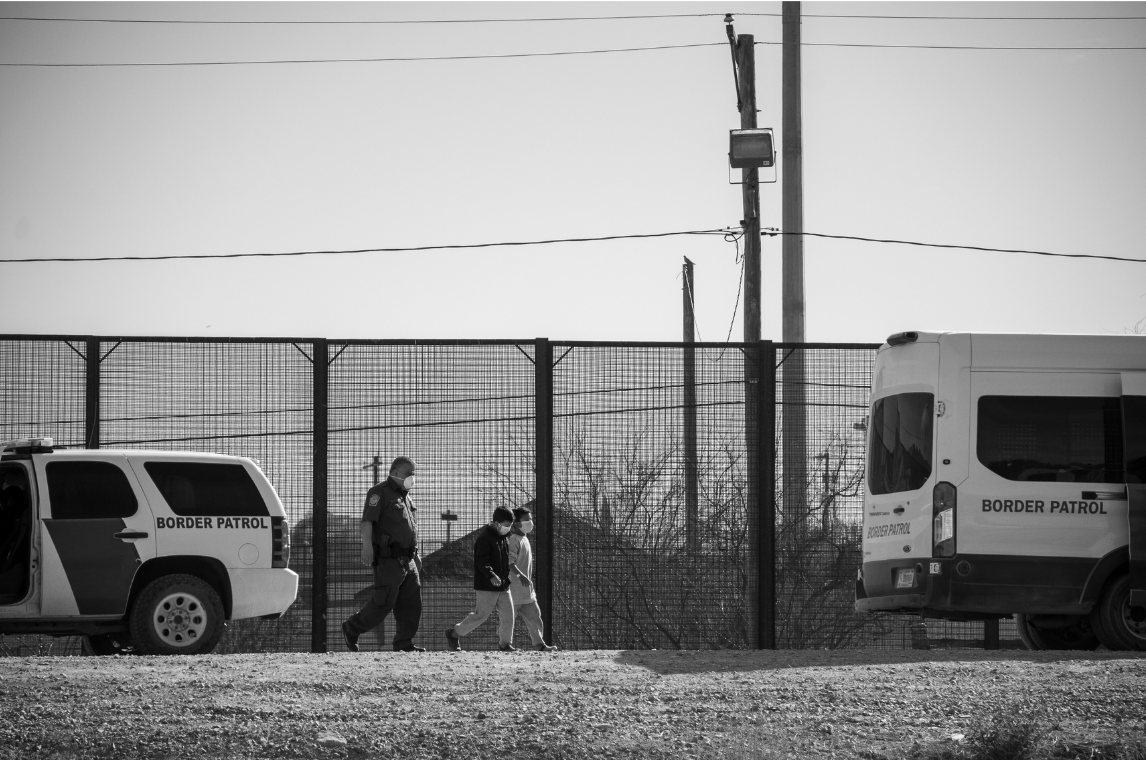
Half a Day: The Uncertain Future of Immigration Under Trump
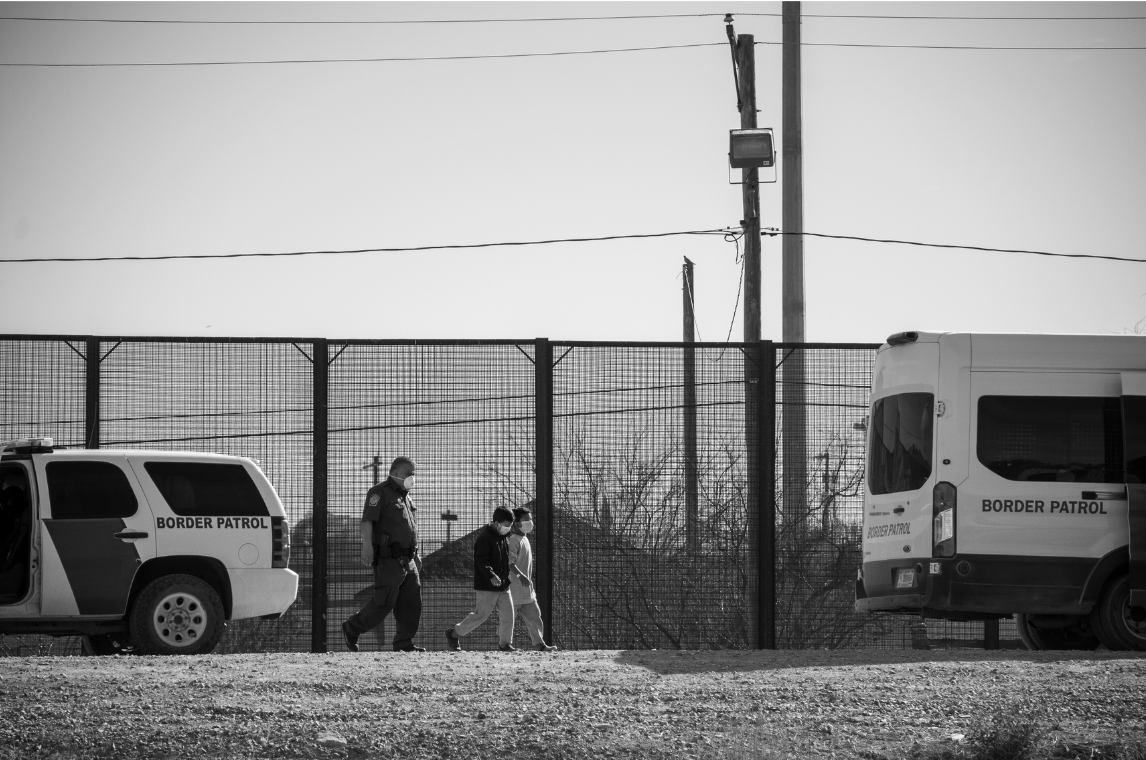
Photo by David Peinado.
Half a day.
On January 20th, Donald J. Trump was sworn in as the 47th President of the United States. And in just half a day, as news outlets globally will tell you, he wasted no time making executive orders, doing good on his campaign promises to his supporters.
So what’s one of the many things at the top of the agenda?
Immigration.
President Trump is arguably notorious for his harsh take on immigration, especially at the Mexico-United States border. Despite decades of strides toward cooperation and integration between the two nations at the hands of previous administrations, Trump has claimed that building a wall between the countries, “is not even a difficult thing to do” – and his 2016 campaign was built on the slogan of creating one.
While the wall wasn't built on January 20th, the nation took significant steps backward regarding immigration and cooperation.
With a quick visit to whitehouse.gov, you can find that a national emergency at the Southern border was declared. This will result in an increased presence of armed forces at the border, additional physical barriers, unmanned aerial systems, and revisions of current strategies. Using words like “criminal gangs,” “known terrorists,” “human traffickers,” and “smugglers” to describe all immigrants who cross the border, Trump declared that “America’s sovereignty is under attack.” He went on to state that at the hands of illegal immigrants, American women and children are murdered and Americans are terrorized beyond control.
Food for thought: according to a 2024 study by the National Institute of Justice, “undocumented immigrants are arrested at less than half the rate of native-born U.S. citizens for violent and drug crimes and a quarter the rate of native-born citizens for property crimes”.
The national emergency is just the beginning. Key issues like birthright citizenship, the 'Remain in Mexico' policy, the federal death penalty, refugee resettlement, and the potential designation of cartels as terrorist organizations are all on the table for Trump’s agenda over the next four years – signaled clearly within his first half day in office.
This half-day has already set the tone for an administration with plans to upend decades of immigration policy. Trump’s rhetoric and actions signal a shift toward greater division, painting immigrants with broad and damaging strokes. For the millions of immigrants who call the United States home – many of whom contribute to the nation’s economy, culture, and communities – this moment ushers in an uncertain future.
The implications extend beyond border security, as debates over human rights, legal protections, and America’s identity as a nation of immigrants take the stage. How the next four years will unfold remains to be seen, but one thing is clear: the lives of millions hang in the balance, and this administration’s policies will have lasting consequences not only for immigrants but for the soul of the United States itself.

Martial Law, Impeachments, Protests…What Was Going on in South Korea?
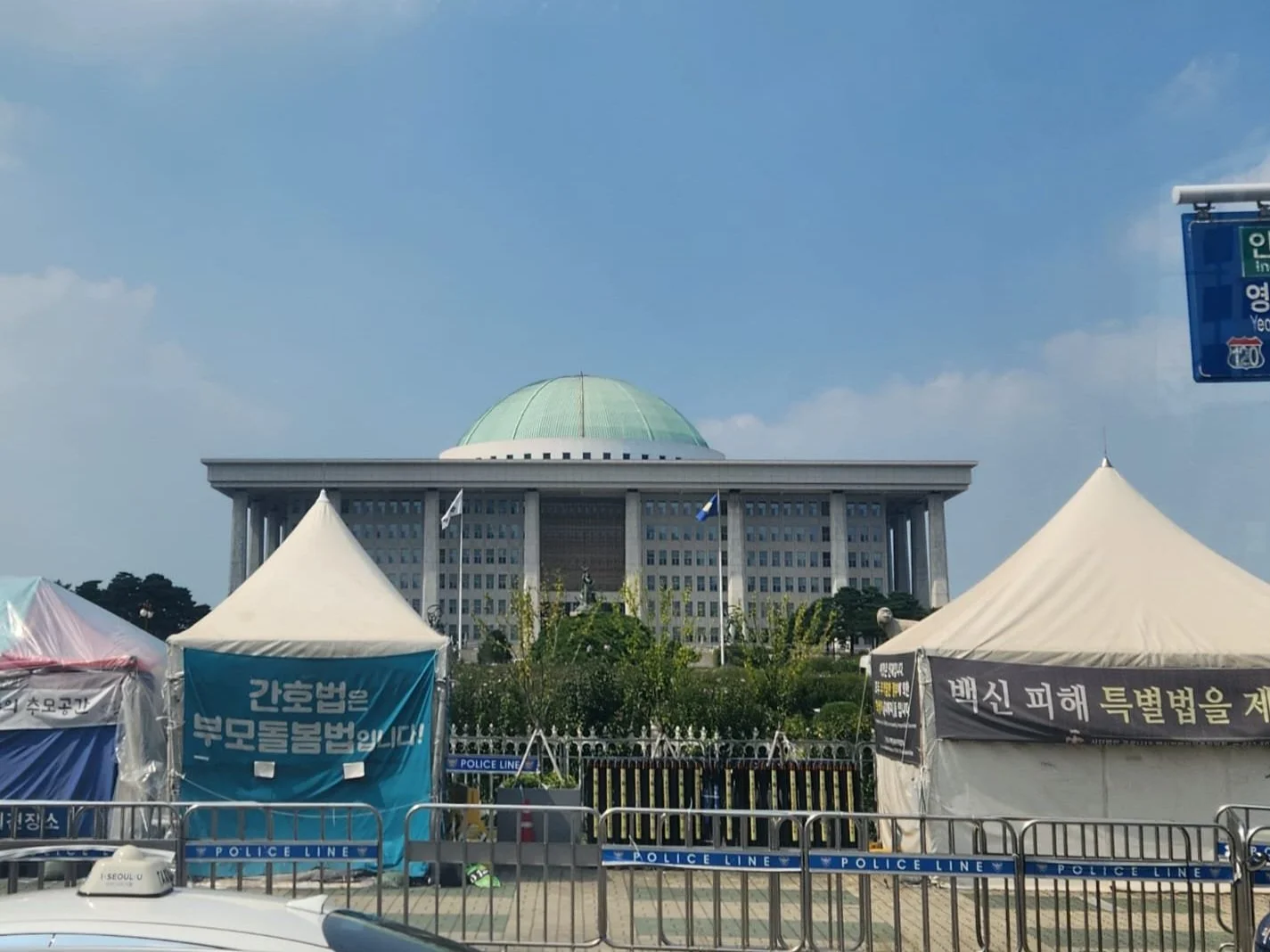
National Assembly Building, Seoul, South Korea. Photo by Annika Deshpande, September 2025.
On December 3, I was spending the night in my dorm room in Seoul, South Korea, when my phone suddenly lit up with messages and calls from friends and family back home. Opening them I saw variations of the same message: “OMG, are you okay? I just saw the news!”
The news? I open my phone and do a quick google search and read the headlines. Sure enough, South Korea was under martial law. It was shocking and almost impossible to believe. Martial law is when civilian rule is substituted by military authority and typically occurs during times of war, rebellion, natural disasters, or other types of unrest. Yet none of that was happening in South Korea.
The next couple of hours were filled with confused messages back and forth, as both local Koreans and foreigners attempted to understand what was happening. Then, at around 4 a.m., the martial law was lifted as abruptly as it had been imposed. By morning, life resumed as normal. Local South Koreans went to work and me and the other students went to our classes.
While the declaration was short lived, it plunged the country into a political crisis that continues to this day. South Korea now faces an uncertain future as a nation that once prided itself on its rapid democratization appears to have backslid into the first major political crisis since the 1980s.
What happened after Martial Law was declared?
South Korea and the rest of the world watched stunned as President Yoon Suk Yeol declared martial law citing the “threat of North Korean forces.” For the next 6 hours scenes of chaos erupted outside of the National Assembly building. Crowds gathered around the assembly building to protest the declaration as truckloads of armed police forces came to monitor the situation and stop lawmakers from entering the building. Scuffles broke out between the police and crowds. Lawmakers from the opposition party went through great lengths, even as far as climbing fences to get into the buildings to overturn the decision. Around 1 am the lawmakers voted to lift the law and at 4 am, President Yoon agreed to honor the parliaments’ decision and lift the martial law. In the coming weeks, South Korea saw multiple changes in leadership, impeachment charges, and many days of protests and clashes.
Following this, mass protests erupted as the opposition and the public called for Yoon’s impeachment. Initially, the impeachment vote failed after members of Yoon’s party believed he should have a chance to resign. However, Yoon refused to resign, and firmly maintained that he was acting in the country’s best interests. Therefore, eventually lawmakers from Yoon’s own party joined in impeaching him. Yoon also became the first sitting leader to be detained from criminal questioning as he has been accused of initiating an insurrection. After Yoon’s impeachment, prime minister Han Duck-Soo served as the acting president, only to be impeached two weeks later! Han’s impeachment came after he refused to appoint three-justices to the nine-member constitutional court. Han believed that this would overstate his authority but he accepted the impeachment and stepped down. This move only furthered the political chaos and uncertainty in the country. The move to impeach Han almost feels as if the opposition party went on a power trip, refusing to let anyone stand in the way of their goal to officially remove Yoon from office. Yet if this is true, then it means the political stability of the country was disregarded. As the chaos continued to ensue, the Korean won continued to plummet until it reached the lowest level to the dollar since 2009.
Yet the drama does not stop there.
At the end of December, a court ordered the arrest of Yoon for his attempt to declare martial law. The arrest warrant came after Yoon repeatedly refused summonings to be questioned by the court. However, when the police arrived to try to arrest Yoon from his home, they were met with a six hour long standoff against hordes of his supporters. The police eventually gave up the arrest attempt which kicked off a month-long standoff between Yoon’s supporters and security forces and the police, while Yoon remained holed up in his home. These protests were vastly different then protests earlier in December, which called for Yoon’s impeachment. The fervent of the supporters also seemed to mirror the behaviors seen in the US during the past election. Finally, after a month, Yoon was arrested to the dismay of the thousands who had gathered around his house. His supporters were so upset by the arrest that they broke into the Seoul Western District Court and began to riot.
What does the rest of the world think?
This crisis also dealt a significant blow to South Korea on the global stage. When President Yoon first took office, he made strengthening Korea’s position internationally a major priority. However, after this debacle, several of South Korea’s allies expressed disappointment over what they perceived as a restriction on democratic principles. The United States expressed serious concern about the situation, while Japanese lawmakers canceled a planned visit to Seoul.
This is significant because President Yoon had been advocating for a stronger trilateral partnership among the U.S., Japan, and South Korea to form a strong force in the region with their sense of democratic ideals being the binding force. However, South Korea’s apparent political instability left these key allies unsettled and undermined the image of cohesion that had been projected to deter China and North Korea. Reuters reported that Duyeon Kim,the Center for a New American Security, said that Yoon’s international reputation as a symbol of democracy had been ruined.
This miscalculation not only damaged Yoon’s political career, but minimized South Korea's credibility on the world stage. With a weakened image of unity and stability in South Korea comes the increased threat of North Korea. The DPRK mocked President Yoon’s declaration and likened him to a “dictator from decades ago”. While this is rather ironic coming from one of the most oppressive regimes in the world, it underscores the controversy sparked by the declaration.
Why was Martial Law so controversial?
The declaration of martial law was not only entirely unexpected but also remains a very sensitive issue for the nation. The last time martial law was declared was in 1980 by the nation’s last authoritarian leader Chun Doo-hwan. However, the degree was met by protests from students in the city of Gwangju. In response Chun sent the military to violently crack down on the protests. In what eventually became known as The Gwangju Uprising, where over 200 people had been killed in the violent protests and represented the nation’s turning point into eventually becoming a democracy seven years later.
Therefore, for the country, especially in the city of Gwangju, the declaration felt like a sharp sting and brought back memories to the country’s dark past. South Korea has rapidly progressed both economically and democratically. From 1987 when the last authoritarian dictator, the nation has grown to be a highly functioning democracy with an increasing global presence thanks to the global Hallyu wave. However, did this crisis highlight the flaws in the nation’s democracy, or perhaps its strength? South Korea's democracy is in no way perfect. Many presidents have been jailed or faced corruption accusations. President Yoon himself was extremely unpopular and faced significant backlash over his handling of bribery accusations involving his wife. This does not reflect a very strong democracy. When martial law was first declared, many people feared this was a reflection of the country’s brittle democracy. However, the martial law might have actually highlighted the strength of the country’s democracy. While the president’s last ditch power grab failed, the citizens rapidly mobilized to fight for their democracy. In a matter of hours and then for the next couple of days, protests erupted as the South Koreans protested the decree, refusing to give up the democracy they had long struggled for. Perhaps it was the arduous nature in which the country became a democracy that has made the citizens hold on to it so strongly. Yet while the citizens may be willing to fight and hold their political executives accountable, it does not diminish the fact that many of the country’s leaders are still riddled with corruption. As South Korea continues to cement its place in the world stage, perhaps it needs to look inwards at its political leaders to ensure that this type of instability does not happen again.
So why did Yoon do it?
In seeing all of the aftermath—the political crisis in Seoul, the potential criminal charges leveraged against Yoon, the loss of credibility on the world stage—what made President Yoon utilize such an extreme measure? And did he not see the obvious consequences that would emerge in doing so? Perhaps he was driven by desperation. Yoon’s presidency was riddled with various problems from the ongoing doctor strikes, various corruption charges against members of cabinets, and investigations into his wife. Relations with North Korea are at an all time low and most of his domestic policies were being blocked by the opposition party. The situation was dire indeed for President Yoon. Yet declaring martial law during times of peace is simply unheard of and it propelled a thriving nation into political disarray. The past month has been embroiled in confusion and chaos. The situation has negatively impacted the value of the won and lowered global confidence in South Korea’s political structure. While it exposed the weaknesses in the nation’s leadership, it also showed the willingness of the citizens to speak up and protect their sovereignty and freedom. Therefore, despite the current situation, South Korea will continue to forge its place in the global stage.
America for Whom?
Trump’s Attack on Birthright Citizenship
The United States of America has often been referred to as “a nation of immigrants,” a sentiment famously expressed by John F. Kennedy. With the exception of those of Native American descent, nearly every American has roots that trace back to other parts of the world. Central to the United States’ identity as a nation of immigrants is the principle of birthright citizenship. This idea, enshrined in the Fourteenth Amendment to the Constitution, guarantees that ‘all persons born or naturalized in the United States, and subject to the jurisdiction thereof, are citizens of the United States.’
Ratified in 1868, this amendment was a direct response to the injustices of slavery and the infamous Dred Scott v. Sandford decision, which denied citizenship to African Americans. It was a promise of inclusion at a critical moment in American history. The Fourteenth Amendment guaranteed that birth and place–not race and ancestry–would determine who could claim the full rights of American citizenship.
Today, that promise is under direct attack. President Donald Trump has unveiled plans to end birthright citizenship through an executive order, targeting children born in the United States to undocumented parents. If implemented, Trump’s proposal would fundamentally alter how citizenship is determined in the United States, dismantling a principle that has endured for more than 150 years. The automatic right to citizenship for children born on American soil—a cornerstone of the nation’s identity—would be stripped away, leaving countless individuals in legal uncertainty.
Ending birthright citizenship would have profound consequences, not just for individuals but for the nation as a whole. One of the most immediate consequences would be the creation of a stateless population—children born on U.S. soil who, despite their birthplace, would be denied the protections and opportunities afforded to citizens. Without the legal recognition, these individuals would face barriers to education, healthcare, employment, further deepening economic and social inequalities. This exclusion would ripple through society, creating significant challenges for public institutions. Schools and healthcare providers would struggle to accommodate a growing population without legal status, while families, many of whom lack access to legal resources, would be left to navigate an increasingly complex and burdensome system to prove citizenship eligibility. At a bureautic level, ending birthright citizenship would demand an extensive overhaul of the processes used to determine and verify citizenship. Such a system would inevitably result in delays, errors, and the potential for systemic discrimination. The strain on already stretched public resources would only intensify, fostering distrust and further alienating immigrant communities.
Because if a president can unilaterally alter such a fundamental right, what other constitutional guarantees could be next? How far can executive power go before it begins to erode the checks and balances that define a democracy?
This effort to dismantle birthright citizenship not only threatens the rights of millions but also tests the boundaries of executive power. The Constitution, not presidential authority, has always defined the parameters of citizenship. To allow a single leader to alter such a fundamental right through executive action would set a dangerous precedent, calling into question the integrity of other constitutional protections.
The attempt to bypass this cornerstone of American democracy is not without historical context. Over a century ago, the Supreme Court addressed this very issue in United States v. Wong Kim Ark. The case revolved around Wong Kim Ark, a San Francisco native born to Chinese immigrant parents, who was denied re-entry to the U.S. under the discriminatory Chinese Exclusion Act. In a decisive ruling, the Court reaffirmed the Fourteenth Amendment’s guarantee that anyone born on U.S. soil is a citizen, regardless of their parents’ immigration status. This landmark decision has stood unchallenged for more than 125 years, solidifying the principle that birthright citizenship is not subject to interpretation but a constitutional right.
If a president can bypass this precedent with a unilateral action, it raises an unsettling question: What prevents future leaders from targeting other constitutional guarantees? The erosion of such a foundational right signals a shift away from the democratic principles that have defined the United States, replacing them with a more exclusionary vision of citizenship.
Birthright citizenship is more than just a legal doctrine–it is a symbol of the nation’s promise of inclusion and equality.
Then, the question comes to mind:
So, America for whom?