
The Journal of Foreign Affairs at Carolina
Formerly known as The Internationalist
Get the latest from our Undergraduates at
The International Relations Column
Tariff Confusion: What’s Going On With Trump’s Economic Policy?
What an interesting week it has been for economic policy. Tariffs were threatened, introduced, delayed, and threatened some more. It’s not clear exactly what the end goal is for the Trump administration, and many on both sides of the aisle are concerned about the potential impact on American consumers and exporters alike. As of March 8th, here’s how the situation stands:
The sweeping 25% tariffs imposed on imports from Mexico and Canada were suspended just two days after they were announced, as markets suffered due to the confusion. However, President Trump denied that market reactions influenced his decision to suspend tariffs., instead citing the protection of American farmers and carmakers. This suggests that Mr. Trump is aware of the damage that these tariffs could cause, and yet a second round of tariffs is still in the works for April 2.
The back and forth, stop and start nature of the Trump administration’s decision making is being touted as a powerful negotiation tool, to stop the flow of fentanyl and illegal immigration into the country. And to a certain extent, this has been effective. Mexico has sent busted fentanyl laboratories, sent the National Guard to the border, and even agreed to have major cartel leaders extradited to the US. Whether this amounts to actual results remains to be seen, but an effort is certainly being made.
The other defined goals of the tariffs are shakier, and possibly even contradictory. If Trump wants companies to produce more of their products in the US, then consumers will buy more American-made goods. This is logical. But if consumers are buying domestic, the tariffs will generate less revenue. Countries will simply import fewer products if American consumers aren’t buying them.
There are also many lessons to be learned about tariffs from Trump’s first term. When tariffs were levied on China, economic studies showed that Chinese companies simply passed most of the costs on to consumers. American companies and manufacturers that use imported materials will also face higher costs, meaning that unless they too increase prices for the American market, their profit margins will suffer. Not to mention that the targets of tariffs will likely impose retaliatory tariffs on American exports, just as Canada has already done: a 25% tariff was imposed on Canadian electricity exports, affecting 1.5 million American households.
In terms of tariffs as a means for national security, decoupling from supply chains in foreign countries actually makes sense. But if this were a legitimate goal for the Trump administration, why would he want to get rid of the CHIPS and Science Act? This act by the Biden administration represented a strategic investment in America's technological independence—bringing semiconductor manufacturing back to U.S. soil precisely to protect against geopolitical vulnerabilities involving Taiwan.
Yet Trump's position creates a perplexing contradiction: while claiming to champion American manufacturing for national security, he seeks to dismantle the very legislation that successfully attracted semiconductor manufacturer TSMC's historic $100 billion investment. His theory that tariff threats alone will accomplish what substantial subsidies already have defies economic reality. Without the subsidies that offset America's higher labor costs, these companies would simply pass tariff expenses to consumers rather than relocating production. This fundamental misunderstanding of market dynamics not only threatens a critical defense industry but illustrates the flawed reasoning behind the broader tariff strategy.
Concerns over the fentanyl crisis and national security might be valid, but they don’t warrant disrupting historically friendly trade relationships with neighbors and allies. Especially when considering the harm that trade wars have caused in the past, the Trump administration should consider a more nuanced approach to trade that doesn’t harm American consumers and exporters.
Coercion and Crackdown: The US-Mexico Relationship under Trump
As of March 7, Trump’s ultimatum to Mexico to charge the country with 25% tariffs if they didn’t crack down harder on organized crime and drug cartels resulted in a one-month exemption for products as part of the US-Mexico-Canada Trade Agreement.
This marks the second time Trump has threatened hefty tariffs on Mexico, the first being on February 1. These tariffs represent attempts to economically coerce Mexico to stop the flow of fentanyl and migrants over the US-Mexico border. While fentanyl deaths have slowed in the past year along with the number of border crossings, Trump’s declaration in Congress on March 4 highlighted his intentions, as he stated that “the cartels are waging war on America, and it’s time for America to wage war on the cartels.”
Cartels in Mexico dominate the manufacturing, import, and distribution of fentanyl, cocaine, heroin, marijuana, and meth in the US. Fentanyl, the synthetic opioid that is up to 50 times more potent than heroin, is cooked inside seemingly ordinary kitchens in seemingly ordinary houses. The ease of production marks the saturation of fentanyl in the US, with this form responsible for nearly 70% of the US’s 107,000 drug overdose deaths in the past year. Cartels, along with fentanyl trafficking, often engage in extortion, migrant smuggling, oil and mineral theft, prostitution, and the weapons trade. They use their profits to bribe judges, police, and politicians to look the other way and use threats to coerce officials into cooperation.
The crackdown on drug cartels marks a shift for Mexico, whose previous president had a “hugs, not bullets” approach to crime in the country that attempted but failed to address the root causes of criminality while avoiding violence. Current President Claudia Sheinbaum, however, has proven her willingness to utilize confrontation and soldiers to stop the cartels. Earlier in her presidency, soldiers and cartel gunmen engaged in a series of battles that led to dozens of deaths.
On February 27, after Trump’s initial tariff threat, Sheinbaum illustrated her desire to handle the cartels on her own terms, without US assistance. Sheinbaum deployed 10,000 national guard troops to the US-Mexico border, launched an anti-fentanyl advertising campaign, and prioritized arrests of top criminal leaders. This historic crackdown led to the extradition of 29 criminal leaders to the United States, among them some of Mexico’s most infamous drug traffickers.
In response to Sheinbaum’s actions, Trump postponed the tariffs and praised Sheinbaum, stating that he postponed the tariffs “as an accommodation, and out of respect for President Sheinbaum.” Compared to the rhetoric surrounding Canadian Prime Minister Justin Trudeau, or “Governor Trudeau,” as Trump likes to call him, this more agreeable relationship he has with President Sheinbaum is certainly one to monitor carefully.
The Trump Administration has also stepped up its efforts to curb fentanyl production and smuggling. One shift prioritized the drug cartels by designating some of the most prolific Mexican cartels as Foreign Terrorist Organizations, or FTOs. This designation places the drug cartels on the same level as Hamas, ISIS, and Boko Haram and also permits new funds to expand operations, such as intelligence gathering or military force, to combat the FTOs.
These actions have had devastating effects on the cartel members, with operation shutdowns, lab relocations, and a series of arrests and seizures of fentanyl. In response to these changes, cartel operatives have started scaling down their operations and laying low to avoid suspicion. Many others are preparing to invest in equipment that detect American government drones. Despite the changes and crackdown, cartels have a long history of surviving efforts to dismantle them, such as by creating splintering groups as the number of cartels increases and shrinking the size of each operation.
Current and future policy direction for dealing with the cartels is not simple, nor is it universally agreed upon. Inside the Trump Administration itself, differing opinions exist on Mexico’s involvement in the fight against the cartels. While Trump wants Mexico to handle the issue, Mexico’s alleged government entanglement with cartels makes both potential cooperation and unitary action difficult. Similarly, Sheinbaum has not simply rolled over and given in to Trump’s demands. She has noted that while the drugs may come from Latin America, it is American consumers who demand and buy them.
This back-and-forth tariff cycle throughout North America puts the economy through a whirlwind, with the Mexican peso weakening during the latest episode. If Trump is not satisfied with Steinbaum’s progress on dealing with the cartels byApril, and he follows through with the tariffs, Mexico could slip into a recession. While Trump and Steinbaum have made their moves, the future is hazy, and we’re left to speculate how the tariffs and the crackdown unfold in the next few weeks.
When Reckless Texting Becomes a National Security Threat
We've all done it—sent a text to the wrong person. Maybe it was an embarrassing typo or a message meant for a friend that landed in your peer’s messaging log. Awkward, sure. But what if that message contained classified military plans?
That’s precisely what happened when top U.S. officials, including the Vice President, mistakenly sent details of planned airstrikes in Yemen to a journalist. Not over a secure government network, but on a commonly used messaging app.
Under President Donald Trump, the U.S. has ramped up airstrikes against Yemen's Houthi rebels. His administration has been open about this strategy—Trump himself declared, "We will use overwhelming lethal force until we have achieved our objective." So, the airstrikes themselves weren’t the shock. The shock was how the world learned about them.
The Atlantic released excerpts from the Signal chat on Monday, offering a glimpse into private discussions among top officials as they deliberated on U.S. military strikes against Houthi targets. Despite significant downplay by included officials and members of the current administration, the chats reveal specific timing of launches, information that is often heavily guarded as means of protection and security. It is information that, had it been leaked, would have allowed adversaries to flee.
The fallout was immediate. CBS reports that Israeli officials were "furious," since some of the leaked intelligence reportedly came from an Israeli human intelligence source on the ground. The breach didn’t just compromise military operations—it fractured trust with one of our closest allies.
And yet, no one has been held accountable. Many former military officers, active-duty troops, and outraged civilians have taken to the media, pointing out major flaws rooted in hypocrisy. If they’d leaked lower-level information, they’d be court-martialed, fired, or imprisoned. Kevin Caroll, Army veteran, former CIA, and former DHS member, states, "What typically happens in a spillage as serious as this is they're immediately fired.” Top-level officials being exempt from any sort of accountability sets a toxic double standard.
So what does this leak mean for national security? For America's standing in the world?
It means that, once again, reckless communication has compromised sensitive information. It means that one of our closest allies is questioning our ability to safeguard intelligence. And it means that those in charge—leaders entrusted with decisions of war and peace—are discussing military operations on the same kind of app we use to text our friends.
This isn’t just a lapse in judgment. It’s a warning sign. If our government’s top officials can’t even keep their Signal chats secure, should we trust them with the security of an entire nation?
Indonesia Joins BRICS, But What Does this Mean?
On January 7th, Indonesia joined BRICS, making it the first Southeast Asian nation to do so. This is a significant shift for Indonesia, which in recent years has remained largely neutral and worked to strengthen relations with both the western and eastern countries. However, Indonesia’s current President, Prawbowo aims to increase Indonesia’s role as a leader on the global stage. Yet will Indonesia be successful in foraging its place outside of the spheres of the west and east,as it has done before, or will it get caught in the cross-fire?
To begin, we first must quickly understand what BRICS is. BRICS stands for Brazil, Russia, India, China, South Africa– a group of nations who came together to counter Western global influence and give emerging economies more of a voice in international economics. In 2023, the block expanded to include Egypt, Ethiopia, Iran, Saudi Arabia and the United Arab Emirates (UAE). The primary goal of this group is to help its members increase their economic development. However, BRICS also includes several countries which have had or currently have rather frayed relations with the US and the west. Now, what does this have to do with Southeast Asia?
China and the US have been vying for influence in Southeast Asia leaving the nations of the region to walk a fine line between maintaining relations with both superpowers. However, Indonesia joining BRICS is a big move, which could be a source of concern for the west. In particular, Indonesia seeks to buy cheaper oil from Russia, citing this as an opportunity to help propel Indonesia’s economic growth. However, this would be concerning for the west which has aimed to pressure Russia to end its invasion of Ukraine through tariffs on oil. Yet if Russia continues to find new markets for its oil such as India and now Indonesia, Russia will be able to go around these tariffs and are less likely to succumb to international pressure. With the Ukraine war having been ongoing for the past three years and the recent talks of the end of the war from President Trump and other European leaders, the west will be keen to have countries such as Indonesia to align with its tactics.
While joining BRICS could potentially sour relations with the West, there is also a great opportunity for Indonesia to help improve its economy and help contribute to a more prosperous and stable Southeast Asia. Additionally, Indonesia also seeks to join OECD, showcasing its continued plan to build connections with both the west and east. In an increasingly polarized world, where countries seem to be more at opposition than in collaboration, could countries such as Indonesia, which has a hand in both bowls, be the answer to fostering global cooperation?
Europe Cuts the Cord on Russian Gas but What Comes Next?
On January 1st, the last land gas pipeline connecting Russia and Europe directly stopped flowing. The pipeline, which went through Ukraine, allowed Russian state-controlled energy giant Gazprom to transport natural gas to central Europe.
This halt comes as the five-year-old contract allowing Gazprom to utilize the pipeline ended. Signed before Russia’s invasion of Ukraine, the contract was upheld for its full validity with Ukraine announcing it had no plans to renew. So how did this impact Europe?
In short, Europe was not heavily impacted by the closure of the pipeline. The brunt of the impact occurred in 2022 with the Russian invasion of Ukraine. In response to the invasion, Western Europe among other individual countries placed a plethora of sanctions on Russia targeting a wide variety of industries and people. Russia in its retaliation, through claims of technical and maintenance errors with the pipelines, reduced and halted the flow of gas to Europe. This created an energy crisis in Europe and forced its countries to find new energy outlets.
Europe compensated for this loss by changing its main importers of gas. In 2021, 40% of the gas imported by the EU came from Russia. Flash forward to 2023, and only 8% came from Russia with a primary import emphasis coming from Norway and the United States.
Russia’s invasion of Ukraine also prompted a stark shift towards renewable energy alternatives. In 2023, clean energy solutions received 10 times the investment money from Europe when compared to fossil fuels. These two efforts combined allowed Europe to adjust its energy consumption throughout the crisis surprisingly well.
The closing of the gas pipeline last month holds somewhat of a symbolic meaning because the majority of Europe was minimally impacted by its shut-off. Only Moldova has faced real struggles with the line closing and Austria has had to compensate more than others to find solutions for their gas needs. The separation of Europe and Russia through the pipelines’ closing demonstrates Europe’s ability to not be bound to Russia and display its competencies as an entity that can stand for itself.
A question presents itself though, as U.S. relations with Europe, Ukraine, and Russia shift under new governments, will Europe’s continued reliance on gas from the U.S. remain a viable alternative for its energy needs?
Bolsonaro’s Indictment Tests Democracy in the Region
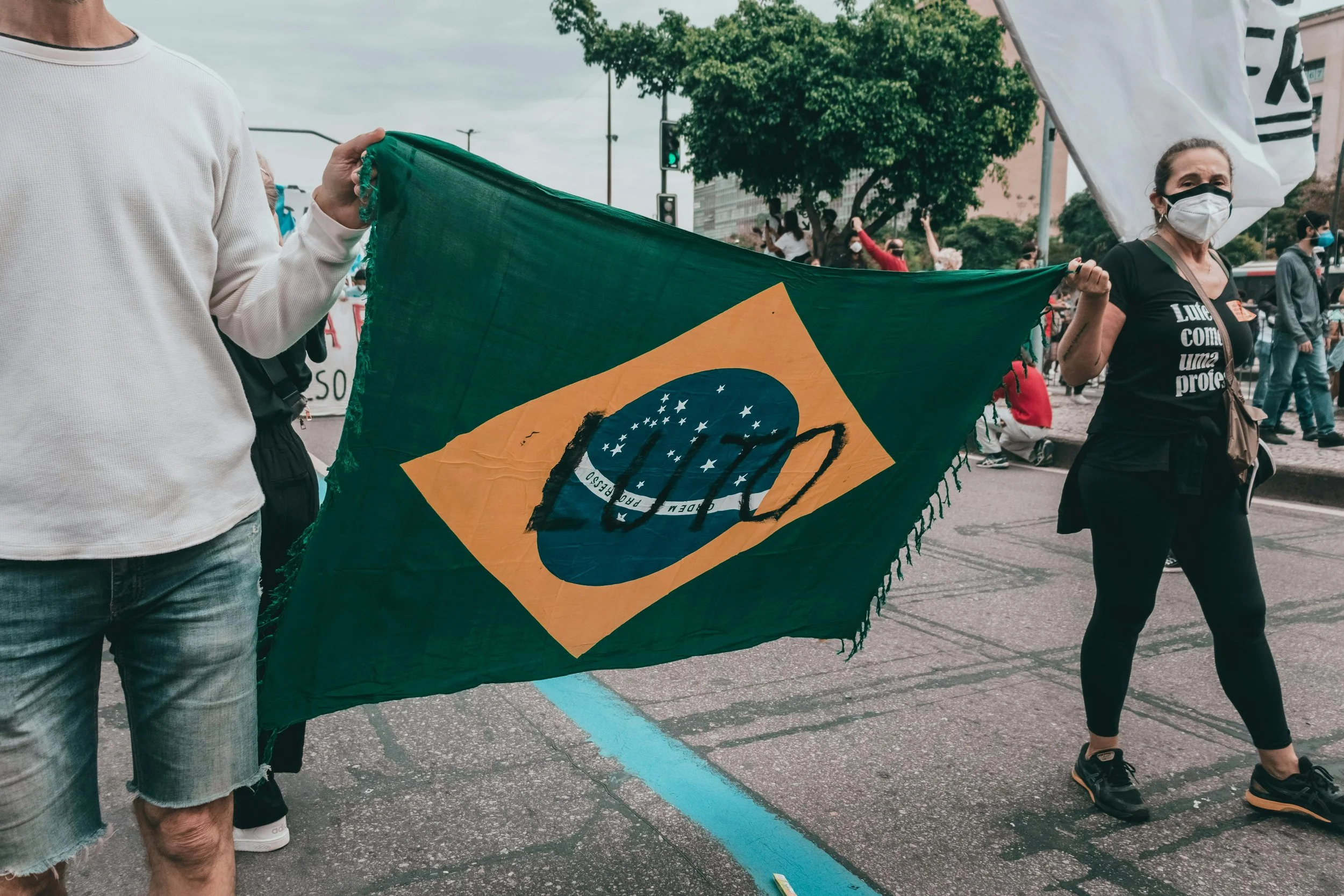
Photo by Michelle Guimarães from Pexels.
After losing the 2022 presidential election to current President Lula da Silva, former Brazilian President Bolsonaro has been indicted with a scheme that threatens Brazil’s democracy. The plan included annulling the vote, dissolving the judicial system, strengthening the military, and even assassinating President Lula da Silva. The Attorney General indicted 33 other individuals, some of which included high-ranking government members, like the defense minister and national security advisor.
Brazil’s democratic peril—evidenced by Bolsaro’s plans, claims, and his supporters who stormed government buildings in Brasilia in 2023—is reminiscent of Trump supporters attacking the U.S. Capitol in January 2021 after Joe Biden had won the election. In fact, Bolsonaro claims that the judicial system is being weaponized, another parallel between Bolsonaro’s politics and Trump. There is a fear that Trump might attempt to exert influence in Brazil in favor of Bolsonaro.
With the charges filed, what comes next is up to Supreme Court Justice Alexandre de Moraes (who was also targeted in Bolsonaro’s scheme), as he will weigh the strength of the arguments to determine if the case will move onto a trial. Should this case move to trial, it is expected to be lengthy. If convicted, Bolsonaro could face a sentence that could last decades.
Brazil’s democracy, which until this point had remained relatively strong after a dictatorship from 1964-1985, is once again under threat. The indictment, a fierce political divide between Lula da Silva and Bolsonaro’s supporters, and next October’s general elections (elections in which Bolsonaro cannot legally participate in) delicately position the democracy in one of the most influential countries in Latin America. Bolsonaro, Trump, Mieli (Argentina), Maduro (Venezuela), Ortega (Nicaragua), and Bukele (El Salvador) all represent right-wing populism, to varying extents, and some also represent complete democratic backsliding. Only time will tell if democracy in the Americas will be upheld, or if Brazil’s democracy will erode like many other countries in recent years.
Serbian Student Protests Continue to Gain More and More Momentum
What began as student-led protests could lead to large-scale changes in Serbia. In November 2024, a concrete canopy outside the city of Novi Sad’s railway station collapsed, killing 15 people. The tragedy has sparked a wave of student-led protests to demand more government accountability and less corruption and has resulted in “the biggest protest movement in Serbia in years.”
These protests started as 15-minute road blockades to honor the 15 lives lost in the collapse and spread from Novi Sad across the country. The blockades turned into occupations of public university buildings as a result of attacks on the vigils and the lack of response from authorities. On January 28th, students in Belgrade organized a 24-hour occupation of a central intersection that was copied in other major Serbian cities.
There was a solidarity created not only among the students leading and attending these protests but also with community members across Serbia, signaling a greater desire for government accountability. 61% of Serbians support the blockades and protests and tens of thousands of people gathered in over 200 towns and cities over the past three months to protest. Community members provided students with meals, hundreds of taxi drivers gathered to drive students from Novi Sad to Belgrade, and citizens of Kragujevac opened their homes to around 700 students who came into town to protest. Citizens across Serbian society joined the students in attempts to demand more from their government.
While the protests started as targeting the potential corruption in construction contracts and transparency about how the collapse occurred, it has evolved into a demand for greater government accountability and political change. As the protests have continued on for months, some concessions have been made by the Serbian government to satisfy protesters without fully giving into their demands. Serbian President Vučić has stated that he has met the demands of the students (publication of documents, justice, dismissal of charges for those arrested, and greater funding for higher education), but the protests are still ongoing. In reality, the government has only declassified a handful of documents related to the collapse and the independence of the recent investigation has been called into question, further fueling the protesters’ cause. In January, in addition to the resignation of Novi Sad mayor Đurić, Prime Minister Vučević became the highest-ranking government official to resign as a result of the protests. However, the protesters do not see these attempts by the government as meaningful change. They want to see prosecutions, not false attempts at reform.
Mass protests in Serbia have not been uncommon in recent years. Until this recent wave of protests across the country, the Serbian government has been able to quiet previous demonstrations by framing their issues as isolated to certain groups or populations or painting protesters negatively, which has limited participation in previous protests. However, this strategy has no longer worked with this recent movement. The protesters’ demands for truth and accountability are widely felt across Serbian society and these protests have gained mass following as a result. Despite attempts by the government to suppress the protesters, such as through random arrests and accusations that student protesters are working with foreign intelligence agencies, they have only mobilized more people from across Serbian society. The demonstrations have grown into the largest protest movements in the country since the fall of former Serbian president Milošević in 2000 and some have even considered it Europe’s largest student-led movement since 1968.
Perhaps even more remarkable, these protests demanding transparency and garnering popular support are a unique phenomenon in the backdrop of a global shift towards the right seen in places like the United States and Germany. Within Serbia, they are posing a real threat to Vučić and his government’s rule and may also, in time, have a substantial impact on Serbia's governance moving forward.

Strategic Ambiguity and Stability in the Taiwan Strait
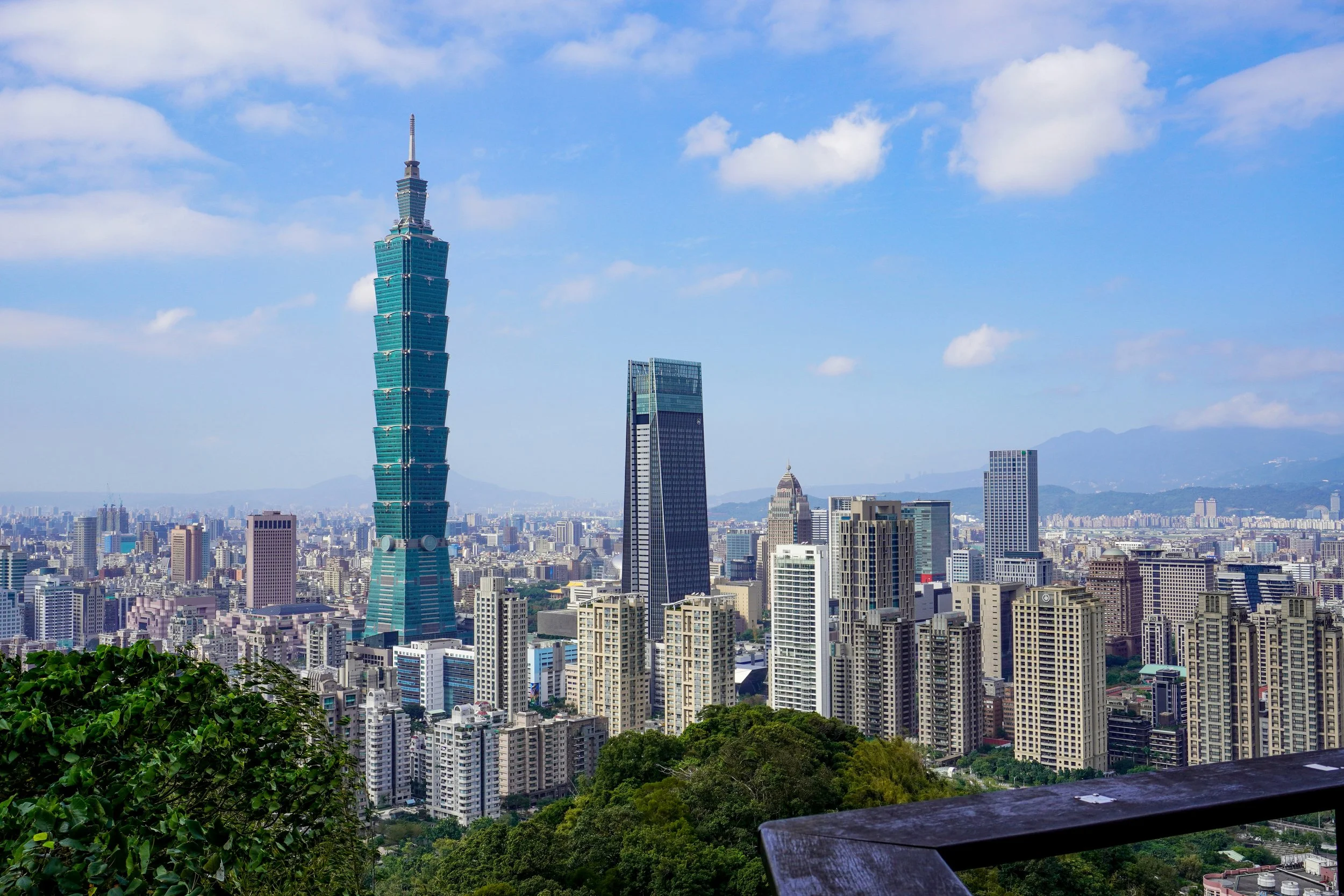
Taipei, Taiwan. Photo by Vas on Unsplash.
The Taiwan Strait has long been a flashpoint of tension, but in 2025, the stakes are higher than ever. With President Donald Trump back in the White House, China’s military posturing in the region escalating, and Taiwan bracing for what some predict could be an imminent invasion, the world is watching anxiously. The U.S. remains caught in a delicate balancing act—maintaining its long-standing policy of "strategic ambiguity" while arming Taiwan against a potential Chinese assault. But as Beijing intensifies its rhetoric and military maneuvers, the question remains: Is war inevitable?
Taiwan’s struggle for self-determination is nothing new. The Chinese Communist Party (CCP), led by President Xi Jinping, has consistently asserted that Taiwan is a breakaway province that must, sooner or later, be reunited with the mainland—by force if necessary. "Taiwan's sovereignty and independence belong to its 23 million people, not the People's Republic of China," declared Taiwanese President Lai Ching-te earlier last year, reinforcing the island’s defiant stance against Beijing’s claims.
China’s aggressive actions have escalated dramatically. In the past month alone, Beijing has conducted large-scale military drills around the island, sent warplanes near Taiwanese airspace, and issued fresh warnings against "foreign interference." This belligerent behavior isn’t just about Taiwan—it’s also a direct challenge to U.S. influence in the region. Will Washington back its implicit promises to Taiwan, or will it hesitate in the face of a potential military clash with China?
President Trump’s return to office has introduced new uncertainties to the conflict. Since he was elected, Trump has imposed a 10% Tariff on all Chinese imports, Taiwan is contemplating a multi-billion dollar arms purchase from the US, and the US has removed the statement “We do not support Taiwanese independence” from the State Department’s bilateral fact sheet on Taiwan. These actions constitute at least a slightly more assertive US policy in the region contributing to heightened tensions.
The core issue in this conflict is a classic “commitment problem”—the challenge states face in making credible promises to avoid future aggression. For China, Taiwan represents unfinished business, and its growing military power has emboldened its ambitions. Meanwhile, the U.S. must weigh the risks: failing to act could embolden China, but a firm commitment to Taiwan could push the region toward a catastrophic war.
The shifting military balance adds to this uncertainty. For decades, the U.S. Navy dominated the Pacific, but China’s rapid military expansion has significantly narrowed the gap. Analysts warn that Beijing’s naval capabilities could soon rival Washington’s, meaning America’s ability to deter Chinese aggression is under strain.
Several potential scenarios loom. China may calculate that U.S. hesitation gives it the perfect opportunity to seize Taiwan, leading to a military confrontation. Alternatively, fearing China’s rising power, the U.S. may shift away from "strategic ambiguity" and explicitly commit to defending Taiwan—a move that could provoke Beijing into aggressive action.
This conflict is no longer just a regional issue; it has evolved into a global flashpoint with widespread implications. The decisions made in Washington, Beijing, and Taipei in the coming years will determine whether tensions remain contained or escalate into one of the most significant conflicts of the 21st century.
Norway’s Government Collapse: What Led to the Political Crisis and What’s Next?
Last month Norway’s government collapsed. So what happened?
For some background, Norway is an incredibly wealthy nation with humongous amounts of oil. It is not a member of the European Union (EU), but it is a part of the European Economic Area (EEA). The EEA and Norway’s participation in the agreement allows the country to be a part of the single/internal market that other EU countries operate within. The EEA is crucial for Norway as 80% of the country's exports go to the EU.
That being said, many Norwegians have an overwhelmingly negative view of the EU. In January, Jonas Gahr Støre, Norway’s Prime Minister and member of the Labour Party, wanted to implement three EU energy directives. This did not go over well with his coalition group the Centre Party who hold primarily Eurosceptic beliefs. They were so against implementing these three directives that they essentially quit the government. Støre lost eight of his cabinet members with the separation, leaving roles like the minister of defense, justice, and finance vacant. The Centre Party holds a strong belief that cooperation with the EU threatens Norway's autonomy. Furthermore, the Party's resignation leaves large gaps in Norway’s governmental framework and the Labour Party will now govern until elections are held again in September.
So what does the Norwegian Labour Party stand for?
The Norwegian Labour Party is the largest political party in Norway and is much more open to cooperation with the European Union. They believe in the prioritization of EU-Norway relations as they fear that a trade war between Europe and the US is on the horizon. Also, renewable energy sources are something that the party advocated for making the three EU energy directives something the Labour Party supports.
Despite being the new governing power and potential for change, it is unclear whether or not the Labour party will be able to take much political action in the coming months. On one hand, the Labour Party does not have the majority in parliament and also does not take the lead in opinion polls compared to its right-wing counterparts. On the other hand though, since the exit of the Centre party, voter support for the Labour Party is the highest compared to the other 10 other parties represented in parliament.
Norway’s political uncertainty has the potential to bring about new change and different approaches to cooperation with the European Union, something that has not been deeply explored in quite some time.
Global Econ-Insights #5: Spanish Success
Thus far, each issue of this publication has been solely focused on the economic downfalls of foreign countries. Recession, inequality, growth inhibition—all have restricted the financial success of nations across the globe. But now, it is time to adopt a more optimistic approach to the economic state of the world—and find examples that represent the best ways of mitigating fiscal repercussions. In this issue, we look towards the recent drop in Spain’s unemployment rate.
As of January 2025, Spain’s unemployment rate has fallen to the lowest that it’s been since 2008. Keep in mind that this was the same year during which the U.S. itself was greatly suffering from an economic recession. However, 17 years later, it seems that Spain’s financial evolution has been of a much more distinguished nature than most other Western countries. According to the National Statistics Institute, the unemployment rate has recently fallen to 10.61% from 11.21% in the previous quarter, whereas in 2008 it was 10.36%, despite economics forecasting that it would fall to 11.1% this year. When it comes to specific measures of employment, it is important to recognize that Spain has added a whopping 468,000 new jobs to its labor force just this year alone. This puts Spain on track to achieve a 2.5% increase in GDP this year in a manner of economic growth that no other large European country has ever done in recent history. In fact, Spain’s fiscal acceleration has resulted in France and Germany inhibiting their own progress.
When analyzing examples of such blatant economic success like this one, it is crucial that we deduce which industries are relevant. In the case of Spain, more than 90% of the new employment in its labor market has been in services, causing a large boom in the tourism industry. The ultimate impact of this rampant increase in Spanish tourism has been a significant reduction in income inequality across the country, causing great damage to the existing effects of inflationary shocks. These findings come from CaixaBank Research, which has tracked the evolution of wage inequality in Spain over time. During the pandemic, wage inequality in Spain was significantly increasing, However, in the post-pandemic era, Spain’s wage inequality has traveled in the complete opposite direction, serving as a platform for adding new employees to the workforce and plummeting the unemployment rates. In the time that Spain has countered its own rampant inequality, such an inequitable division of labor has only become amplified in the U.S., Germany, and France, proving that Spain has been primarily alone in its newly successful economic endeavors.
However, while Spain has indeed demonstrated great economic progress and made it easier to imagine a lucrative future in store for itself, it still needs to work on its integration of foreign workers into the makings of its labor market. Doing so will be the key to advancing Spain as a country from its current state of anticipation to a peak economic breakthrough. At the moment, 78% of foreigners in Spain are of working age as opposed to just 63% of the natives, yet foreign workers account for only 16% of the labor force, with particularly only 3.2 million of workers being foreigners. 8% of foreign workers have unverified contracts whereas only 1.7% of native workers do. This once again goes to show and prove how foreign workers are put at a great disadvantage in the Spanish labor force and that even though the country itself may currently be maximizing its economic efficiency, it still has much to improve on in terms of its economic equality.
Student Activism in the Anti-Corruption Movement
Student activism has long been a driving force for social and political change worldwide, and Serbia is no exception. Over the years, university students have played a crucial role in advocating for transparency, justice, and systemic reforms in response to government corruption and institutional failures. Their efforts have become particularly significant in light of recent events, such as the silent protest in Niš, held to honor the victims of the Novi Sad railway station canopy collapse. This tragic incident has ignited a renewed call for accountability, with students at the forefront of Serbia's growing anti-corruption movement.
The tradition of student activism in Serbia can be traced back to the 1968 protests against the communist government, a movement that mirrored similar uprisings across Europe. In the 1990s, student demonstrations became instrumental in challenging the fraudulent electoral practices of Slobodan Milošević’s regime. The 1996-97 protests against electoral fraud and the massive 2000 demonstrations that led to Milošević’s ousting were watershed moments in Serbia’s political history. These movements established a foundation for youth-led civic engagement and a culture of resistance against corruption. In recent years, Serbian students have continued to challenge systemic corruption, particularly in response to mismanaged public infrastructure projects and political misconduct. The Novi Sad railway station collapse is only one of many instances where government negligence has resulted in serious consequences, prompting students to mobilize in the fight for transparency and reform.
Serbian student activists employ a variety of methods to sustain their movement and amplify their message. Their strategies include peaceful protests, social media campaigns, collaborations with civil society organizations, legal advocacy, and international engagement. One of the most effective forms of protest in Serbia has been peaceful demonstrations. Silent protests, such as the one in Niš, serve as powerful acts of remembrance and civic responsibility. Additionally, marches, sit-ins, and public vigils have become key tactics in sustaining momentum for the movement. Social media platforms such as Twitter, Facebook, and Instagram have also played a crucial role in mobilizing support. These digital tools enable activists to quickly organize events, spread awareness, and counter government-controlled narratives in state-run media. By utilizing social media, students ensure that their movement reaches a wider audience, both nationally and internationally. Moreover, Serbian student activists frequently collaborate with non-governmental organizations (NGOs) and independent journalists to investigate and expose corruption. These partnerships provide them with the resources and expertise needed to effectively document misconduct and push for legal accountability. Another significant strategy is legal advocacy. Some student groups have pursued legal avenues by filing complaints against corrupt officials and lobbying for policy reforms that promote transparency. Through legal action, they put direct pressure on government institutions to uphold the rule of law and protect democratic principles. Lastly, Serbian student activists engage with international human rights and anti-corruption organizations to draw global attention to their cause. This international spotlight increases pressure on the Serbian government and amplifies the movement’s demands for justice and reform.
The persistence of student activism in Serbia has led to tangible societal changes. One of the most significant impacts is the increased public awareness of corruption and government accountability. Public discourse on these issues has intensified, forcing political leaders to address concerns that might have otherwise been ignored. In some cases, sustained student-led protests have resulted in high-profile resignations and policy changes. Government officials implicated in corruption have been forced to step down, and certain policies have been revised in response to public outcry. Furthermore, the movement has contributed to a surge in civic engagement among Serbian youth. More young people are becoming politically active, voting, and participating in advocacy efforts beyond traditional protest methods. This increased involvement signals a shift toward a more engaged and informed electorate. Additionally, institutions such as universities, media outlets, and watchdog organizations have intensified their scrutiny of government actions. The efforts of student activists have played a crucial role in fostering a culture of accountability within these institutions, strengthening democratic norms in Serbia.
Despite their successes, Serbian student activists face significant challenges. State repression remains a major obstacle, as government authorities often attempt to suppress dissent through intimidation, arrests, and media manipulation. The state-controlled media frequently attempts to discredit activists, portraying them as troublemakers rather than legitimate advocates for change. Another challenge is the risk of political co-optation. Some movements lose momentum when their leaders are absorbed into the political system, diluting the movement’s objectives. Maintaining independence and resisting co-optation is crucial for the long-term effectiveness of student activism. Despite these challenges, the persistence of Serbian student activists offers hope for a more transparent and just society. Their resilience in the face of adversity signals a broader shift in public consciousness, one that demands accountability and upholds democratic values. As they continue to challenge corruption and advocate for systemic reforms, their movement has the potential to shape Serbia’s political future for generations to come.
Student activism in Serbia has a long and rich history of advocating for transparency, justice, and political reform. From the overthrow of Milošević to present-day protests against corruption, students have played a central role in holding the government accountable. Through peaceful demonstrations, social media mobilization, legal advocacy, and international engagement, they have successfully brought attention to pressing issues and influenced political discourse. While challenges such as state repression and political co-optation persist, the student movement remains a vital force in Serbia’s fight against corruption. Their efforts have already led to increased public awareness, resignations, and policy changes. As they continue their activism, they represent not only the voice of the present but also the hope for a more democratic and accountable Serbia in the future.
Hope on the Horizon
New York Times opinion columnist Bret Stephens has recently published an article with which I tend to agree, to say the least. It’s titled “A Day of American Infamy,” and I suggest that you take a look at it: it speaks to what I can assume has been on most of our minds recently. He begins the article with a powerful example, from the dark days of World War II, when our timeless ally, Britain, faced an existential threat in the bombs unleashed by Nazi Germany:
“If [Franklin] Roosevelt had told [Winston] Churchill to sue for peace on any terms with Adolf Hitler and to fork over Britain’s coal reserves to the United States in exchange for no American security guarantees, it might have approximated what Trump did to Zelensky.”
If you’re like me, and have found yourself asking “What just happened?” after reading just some of the choice news articles published these last few weeks (see: when the United States of America joined the despots of the world, among them Russia, North Korea, Belarus, and Israel in a UN vote against a “Comprehensive, just, and lasting peace in Ukraine”), this is the answer: the United States government has sold out an ally to the lowest bidder: Vladimir Putin, a bloodthirsty autocrat lying to our president through his teeth.
All of this would be less shocking if Trump’s positions weren’t so wandering and inconsistent. In a visit to the White House, UK Prime Minister Sir Keir Starmer, bringing flattery and an opportunity for a state visit with King Charles III, managed to get it out of Trump that American backing of Ukraine would be “an honorable thing to do,” even walking back his ridiculous claim that Volodymyr Zelenskyy is a “dictator without elections” (“Did I say that? I can’t believe I said that. Next question.” He said). This, of course, coming after weeks of bashing the embattled Ukrainian president with attacks both within the Oval Office and without.
To those readers who are struggling to find hope, I myself have considered joining you. We are living in times that do indeed rhyme with those deadly years of 1939-1945. But research into historical precedent has brought enlightenment, with tidings of what could be, at the very least, a better time of this administration ahead for all of us.
I’m referring to the 2026 midterm elections, in which dozens of seats in the United States Congress will be up for grabs in districts across the country. Data over many years and many elections tend to reveal that, on average, the incumbent administration’s party loses 25-28 seats in midterms, with unpopular presidents standing to lose even more. Donald Trump is uniquely unpopular outside of his base. In 2018, even with a relatively strong economy, Trump led his party into a wipeout, losing 40 House seats. His core supporters remained fanatically devoted, to be sure, but the broader electorate—especially suburban voters and independents—recoiled from his relentless chaos, corruption, and extremism.
There is no reason to believe 2026 will be any different. Trump has shown that he will govern in 2025 as he did before—by battering institutions, gutting environmental regulations, provoking international crises, and treating NATO like an afterthought—and his party will suffer the consequences. The backlash will be swift, and the Republican majority in Congress will likely be shattered.
This will not eliminate the threat Trump poses, however. The president has made stunning use of (arguably autocratic) executive orders to shove through otherwise unpopular legislation, among which came numerous heavy tariffs on American allies, and the bizarre orders to rename the Gulf of Mexico to the Gulf of America, and Denali, the tallest mountain in America, back to Mount McKinley. His star-studded cast of vaccine-denying, amoral, totally professionally and morally unqualified cabinet picks, too, will continue to represent a dangerous threat to American democracy. But the administration has begun to show cracks in its policies even just about 6 weeks into the game. Guantanamo Bay has been emptied of the migrants the administration promised to imprison there; Aid funding has been ordered resumed; the threatened tariffs on Canada and Mexico have been paused, and refugee admissions have been ordered continued.
Normal Americans who will not tolerate autocracy in this country must continue to put up the fight against American tyranny, but now they have something to look forward to: the possibility that as soon as next year, Democrats could retake the House and Senate, and block the autocratic legislature that threatens to take hold of our government.
The Two Sides of Paul Kagame
In January of 2025, the rebel group M23—supported by regular Rwandan soldiers—entered Goma, the DRC’s eastern metropolis. A patchwork of rebel militias cover Eastern Congo, but rarely do they attack regional centers with armored vehicles, drones, and surface-to-air missiles. In Goma, M23 looks more like a professional army. The Rwandan support for M23 comes from Rwanda’s long standing president, Paul Kagame.
Kagame’s domestic policies have earned him an impressive reputation. Since taking power in 2000, Kagame has ruled as a strongman but is building an impressive resume. Under his leadership, Rwanda became one of the consistently fastest growing economies on earth. Rwanda has the highest proportion of women in Parliament out of any country. Kagame’s leadership has lowered child mortality by 70%, developed a national health insurance program, and defused the ethnic rivalries that led to the 1994 genocide. Rwanda now lays claim to Africa’s first smartphone company, is the host of the NBA’s offshoot Africa Basketball League and has recently entered negotiations to become the first African country to host a Formula 1 race.
Kagame’s immense domestic progress has led him to develop strong ties with the West. He is a frequent attendee of conferences in Davos and Paris, is a favorite target for foreign aid, and has strong support from the US. Consequently, 70% of Rwanda’s central government is funded by the OECD.
Simultaneously, Kagame’s foreign policy horrifies onlookers. Political opponents often flee the country. Kagame has been accused of using state intelligence to terrorize exiled political figures. Since coming to power in 1994, he has sponsored two wars against the DRC, including the Second Congo War, known as the “Great War of Africa.” Now, after years of backing the rebel M23 group in Eastern DRC, he looks poised to do so again.
Kagame’s support for M23 and mobilization of troops across the border has a turbulent precedent. Rwandan-backed wars in the DRC have twice toppled the DRC’s president, pulled in a dozen other countries, and has now received a rare condemnation by the United Nations Security Council. (If China, Russia, and the United States agree on something, it's generally pretty serious.) If international opinion towards Kagame sours, particularly that of his OECD supporters, Rwanda will struggle to maintain its prosperity.
The international community’s reaction to Rwanda’s de facto seizure of Goma could put Kagame in a difficult position. Kagame’s standoff with the international community dares them to intervene and sanction one of Sub-Saharan Africa’s brightest examples of development, a regional beacon of stability, and a reliable partner.
Simultaneously, internationalism is struggling. The closure of USAID heralds a global lean towards isolationism, and a tiny country like Rwanda may see its river of foreign investment turn into a trickle. If foreign investment is slowing, Kagame is betting on Rwanda’s military to secure his country’s future. Africa’s great lakes region (which Goma is built on the shores of) is home to some of the world’s richest deposits of coltan, gold, and tin. (Rwanda has mysteriously become a large gold exporter, despite mining little gold domestically.) If Rwanda’s reliance on OECD aid is murky, Kagame believes that the DRC’s critical minerals could be the next best option.
The Price of Peace: Ukraine's Sovereignty Hangs in Balance
Editor’s note: This article was submitted on February 15, 2025.
In February of 2022, Russia launched a military incursion into Ukraine that many at the time, including the US government, thought would make quick work of the Ukrainian military and seize Kyiv within days. But while a solid chunk of territory is now occupied by Russian forces, the invasion has largely been a failure for Putin. By some miracle, Kyiv is still standing three years later.
This “miracle” is thanks to a variety of contributing factors, including strong political and military leadership from Ukrainian President Volodymyr Zelenskyy, home field advantage for the Ukrainian military, shockingly incompetent and under-provisioned Russian soldiers, and valuable strategical assistance from NATO. But the most crucial factor of Ukraine’s defense? The financial, military, intelligence, and humanitarian assistance from the US. Now, with Donald Trump once again at the wheel of US foreign policy, this all may come crashing down.
In a “lengthy and highly productive” phone call with Putin, Trump and the Russian President came to the agreement that negotiations to end the war will take place “immediately”, without mentioning Ukraine or Europe at all. Zelenskyy was informed of the call soon after, but it still played right into European fears that they would be left out of negotiations. Pete Hegseth, for his part, isn’t doing much to reassure the Europeans either. The newly confirmed Defense Secretary stated during a defense conference in Brussels that it was “unrealistic” to expect Ukraine to recoup its pre-invasion borders, and that Europe, not the US, should provide the “overwhelming” share of funding for Ukraine’s protection. No public concessions of sovereignty have been made by Zelenskyy, but he has recently said that Ukraine would be ready to negotiate on the condition that it do so from a position of strength.
So what does this mean? For one, the Kremlin is surely rejoicing. The US has the capacity to keep Ukraine in the war, but Europe would struggle mightily without US support. “Spend more on defense” has been the constant refrain from the American right, but the problem is that most NATO countries don’t even spend enough to protect themselves, let alone Ukraine. If they were to increase spending, it would probably go towards their own defense first. Because of this, the US cutting aid to Ukraine would be a massive Russian victory.
There’s also the issue of the power imbalance facing Ukraine should they take a seat at the negotiating table now, while Russia controls nearly ⅕ of Ukrainian territory. If Trump truly does not care about Ukrainian sovereignty, then it makes sense why he wouldn’t want them in NATO – Ukraine would just be one more country that the US is obligated, not just allowed, to defend and protect. Trump surely knows that Russia would not simply just agree to give back their occupied territory, so it begs the question: what does Russia lose from negotiating now, and what does Ukraine gain? The answer is nothing and not much, respectively. Yes, the war would be over and the bloodshed would stop, but that’s no guarantee of an end to Russian aggression.
The signaling from the US is extremely pro-Russian, which is not only just a change of pace for our European allies, but also a warning to Ukraine: the American appetite for war is waning. The way the war stands now, Ukrainian security won’t be guaranteed through peace talks, especially without NATO membership or the participation of other European countries in the negotiations. Unfortunately, it doesn’t seem like the current US administration has any issue with this, which may end up putting all of Europe at risk, if it wasn’t already.
When Aid Disappears
The Fallout of Dismantling USAID
So What?
For some, the dismantling of USAID might feel like the grand victory of a long-overdue reckoning. For others, it’s a heartbreaking loss of an agency that embodies America’s global generosity. And for most? They’re simply indifferent.
We’ve all heard the familiar refrain: America gives too much. Too much aid, too many resources, too much of our tax dollars to people far from home. But in all that noise, have we really stopped to ask: What is USAID actually doing? And what happens when the force behind billions in global development and humanitarian assistance is suddenly pulled apart?
On January 20, President Donald Trump signed Executive Order “Reevaluating and Realigning United States Foreign Aid”, which ordered a 90-day suspension of foreign assistance to assess the efficiency of the programs, as well as their alignment with American values. Just over a month later, the order’s fallout has had tremendous consequences.
Healthcare clinics across the globe have been forced to shut their doors on patients who once relied on USAID support. Overnight, programs that delivered clean drinking water simply stopped. A large faction of USAID funding is spent on healthcare programs overseas. Communities that depended on these programs are now defenseless against crises like disease and malnutrition. And while some might read this and think, “That’s far away, that’s someone else’s problem”, the reality is that in our globally interconnected world, the collapse of globalization and interconnectedness, the collapse of foreign healthcare systems and economies “can reach the US faster than ever”. The collapse of international development, an initiative spearheaded by the United States, will have everlasting implications for society.
So what?
So, the children who once received life-saving vaccines are left vulnerable. So, the communities that once had clean water now face the resurgence of preventable diseases. So, the fragile economies that USAID helped stabilize begin to crumble, fostering cycles of poverty, displacement, and conflict. And so, whether we acknowledge it or not, the ripple effects of this dismantling will find their way back to us—through public health crises, economic instability, and the erosion of American influence on the global stage.
Trump and Tariffs, Tariffs and Trump
In the weeks that have followed President Trump's inauguration, the public has been bombarded with various announcements and changes regarding domestic and foreign policy. It has been overwhelming and concerning. One such decision which has raised debate is his apparent love of tariffs.
Tariffs are widely misunderstood by the general public and become a “buzzword” that politicians throw around to appease voters. So let’s quickly look at how tariffs work. Tariffs are taxes on import goods and are often thought to help alleviate competition of foreign goods in the domestic market. In truth, there are several benefits to tariffs. Tariffs are typically used to protect specific domestic markets. These domestic markets are protected for numerous reasons such as national security concerns or combating monopolization of an industry in a foreign country. However, tariffs also have some negative effects. For starters, there are many misconceptions about who pays for the tariffs. Trump has stated that the foreign country will pay for it. The actual cost will most likely fall upon the American economy. The burden will fall on consumers if retailers increase their prices to offset the high import costs. Meanwhile, American companies that rely on imported materials for manufacturing have to reduce the amount of capital they have for other business investments, harming the overall American economy. Imposing a tariff on imports can also increase the value of the American dollar, which makes American exports more expensive and less attractive in foreign countries. So as we can see tariffs are not always effective and even have the possibility of harming the economy. So why is Trump such a big proponent of them?
President Trump has long promised to use tariffs to help raise the country’s revenue, balance out trade, and apply force to foreign countries. For example, his short-lived tariffs on Mexico and Canada were largely to put pressure on the US’ neighbors on issues such as illegal immigration and drug trafficking. However, if the threat of tariffs successfully makes a country agree to the US demands, then the question of how to raise US revenue still remains. In fact, the tariffs are predicted to have an adverse effect on the economy. The tariffs on Canada and Mexico were found to reduce long-run GDP by 0.3 percent while the tariffs on China would reduce the GDP by 0.1 percent. Trump’s goals with these tariffs seem rather contradictory. They feel more as if to prove he is following through with his campaign promises rather than enacting lasting benefits for the nations. On February 10, Trump imposed a 25 percent tariff on steel and aluminum imports. Now this move could see an increase in steel prices and jobs, but these gains would be offset by the losses in the manufacturing sectors that rely on steel for production. In fact, in 2018, Trump’s tariffs led to a loss of 75,000 manufacturing jobs.
The most recent headline in Trump’s love of tariffs– on Thursday, February 13, trust signed his plans for reciprocal tariffs on US trading partners with the goal of starting new trade negotiations and bringing manufacturing back to the United States. In the coming weeks, reports on each individual country will be produced and tariffs will be customized for each nation. However, there is the fear that countries might retaliate with their own tariffs, putting American consumers and businesses in an uncertain position. Reciprocity-based tariffs drastically altered the US trade policy as well as violated the W.T.O.’s non-discrimination for trade. What is also worrisome is Trump appears to be pushing through with this trade policy with seemingly little regard for the US and its international relations. If US trade partners feel threatened by these tariffs then this further sours relations and will ultimately weaken the US’ global power and reputation.
Tariffs are an economic strategy that has been used by policymakers for years. If used in the short term and focused on targeting specific industries, they can be very effective. However, Trump’s rapid announcements of various tariffs feel overwhelming and alarming with the potential of widespread consequences for both the economy and US global relations. It continues to push the country toward uncertainty, leaving us to wait and see how these policies will unfold.
Trump’s Federal Freeze: The Policy, The Politics, and The People Affected
On Monday, January 27, 2025, at 5:00 PM Eastern Time, the Office of Management and Budget (OMB) released a sweeping directive that sent shockwaves through federal agencies, state governments, and millions of Americans who rely on federally funded programs. The memo, signed by Acting OMB Director Matthew J. Vaeth ordered an immediate temporary freeze on all federal grants, loans, and financial assistance programs–a move that was justified as a review princess to ensure its alignment with the Trump administration’s policy priorities.
Within 48 hours, the White House rescinded the freeze, but by then, the damage had already begun. Medicaid portals malfunctioned, child care centers struggled with funding, and states braced for economic instability as federal payments stalled.
Although the freeze was short-lived, it signaled a broader shift in the Trump administration’s approach to federal funding–one that prioritizes ideological battles over essential services. By halting aid programs tied to health care, child welfare, and anti-poverty initiatives, the administration made its stance clear: government assistance would only flow to clauses that align with Trump’s agenda. This abrupt decision left agencies scrambling for clarity, raising concerns about the long-term stability of federal funding.
The implications of this policy shift extended beyond immediate funding concerns. Legal experts questioned whether the administration had the authority to unilaterally halt congressionally approved financial assistance, while advocacy groups mobilized to challenge the move in court. State governments, many of which rely on federal freeze for nearly half of their budget, faced mounting pressure to fill the gaps left by the freeze.
At the same time, economists warned that even a brief disruption in federal spending could have ripple effects across industries that are dependent on government contracts and funding systems. Ranging from healthcare providers to local food banks, the uncertainty surrounding future federal allocations left essential services in a limbo.
But where does that leave us, America as a nation?
The White House’s response to the backlash only deepened the confusion. While the administration insisted that the freeze was never intended to be permanent, officials failed to provide clear guidance on how agencies should proceed. Press Secretary Karoline Leavitt claimed that the directive had been misrepresented by the media and that the goal was to simply eliminate waste and inefficiency. However, the abrupt nature of the freeze which was then followed by an equal sudden reversal of it raised valid concerns about whether the administration had fully considered its own policy impact before implementing it.
Legal challenges quickly mounted. Advocacy groups like Democracy Forward, along with a coalition of 22 state attorneys general, filed lawsuits arguing that the freeze violated congressional authority over federal spending. A federal judge temporarily blocked the measure, stating that the administration had not provided a legal justification for its actions. While the White House hoped that rescinding the memo would put an end to these challenges, legal experts warned that the case could set a precedent for how future administrations handle federal funding.
But beyond the courtroom battles, the fallout extended to communities across the country. Nonprofits that rely on federal grants to support housing assistance, food programs, and healthcare initiatives faced immediate uncertainty. In several states, local officials scrambled to reallocate resources to prevent service disruptions, fearing that future federal aid could be just as unpredictable.
The instability also rattled financial markets, as investors grow wary of how the federal government might handle spending priorities moving forward. Economists noted that even a brief pause in federal payments could have long-term effects, particularly in industries that rely on government contracts. Businesses involved in infrastructure projects, education grants, and public health initiatives suddenly faced the prospect of delayed or lost funding.
As the dust settles, one question remains: Was this a temporary misstep, or a sign of what’s to come?
A Policy of Table-Clearing
We who are so focused on the world of foreign affairs seem laser-focused on the interactions, all or most of them increasingly hostile and competitive, between the United States and China. We study them in school: one, according to foreign policy pundits, a power ever on the rise, destined to blow the world order into smithereens; the other, the former champion of the Cold War, now desperate to hang up its “world policeman” hat and retire into the sunset of protectionism and domestic disorder. It would seem that the United States-dominated world order that has thrived throughout the last 75 years is in its death throes, especially after the inflammatory statements made by Defense Secretary Peter Hegseth and Vice President J.D. Vance at this week’s Munich Security Conference. The only thing left for us Westerners to do is wait for the dawn of a new, multipolar world in which China is on top everywhere and in everything, from Saudi Arabia to Sudan, from semiconductors to silk scarves.
But those who follow the dynamics of our changing world know that things are rarely so simple. For one thing, many China analysts have become more worried than ever about the continued growth of the Chinese economy, as slow economic reinvigoration policies and inadequate reform measures following Beijing’s disastrous response to the COVID-19 pandemic (and an increasingly aging population) have shown. And, as Yun Sun writes for Foreign Affairs, the CCP has been bracing itself for the Trump presidency by expressing eagerness for a revitalization of the Comprehensive and Progressive Agreement for Trans-Pacific Partnership (CPTPP), which the United States abandoned in 2017, and by diversifying its trade agreements to make up for the lost US markets on which it so heavily relies. The United States, standing from its bully pulpit, has been trigger-happy with trade policies of its own, including President Trump’s well-covered flurry of tariffs against friends and foes alike. But some indicate not a complete unwillingness to continue its expansion towards heretofore ignored states, exemplified by Secretary of State Marco Rubio’s forays into South America and South Asia. But make no mistake: China is here, the United States relies on them, and as Washington shifts its foreign policy focus towards battling the Chinese government, the average person is going to be hearing a lot more about them.
Dealing with our demanding—and occasionally belligerent—Pacific neighbor, however, has not been easy, to say the least. Xi Jinping has allegedly expressed his desire to have the People’s Liberation Army ready for an invasion of Taiwan by 2027, despite doubts both of his real timeline and his capability to do so. Publicly, the PLA has been infamous for its repeated invasions of Taiwanese airspace—a frequent scare tactic for the island China deems its own territory—as well as near-constant conflicts over territory in the South China Sea and other Pacific zones.
In times like these, and with competitors like this, it is necessary to develop a comprehensive plan for approaching the Chinese government, managing individual and group interests, and creating a good deal for the parties involved, and it is the opinion of the author that the current negotiating strategy of the United States has been ineffective. As it stands, the United States needs Taiwan for its semiconductors (which go into anything from cars to computers to medical equipment to refrigerators) and, with Taiwan under threat, that vital aspect of the American technology industry is unacceptably vulnerable. But what it also needs, as the world continues to shift towards the Asian-Pacific and away from the mistakes of the Middle East, is a stable Pacific region, one without the threat of Chinese territorial aggression, which will inevitably drive a wedge between America and its allies if Washington’s commitments to their defense continue to go uninvoked. And it isn’t difficult to understand some of the trepidation expressed by policymakers: all of the above problems represent a massive load on the plate of US Diplomats at home and abroad. What is necessary, then, is a policy of table-clearing.
Table-clearing is to be an approach to these multilateral problems between the United States and China in which one issue is approached at a time, with smaller issues coming before those pivotal, order-changing agreements that are likely to take months or years and leave no feather unruffled. Think of it like putting the plates and silverware away before ripping off the tablecloth in one fell swoop. Approaching such an important but competitive state like China with rapport-building agreements (say, reapproaching the CPTPP) will establish a working relationship with Beijing, allowing a good sense of familiarity, confidence, and one of the most under-rated tenets of relationship building, predictability. Maintaining strong, interpersonal ties between government officials such as these offer only gains for the parties involved, as the bonds of repeated contact dash away the clouds of suspicion and mutual adversity. We have yet only to see it happen, but the author is confident that America will grow stronger as a result.
What is the next move for TikTok?
TikTok's future in the United States is uncertain as the platform faces a looming January 19, 2025 deadline to divest its U.S. operations or risk being banned. With over 150 million American users, TikTok has become a leading force in social media, shaping digital culture and commerce. However, concerns about data security and Chinese ownership have led U.S. lawmakers to demand a sale, forcing ByteDance, TikTok’s parent company, to find a buyer. This situation has sparked interest from potential investors, tech giants, and even government-backed proposals.
One of the biggest names rumored to be interested in TikTok was Elon Musk, given his previous acquisition of Twitter (now X). However, Musk recently dismissed these speculations, stating that he has no plans to buy TikTok or integrate it into his business ventures. His stance suggests that acquiring social media platforms is not a priority for him beyond Twitter. With Musk out of the picture, other potential buyers are stepping in.
One of the strongest bids comes from billionaire Frank McCourt, who is preparing a $20 billion offer to acquire TikTok’s U.S. operations. McCourt envisions transforming the platform into a decentralized, user-owned model where individuals have greater control over their data. His Project Liberty initiative focuses on rebuilding social media to prioritize transparency and privacy. By migrating TikTok’s infrastructure to an open-source protocol, McCourt’s plan would move away from the traditional ad-based revenue model and shift toward e-commerce and AI-driven monetization. If successful, this approach could redefine how social media platforms operate.
Another proposal comes from Perplexity AI, which suggests merging TikTok’s U.S. operations into a new entity called “NewCo.” Unlike McCourt’s decentralized vision, Perplexity AI’s proposal involves allowing ByteDance to retain its recommendation algorithm while the U.S. government takes up to a 50% ownership stake after an IPO. This plan aims to address national security concerns by ensuring that the U.S. has some control over the company while keeping TikTok’s operations largely intact. However, this proposal raises concerns about government involvement in social media, which could lead to debates over privacy, free speech, and corporate independence.
Microsoft, which previously attempted to buy TikTok in 2020, is also back in discussions. With its experience managing LinkedIn, Microsoft could offer stability and expertise in handling a major social platform. However, negotiations will likely center on ByteDance’s algorithm, which is crucial to TikTok’s success. Without it, the platform’s appeal and engagement could decline.
Meanwhile, TikTok is not waiting for a sale to secure its future. The company is aggressively expanding its e-commerce initiative, TikTok Shop, integrating shopping directly into the app. By leveraging influencer-driven sales, TikTok hopes to diversify revenue beyond advertising, making itself more attractive to investors.
With the January deadline approaching, ByteDance must finalize a deal or risk being shut down in the U.S. Whether through a corporate acquisition, a government-backed merger, or legal resistance, TikTok’s next move will significantly impact the social media landscape. The coming months will determine who controls one of the most powerful platforms in the world and how it evolves in response to regulatory pressures and market demands.

Nicaragua's (Un)Constitutional Shift

Photo by Fabian Wiktor from Pexels
Since Donald Trump’s inauguration, the US government has experienced a constant flurry of international and domestic policy shifts and chaos. One area that has experienced such shifts is foreign policy, particularly in the US relationship with Latin American countries concerning trade and immigration. We’ve also seen a new, unprecedented relationship emerge in the White House—that between President Trump and entrepreneur and tech billionaire Elon Musk.
Nicaragua’s domestic, and international situation resonates with that of the new US administration. Mainly, the Constitution shift permitting Daniel Ortega’s utter takeover of the government follows a trend of a new wave of authoritarian Latin American countries. It also demonstrates a new way of governing a country from which Trump and Musk might draw inspiration.
Ortega became president following the Sandinista revolution that overthrew Anastasio Somoza, the US-backed dictator. Ortega won the subsequent 1984 election, and remained in power until 1990. He returned to power in 2007, and has served as Nicaragua’s President since. However, his role as an authoritarian was only recently solidified through his slow power-grabbing approach, and his now firm control of the state. His new constitution describes Nicaragua as a “revolutionary socialist state,” and includes a symbol of the FSLN guerilla group turned political party, which Ortega was a part of to facilitate the overturning of Somoza.
In 2018, mass protests in Nicaragua led to a government crackdown resulting in the death of over 300 people. Following these events, Ortega shut down over 5,000 NGOs. During this time, Ortega also pursued military cooperation with Moscow, which has since supplied the regime with equipment and training. Further, Ortega has pursued relations with China, including a strategic partnership in the business world and its membership under the Belt and Road Initiative, signalling willingness for Chinese investment.
If concerns over Russian and Chinese influence in the Western Hemisphere weren’t strong enough, the domestic situation in Nicaragua reached new levels under Ortega after his January 30th constitutional amendment ratified by the state legislature. This amendment granted Ortega control of state powers and issued his wife, Rosario Murillo, the position of “co-president.” This “bicephalous” and “nepotistic” dictator(s)ship pursued several other changes, including a lengthening of the presidential term from five to six years and the power to coordinate all legislative, judicial, electoral, and supervisory bodies. Despite Murillo’s claim of Nicaragua as “a model of direct democracy,” thousands of Nicaraguans have fled the country under the increasingly repressive activities that include legal cover for systematic human rights violations, including revoking citizenship of “traitors,” and expanding government influence over the media. Nicaragua has also pulled out of the UN Food and Agricultural Organization following a report that stating an increase in hunger in the country. Ortega has also called for nuns to leave their monasteries, described as a “night of terror” by nuns and other Catholics.
Recent events mark eerie similarities between the constitutional shifts in Nicaragua to the current political changes under the second Trump Administration. Shut-down of NGOs and the subsequent seizing of all other organizations expected to give aid and provide relief to Nicaraguans sound familiar to Trump’s shut-down of the U.S. A.I.D. and the Musk-run Department of Government Efficiency’s spending cuts, including downsizing the Department of Education, freezing federal worker hiring, and disintegrating DEI programs. Trump’s bureaucratic reorganization puts his men in leadership positions within these organizations, ensuring control over these various bodies.
Further, Elon Musk’s description by many Democrats as Trump’s “co-president” has been thought provoking, although Elon commented on X that he preferred the title of “Tech Support.” However, there’s no doubt that Elon’s role is Trump’s de facto number two. Trump has loosened the reins on Musk, so much so that the billionaire feels empowered to remake the federal government to his liking. While Trump would not give Musk an official position as co-president like Ortega did with his wife, some aspects of Musk's role certainly appear similar.
One area where Trump and Ortega have come head-to-head on is migration. The Nicaraguan government traffics migrants from Latin America, Asia, and Africa into the US, in exchange for remittance payments and issued predatory visa fees. With Trump’s crackdown on the border, these policies have drawn scrutiny from top White House officials, including Secretary of State Marco Rubio, who accused Nicaragua of causing a regional migration crisis, and criticized the larger Nicaraguan co-presidency. Within his first week as President, Trump eliminated humanitarian parole and cancelled the CPD One application, leaving over 47,000 Nicaraguans in imminent danger of deportation back to the authoritarian state.
To prove Trump’s commitment to migration, and to establish a stronger stance against authoritarianism, Trump’s readiness to put economic pressure on Latin American countries could hurt Nicaragua. Sectoral sanctions, similar to those passed under the first Trump Administration, would show a US commitment to democracy, but might also exacerbate the problem by increasing the emigration flow out of Nicaragua.
Trump and Ortega are both walking a fine line with their policies and reforms. While Trump attracts more attention, it’s important to keep a sharp eye on the trend of reshaping government and power in the West.