
The Journal of Foreign Affairs at Carolina
Formerly known as The Internationalist
Get the latest from our Undergraduates at
The International Relations Column
Calls for EU Sanctions on Israel and Regional Fallout
Israeli jets have flown into Doha, Qatar to strike Hamas targets within the area. This maneuver by Israel has not only gained attention from those within the region, but also worldwide. International backlash condemning Israel for their actions has accumulated among many countries and the majority of the public. They are now taking the war outside of Gaza into new municipalities, spreading the fear of violence and danger. The European Union has now considered the possibility of imposing sanctions on Israel as well as Hamas and other violent actors, which would restrict trade and diplomatic relations within the countries. The strikes in Doha demonstrate that this isn’t just about the threat on Gaza: it is about the threat on international sovereignty and diplomacy. This situation has made European, Arab, and Islamic states consider confronting Israel in ways it never has before.
Airstrikes in the city of Gaza and now Doha, Qatar have caused civilian casualties and diplomatic outrage within Western countries and especially among Arab and Islamic states. The Doha strike, unlike the ones in Gaza, were uniquely destructive because it violated a friendly nation’s sovereignty in addition to spreading violence. Qatar had previously enjoyed diplomatic relations with Israel, and claims they were given no information about this action happening. The Doha strike left several individuals dead, including a couple of Hamas affiliates and a Qatar security soldier. Israel responded, stating that the strikes in Doha were intended at Hamas leaders involved in ceasefire negotiations. However, the question remains: Does this give a nation the right to send airstrikes to another nation unannounced, putting innocent lives at risk?
Qatar has paused all mediation efforts between Israel and Hamas and calls for a violation of international law. Furthermore, the airstrikes in Doha have led to calls for a unified response among Arab-Islamic states from the summit in Doha and have caused potential destabilization of the Abraham Accords. In addition, many have cited proof of Israel’s aggression from these attacks and called for a reconsideration of Israel's military reach in surrounding areas.
Ursula von der Leyen, the President of the European Union has called to impose EU sanction on Israel as well as Hamas and other violent actors, citing the fact that this violence has gone too far due to the spread of violence to Qatar. Furthermore, the EU advocates to let humanitarian aid into Gaza, as currently little to no aid is allowed. Von der Leyen states “The horrific events taking place in Gaza on a daily basis must stop. There needs to be an immediate ceasefire, unrestrained access for all humanitarian aid, and the release of all hostages held by Hamas. The European Union remains the biggest donor of humanitarian aid and an unwavering champion of the two-state solution. Reflecting these principled commitments, and taking into account serious recent developments in the West Bank, we propose to suspend trade concessions with Israel, sanction extremist ministers and violent settlers, and put bilateral support to Israel on hold, without affecting our work with Israeli civil society or Yad Vashem.”
Prior to this airstrike, the European Union has been vocally critical of Israel, but has never imposed serious consequences. Sanctions being considered between nations are rare and controversial because of the tension it can create between nations. However, this proves that the EU’s patience is running thin: they want this already two-year-old Israel-Hamas conflict to stop.
The United States openly criticized Israel for the airstrike, claiming it violated sovereignty and further set back the development of peace within the Middle East. The White House has been in peace talks with Israel and Qatar after the strike. However, even though the United States administration supports strong relations with Qatar and advocates for peace, they are not very open to the ideas of imposed sanctions in retaliation to Israel. This is due to the fear that sanctions could undermine cooperation with a key ally to the U.S. This puts Washington and Brussels at opposite ends of the spectrum on this issue, and also raises the question of whether the West can maintain a consistent unity on global crises. Will the West be able to produce a two-state solution with lasting peace, or will the tensions spread and worsen?
Overall, this action by Israel has gained the attention of many nations and caused a divide on how the world approaches the continuing conflict. The U.S. seems to be content to hold peace talks with Israel, but it seems diplomatic talks have only resulted in the continuation of the war, the spread of the conflict to other states, and the restriction of humanitarian aid entering Gaza, inciting a forced famine that many are likening to genocide. The previously vocal but inactive European Union has now opened the door to substantive changes in foreign policy, which is easier said than done: the EU nations would still have to agree on the policy changes. Countries like Spain call for consequences for Israel, whereas Hungary seeks to protect relations with Israel and advocate for their right to defense. In the Arab and Islamic states, they call for a response against Israel, but seek the West's support to do so. The Israel-Hamas War has caused a divide among the world in opinions on the best solution to end with two states and peace. Israel’s strike in Qatar is particularly disturbing because it is a sign that war has spread beyond Gaza, involving other nations with negligence in communication and courtesy. No solution to the war will be taken seriously unless the world can agree on a front. Diplomatic negotiations can only go on for so long and be so effective when there is a continued war, lack of humanitarian aid, and spread of violence. A change in action has been proposed, but when will it actually take place, and who will be the one to carry it out first? The EU is facing an interesting choice, as sanctioning Israel would give them the role of being an independent global player in the Middle East. Will they be able to devise a plan among their countries or will they continue to be parallel with U.S. policy? This debate is not just about foreign policy on Israel and the war with Hamas, it is about how global power and law are contested in today’s world.
Genocide Isn’t Just a Word
The UN’s Independent International Commission of Inquiry (COI) on the Occupied Palestinian Territory, including East Jerusalem, and Israel has issued a report concluding that Israel is committing genocide in Gaza. Frequented as the “crime of crimes”, genocide is a charge so grave that international bodies rarely apply it formally. For the UN to invoke the term is not symbolic rhetoric, but a legal judgment that carries massive moral and political weight. If the UN is calling it genocide, are we finally ready to confront the gravity of what is unfolding?
Raphael Lemkin, the man who first coined the term “genocide”, described it as acts carried out with the intent to destroy a people because of their national, ethnic, racial, or religious identity. ‘Intent’ is crucial — it separates genocide from the general brutality of war, and it is also the hardest thing to prove. After the Holocaust, the UN locked this definition into international law with the 1948 Genocide Convention, making genocide not just a moral evil, but a crime the world is legally bound to prevent and punish.
The UN’s Commission of Inquiry isn’t using the word genocide lightly. Their report points to mass civilian deaths and the deliberate destruction of Gaza’s infrastructure, as well as conditions that make survival nearly impossible, like the restriction of food, water, and medical aid. The Commission of Inquiry also flagged statements from Israeli officials that, in their view, reveal intent — the key to proving and punishing genocide. In the 72-page document, the evidence led the Commission to conclude that what is happening isn’t just another tragic chapter in an inhumane conflict: the actions of the Israeli government meet the legal threshold of genocide.
Israel has already rejected the UN’s findings, and allies like the United States have rushed to dispute the framing. But if every charge of genocide is brushed aside for political convenience, then the very system built to prevent another mass genocide collapses under its own weight. Whether one supports Israel or Palestine, the term genocide shouldn’t be treated as a political insult or reduced to a historical relic; it has a precise meaning. Too often, people assume genocide must look a certain way to “count”, but Lemkin’s definition was always broader than one historical tragedy. It covers the deliberate destruction of a people’s ability to live, and that is exactly what the UN says is happening in Gaza. Ignoring that finding doesn’t just fail Palestinians, it erodes the credibility of international law.
At its core, genocide is about more than mass killing; it’s about deliberately destroying a people’s ability to survive as who they are. Recognizing the UN’s findings is the bare minimum. The real question is whether the world will act on them, or once again allow legal principles to crumble under the pressure of politics.
What We Remember Becomes the Archive: The Politics of Sound in Debí Tirar Más Fotos
Politics, as defined by the Cambridge Dictionary, is “the activities of the government, members of law-making organizations, or people who try to influence the way a country is governed.” But politics extends beyond institutions and elected officials. It exists in the everyday decisions that shape access, identity, memory, and survival. It’s about who has power, who doesn’t, and what that imbalance creates. Music operates within these same systems of power. It can challenge power, preserve stories, and amplify voices that are excluded from political spaces. Music carries what systems often fail to: memory, protest, cultural pride, and collective resistance. It becomes a form of political participation, especially for those whose realities tend to be left out of the narrative.
Bad Bunny’s Debi Tirar Mas Fotos is not just an album, it’s a political statement. Through sound, he captures the impact of colonialism, gentrification, cultural erasure, and diaspora. These themes aren’t just mentioned, they are embedded in the structure of the music itself. The album blends genres like plena, jibaro, salsa, and reggaeton that carry deep cultural weight not simply as a stylistic choice, but as a way of reclaiming sonic space. In doing so, Bad Bunny resists the erasure of cultural memory and transforms music into a living archive. The album doesn’t claim to fix these conditions—it sits in the complexity of grief, pride, and displacement, offering remembrance as a form of resistance.
The album opens with “Nuevayol,” a track that immediately sets the tone for what’s to come. Sampling El Gran Combo’s “Un Verano en Nueva York,” Bad Bunny grounds the listener in diasporic memory before the first verse even hits. He’s not just nodding to what came before or what shaped the genre, he’s reminding us that Puerto Rican identity has always been shaped by movement, migration, and loss. The layering of Dominican dembow with reggaetón reflects both cultural blending and the pain of dislocation. This isn’t just a musical crossover, it’s an emotional geography. By starting with “Nuevayol,” he’s tracing a history of exile and connection of diaspora as survival.
To me, Bad Bunny is saying that diaspora isn’t a rupture, it’s a continuation. A way of holding on. Music becomes the thread that ties those pushed out—or born elsewhere—back to the island. That really stayed with me. As someone who comes from a different but parallel diaspora, this song hit hard. Exile isn’t just about leaving, it’s about always searching for a piece of home. Sometimes, that search leads you to sound.
Another defining track, “Lo Que Le Pasó a Hawaii,” moves into more direct critique. It draws an explicit connection between Puerto Rico and Hawaii—two U.S. territories deeply shaped by violent colonial histories and ongoing cultural suppression. The lyrics paint a vivid picture:
“Quieren quitarme el río y también la playa, quieren el barrio mío y que tus hijos se vayan.”
(They want to take the river, the beach, my neighborhood—and your children too.)
This lyric doesn’t need to be dressed up, it already says everything. It speaks directly to the violence of gentrification and colonial displacement, where land and culture are extracted, and communities are left with nothing. It’s a warning wrapped in poetry. And what makes it more powerful is the intimacy, he’s not shouting, he’s just telling the truth. They don’t just want the land; they want what the land represents. They want the beauty without the people. They want the culture without the context. They want the beaches without the neighborhood.
To me, this doesn’t feel hypothetical, it feels like it’s already happening. And the way Benito delivers it, with space, with weight—feels like he's asking us to pause, to really sit with it. The silences in the song are part of that. They echo the blackouts Puerto Rico continues to face, but also feel like a metaphor for something deeper: political neglect, historical erasure, and the constant silencing of voices that try to speak out.
What makes this track stand out is how it doesn’t rely on explosive production to get its message across. Instead, it leans into vulnerability. It makes you feel the fragility of home, how quickly it can be taken. And not by accident, but by design.
That theme continues in “Turista.” What initially feels like a soft, even romantic ballad becomes something far more cutting. The metaphor compares a fleeting love to the way tourism extracts joy, culture, and beauty from Puerto Rico without care for the people who live there. The relationship is one-sided—and so is the harm.
What stands out here is the softness. There’s no yelling. No dramatic declaration. Just melancholy and resignation. It’s the sound of watching your culture be performed for people who don’t understand it. Like being a living exhibit in a museum. It’s the feeling of being watched, but never truly seen. And that’s the power of this song. It doesn’t scream about commodification, but it makes you feel it. Tourism, even when celebrated, can become a form of violence. And Benito doesn’t just tell you that, he lets you sit with it.
While every track on this album could be unpacked, one that especially stayed with me was “La Mudanza.” The title alone—“The Move”—already tells you something: this isn’t movement by choice. The track weaves personal reflection with political memory. There’s a lyric that says,
“Aquí mataron gente por sacar la bandera.”
(Here, people were killed for waving the flag.)
That’s not metaphor, it’s history. The Puerto Rican flag was once criminalized. To display it was to resist. This line pulls that resistance into the present, asking us to consider what has changed, and what hasn’t.
“La Mudanza” feels like a love letter to Puerto Rico, but also a record of grief. Benito thanks his parents. He calls for independence. He reflects on what made him. It’s emotional, but not sentimental. It’s grounded in love, history, and pain. For me, it brought everything full circle. It reminded me that culture isn’t just something we inherit, it’s something we fight to keep. This track doesn’t end the album with closure. It ends with conviction.
What Bad Bunny does throughout this album is more than clever or creative. It’s deliberate. With every song, he’s showing how music can hold the things politics tries to erase: the violence of colonialism, the grief of displacement, and the joy that refuses to die. As someone from the Caribbean, even from a different island, I felt seen by this album. It’s not just about Puerto Rico, it’s about what happens when a people are told their home isn’t theirs. And how music can speak when the rest of the world isn’t listening.
These issues—colonialism, gentrification, displacement—are still happening. They haven't gone away. They’ve just been repackaged, wrapped in a different bow, made to look like progress or investment. But underneath the new language is the same harm: communities uprooted, cultures commodified, and land stripped of the people who gave it meaning. The violence isn’t always loud; sometimes it comes quietly, through rising rents, disappearing traditions, and the slow erasure of memory.
Editor’s note: This post was originally written for publication on April 11th, 2025.
The African Space Agency Takes Off… But Who Sets the Course?
Graphic by Faith Austin.
“Africa’s survival and prosperity depend on its ability to harness space technologies. Space is not a luxury. It is not about launching rockets for show….”
During a July 2025 address to the African Union (AU), the President of the Council of the African Space Agency, H.E. Dr. Tidiane Ouattara, expanded on his previous bold statement: “Space is the silent infrastructure behind food security, disaster response, climate resilience, smart agriculture, mineral management, and even electoral transparency.”
However, only a combined 65 of the over 10,000 total active satellites in Earth’s orbit belong to members of the AU. The Africa in Space consultancy firm reported that for the few hundred commercial space companies in the nearly two dozen space-faring African countries, such as South Africa and Egypt, progress and innovation are siloed without cooperation.
Dr. Outtara made it clear: “When speaking of African solutions to African problems, it is essential to invest in African satellites, designed by African engineers and launched under African policy frameworks.”
For most of modern history, since the early Cold War, the domain of outer space has only been accessible to and capitalized on by a limited number of nation-states that operate north of the Equator. African countries have needs that are specific to the equatorial region, and European and other satellite programs often do not cater to those needs.
Evident in how the United States aims to plant a flag on Mars, Russia chases to compete with Starlink, and China hopes to build a lunar base and nuclear power station by 2035, the dash for the podium in today’s “New Space Race” makes it important now more than ever before to prioritize an equitable approach to progress in the domain of African space technology.
The solution?
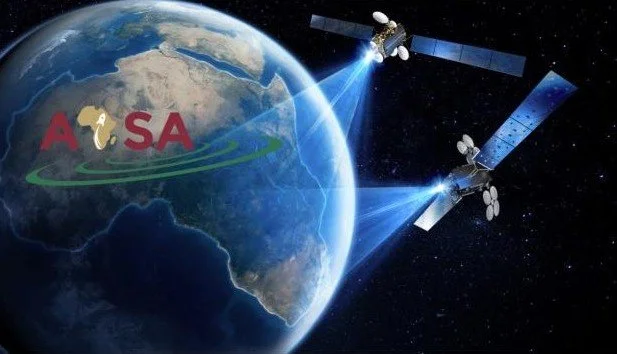
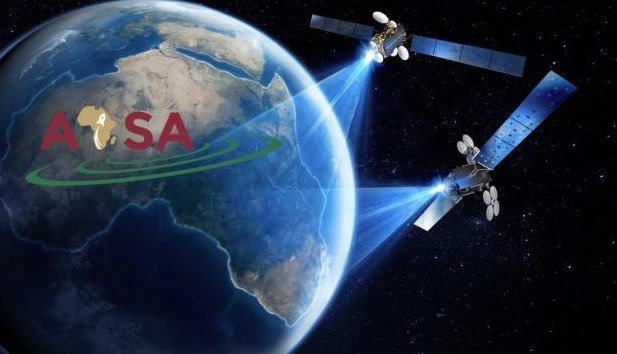
In April 2025, the African Space Agency (AfSA) was formally launched to align and coordinate space-based and capacity-building activities among the African Union’s 55 member states. In the past six months, the 10-member African Space Council (ASC), which oversees the AfSA, has signed numerous cooperation agreements with the European Space Agency, the United Arab Emirates Space Agency, and Russia’s Roscosmos. Most notably, the newly inaugurated organization entered the 100 million EUR program called the EU-Africa Space Partnership with the European Commission.
Despite the recent influx of these seemingly novel international partnerships for the young agency, its relationship with China began long before this year.
Since the early 2000s, the Chinese Communist Party (CCP) and Chinese private companies have invested heavily in Africa’s entry into the space industry. Based in Cairo, Egypt, AfSA’s new building and technical infrastructure were wholly built by China, who in return “gets control over Africa” and their space-based decisions, says expert Thomas Weissenberg.
According to Reuters, China is leaning into forging alliances across Africa through its space program as the United States cuts foreign aid and withdraws its engagement with the continent. Beijing has reportedly signed 23 space agreements with AfSC nations, investing in satellites, ground stations, and research infrastructure, which provides the CCP with long-term surveillance and debt control capabilities.
The AfSA stands at a crossroads. It can either replicate the extractive patterns of the past—where outside powers build the infrastructure, finance it on their terms, and reap the strategic benefits—or it can chart a sovereign course that anchors Africa’s space future in African hands. Global equity demands the latter.
With the space economy set to reach $1.8 trillion by 2035, the question is not whether Africa will participate, but whether it will do so on its own terms. By turning external competition into leverage and centering capacity-building across the continent, the AfSA can transform space from a silent infrastructure of dependency into a foundation of independence.
Africa’s future in space will either mirror the inequities of the past—or redefine what global equity looks like beyond Earth’s atmosphere.
Is That Correct? China’s Media Dominance within Africa
China utilizes the power of media and reporting to shape the narrative of events across China itself and large parts of the Global South. China’s media sphere is almost entirely state-owned, meaning that what is shared is often dictated by the narrative of the government.
In the last two decades, China has extended its state-owned media reach across the Global South—particularly in Africa.
There are three main Chinese news sources that have extended a deep reach into African media outlets: China Global Television Network, Xinhua, and China Daily. Xinhua spurred the influx of Chinese media outlets into Africa in 2006 when its regional headquarters were moved to Nairobi, Kenya, from Paris, France. Now Xinhua has 37 bureaus across Africa.
Within these news outlets, soft power techniques are utilized to spread positive rhetoric about China. For example, many of the journalists in Africa are trained in Beijing by Chinese media entities.
Furthermore, similar to the Belt and Road Initiative, Chinese media companies like StarTimes have invested over two billion US dollars into TV infrastructure across 30 African countries.
China’s exertion of financial assistance and dominance in the media sector provides African countries with access to information that otherwise may be harder to obtain. However, while there may be greater access to information, the narrative often takes a pro-China approach.
As tensions between the United States and China only seem to escalate, and soft power initiatives by the United States continue to dissipate, the United States may find itself in a precarious position. China has no plan to halt its meddling in African affairs, and with the closure of establishments like USAID, perceptions of the United States in places where China exerts control may become increasingly negative and anti-American.
Reality is shaped by the content we read and learn, and currently, China is taking all the right steps to control the narrative.
Brazil Beats Bolsonaro?
From the 1960s to the early 1980s, Brazil and other South American countries were plagued by an era of military dictatorships responsible for thousands of tortures, killings, and disappearances of those they deemed “subversive” or against the junta. Following a democratic transition in the 1980s in these countries, each country’s courts attempted to issue trials for those deemed responsible for the state-sponsored terror.
The courts, while successful in some cases, let many perpetrators off the hook. The courts were marked by a culture of impunity due to a series of amnesty laws, such as one in 1979 Brazil, that allowed many military and political figures directly responsible to walk away with little consequence. This left much of civil society dissatisfied, and they attempted to fill in the gaps in justice to ensure some form of accountability to prevent future abuses. South America’s long struggle with accountability and impunity for military and political leaders remains important to today’s politics given recent events in Brazil.
Former Brazilian President Jair Bolsonaro built his career on support and admiration for Brazil’s military dictatorship and further developed an agenda with echoes of “dictatorship nostalgia.” His presidency in 2018 was marked by pandemic skepticism, deforestation efforts, and the overall tone of conservative populist rhetoric seen recently in other countries.
Still, President Bolsonaro enjoys great support by many Brazilians and other leaders, including President Donald Trump. Given his popularity and Brazil’s history with political impunity, Bolsonaro’s recent conviction and subsequent sentencing on September 11th and 12th marked a surprising break from a political culture of impunity that defines not merely South America but much of the world when it comes to holding political leaders accountable for their actions.
Bolsonaro was sentenced by Brazil’s Supreme Court for his actions in 2022, when he attempted to stay in power after losing the presidential election to Luiz Inacio Lula da Silva. His failed attempt to stage a coup and overturn the election by disbanding courts and assassinating da Silva culminated in his house arrest in August 2025.
While the coup failed, his supporters did storm government buildings, causing property damage and chaos— reminiscent of the United States’s January 6th. His plans resemble those of past coups that led to the military dictatorships of the late 20th century, including a state of emergency to consolidate power in the hands of the executive.
On Thursday, four out of five justices voted to convict Bolsonaro and seven of his co-conspirators. His conviction is a landmark ruling, as fifteen coups and coup attempts since Brazilian independence in 1889 never culminated in a conviction of a leader of a plot. While Justice Luiz Fux acquitted the president of all charges, other justices noted the importance of the conviction. Justice Carmen Lucia described the case as a “meeting between Brazil and its past, its present, and its future” in reference to Brazil’s history of political impunity. His conviction is seen by many as a victory for democracy and a shift into a culture of accountability.
Before and after the court’s ruling, pro-Bolsonaro lawmakers and supporters have been pushing for amnesty, citing a similar sentiment to that of post-junta leadership in the 1980s-forgiveness that would help pacify a politically divided country. These supporters include US President Trump and Secretary of State Marco Rubio, both outraged on social media at the result of the vote. Rubio described the verdict as “unjust” and threatened a US response to the “witch hunt.” Trump drew a comparison between himself and Bolsonaro, saying that what happened to Bolsonaro was “very much like what they tried to do with me.”
On Friday, September 12th, Bolsonaro was sentenced to 27 years and three months in prison. Whether he will actually go to jail, however, remains to be seen. His poor health has prevented him from attending the hearings, and his sentence could lead to an extension of his house arrest rather than jail time.
Despite his conviction and sentencing, it is likely that Bolsonaro’s political influence will live on given the extent of his national and global support. The country’s mixed public opinion over his conviction indicates the polarization within Brazilian politics. Similarly, the influence of Trump is a factor in the future of Brazilian politics. The sanctions imposed earlier this year on Supreme Federal Court Justice Alexander de Moraes, as well as his recent tariffs on Brazil, illustrates Trump’s outrage with the conviction of a friend and fellow leader. In response to the economic and verbal attacks, President da Silva remarked that his nation “will not accept anyone’s control,” rejecting their influence on Brazil’s economic and political landscape.
The conviction of Jair Bolsonaro breaks with historical precedent, despite much protest internally and externally against his conviction. The four justices who convicted and sentenced Bolsonaro represent a break from the culture of impunity and an attempt to address wrongdoing with legal justice. The US response to the conviction was expected given Trump’s relationship with Bolsonaro. Trump may decide to increase Brazil’s exposure to his tariffs, particularly if Bolsonaro receives jail time rather than remaining on house arrest. Breaking with historical and legal precedent, however, is no easy feat—the role of the justices in upholding Bolsonaro’s conviction was crucial in breaking a cycle developed during the age of military dictatorships, which marks a new step for justice even if foreign and domestic retaliation remain inevitable.

Brazil-U.S. Economies at Odds Over Tariffs

Image source here.
In April 2025, shortly after Donald Trump began his second term as president of the United States, aggressive trade policies, namely in the form of widespread tariffs with practically no country exempt from the policy, were announced. Brazil, however, is an exception—in the sense that the country, along with India, sits at a drastically higher tariff rate of 50%. But how did Brazil end up at 50% while many other countries remained in the more modest 10%-15% range?
Before looking at Brazil specifically, understand that tariffs have been an economic and foreign policy strategy in the U.S. (and elsewhere) since the early days of the nation. In fact, the first tariff was enacted in 1789. Tariffs, also known as a tax applied to imports, are used generally in two main ways: to promote domestic industry by making the imported goods more expensive and to combat unfair trade practices by leveling the playing field. Even in times of general economic stability, the U.S. has utilized tariffs to protect domestic agricultural production and auto manufacturing, for example.
Back to Brazil: Like many other countries, Brazil’s tariff rates started at 10% in April but later increased by 40% in July for punitive reasons. A July 30th executive order from the White House indicates political motivations behind the increased tariff. Conservative populist Jair Bolsonaro served as president of Brazil from 2019-2023 and has recently been convicted of plotting a coup to stay in office after losing the 2022 election to the current president, Luiz Inácio Lula da Silva, a move that was inspired by the January 6th insurrection of 2021 in the United States. President Trump has shared that he understands the feeling of “political persecution” Bolsonaro faces, and has used the case against Bolsonaro to justify the increased tariffs.
Brazil is the second most populous country in the hemisphere, and its economy deserves attention too. It has the largest economy in Latin America with a GDP of $4.2 trillion (2024), and the CIA classifies it as an “upper-middle-income” country. Brazil also belongs to different political and trade blocs and organizations, like Mercosur, BRICS, and the G20. As of July 2025, top exports of Brazil to the U.S. included crude petroleum, air and spacecraft, and pig iron. Main U.S. exports were gas turbines, refined petroleum, and packaged medications. This interdependence signifies that heightened tariffs not only disrupt billions in trade flows but also risk reshaping supply chains and pushing Brazil to strengthen ties with alternative partners like China, Russia, or other BRICS members.
In the U.S., effects of these tariffs are already visible with a reduction of coffee imports in August 2025, for example. Brazilian coffee sellers must seek new importers outside the U.S. Brazil’s government has taken steps to reduce the negative economic effects through a $5.5 billion plan in credits to postpone taxes and incentivize the consumption of local Brazilian goods.
Coffee aside, the increase in tariffs on Brazil more largely represents a loss in hemispheric unity at a time when bilateral cooperation is paramount. Brazil is a regional ally that also shares a high state capacity and high rule of law with the U.S. Furthermore, Brazil serves as a strategic security partner for counternarcotics and counterterrorism, salient problems in the region that require continued collaboration.
If left unchecked, the U.S. approach could isolate Brazil at the cost of weakening cooperation on issues that neither nation can tackle alone, from economic growth to transnational security threats.
Chaos, Change, and 2026: Colombia’s Election Outlook
On the morning of August 11th, Colombians woke up to the news that presidential candidate Miguel Uribe Turbay had died after nearly two months in critical condition following an attack in Bogotá’s Modelia neighborhood during a campaign event. His assassination leaves the country in a vulnerable and unstable position on the verge of crucial elections. At the same time, the nation is also reckoning with the legacy of its first leftist government under Gustavo Petro, making it important to look at the achievements and failures of his presidency, now entering its final stretch. The effects of his legacy, together with the shockwaves from a politically high-profile assassination, could shape the outcome of Colombia’s 2026 elections.
Gustavo Petro leads Colombia’s first leftist government, a historic move that has made governing a complicated task. His coalition brought together leftist parties, indigenous and social movements, and progressive groups, which has made implementing a coherent and unified agenda a real challenge. Expectations were enormous, and while not everything has been achieved, there have been measurable gains. The economy grew 2.7% in the first quarter of 2025, mostly driven by private consumption, which now represents more than three-quarters of the country’s GDP. Unemployment has steadily fallen, reaching 8.8% in July 2025, down from 9.9% the year before. Poverty has also improved, dropping slightly to 31.8% in 2024, even as inequalities continue to cut deep across regions and social groups.
These numbers, however, tell only part of the story.
On the economic front, Colombia’s fiscal deficit has reached 12.5 trillion pesos. Experts predict that public debt could reach up to 63% of the country's GDP, a level not seen in the last 20 years. While some of this comes from inherited pandemic-related obligations, Petro’s ambitious spending plans and subsidy programs have stretched the budget further. And although unemployment has fallen and more Colombians are working, the quality of jobs is worrying: as of late 2024, 86% of the new employment was self-generated in the informal sector, leaving over half of the workforce without social security coverage.
Political and security issues are also among the pressing considerations Colombian voters have to decide on next year. Petro’s reform agenda has further polarized the country, while corruption scandals and constant cabinet reshuffles have eroded trust in the government. In terms of security, the “total peace” plan, meant to bring simultaneous negotiations with guerrilla groups and criminal networks, has largely failed. Violence remains a daily reality, with 81 social, political, and environmental leaders killed this year alone. The assassination of presidential candidate Miguel Uribe Turbay, carried out by a 14-year-old allegedly linked to the Segunda Marquetalia, and recent terrorist attacks in Cali that left 18 dead and dozens injured both demonstrate not only how fragile Colombia’s security situation remains but also how deeply insecurity could shape the political agenda in 2026. In a country where citizens already distrust institutions, the persistence of violence risks pushing voters toward candidates who promise order above all else, even at the expense of broader reforms.
Internationally, Petro’s record has been uneven and at times contradictory. Relations with Washington have become strained: earlier this year, mass deportations of Colombians from the United States and threats of sanctions exposed the fragility of diplomatic channels between the two countries. The tension is especially striking given Colombia’s traditional role as Washington’s closest partner in the region, raising questions about whether Petro is willing to risk that alignment in pursuit of a more independent foreign policy. At the same time, his administration has drawn closer to Beijing, formally joining the Belt and Road Initiative and welcoming an influx of trade and infrastructure investment. This shift has also fueled domestic debate over whether dependence on China could be beneficial in diversifying international partnerships or detrimental, as it could create new vulnerabilities. Petro has likewise positioned Colombia more assertively in the Middle East: by severing ties with Israel and publicly calling for humanitarian support for Gaza, he aligned himself with progressive movements at home and abroad, but also deepened polarization within Colombia and added to the perception among critics that his foreign policy is driven more by ideology than by pragmatic calculation.
So what does this mean for 2026? Colombians are heading into an election clouded by uncertainty, where Petro’s mixed legacy collides with a wave of insecurity and political violence. The assassination of Miguel Uribe Turbay was not just a tragedy but a turning point, amplifying fear and reminding voters how fragile the country’s democracy could be. In many ways, the current political climate is a reminder of the volatility that has long defined Latin American politics: moments of crisis opening the door to both instability and uncertainty. As Colombia moves closer to 2026, voters may find themselves casting ballots less out of conviction and more out of fear, mistrust, or simply hope of clinging to some sense of order.

Is the US Going to War With Venezuela?

Graphic by Miles Kershner.
On Tuesday, September 2nd, the US military killed 11 Venezuelans on an allegedly cartel-linked vessel in the Caribbean. According to President Trump, the crew of the speedboat had been identified as members of the Venezuelan gang Tren de Aragua, which the US had previously designated as a terrorist group. As the ship and its occupants were destroyed in the strike, the quantity and type of drugs on board is unclear.
Normally, the protocol would be to board the ship, apprehend the crew, and seize the narcotics – a very routine process for the US Navy and Coast Guard. Use of kinetic force via airstrike in a manner similar to counterterrorism operations is not only a significant departure from precedent, but is also almost certainly illegal under both US and international law. Simply designating Tren de Aragua as a terrorist organization does not provide legal authority for military action. There is also no evidence to suggest that the ship posed any immediate threat, which has usually been a necessary condition for similar strikes.
But while this particular instance of extra-judicial killing is certainly shocking, it’s not exactly out of the ordinary. The US has struck targets all around the world with impunity since the 2001 Authorization of Use of Military Force Act (AUMF), which authorized strikes against al Qaeda and the Taliban. The consensus around many of those strikes was always that the US was stretching the legal limits of congressional authorization of force. Sadly, this means that arguing over legality is basically fruitless – what really matters here are the implications.
The strike comes after several weeks of larger than usual military buildup in the Caribbean, likely in response to Trump’s stated goals of cracking down on the flow of illegal drugs into the US. But singling out Venezuela in this sense is slightly puzzling. True, roughly 10 to 13 percent of the world’s supply of cocaine flows through Venezuela annually (about 200 to 250 metric tons), assisted by widespread corruption and weak state institutions. But other countries play arguably larger roles in facilitating the illegal narcotics trade. For example, 1,400 metric tons of cocaine moved through Guatemala in 2018, according to data from the Bureau for International Narcotics and Law Enforcement Affairs. Venezuela also has very little cultivation of cocaine or production of fentanyl, which are better attributed to Colombia and Mexico, respectively.
So why Venezuela, and why now?
Many will claim that the attack was merely performative: a warning to the cartels not to attempt further operations. This is a laughable excuse for several reasons. Primarily, the cartels can always find another way to get their product into the US. As long as there is an American market for illegal narcotics, the cartels will continue to be the suppliers.
The Venezuelan political narrative has mostly centered around regime change. Venezuelan president Nicolás Maduro and other officials assert that the naval buildup in the Caribbean is a military threat meant to oust Maduro. “The government of the United States should abandon its plan of violent regime change in Venezuela and in all of Latin America and respect sovereignty, the right to peace, to independence,” said Maduro in a televised press conference. Trump’s rhetoric has been consistently accusatory and hostile towards Maduro, whom he accuses of running the Tren de Aragua gang. Maduro also famously remained in power despite being defeated by an opposition candidate at the polls in 2024. The Trump administration holds the position that Maduro is not a legitimate president, which is ironic coming from the man who himself tried to overturn the 2020 election, though certainly still accurate. According to Trump, the US is not considering a regime change operation. However, 10 additional stealth fighters have already been sent to the US base in Puerto Rico and potential strikes on cartel targets inside Venezuela are reportedly being considered.
There is also the chance that starting a war with Venezuela is the perfect excuse for Trump to deport Venezuelans under the authority of an obscure 18th century law known as “The Alien Enemies Act.” The act, which Trump already attempted to invoke in March, essentially allows for the deportation of nationals from a country that is actively invading the US or at war with the US. Trump’s initial use of the act was struck down, but the decision has now been appealed to the Supreme Court. An official act of war against Venezuela, should it be given, might give Trump better legal justification for deporting Venezuelans.
The Trump administration seems to be combining the means of the war on terror with the ends of the war on drugs – two engagements where the US left a bloody trail of destruction, humanitarian crises, and ultimately failure across the Middle East and Latin America. Why would combining these efforts be any more successful now? What exactly is the end goal, strategically? If it is to crack down on illegal narcotics entering the US, Trump is barking up the wrong tree. If it is to get rid of Maduro, the question of what comes after remains unanswered. With history threatening to repeat itself, Washington is likely unprepared for a Caribbean quagmire of its own making.
Keeping Up With US Foreign Affairs Island:
Iran enters the Villa with Nuclear Talks
Keeping up with US international relations feels akin to watching a chaotic reality TV show titled US Foreign Affairs Island. Every week brings a new drama – an escalating trade war, promises of peace that crumble, and increased economic and political tensions. This week was no exception, with a hot new bombshell entering the villa – Iran.
On April 7, during a press conference with the Israeli Prime Minister Benjamin Netanyahu, President Trump made a surprising announcement: his administration has been holding direct talks with Iran. This follows weeks of threats and denunciations between the two countries. This marks a major step towards potential peace in an increasingly unstable region of the world. However, there is also a lot at stake. Should the talks fail, the ramifications could be deadly. In fact, France's origin minister warned that if these talks fail then “military confrontation is unavoidable”.
Unlike other recent fraught moments in international diplomacy, this situation isn’t entirely hopeless and there is potential for these talks to be productive. For one, it’s in Iran’s best interest for the talks to succeed. Leaders of the nation are also aware that a deal with the US will be key for reducing the threat of Israel and freeing Iran economically. Similar to the talks which led to the 2015 Nuclear deal, Iran is urgently seeking to reduce its economic sanctions.
But while Iran may be willing to strike a deal, it faces the unpredictability of the Trump administration, which has often taken a hardline stance against Iran. There is especially deep distrust because Trump pulled out of the 2105 Iran Nuclear Deal and then imposed harsh sanctions on Tehran, setting back Iran-US relations during his first term.
However, times have changed. Trump is now facing backlash and distrust from many international counterparts. He needs to prove that he is capable of negotiating peace. A deal with Iran provides him with the perfect opportunity to do so.
So here we are: the US, who had become ostracized in the global “villa” for its tariffs and tough talk, is now trying to prove itself capable of being able to secure peace. . While things continue to build, Iran enters the picture, eager to move towards an agreement.
What is at stake in these deals? As we know, Iran wants to lessen its economic sanctions and have the US agree to hold off Israel. Meanwhile, the US wants Iran to dismantle its nuclear production completely so that it never has the capability to build a nuclear bomb. Here is where things get tricky. Iran refuses to get rid of its nuclear program for fear of being left defenseless. Therefore, the success of the negotiations will be on whether both sides can agree on what Iran’s nuclear program will look like.
One of the surprising parts of this story was how it was revealed — during a press conference next to Israeli prime minister Benjamin Netanyahu. Now Israel and Iran have very tense relationships and Nethanyahu has even said he believes Iran is one of its biggest threats. Therefore, there was quite some shock in Israel following the announcement. Trump announcing that there are ongoing talks between the US and Iran signals that the US has its own opinions of the region and will act how it would like and not necessarily always do what Israel wants.
So thus things in the villa become even more complex.
Saturday’s negotiations reportedly went well. What was rather funny was that the talks were conducted in Oman, with the US delegation in one room and the Iranian delegation in another, while the Omani shuttle messages back and forth between the two sides. The scene is a little funny to imagine. At the end, Trump’s Middle East envoy Steve Witkoff, who has no formal negotiation experience but is President Trump's golf partner and Iranian Foreign Minister Abbas Araghchi met in person afterwards. This seems to be a good start to what will be long, and complex negotiations. The next round will take place next Saturday on April 19th.
I am sure next week’s episode of US Foreign Affairs island will bring many twists and drama, but we will be sure to keep an eye out on this developing relationship. If a deal between the US and Iran is successful it could lend some much needed respite to the middle east and be claimed as a success by the Trump administration. However, if it fails, then the region may once again find itself on the brink of military conflict.
AI and the EU: What's New?
Artificial intelligence surrounds us. Given AI’s increased competencies and prevalence, supranational institutions like the EU created institutional and legal frameworks to regulate AI and build trust around AI in the EU.
The first artificial intelligence law was proposed by the European Commission in 2021. After three years of revisions and committee meetings, the European Council formally adopted the EU AI Act in May of 2024, and the Act was formally published in the Official Journal of the EU in July 2024.
So what does this mean for the EU and artificial intelligence?
The EU AI Act’s primary objective is to create a clear structure for AI developers and deployers regarding specific uses of AI. Analysis of artificial intelligence programs is structured around risk-based rules. The risk and its subsequent roles are divided into four levels: unacceptable, high, limited, and minimal (or no) risk.
For some perspective of scale, unacceptable risks of AI include criminal profiling based on personality traits, high risk encapsulates migration, asylum and border control management, and limited and minimal risk comprise of chatbots and spam filters.
The higher risk associated with artificial intelligence platforms constitutes more stringent rules for its use. These policies are in place to ensure that safety and human-centric AI are guaranteed across the EU.
As the first major regulator of AI anywhere, the EU’s policy impacts more than EU-based companies establishing new AI platforms. All AI platforms regardless of origin must abide by its framework if used in an EU member country. American AI companies like OpenAI (ChatGPT) must ensure that their generative programming follows EU legislation and privacy acts with the understanding that if rights, safety, or ethical principles are violated, action by the European Commission is likely.
February 2025 was an action-packed month for AI. The European Commission announced a €200 billion investment in artificial intelligence and banned AI initiatives in the “unacceptable” category with distinct timelines for the future.
The EU through its prioritization of artificial intelligence and role as the first large institutional framework to create actionable policies on AI set a precedent for other countries and institutions to follow. It will be fascinating to see how AI investments, privacy, and legislation progress in the coming years throughout the EU.
When the World Calls, Will America Answer?
On March 28, a 7.7 magnitude earthquake hit central Myanmar near Mandalay, killing upwards of 4,000 people and displacing tens of thousands. The quake struck a country already amid civil war, where government services are fractured, and many communities—like ethnic minorities such as the Rohingya—have long been left without consistent access to aid or protection.
In a surprising shift, the junta declared a state of emergency and welcomed international humanitarian aid, marking a departure from its rejections following Cyclone Mocha in 2023 and Cyclone Nargis in 2008, which killed over 138,000 people. Yet early signs suggest this openness is performative: aid access has already been blocked in opposition-controlled areas, and the military continues to control and redirect aid.
The earthquake comes at a time of Myanmar’s greatest humanitarian crisis—but it’s also the first major rapid-onset disaster to test the international humanitarian system since the Trump administration initiated massive cuts to U.S. foreign assistance. With USAID staff terminated mid-response and no U.S. Disaster Assistance Response Teams (DARTs) deployed ten days after the quake, the world is seeing the effects of America’s diminished humanitarian presence.
Even before the earthquake, millions in Myanmar required humanitarian assistance due to ongoing civil conflict and mass displacement. The region hardest hit by the quake, near Mandalay, was already sheltering 1.6 million internally displaced people. Now, survivors sleep outdoors in the rain, preparing for aftershocks, without access to adequate shelter, medical care, or food.
While neighbors like China, India, and Hong Kong quickly mobilized rescue teams and aid within 72 hours, their efforts alone are not enough. Reports of locals digging through debris with their hands highlight the lack of trained responders and equipment.
Emergency aid is more than altruism; it’s a tool of diplomacy. Past instances of “earthquake diplomacy,” Turkey and Sweden in 2023, show how humanitarian response can build bridges across geopolitical tensions. After the 2023 Turkey quake, U.S. leadership in the region was reaffirmed. In Myanmar, its absence is glaring.
The Trump administration has indicated plans to reconfigure USAID further, folding it into the State Department. But what this means for operational capacity remains murky. With U.S. responses becoming dependent on allies, other nations are asking: When the next crisis strikes, will America show up?
For allies in the Indo-Pacific like India, Japan, and the Philippines, nations the U.S. counts on to counterbalance China, this is a critical moment. The reduced American presence in Myanmar sends an eery message: that the U.S., once the gold standard in humanitarian response, may no longer lead when the world calls.
Demands and Discontent: Protests in Turkey
Recent protests raise many questions about President Recep Tayyip Erdogan's future in Turkey. While leading Turkey for 22 years, as both Prime Minister and President, his rule has been characterized as repressive, criticized for lacking checks and balances, and called out for sidelining opponents. However, with the arrest of Ekrem Imamoglu, the popular opposition candidate and mayor of Istanbul, large anti-government protests erupted throughout the country.
The protests include Imamoglu’s supporters and other groups generally dissatisfied with Erdogan’s authoritarian role, or disillusioned with government corruption and ineffectiveness. Erdogan condemned the demonstrations as a “movement of violence,” despite most of them being peaceful. Still, dozens of police officers were injured, and more than 2,000 people, including several journalists and photojournalists covering the protests, were detained.
Imamoglu, a member of the center-left-pro-secularist Republican People’s Party (CHP), is viewed as posing the most serious electoral challenge to Erdogan. In 2024, Imamoglu won 51.4% of the vote in the March municipal elections. Now, likely due to the crackdown on opposition that began earlier this year in Turkey, Imamoglu is detained on corruption charges, along with a suspicion of supporting an outlawed Kurdish organization, with the government denying any influence over the judicial decision. Along with Imamoglu, some 100 others connected to the mayor, and thus the opposition, were detained.
European leaders, including the CHP party leader Ozgur Ozel praised the protests, and condemned the arrest of Imamoglu as “the greatest motion of censure in history.” With Imamoglu detained, the pharmacist-turned-politician Ozel poses another potential threat to Erdogan’s rule. As the face of the protests, and a longtime opponent of Erdogan, Ozel will likely be the “best placed” for the job. While Erdogan has served his two terms as permitted under the constitution, the loophole of amending the Constitution, or simply calling an early election is not out of the question. He’d need a majority in Parliament, however, and while the government is packed with loyalists, the protests have called major attention to the adversaries of the regime.
The demonstrations illustrate the complicated political battleground in Turkey, the growing divide between the secularists and the more devout, and the strengthening dissatisfaction of younger generations towards authoritarian regimes who find value in rallying around a cause and a charismatic leader. While the demonstrations are large, and the opposition popular, Erdogan holds most of the cards in his hands. However, Ozel’s popularity, and the anger surrounding Imamoglu’s arrest makes Erdogan an unlikable figure, inside and outside of Turkey. And if more become discontent, a third term for Erdogan appears off the table.

“Hell for Everyone”: The Unraveling of Haiti
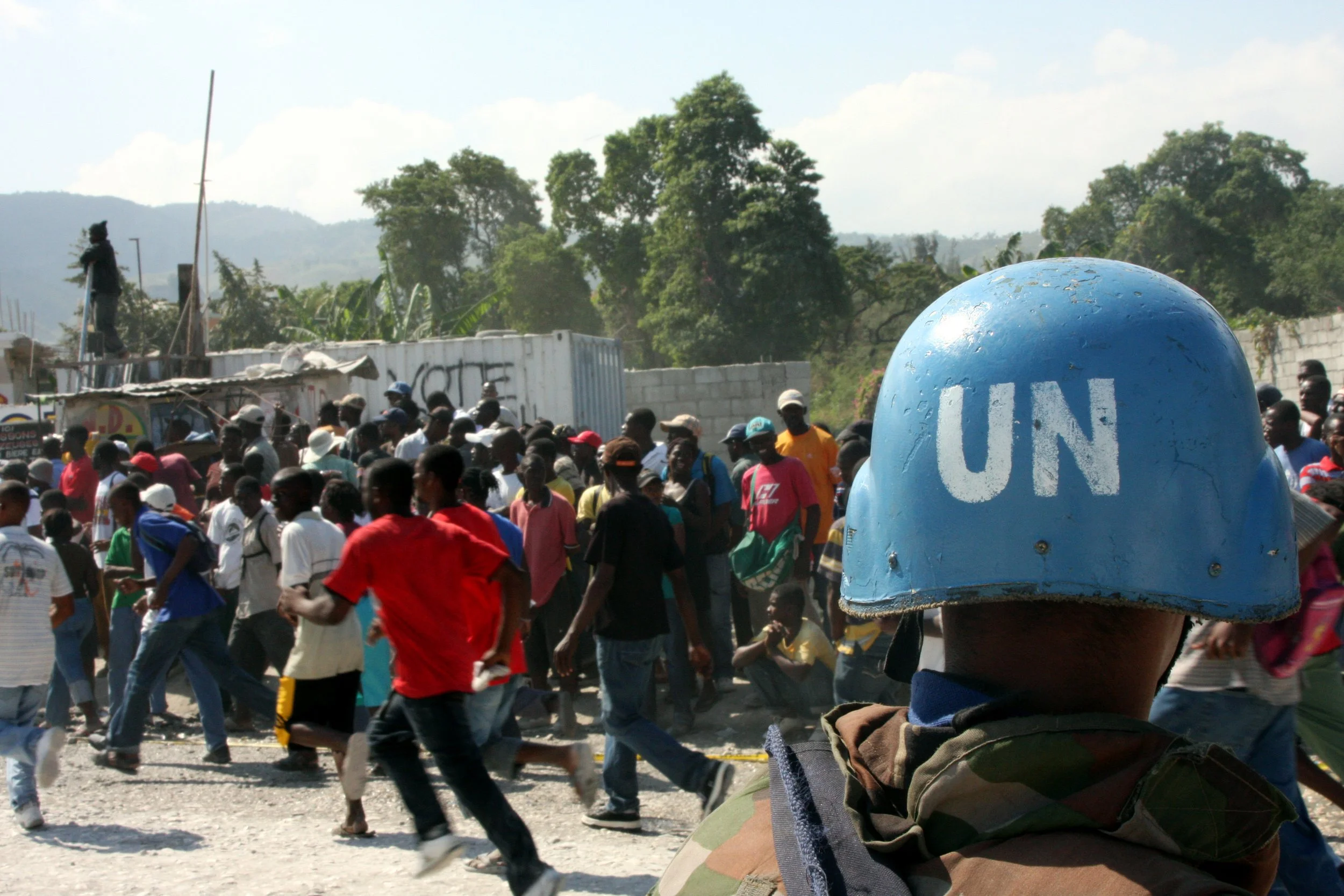
Photo sourced here.
Haiti has “become hell for everyone,” remarked Fritz Alphonse Jean, the leader of Haiti’s transitional presidential council. The Caribbean nation of 11.6 million is currently at the junction of multiple, deeply intertwined crises: Violent gangs control over 80% of Port-Au-Prince; protests against deteriorating security conditions have erupted; and U.S.A.I.D. has been dismantled. All of this is unfolding amid an already volatile geopolitical climate.
The aftermath of the 2010 earthquake and assassination of President Jovenel Moïse in 2021 marked a tipping point for Haiti’s worsening instability. Since then, gang violence has surged to unprecedented levels both within and beyond Port-au-Prince, manifesting in brazen raids on police stations, prison breaks, hospital attacks, and more recently, direct assaults on the press. Displacement has skyrocketed, affecting over 1 million people, and critical infrastructure like bridges, along with essential aid such as food and medicine, have been seized and weaponized by armed groups.
The media landscape is also collapsing under pressure from gangs. The “PRESS” vest, once a shield, so to speak, is now a target. Journalists have been shot, had their equipment stolen, and some media outlets have even closed; some publications have shifted to entirely digital reporting. Journalists now face a fork in the road: acquiesce to gang demands and continue reporting, or maintain journalistic integrity and face violence (or even death) for doing so. The former has now caused public distrust in the media, as the public views journalists as an instrument of the gangs. The latter leaves the press in a highly precarious and lethal position. As a result, Haiti is now one of the world’s most dangerous places for journalists, joining Russia, Cuba, Zimbabwe, and Iraq.
The state is failing and promises are left empty. No elected government official has held office since 2021, and the Transitional Presidential Council, formed in the wake of Moïse’s death, is rife with internal divisions. Meanwhile, international aid and peacekeeping forces are struggling. Gangs control access to critical supplies, and the U.N.-approved peacekeeping mission is not meeting its objectives. The Multinational Security Support initiative is funded by the U.S., and security forces from other countries like Kenya, Chad, and Bangladesh are to work on the ground. So far, fewer than 800 of the expected 2,500 security forces have arrived, signaling weak international support. Haitians, however, are skeptical of international peacekeepers, remembering past tragedies, like the cholera outbreak from a poorly-managed, U.N. peacekeeping force from Nepal. Further compounding the crisis is the erosion of U.S. support. Under President Trump, institutions like USAID and the U.S. Institute of Peace were significantly weakened, and aid commitments have dwindled.
Haiti’s current crisis is not merely gang violence, rather it’s a nation buckling under compounded pressure. International aid is limited in both reach and credibility. Gangs rule the streets and control key public services, and the press is under attack. These struggles also unfold as the world grasps the economic spillovers of the Russia-Ukraine War, political divides from the Israel-Gaza War, and drastic changes to the global economy under President Trump. The international response to Haiti says as much about global priorities as it does about Haiti itself.

Crisis at the OAS

Photo by Element5 Digital on Pexels.
In 1948, the Organization of American States (OAS) was created, a regional multilateral organization made of 35 independent nations in the Western Hemisphere. Its original purpose was to serve as a forum through which the member nations engage in dialogue and address shared challenges. However, over time, its primary objectives have changed to tackle four key issues: the promotion of democracy, the protection of human rights, the advancement of economic and social development, and the enhancement of regional security cooperation.
Now, this important organization finds itself changing once again, as internal and external struggles place the OAS in a position fraught with challenges: The recent election for the Secretary General highlighted in-house divisions, and global conflict and the new Trump administration add external pressure to the organization.
The March 10th election proved to be contentious for member states in the organization's search for new leadership. Secretary General-elect, Albert Ramdin of Suriname, competed against Paraguay's Rubén Ramírez Lezcano before he dropped out of the race. Various Caribbean, as well as Andean and Southern Cone states backed Ramdin, who opts for more neutral stances and mediation to resolve conflict with controversial members like Nicaragua and Venezuela. China, an observer country with no voting power, has also supported Ramdin.
Before he left the race, Argentina supported Ramírez Lezcano and so did the United States, albeit indirectly. Other member states, like Mexico and Colombia, signaled that they would not support the U.S.-backed candidate, though. In recent years, political polarization, disagreement on previous leadership, and an overall lack of consensus on organizational trajectory have resulted in setbacks. For example, Mexico’s former president called for the organization to be dissolved and replaced entirely. Other members, however, supported decisions made by previous leadership. Because of these internal tensions, timely decisions cannot be made, affecting the efficacy of the group.
Issues outside of the Hemisphere also create obstacles for the OAS. The COVID-19, Pandemic, Haiti’s 2021 presidential assassination, the Russia-Ukraine War, and the Israel-Gaza war have significantly changed the international geopolitical landscape; and Donald Trump’s return to office, dismantling of USAID, withdrawal from the WHO, and controversial immigration decisions in the region certainly do not ease tensions.
In his first term, President Trump skipped the 2018 summit, an unprecedented move, and attempted to drastically cut funding. Now, his increased trade barriers, tariffs, and proposed mass deportations (and recent deportation of Venezuelans) have been met with backlash in varying ways from Mexico, Colombia, and Brazil, for example; the threat to “reclaim” the Panama Canal has also triggered a negative reaction.
As the OAS grapples with internal fractures and mounting global pressures, the stakes for the entire region—North America, Latin America, and the Caribbean—are high. Stability is no longer a given, and the organization remains the only unified body capable of connecting all nations in the Western Hemisphere. In a time of rising geopolitical tensions, economic uncertainty, and shifting power dynamics, weak leadership is not an option. If the OAS cannot find a way to overcome its divisions and act decisively, external forces, be it global superpowers, economic crises, or political upheavals, will shape the region’s future instead. Should that happen, it won’t be on terms that benefit the nations of the Americas.
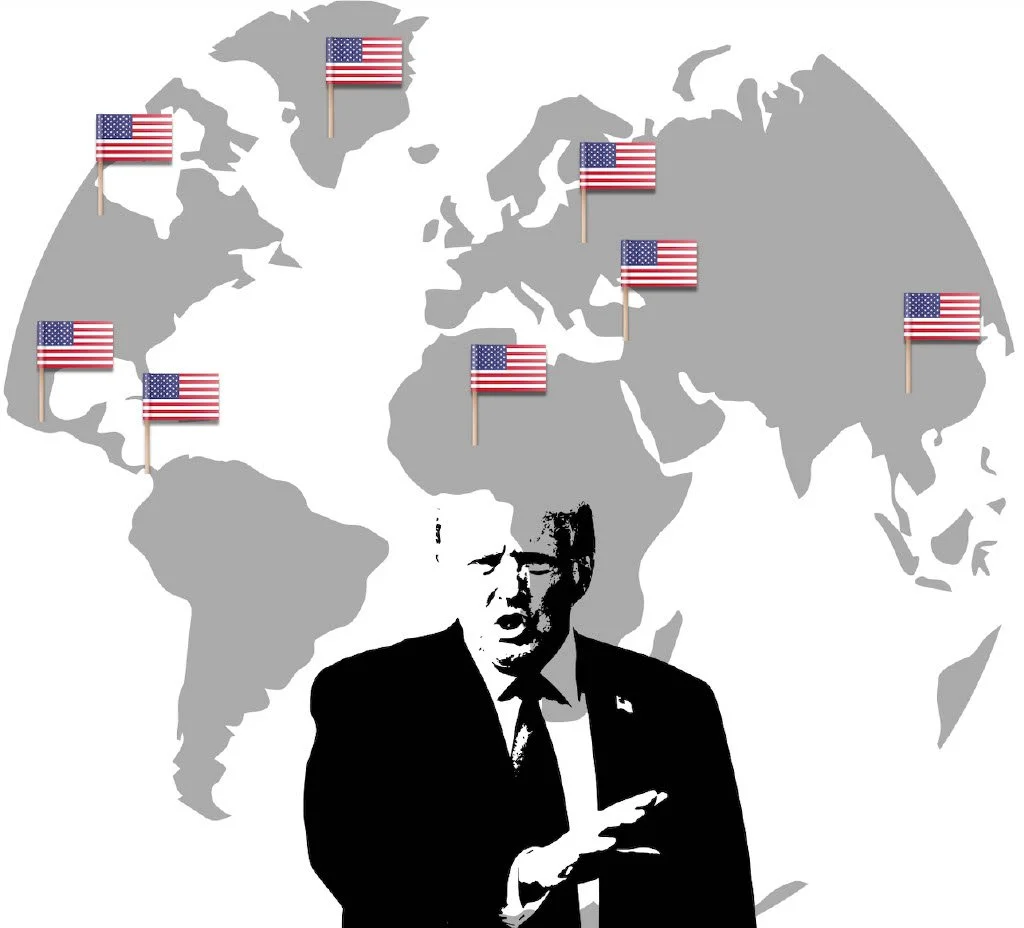
How Trump is Dismantling American Soft Power
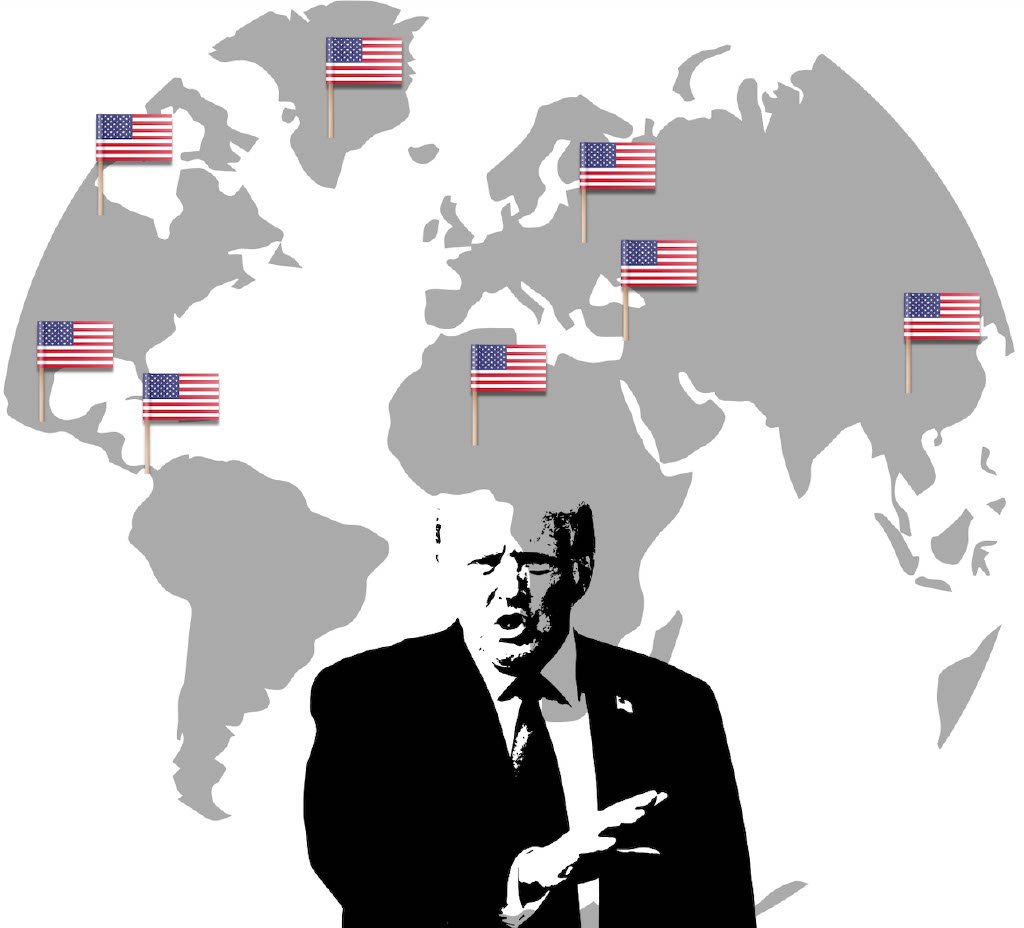
Graphic by Zoë Kershner.
American “power” is often understood through the immense force capabilities of its military apparatus–from the defense-industrial base, to elite soldier corps, to nuclear weapons. After years of constant innovation and massive investment, the physical impacts of these manifestations of might are felt all across the world. But when it comes to building rather than destroying, soft power is what sets America apart.
Since the end of the Cold War, soft power has played a crucial role in the U.S. ascent to global dominance. This includes everything from cultural exports—think McDonald’s, Nike, and blue jeans—to strong diplomatic relationships and generous foreign aid. But over the years, as the military budget has continued to increase, soft power seems to have been upstaged. Now, with the sweeping reforms of a second Trump administration taking shape, it risks disappearing from American grand strategy altogether. This shift raises a critical question: What will it mean for America's role as a global superpower, and how will global power dynamics respond?
This might all seem rather obvious, as the traditional pillars of soft power begin to crumble: Trump has effectively shuttered USAID, admonished foreign leaders, punished allies with unwarranted tariffs, and aligned himself with authoritarians…all before 100 days in office. Weakening soft power in this way makes it harder for the US to maintain its leadership of the world order, as policy shifts that prioritize confrontation over cooperation erode trust among allies.
Additionally, however, America’s reputation is on the line. Of course, not all the blame can be handed to the Trump administration for this. Many around the world have rightfully questioned the US since the War on Terror, which brought America’s unabashedly violent interventionism to a more public eye. But the domestic policies and actions of the Trump administration, at odds with the values of other democratic states, will further erode the generally favorable view that global citizens have of the US. This is also soft power. Mass deportations, attacks on the judiciary, the rejection of intellectualism and multiculturalism, and the weakening of civil liberties damage the nation’s status as moral authority–which undermines confidence in our democracy and limits our ability to conduct diplomacy.
Soft power matters. If hard power is the knockout punch, soft power is the footwork: seldom appreciated, but integral to success. So what are the potential consequences of its disappearance? For starters, global stability will be threatened in areas highly reliant on foreign assistance from the US. Aid helps combat terrorism by limiting the conditions from which it spawns: poverty, weak institutions, corruption, and radicalism that results from poor education systems. Strong alliances, intentionally built over decades to counter ideological adversaries, contribute to our national security and economic prosperity. Abandoning global cooperation and cutting foreign aid will create a vacuum that states who oppose America’s hegemony, such as China, will be eager to fill.
Ultimately, undermining allied security and global partnerships makes us more vulnerable to external threats. It also questions America’s role: the US can no longer claim to be the moral leader of the international order if it abandons soft power. A successful foreign policy must balance hard power with a commitment to diplomacy, alliances, and the rule of law. Restoring America’s global influence will require more than just having a bigger nuclear button than Kim Jong Un. We must reinforce soft power, uphold democratic values, and maintain the strong international relationships that keep ourselves, and the world, safe.
South Korea in Flames, Threatening Ancient Monuments
Flames tore through the forests like a hungry beast, consuming everything in their path. South Korea has faced wildfires before, but nothing quite on this scale, threatening even the most ancient of preserved sites. In March 2025, the country witnessed its most catastrophic wildfire disaster, with an unprecedented 36,000 hectares of land scorched, surpassing even the infamous 2000 east coast wildfire. What started as isolated blazes quickly turned into a national emergency, leaving at least 27 dead, thousands displaced, and entire communities in ruins.
Firefighters, emergency responders, and volunteers battled relentlessly against the inferno. Over 9,000 personnel and 120 helicopters were deployed, but the odds were against them. Fierce winds and record-dry conditions fanned the flames, making containment efforts increasingly difficult. Despite their best efforts, the flames devoured hundreds of homes and historical landmarks, including the revered Gounsa temple, a site with origins dating back to the 7th century. Although firefighters managed to save an 8th-century stone Buddha statue, the loss of many temple buildings was a heartbreaking cultural tragedy.
Beyond the destruction of property, the fires exposed a troubling vulnerability within South Korea’s society. Among the deceased were elderly residents who found themselves trapped as the fire advanced. Alarmingly, three of the victims were firefighters in their sixties. This tragedy sheds light on South Korea’s reliance on an aging workforce for fire response; over 73% of temporary forest firefighters in the country are above 60 years old, earning only around $50 a day.
The environmental repercussions of the wildfire continue to stagger. With over 39,000 hectares of land turned to ash, ecosystems that took centuries to develop have been reduced to nothing in a matter of days. Wildlife habitats are among the obliterated, and the long-term effects on soil and air quality remain up in the air. Scientists point to climate change as a driving factor behind this disaster, noting that the affected regions received only half their usual rainfall in recent months. Specifically, the combination of extreme dryness and strong winds created the perfect storm for this devastating event.
As the country begins to assess the damage and rebuild, the wildfires of 2025 stand as a warning and emphasize the urgent need for proactive climate policies and a fundamental reassessment of how South Korea manages its aging workforce in high-risk professions like first responders. The flames have been extinguished, but the scars, both on the land and in the hearts of the South Korean people, will remain for generations.
Former Philippines President Rodrigo Duterte Goes to the Hague
The former president of the Philippines, Rodrigo Duterte, is currently standing trial at the International Criminal Court (ICC) in The Hague for crimes against humanity. He faces charges related to thousands of extrajudicial killings and widespread human rights violations committed during his infamous war on drugs. Duterte’s arrest has been seen as the beginning of a new era for the Philippines, focused on upholding human rights and rule of law. Yet, despite his bloody presidency, Duterte remains quite popular in the country. Duterete’s trial comes during a time of highly divided domestic politics and a rapidly changing nation. What impact will these trials have on the country?
Rodrigo Duterte is a rather controversial figure in the Philippines. Before becoming president, Duterte was the long-serving mayor of Davao City, where he built a reputation for being tough on crime. He was nicknamed “the Punisher” for admitting to being linked to death squads, and he maintained that he had no qualms about killing criminals. This behavior should have been almost appalling to voters. However, in 2015, political analysts found that criminality was one of the biggest fears among Filipinos. Therefore, Duterte’s belligerent approach to criminals made him quite popular, and he was elected President, though this came as a shock to many.
He served as the Philippines’ President from 2016 to 2022. During this time he led a massive campaign against drugs, leading to the death of thousands of alleged drug dealers and addicts. Despite his violent handling of drug issues in the country and sexist comments, Duterete still maintained popularity among the public. Most notably, he was able to deliver on his bold and violent promises against drugs.
Duerte’s presidency was characterized by violence, human rights violations, disdain for the US, and democratic backsliding. His campaign against drugs led to violent confrontations with the police and extrajudicial killings. It is believed that Duterte’s war on drugs led to the deaths of over 12,000 Filipinos. Many of the victims' families claimed that the victims were often not involved in drug-related activities but simply were in the wrong place at the wrong time. The killings were often indiscriminate and occurred outside of the legal framework. Those accused of participating in the drug industry were essentially executed without due process. Despite international and domestic outrage, Duterrte stood by his stance and said he would “never, never apologize for the deaths”
The current situation regarding Duterte’s arrest stems from a complex political situation in the Philippines, particularly the recent falling out of the Duterte and Marcos families, two of the Philippines political elites. The current President, Ferdinand Marcos Jr., believed that it was necessary for Duterte to be sent to ICC, in a new era for the Philippines. However, in the process he was able to get rid of a powerful political rival. One wonders how much of his motivation is truly about justice for the victims.
Duterte was arrested on March 11, after arriving in Hong Kong to start a campaign tour. The ICC issued a warrant for his rest following the extrajudicial killing carried out under his leadership from about 2011 to 2019. However, the ICC can not prosecute any crimes after 2019, because, rather conveniently, in 2019 the Philippines pulled out from the ICC. Following the arrest, Duterte’s children, including Sara Duerte, who is the nation’s current vice president, filed a petition with the Philippine Supreme Court challenging the arrest. However, this was unsuccessful. Despite this, Duterte is confident that the ICC has no case against him.
The impact of the arrest on the Philippines is hard to predict. Currently, Duterte continues to enjoy national popularity to this day, with news of his arrest sparking outrage and demonstrations among his supporters. Many people believe that he saved the country from criminals and drug cartels, while others are appalled by his human rights violations. Making him a rather divisive figure. Analysts are divided on whether the arrest will make Duterte a martyr in the eyes of the nation or if his supporters will eventually lose interest and the unrest will die down. The current Filipino political landscape is shaped by the rivalry between the Duterte and Marcos families. If Duterte becomes a martyr, it could benefit his political allies, while Marcos would gain from his discreditation. Sounds like something out of a TV show.
While Duterte's arrest signals a possibility of justice and consequences for the human rights violations he oversaw, what the actual outcome or impact on the Philippines' political landscape remains to be seen. I suppose, for now, all we can do is watch and see how this unfolds.
Hey, Ho, Western Civ Has Got to Go
I am not sure that many in my generation are aware of protests at Stanford in the late ‘80s demanding that its required introductory course in “Western Culture” be replaced with more “cultural diversity,” or the works of ethnic and minority thinkers, which would make perfect sense considering that I have neither seen nor taken a course in Western Civilization. In fact, for our generation and, I would assume for the one directly preceding us, we have been encouraged to take courses in exactly the opposite - that is teaching that promulgates the idea that there is nothing exceptional about Western Civilization.
While witnessing the disastrous meeting between President Trump and Ukrainian Volodymyr Zelenksy after the US sided with Russia at the UN, I was envious of previous generations who grew up with leaders whose both foreign and domestic policy was shaped around ambitious but firm principles - principles that balanced societal compassion with individual dignity. These two ideas, in my opinion, formed the bedrock of all post-World War II policy. It was the combination of societal compassion and individual dignity that encouraged leaders to combat socialism, maintain economic liberty, advocate self-determination, and defend democratic government - both at home and abroad. It is true that these principles often led to over ambition - as exemplified in the burgeoning of the welfare state bureaucracy at home and failed military campaigns abroad from Vietnam to the Middle East, but the reality is that these principles have produced all that is beneficial to the modern world: relative peace, economic prosperity, and a rules-based order that defends human rights.
The harsh truth is that these principles are uniquely Western. They are all the legacy of an ancient tradition rooted in, one must assume Christianity, but nonetheless the idea that the world can be improved - improved to be more fair, to be more peaceful, and even to be more equal, diverse, and inclusive. They are of the same culture that produced three of the primary accomplishments of the modern world - the scientific method, representative government, and free markets - all of which are why the West advanced to such an extent that it has been able to enforce such ideas around the world for the past seventy-five years.
However, despite being beneficial to the entire world, the values of Western Civilization are not shared by the entire world, and if their benefits are to be conferred on humanity, they must be enforced. Such is what the American-led West has done since the last world war. The only problem is that a civilization is only inclined to enforce the benefits of its values on the rest of the world at cost, if it truly believes it is a unique civilization, and that that civilization is indeed exceptional.
Stanford’s, along with many other universities,’ Western Culture class was replaced with “Culture, Ideas, and Values,” jargon one may confuse with IDEAs in Action or some other general education requirement today here at UNC. The irony of course is that only in the West would a civilization denounce its own history in favor of others. It is a beautiful thing, until the very fabric that defines that civilization unravels as a result. My freshman year at UNC, I was required to take Ideas, Information, and Inquiry: Borders and Boundaries, in which we were taught that enforcing borders between Palestine and Israel or Turkey and Greece are antithetical to humanity because such borders were not enforced in ancient Egypt and Persia - a very fascinating qualification considering that both Egypt and Iran enforce very strict borders today.
And thus, today, the rest of the world watches as Europe roils in domestic political turmoil, and the United States abandons our allies in Europe and security partner in Ukraine for a transactional relationship with Russia.
But why not? There is nothing exceptional about the West. Why take risks to defend democracy? There is no culture to be maintained as positively unique. Why defend such ambitious ideals? There is no reason because they, supposedly, do not exist. There is no such thing as the moral idealism or exceptionalism that permeates the West and its affiliates. There is only the realism and existentialism that permeates the rest of the world - a transactional world. To defend Ukraine in the face of Russian aggression may be risky or ambitious, but to do so is to reinforce the values of the West. To not do so is to denounce those values, and without values, there is no civilization. To water down this historical change in ideology to merely a “shift in decades-long foreign policy” is exactly the problem. Thus, for those wondering how we arrived at this point in history, or how we are to save NATO and the rules-based international order from Trumpian ideology, we cannot have our cake and eat it too. We must reject what our parents accepted to save what our grandparents defended. Otherwise, we cannot be surprised when “hey hey, ho ho, Western Civ has got to go.”

Norway Day in My Life

Photo by Zoe Schruckmayr.
I have been on exchange abroad in Bergen, Norway studying comparative politics this semester. While this may not be typical JFAC content, I wanted to share a day in my life!
I chose the University of Bergen because of the amazing exchange agreement UNC’s Center for European Studies (CES) has with UiB’s Comparative Politics department (SAMPOL). As a global studies student with a concentration on Western Europe and the EU, the opportunity to take a semester of classes based solely on these topics has been very immersive. Also, the CES provided me with an incredibly generous living stipend, roundtrip airfare, and reimbursement for my visa fees which has been such an anxiety reliever when managing my finances!
While a typical DIML varies, I thought it would be fun to describe a day when I have class and am busy!
I live in student housing about 20 minutes outside the city by train. Bergen is Norway’s second-largest city, but the train system has only two lines so it’s very easy to navigate! While I could have lived closer to the city, I decided against that because my housing community is where all the other international students live. This was such a great decision! In my apartment, I have six other flatmates. Coming from Spain, Hong Kong, France, Belgium, Kenya, and Alaska it’s been amazing to live with people who have such different lived experiences.
The Norwegian education system is very different compared to the U.S. A full course load at UNC equals two courses in Bergen, so I only have classes on Tuesdays and Wednesdays. While this may seem nice, my entire grade comes from the 10-hour final exam which is completely nerve-racking!
On Tuesdays and Wednesdays, I get to class around 10 for my two-hour lecture. Since class attendance is not mandatory, it is interesting to watch class sizes ebb and flow depending on the week. It is very typical to have a 15-minute break in the middle of class. At this time, many students go to the cafe and buy waffles with jam or bolle (buns) as a mid-lecture treat. They are so delicious!
The University is spread across part of the city and almost all academic buildings have cafes, so I typically wander around after class until I find an intriguing place! While Norway is an incredibly expensive country, student discounts are almost everywhere. I typically grab a coffee and sandwich and work for a while.
Bergen is surrounded by seven mountains, and one of my favorite pastimes is hiking! Although it is the rainiest city in Europe, I have learned to embrace the saying “There’s no such thing as bad weather, just bad clothing.” Since the seven mountains are accessible by public transit, there is no excuse to not be outside.
My favorite mountain to hike is Fløyen, and my investment in a good waterproof backpack makes it super easy to go straight from class to the trailhead. Norway has something called the right to roam which essentially means that it is completely legal to explore anywhere in the country on the condition you practice good environmental stewardship. I’ve stumbled on some amazing fjords, landscapes, and lakes because of this freedom!
Depending on the day, after my hike, I like to grab a hot dog from Trekroneren. They are super affordable and you can choose from many different meat options and toppings. My personal favorite is reindeer with fried onions and jam. I realize it may be a controversial order, but don’t knock it till you try it!
After a good dinner, I walk through the city and then take the train back to my apartment. I have recently learned to knit and that is my favorite thing to do in the evening.
Studying in Bergen has been an incredible experience and has really forced me to slow down and enjoy life. I believe the exchange agreement between CES and SAMPOL goes until 2026 and I would totally recommend Bergen for all nature lovers and people interested in Western Europe!