
The Journal of Foreign Affairs at Carolina
Formerly known as The Internationalist
Get the latest from our Undergraduates at
The International Relations Column
Cuba, Venezuela, and the Politicization of Oil
The recent capture of Nicolás Maduro marked a dramatic turning point in U.S.-Venezuela relations, but the weeks that followed revealed something equally significant: the strategic value of Venezuelan oil in enforcing what has come to be known as the Donroe Doctrine. With Maduro replacement Delcy Rodríguez signaling openness to foreign investment, a new question has emerged—not just who controls Venezuela's government, but who controls its roughly 300 billion barrels of proven oil reserves. While it remains too early to determine the precise nature of U.S. influence over Venezuelan oil or how profits and access will be distributed, current developments suggest that energy dependence is becoming an important tool of hemispheric control.
Venezuela’s Uncertain Opening
In the aftermath of Maduro's removal, Rodríguez has taken steps to attract foreign investment, particularly in Venezuela's struggling oil sector. Venezuelan oil exports have shown signs of recovery, climbing from just under 500,000 barrels per day in December to 800,000 in January. Rodríguez has also signaled a willingness to release political prisoners and open the economy to outside capital, actions some observers interpret as a potential neoliberal opening under U.S. guidance.
Yet uncertainty remains. The exact details of U.S.-Venezuela cooperation are unclear. What does it mean for Washington to be "running the country" or working closely with Rodríguez's interim administration? Who will profit from renewed oil production, and who will control access to Venezuelan crude? These are open questions, and the answers will determine whether this moment represents a genuine shift in Venezuela's economic model or simply a reconfiguration of elite control.
Foreign investors and analysts, for their part, remain cautious. Venezuela's oil infrastructure has deteriorated significantly after years of underinvestment and mismanagement. Rule of law is weak, institutional frameworks are fragile, and the legacy of the 1976 nationalization of PDVSA, later reinforced by Chávez-era expropriations of ExxonMobil and ConocoPhillips, looms large in the minds of potential stakeholders. While these dynamics are still taking shape, what is clear is that the U.S. now has unprecedented potential leverage over Venezuelan energy flows. And if recent developments in Cuba are any indication, that leverage could extend far beyond Venezuela's borders.
Cuba on the Brink
Cuba's energy crisis offers a stark illustration of what happens when oil becomes a geopolitical weapon. The island has long depended on fuel imports from Venezuela, its closest regional ally and primary supplier. But recent U.S. policies aimed at blocking oil shipments to Cuba have left the country facing intense shortages. On January 29, a White House Executive Order threatened tariff action against any country supplying oil to Cuba, worsening the decades-long blockade to a concerning degree. The results have been immediate and severe. Cuban President Miguel Díaz-Canel acknowledged in early February that the country had not received fuel since December, forcing the government to readjust domestic consumption and modify the distribution of basic food basket products. Not long after, Air Canada canceled flights as Cuba ran out of jet fuel, grounding planes and disrupting one of the island's largest sources of foreign exchange. At its peak, Cuba earned over $3 billion annually from tourism; a figure that is now believed to have dropped below $1 billion.
Beyond economic damage, the humanitarian toll is intensifying. The country experienced a partial collapse of its electrical grid on Wednesday, leaving broad areas of Eastern Cuba in the dark for more than 12 hours. This came during an unusually cold period that brought the island its first freeze in recorded history. United Nations Secretary-General António Guterres also warned of a potential humanitarian "collapse" if Cuba's energy needs go unmet. In response to the crisis, Mexican President Claudia Sheinbaum announced that Mexico would send 814 tons of humanitarian aid in the form of provisions to Cuba and work to continue to fulfill Pemex’s contract with Cuba, despite President Trump telling reporters that Mexico would cut off supply. On February 4, Pemex's CEO confirmed the company's intent to honor its commitments, though the future of those shipments remains uncertain under U.S. pressure.
The Mechanics of Dependency
Understanding why oil has become such a powerful tool of leverage requires us to examine the technical details of energy production and refining. Venezuelan crude happens to be heavy and sulfurous, which makes it more expensive and difficult to refine than lighter grades. The specialized refineries capable of processing it are concentrated on the U.S. Gulf Coast, creating a structural dependency that limits Venezuela's ability to diversify its export markets. Even if Venezuela wanted to sell its oil elsewhere, the infrastructure, logistics, and refining capacity required would take years to develop, according to experts.
This dependency is not accidental: it reflects decades of economic integration between the U.S. and Latin American energy markets. But in the current geopolitical context, that integration has become a source of vulnerability. Countries that rely on Venezuelan oil, or on oil that must pass through U.S.-controlled refining networks, are exposed to political pressure in ways that extend beyond traditional sanctions or tariffs. Cuba's crisis exemplifies this dynamic. The island's energy needs are modest compared to larger economies, but its lack of alternatives has made it exceptionally vulnerable.
Beyond the Hemisphere: A New Leverage Tool
It is still too early to say definitively how U.S. influence over Venezuelan oil will manifest or what the long-term consequences will be. If the U.S. were to consolidate control over Venezuelan production and distribution, it could reshape global energy markets in several ways. Greater control over Western Hemisphere energy flows would reduce American exposure to Middle Eastern instability and reinforce the petrodollar system, ensuring that global energy transactions continue to flow through dollar-denominated markets. Most significantly, the politicization of oil access could reestablish how energy is used as leverage in international relations. Sanctions and tariffs have long been tools of economic statecraft, but the ability to control who receives oil, and under what conditions, represents a more direct and potentially more coercive form of influence. Cuba's crisis offers a preview of what this looks like in practice: isolation, humanitarian emergency, and threats facing any country that attempts to supply fuel, all pointing to a world in which access to essential resources is increasingly conditional on political compliance.
If this pattern holds, the use of energy access as a lever to enforce alignment, whether in Latin America or elsewhere, suggests a shift in how great powers exert influence. The Donroe Doctrine, in this sense, may be less a regional policy than a template for a broader strategy, one in which control over essential resources becomes the primary means of shaping global order. For Latin America, this is a familiar logic. For the rest of the world, it may be a preview of what's to come.
How Sanae Takaichi Took Over Japanese Politics
For decades, Japanese politics was characterized by the stereotype of “grey men in suits,” which portrayed politics as being run by factional leaders with no personality, who conducted policy through backroom deals and made slow progress. Current president Sanae Takaichi has flipped that narrative, transforming the party and becoming a nationwide phenomenon.
Sanae Takaichi’s rise to Prime Minister is a rapid change of pace from Japan's history. Unlike most of her peers, Sanae does not rise from a political family, a prestigious university, or immense wealth. Takaichi paid her own way through college, working part-time to pay her own bills, and still found time to play the drums in a heavy metal band. Her authenticity and high-profile background as a television presenter lent her a level of relatability and credibility that her opponents simply could not match. Takaichi embodies a “work, work, work” mindset, boasting of three-hour sleep cycles and a nose-to-the-grindstone mentality. This never-stopping image, along with her nontraditional background, has allowed her to connect with a demographic that Japanese politics has often struggled to engage: the youth. In a snap election last week where snow and freezing rain threatened turnout, it was the under-30 demographic that braved the elements to support Takaichi, seeing her as a transition away from the past stagnancy of Japanese politics.
Last week, Takaichi dissolved the lower house of the Japanese parliament, triggering a snap election in hopes of strengthening her political hold and mandate. The vote, which wasn’t due until 2028, was pushed forward in hopes of consolidating support and getting public backing for her priorities like stronger defense, economic reforms, and a tougher stance on China. Triggering a snap election just 110 days into her term was labeled by many in her party as reckless, but the Liberal Democratic Party secured 316 seats (a 118-seat gain) in the 465-seat lower house, giving the LDP the largest single-party majority in the postwar era. By skipping the usual backroom, factional negotiations, and taking her platform directly to the opinion of the public, Takaichi has turned the role of Japanese Prime Minister into more of a public-facing, presidential office. With this win, she now has the legislative power needed to override the Upper Parliamentary House and push for sweeping changes to Japanese traditional stances on defense and social issues. This win has also strengthened her image on the global stage, an image which will soon be in the spotlight when she arrives in Washington in March for a summit with President Trump, who has given her his ringing endorsement.
Further, this sweeping election victory has profound implications for the relationship on which Takaichi has taken the hardest stance: China. Last fall, Takaichi broke a long-standing diplomatic rule by saying that a Chinese invasion of Taiwan could constitute a military deployment and self-defense against China. This set off a political dispute between the two, with the Chinese Foreign Ministry threatening to cut off Japan, restricting travel between the two, and restricting exports of goods and minerals. In the past, such pressure from China might have forced an LDP leader to withdraw the statement to protect domestic interests, but Takaichi stood firm and framed the Chinese rebuttal as proof of the very dependency she aimed to wean. Her landslide victory on February 8th proves that Japan agrees and is no longer swayed by Chinese economic coercion. For Beijing, this outcome raises concerns, as its pressure might have unintentionally created a hard-line leader with few obstacles in her way.
As Takaichi prepares for her March summit in Washington, this snap election has caused a fundamental shift in the Asia-Pacific political landscape. Japan has signalled its unwillingness to continue as a passive observer, instead moving towards becoming as a hawkish protector of its own security led by a prime minister who views economic decoupling and military action not as options, but as necessities for survival.
The Greenland Problem: Trump’s Disdain for NATO is Shared by Putin
President Trump’s real-estate-monger approach to foreign affairs is best exemplified by his repeated public desire to purchase Greenland, the territory of U.S. ally Denmark. While his obsession with the world’s largest island has made headlines in recent weeks, Mr. Trump first posited the idea of purchasing Greenland in 2019. He was immediately shot down by Greenland’s then-premier, Kim Kielsen, who said, “Greenland is not for sale, and cannot be sold.” But Mr. Trump is not one to understand the meaning of no.
Now, almost seven years later, Mr. Trump is doubling down. The U.S. has not purchased new territory since acquiring the U.S. Virgin Islands from Denmark in 1917, making this renewed push for American expansionism feel unprecedented in the modern U.S. foreign policy context. The fact that Greenland is owned by Denmark, a key member of NATO, only adds to this confusing shift.
The shock surrounding Mr. Trump’s serious consideration of usurping land from a U.S. ally should be tempered by his long-standing hostility toward multilateral cooperation. Throughout his first term, Mr. Trump repeatedly expressed frustration with NATO countries’ financial contributions to the alliance. A core tenet of the Trump administration’s “America First” policy rests on the belief that the U.S. is being financially exploited by the rest of the world, a view reinforced by the failure of NATO members to meet the agreed-upon benchmark of spending 2% of their GDP on defense. Consistent with this worldview, Mr. Trump has, across both of his presidential terms, withdrawn the U.S. from multiple international organizations, agreements, and alliances. Taken together, these actions illustrate his belief that the U.S. is better off acting alone.
Mr. Trump’s belief that the U.S. has been consistently taken advantage of by its allies may explain why Denmark’s NATO standing has failed to deter him from threatening the country’s territorial sovereignty. It does not, however, explain why he believes that weakening NATO would strengthen U.S. defenses against Russia.
Mr. Trump’s interest in Greenland has been justified by the White House as rooted in national security concerns. Greenland is home to the northernmost U.S. military base, contains large deposits of critical minerals, and may gain strategic importance as melting Arctic ice opens new shipping lanes. Concerns over Russia’s potential military presence and China’s expanding commercial interests in the region have further elevated Greenland’s strategic value within the Trump administration. Mr. Trump has also suggested leveraging Greenland’s geographic position for the proposed “Golden Dome,” a missile defense system modeled after Israel’s Iron Dome and intended to detect and intercept threats.
However, President Putin has publicly denied having any interest in the ownership of Greenland. Meanwhile, Mr. Trump’s rhetoric and coercive tariffs targeting European countries who have sent military personnel to Greenland have deepened divisions among NATO members, weakening the military alliance that has long served as a central counterweight to Russian power. In attempting to strengthen the U.S. military position against Russia, Mr. Trump is instead undermining the very alliance that poses the greatest strategic threat to Moscow—an alliance formed in direct opposition to the Soviet Union and one that Ukraine sought to join prior to Russia’s invasion.
And Then There Were None: Zhang Youxia and the Fall of the Central Military Commission
Before Saturday, January 24th, General Zhang Youxia was one of China’s most powerful men. The most senior of the Vice-Chairs of the Central Military Commission (CMC), he was the single highest ranking uniformed officer in the entire People’s Liberation Army, second in China’s military hierarchy only to Xi Jinping. Zhang was one of very few Chinese generals with combat experience, having served in China’s war with Vietnam in the late 1970s and 80s. Zhang was believed to have a good relationship with Chinese leader Xi Jinping: their fathers were friends and had served together in the Chinese civil war, causing some to view Zhang as a member of Xi’s inner circle and even “Xi’s most trusted friend” in the leadership of the PLA. Further evidence of this connection was that Xi kept Zhang in place after the normal retirement age. Then, late Saturday, the the Ministry of National Defense publicly declared that he was under investigation for “grave violations of discipline and the law.” Given that these charges were declared publicly, it is highly unlikely that he will be found innocent, especially when Xi could have just made the 75-year old Zhang quietly retire. Zhang Youxia’s downfall was intended to be public.
The exact reasons for his fall from grace, other than the mention of “grave violations,” are unclear. A People’s Daily article, released the same day as the news of Zhang being investigated, accused him of undermining “the chairman responsibility system” and having “encouraged and exacerbated corruption and political problems that undermine the Party’s absolute leadership over the military.” Corruption has been an issue in the Chinese military for decades. Officers often receive promotions by paying increasingly large bribes to their superiors, with some generals paying millions of dollars in cash for a higher rank. Zhang has probably committed some kind of corruption-related offensive during his career, based simply on the lengthy period that he has been in the PLA, as well as the fact that he has spent time in the PLA’s General Armaments Department. The Armaments Department has a reputation for being especially corrupt because it is responsible for purchasing weapons, which provides its officers with plentiful opportunities to either enrich themselves by taking bribes from manufacturers in exchange for favorable contracts or simply embezzle some of the funds that are supposed to be spent on arms.
The reference to corruption in the People’s Daily editorial, however, is of secondary importance to the charge of “undermining the absolute leadership of the Party.” Uniquely among the major militaries of the world, the PLA is not legally the military of the Chinese state, but is instead the military wing of the Chinese Communist Party. Zhang has been accused of undermining the army's loyalty to the party and the “chairman responsibility system” loyalty to the chairman, Xi Jinping. If the investigation of Zhang results in a public trial, we may learn of attempts on his part to give the PLA more political independence or create an ethos of loyalty to the nation over the party. It is just as likely, however, that Zhang’s rank, lengthy career, and reputation were perceived as giving him an independent powerbase, one that was unacceptable to the Party and to Xi. This would be a continuation of the years-long pattern of Xi Jinping centralizing power around himself, taking an unprecedented third term at the head of the Party and stacking the Party Congress with his protégés. Zhang was supposed to be Xi’s ally in the military, but it is possible that Xi came to see him as a rival.
The strangest theory for why Zhang has been placed under public investigation comes from the Wall Street Journal. Citing anonymous Chinese sources “familiar with high level briefings on the allegations”, the Journal claimed that Zhang Youxia has been accused of giving “core technical data” on China’s nuclear weapons to the United States. The US Intelligence Community would be ecstatic to have a source as highly placed as Zhang, but it is very unlikely that he leaked confidential information about nuclear weapons, or that the US would ask a source as connected in high level Chinese strategic planning as him about warhead designs. The possibility that Zhang mentioned something to a representative of the United States is more plausible, such as then National Security Advisor Jake Sullivan when the two met in August 2024. Though the meeting was sanctioned by the Chinese government, it is being used to smear Zhang in high level circles now.
The reasons why Zhang Youxia came under public investigation, and why he came under investigation now, are a mystery, but what is known is that he isn’t alone. At the same time as the investigation against him was announced, it was also revealed that Liu Zhenli, who is also a member of the Central Military Commission, was being investigated. Of the other CMC members sworn in in 2023, Li Shangfu was removed in October of that same year, while Miao Hua and He Weidong were removed from service and the Party on October 17th, 2025 after being placed under investigation for corruption. None of them have been replaced, meaning that there are now only two members of the supposedly seven man Central Military Command: Xi Jinping and Zhang Shengmin, who is seen as a “career political officer” and leads the Discipline Inspection Committee, which is responsible for these very anti-corruption investigations. The highest echelon of the People’s Liberation Army, one of the worlds most powerful armies, essentially no longer exists. No one has any idea who will advise Xi Jinping on military matters, or who will take ultimate responsibility in seeing his wishes carried out.
The most significant question is how this impacts the possibility that the People’s Republic of China tries to take Taiwan by force, and there is contention on that topic. The New York Times argued that the purging of so many senior officers may lead to a loss of capacity in the PLA, setting back any plans for major military operations, such as an invasion. Analysts at the Jamestown Foundation theorized that Zhang Youxia had thought that the PLA would not be ready to invade Taiwan when Xi Jinping plans, and that disagreement was the “insubordination” that caused his fall from grace. Only time will tell. American diplomats and officers who met Zhang Youxia described him as standing out from other Chinese generals in terms of his intelligence, confidence, and understanding of military affairs, and that he was probably the single person most capable of giving Xi good advice on military affairs. Who knows what they will think of his successor.
World Cup in Crisis: Immigration crackdown threatens this summer’s tournament
As U.S. Immigration Enforcement continues to paralyze many immigrant communities across the country, fears are growing for the players and countless fans that will arrive this summer for the 2026 FIFA World Cup taking place in the U.S., Canada, and Mexico. These fears for fans and players alike are not unfounded. There are countries that have qualified for the tournament, including Iran and Haiti, that face visa bans by the Trump administration. Andrew Giuliani, the son of former New York City mayor Rudy Giuliani, is currently the World Cup liaison for the administration. When asked about potential ICE raids on World Cup games, Giuliani affirmed that the president would not rule out anything. These fears are even further compounded by the simple fact that many teams from South and Central America will be playing in the tournament, and their diasporic communities in the United States will almost certainly be in attendance. However, Latinos have been disproportionately targeted for immigration raids throughout the Trump administration, which has had a real effect on Latino communities and businesses across the cities where ICE has been present.
Calls are growing amongst activists and fan groups alike to boycott the tournament this year following the ICE surge in Minneapolis and the deaths of Renee Good and Alex Pretti, which have gathered worldwide attention. Whether these boycotts against the world’s game materialize or not is yet to be seen. However, if ICE continues to surge in other parts of the country while global opinion of Trump and the U.S. continues to deteriorate, it is not difficult to see a summer of turmoil for soccer fans and teams. Only time will tell how this World Cup will play out, but fears are growing and the Trump administration seems to not be backing down.
EU-India Free Trade Agreement: Risks, Rewards and Why it is About More Than Trade
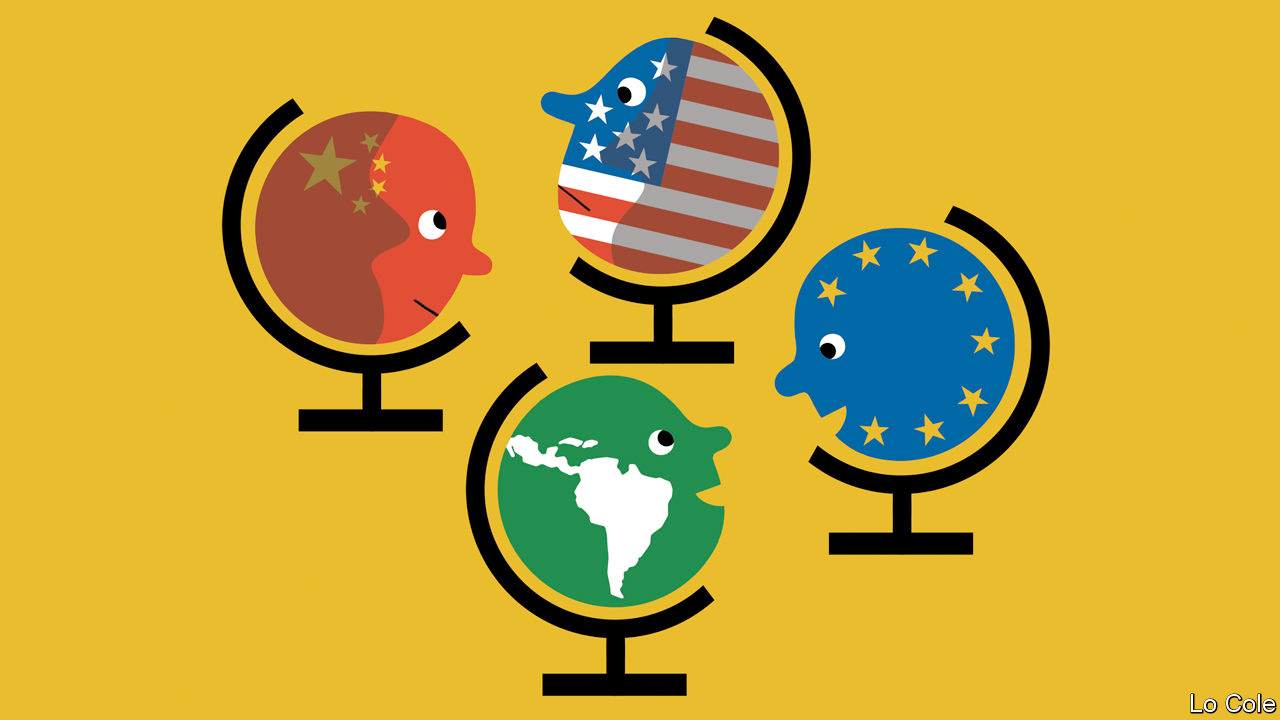
The recently concluded EU-India Free Trade Agreement represents a major shift in global trade relations between two of the world’s largest economic blocs. After nearly 20 years of negotiations, India and the European Union finalized a comprehensive Free Trade Agreement on January 27th, 2026, that is expected to reshape commerce, deepen economic ties, and influence geopolitical alignments in the decades ahead. According to the report, the deal will eliminate tariffs on around 96–97% of goods traded by value between the partners, potentially doubling EU exports to India and saving European companies approximately €4 billion annually in customs duties.
Under the agreement, India will reduce duties on key European imports, including automobiles, machinery, and wine, while the EU will reciprocate with cuts on Indian exports such as textiles, spices, engineering goods, and marine products. The phased tariff reductions, such as cars being cut from around 110 % to as low as 10 % over time, aim to increase market access and competition. Economically, as Indian officials project, the rewards could be as substantial as exports to the EU doubling within five years of implementation, levering India’s competitive sectors like textiles, pharmaceuticals, engineering, and IT services into new markets.
For Europe, the pact diversifies trade partners and situates EU firms better in Asia’s economies, reducing reliance on usual markets amid global tensions. However, the deal comes with significant risks and complexities. One prominent concern centers on the EU’s Carbon Border Adjustment Mechanism (CBAM), a climate policy that imposes fees on carbon-intensive imports. While tariff cuts open markets, these carbon fees could erode price advantages for certain Indian exports like steel and cement unless regulatory alignment or domestic carbon pricing measures are adopted. The European Union should be relatively minimal with initial climate policies in order to keep the trade agreement between India cohesive for the early stages of collaboration. Avenues of deductions or credits on these fees could be a potential tool that will help mitigate the disparities between imports entering Europe versus India. In addition, stringent EU regulatory standards and non-tariff barriers such as health, safety, and sustainability requirements pose compliance costs that could offset some tariff gains for the Indian economy.
Critics also highlight domestic pressures in India, as some farmer groups and unions argue the deal might expose local agriculture to cheaper European products and erode protections for small agricultural producers and their products. The EU’s Common Agricultural Policy provides significantly more subsidies and funding to its farms than India does to theirs, potentially indicating that this FTA will drive domestic prices down and local businesses out. While sectors such as dairy, sugar, and spirits were largely excluded from tariff reductions due to political sensitivity, the broader liberalization of trading goods generates debate about who really is the ultimate beneficiary and whose domestic markets will experience the most change. Micro, small, and medium enterprises will likely be affected and deindustrialised if there is no balance of regulation in India regarding the exchange of European goods and services.
Yet, beyond commercial considerations, the FTA carries geopolitical weight. With rising U.S. isolationism and supply-chain uncertainties, the pact acts as a strategic hedge for both partners by reinforcing economic autonomy and cooperation on issues like services liberalization, foreign investment, and research collaboration. Analysts see this agreement as part of a broader effort to establish trade and technology cooperation in addition to stronger diplomatic relations in a more polarized global order.
Overall, the EU-India Free Trade Agreement is far more than an exercise to reduce trading costs. It serves as a starting line for deeper integration through shared economic interests, challenges of regulatory alignment, and the strategic imperatives of a complex geopolitical power landscape. Whether the deal delivers on its ambitious promises will depend on thorough implementation, transparent dialogue, and the ability of both economies to facilitate short-term adjustments while capturing long-term growth opportunities.
Inside the The EU-Mercosur Impasse
Over 25 years ago, the EU and Mercosur began negotiations to create the world’s largest free trade zone. Yet the deal still has not been signed/completed.
If entirely approved, the deal would create a market of over 700 million consumers that would collectively represent ~25% of the world’s GDP. The deal includes greater EU access to vast quantities of South American agricultural products and more open markets to European automobiles, industrial machinery, pharmaceuticals, and chemical products for Mercosur members. Apart from the increased variety of goods, EU firms will reap the economic benefits of saving some $4.6b in tariffs they currently pay to export to Mercosur members.
Furthermore, the deal carries geopolitical significance. Currently, China is South America’s largest trading partner, and it wields influence through its Belt and Road Initiative infrastructure projects across the continent. If fully implemented, the EU-Mercosur deal would both reduce China’s share of influence and grant the EU access to higher quantities of critical minerals like lithium, graphite, and nickel.
However, the “free” part of free trade is a misnomer, as everything comes at a cost. Despite the estimated gains and benefits for consumers and producers on both sides of the Atlantic, some EU member states have opposed the deal. Poland, France, Hungary, among others, claim the projected flood of cheaper agricultural imports will undermine domestic primary sector producers. They have also expressed discontent with the fact that they must compete in price with countries that are not subject to the EU’s high health and animal welfare standards, creating an unfair playing field.
Despite the opposition the deal faces and the fact that it is still pending a legal review from the EU Court of Justice, the renewed focus to complete the agreement represents cooperation and stability among democracies in regions shaken by fragmentation and instability driven by the Trump administration. Now, it remains to be seen if the EU can overcome its internal strife to bring the deal to fruition.
The Donroe Doctrine: The U.S. Rebranded Return to Latin America
The morning of January 3, 2026, the world woke up to dramatic images and reports of Venezuelan President Nicolás Maduro being captured during a U.S. military operation in Caracas. In a predawn raid executed by U.S. special forces, Maduro and his wife, Cilia Flores, were taken into custody and transported to the United States, where he later faced drug trafficking, narco-terrorism, and other related conspiracy charges. The events in Venezuela were soon described by officials and analysts alike as part of a broader foreign policy shift now being referred to as the “Donroe Doctrine.”
The term, an explicit nod to the 19th-century Monroe Doctrine, reflects a renewed willingness by the United States to assert its dominance over the Western Hemisphere, exclude external rivals, and act unilaterally in the name of “regional stability.” While proponents argue that this approach responds to growing geopolitical competition with China and transnational security threats, critics warn that it revives a familiar logic: one that reduces Latin America to a strategic arena, rather than a region of sovereign actors.
Monroe to Donroe
To understand why the events in Venezuela have sparked such intense debate, it helps to remember that the United States has long framed the Western Hemisphere as its own sphere of influence. The Monroe Doctrine, articulated in 1823, originally declared that European powers should no longer attempt to colonize or interfere in the Americas. While it was presented as a defensive principle, it also laid the groundwork for a broader U.S. posture: the idea that the hemisphere was a zone where the United States had the authority to shape outcomes. Over time, the doctrine evolved from a diplomatic warning into a justification for intervention, from military occupations to economic pressure, whenever U.S. interests were perceived to be threatened.
The current administration’s rhetoric and actions suggest a revival of this logic. In recent months, President Trump has used symbolic language to emphasize U.S. dominance in the region: describing Canada as a “51st state,” calling for the annexation of Greenland, rebranding the Gulf of Mexico as the “Gulf of America,” and reaffirming control over the Panama Canal. These statements signal a worldview where the U.S. is willing to assert its power unilaterally when it believes its strategic interests are at stake. In this sense, the so-called “Donroe Doctrine” is less a new policy than a revival of an old one, reframed for a world defined by competition with China and renewed concerns about regional security.
The Case of Venezuela
Nowhere has this revived doctrine been tested more directly than in Venezuela. The operation that led to Nicolás Maduro’s capture came after months of escalating U.S military presence in the Caribbean and off the coast of South America. Starting in August 2025, Washington began deploying U.S. Navy missile destroyers and thousands of military personnel to the edge of Venezuelan territorial waters. The Trump Administration also intensified pressure on Maduro, including offering a $50 million reward for information leading to his arrest. The forces operated alongside more than 30 boat strikes that killed at least 115 people in the Caribbean and the Pacific, all alleged to be transporting drugs to the U.S. The governments and families of several of those killed have rejected the Trump Administration’s claims of “narco-terrorism” and insisted the victims were fishermen. One family even brought its case to the Inter-American Commission of Human Rights, alleging the extrajudicial nature of the strikes.
Yet, Maduro’s capture did not lead to the democratic opening many had hoped for. Within days, Delcy Rodríguez, a long-time figure of the Chavista regime, was sworn in as Venezuela’s interim leader by the Venezuelan Supreme Court. In response, Washington quickly signaled that it would treat Rodríguez as a partner in stabilizing the country. What followed highlighted the paradox at the heart of the operation: rather than dismantling the existing power structure, the U.S action effectively changed the head of state while leaving much of the regime structure intact. Rodriguez has since then signaled her willingness to cooperate with Washington on oil and security issues.
The opposition’s hopes for a clear democratic transition were complicated by these developments. Before the intervention, opposition leader María Corina Machado, who won international attention and a Nobel Peace Prize, had gone as far as presenting that award to President Trump during a high-profile meeting, a gesture intended to secure U.S. backing for a transition. However, soon after the operation, Trump publicly downplayed Machado’s prospects inside Venezuela, arguing she lacked broad domestic support, and instead shifted focus to working with Rodríguez’s interim administration. What was expected as support for the opposition became, in practice, continued engagement with a regime figurehead, raising sharp critiques towards the United States’ intervention.
Opinions among Venezuelans and regional observers remains deeply divided. Some view the rapid handoff of power as a hopeful break from decades of repression, while others see the episode as a violation of international law and an imperial assertion of American influence that violates Venezuelan sovereignty and self-determination.
The Case of Latin America
The capture of Maduro also sent an unmistakable signal to regional leaders. In the following days, tensions between Washington and Bogotá sharpened, with Maduro himself issuing threats toward Colombian President Gustavo Petro over perceived failures in combating drug trafficking. In the lead-up to the 2026 elections, this pressure has become a central issue for candidates: some condemn U.S. intervention as imperial overreach, while others openly call for stronger cooperation or even support for U.S. action. For many voters, the controversial boat strikes are a reminder that Washington’s “anti-drug” agenda can easily become a cover for military escalation and regional dominance. Ultimately, the question Colombian voters face is not just who will win the election, but whether Colombia will be allowed to chart its own path or be forced to align with U.S. strategic priorities, even when those priorities threaten democratic norms and sovereignty.
Across the region, the Donroe Doctrine’s logic shows up less in dramatic raids and more in strategic alignments and pressure. In Panama, for example, high-level U.S. engagement helped encourage the government to abandon China’s Belt and Road Initiative, a move Washington framed as guarding the neutrality of the Panama Canal and countering Beijing’s influence. Meanwhile, in Argentina, the United States has boosted financial assistance through a $20 billion bailout in an effort to stabilize the falling Argentine peso under Libertarian president Javier Milei. Similarly, in Chile’s recent presidential election, Trump quickly moved to endorse and congratulate José Antonio Kast, a long-time Pinochet follower and Nazi descendant, signaling support for leaders who align with Washington’s regional agenda and resisting those who pursue more independent policies.
And although these actions are presented as efforts to support stability or prevent foreign interference, they reveal a more concerning pattern: leaders who ideologically align with Washington’s priorities are rewarded, while those who seek autonomy or closer ties with China face pressure, threats, or even overthrow. This is the core of the Donroe Doctrine in practice. Beyond a simple foreign policy strategy, it embodies a system of incentives and punishments designed to keep the hemisphere within U.S. influence. It is an explicit demonstration of hard power, not just a softer “strategic partnership.” And the competition with China is the key driver. The U.S. sees Latin America as a critical battleground for access to strategic resources, from oil and gas to various critical minerals used in batteries and renewable energy. In other words, the Donroe Doctrine is a response to the growing rivalry with China, but it also exposes a deeper reality: Latin American countries are again being forced to choose between two major powers.
On a personal note, that choice feels painfully familiar. It echoes the long history of neocolonial and imperial relationships in the region, only now the faces have changed. Countries are left deciding between aggressive investments and influence from two global powers, and the “choice” is often just choosing the lesser of two evils. The result is a region where sovereignty is increasingly conditional, and where the space for independent development is shrinking under the weight of geopolitical competition.
Venezuela and the United States: What to Know and What is Next
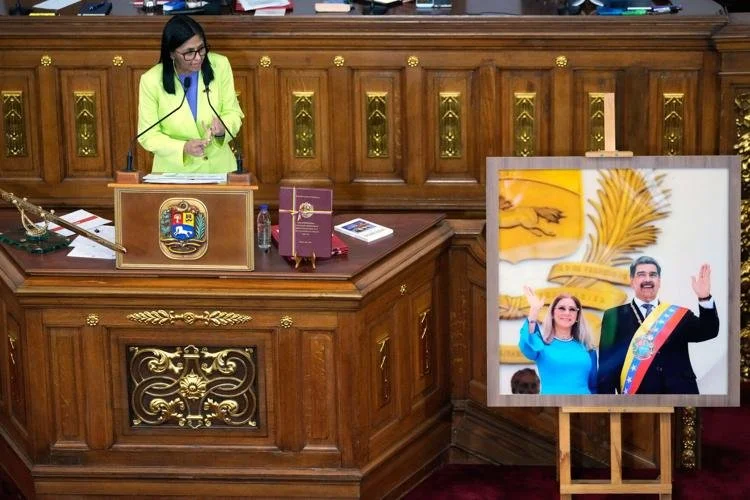
Photo by Ariana Cubillos.
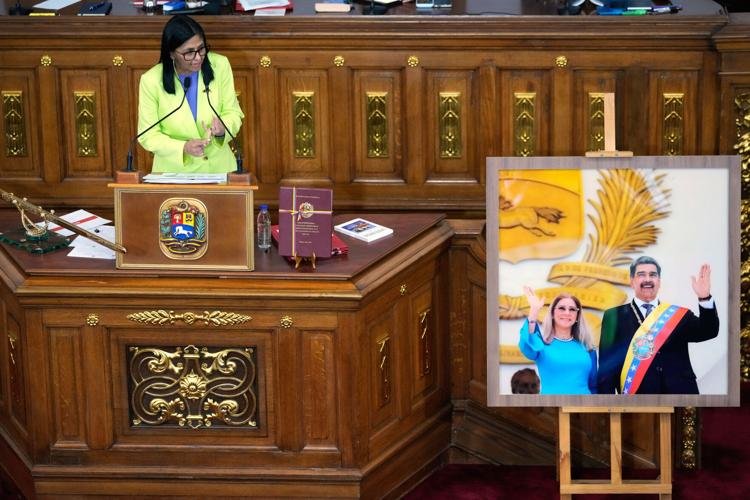
The United States and Venezuela have had a complicated relationship for close to two centuries—one that has become more complicated with the capture and indictment of Venezuelan president Maduró and his wife on January 3rd, 2026. Maduró is currently facing charges for narcoterrorism in the United States. The decision by the Trump Administration to capture Maduro came as a shock for many.
There is no surprise, however, when it comes to the reactions of many Venezuelan citizens who silently rejoiced upon hearing the news of their president’s capture. Since Maduró’s rise to the presidency in 2013, his administration has been known for its repression and violation of human rights, as observed by Time. Yet no country had intervened until now. Thus, the question becomes what exactly led to the United States decision to intervene when it did?
The United States did not intervene for the sake of providing reprieve for Venezuelan citizens; rather, the U.S intervened for control of Venezuela’s natural resources. Venezuela is a hot spot for natural resources, which include the world’s largest oil reserves as well as gas and mineral reserves. Venezuelan minerals such as coltan, niobium-bearing minerals, and bauxite have been deemed critical for the United States according to the U.S. Geological Survey. The U.S.’s desire for these natural resources has become abundantly clear with President Trump’s demanding control of the oil sector in Venezuela, or, as he stated on Truth Social, that Venezuela should return “all of the Oil, Land, and other Assets that they previously stole from us.”
The statement that Venezuela stole oil from the United States is highly controversial and extremely complicated, as is much of the history between the United States and Venezuela. Prior to 1976, when President Pérez of Venezuela nationalized the oil industry and established the Petróleos de Venezuela SA (PDVSA), a state owned oil company, foreign oil companies were allowed to extract and sell Venezuelan oil. However, following the establishment of PDVSA, GovFacts observes that Venezuela expelled foreign oil companies until 2007, when Chávez announced that foreign oil companies could extract Venezuelan oil so long as PDVSA had 60% equity. Most American oil companies refused, aside from Chevron. Therefore, the statement that Venezuela stole oil from the United States is factually incorrect. Venezuela took control of their own oil reserves and allowed international oil companies to extract its oil as long as Venezuela received equity.
The fate of Venezuela, Venezuelan and American oil companies, and the Venezuelan and American relationship is still largely unknown. Trump has made claims of controlling the Venezuelan oil industry and government until further notice, asserting that he is the acting President of Venezuela, according to Intelligencer. However, Venezuelan Vice President Delcy Rodriguez is currently serving as interim leader of the country until a new President can be selected. The United States has no plan to leave Venezuela to its own devices. Instead, they are planning a “boots on the ground” tactic to oversee the transfer of power and grant control of the oil industry to American oil companies. The US seeks to sell Venezuelan oil to sustain Venezuela and reimburse the U.S., according to Britannica. Trump wishes to invest billions of dollars into rebuilding Venezuela’s oil industry; however, he is facing criticism for this decision. According to Intelligencer, Exxon’s and ConocoPhillips’s CEOs have reservations with this idea, contending that Venezuela is “uninvestable”. There remains much to be sorted within Venezuela and between the United States and Venezuela, but Venezuela retains its sovereignty and will continue to be in control of its government despite claims made by the Trump Administration.
Mexico’s Democracy Is On Its Deathbed, And There is Blood on AMLO’s Hands
Former President of Mexico, Ernesto Zedillo, wrote in an open letter that “Mexico’s young democracy has been murdered.” I believe that diagnosis is slightly premature, but there is no doubt that democratic institutions within the country are in critical condition. Unless the government changes course, Mexican democracy could be taking its final breath sooner than expected, and blood will be on Andrés Manuel Lopez Obrador’s (AMLO’s) hands.
AMLO served as the President of Mexico from 2018 to 2024 under the MORENA party. Before, during, and after taking office, AMLO wielded populist rhetoric while also contributing to the militarization of Mexico’s civilian spheres and consolidating authority in the executive. These measures have significantly weakened Mexico’s democratic institutions. Now, President Sheinbaum is continuing the march towards authoritarianism that AMLO began by implementing sweeping judicial reforms and gutting independent oversight agencies.
Contested Elections
AMLO’s political career began in 1976, but he first ran for president in 2006, narrowly losing to Felipe Calderón. He immediately claimed the election was rigged, refusing to concede and fueling five months of mass protests. In 2012, running again as the PRD candidate, he lost by a wider margin but once more labeled the results “illegitimate” and “not clean, free, and genuine,” insisting the election was rigged.
When a major political figure claims that elections have been “stolen”, it erodes the public trust in the election process while also undermining a pillar of democracy: accepting electoral defeat to maintain political stability. By refusing to admit defeat twice, AMLO weakened this expectation of respectful concession, encouraging future candidates to do the same. His undying electoral fraud allegations also helped to create a deeply polarized political environment in Mexico, constructing a “us-versus-them” narrative that laid the groundwork for the damaging, populist rhetoric he embraced after winning his third presidency bid in 2018.
Populist Speech & Attacking the Press
Following the precedent he set before taking office, AMLO spewed inflammatory, populist speech throughout his tenure, which weakened Mexican democracy. Granted, populism itself is not inherently harmful, but populism becomes a danger to democracy when it seeks to “erode freedom of thought, information, and expression, or the ability of people in society and the media to criticize the elected populist leader”. AMLO’s rhetoric did exactly that.
His morning press conferences, or “mañaneras”, were considered the centerpiece of his communication strategy and the primary stage for attacks on journalists, discrediting the media, and spreading misinformation. At least 179 aggressions against journalists and media outlets have been documented in his “mañaneras”. AMLO often labeled journalists as “hypocrites,” “elite press,” and “corrupt,” brewing public distrust in independent journalism. This rhetoric from the president is bound to create a ripple effect among the public by fostering suspicion of independent journalism and strengthening public receptiveness to one-sided political narratives. Over time, this erosion of the media’s credibility weakens an essential safeguard of democracy: a press capable of maintaining accountability.
AMLO also attacked the press through judicial harassment, filing more than 150 legal cases against journalists and media outlets and even exposing the personal and financial information of his critics. These constant attacks on journalism inhibited reporters from carrying out their work freely and fully, which severely weakens the information they disseminate, undermines public debate, and, consequently, democracy.
Militarizing Civilian Life
While AMLO was attacking press freedoms and spewing populist language across the airwaves, he was also unravelling Mexican democracy by giving the military greater control. He created a Mexican National Guard to manage public security across the country and placed it directly under military control. This move sparked an outcry from human rights organizations who argued that rather than turn security over to the military, the government should instead reform corrupt state and local police forces.
Despite his critics, AMLO has ordered the military and national guard to do everything from providing logistics to the Covid pandemic response to building the controversial Tren Maya. In fact, a 2021 report by the Center for Investigations and Economics (CIDE) found that between 2006 and 2021 more than 245 governmental functions had been transferred from civilian authorities to the Mexican armed forces. AMLO’s orders are eerily similar to those of authoritarian leaders like Bolsonaro in Brazil and Bukele in El Salvador, who have expanded military control into the public sphere. I believe that nowhere in the world has the deployment of armed soldiers pacified a nation or strengthened democracy.
Consolidating Executive Power
In addition to militarizing civilian spheres, AMLO systematically consolidated increasing amounts of power in the executive branch. He spearheaded reforms that curtailed the budget, staff, and independence of the National Electoral Institute (INE), Mexico’s primary electoral referee. He also expanded federal social programs like cash transfers, fostering centralized political loyalty around the presidency. This concentration of power in the executive certainly raises serious questions about the resilience of Mexican democracy.
In September 2024, just before leaving office, AMLO pushed a constitutional reform to make the judiciary more responsive to popular opinion and political influence. Specifically, the reform introduces direct elections for all federal and state judges, reduces Supreme Court seats and tenure, and creates administrative bodies vulnerable to political pressure. Motivated by his belief that the judiciary favored elites and restricted his power, these changes politicize the courts, weaken checks and balances, and make it increasingly likely that judges will prioritize political agendas over the rule of law, thus threatening democracy.
Sheinbaum’s Early Continuity
Sheinbaum’s early months in office indicate continuity with AMLO’s and MORENA’s democratically corrosive initiatives, rather than course correction. For example, Sheinbaum recently disbanded seven government-financed, independent watchdog organizations that provide oversight on public information requests, telecommunications, and more. The duties of most of these agencies will be absorbed by other parts of the federal government and overseen by the president, effectively reducing independent oversight within the government.
Keeping Democracy Alive in Mexico
And yet, Mexico’s democratic heart is still beating. The National Electoral Institute (INE) continues to organize, supervise, and conduct federal, state, and local elections to ensure they are free and fair, despite pressure. Additionally, civil society remains vibrant: protests are regularly organized and journalism continues to expose wrongdoing, even in the face of danger.
These remaining beacons of hope show that Mexico’s democracy is not dead yet. However, it is gravely wounded, and the choices Sheinbaum and her administration make now will determine whether democracy in our neighbor to the south recovers or flatlines.
U.S.-Iran Nuclear Talks: Can Nuclear Diplomacy be Revived?
Both the United States and Iran have recently signaled interest in reopening negotiations regarding Iran’s nuclear program. Yet, neither the attacks on Iranian nuclear sites nor the collapse of earlier diplomatic rounds has meaningfully changed Iran’s willingness to abandon its uranium enrichment efforts.
Previous diplomatic efforts continued until a series of escalating events pushed the region to the brink of conflict. In April and May 2025, the United States and Iran held five rounds of direct nuclear negotiations surrounding Iran’s uranium enrichment program and had scheduled a sixth session for June. These were the first direct talks regarding Iran’s nuclear program since the United States withdrew from the Joint Comprehensive Plan of Action nuclear deal during Trump’s first term.
However, just days before their June meeting, Israel attacked Iranian military and nuclear facilities. This was followed by Iranian attacks on Israeli military and civilian infrastructure, subsequent U.S. bombardment of three Iranian nuclear facilities, and Iranian missile attacks at an American air base in Qatar. A ceasefire between Iran and Israel ultimately ended what is now known as the Twelve Day War, but the diplomatic momentum was lost.
Following the U.S. strikes on the three nuclear facilities, Trump declared that Iran’s nuclear enrichment program had been “obliterated” despite a U.S. intelligence assessment concluding that the program remained largely intact. Regional analysts have expressed their concern that these attacks may have only strengthened Iran’s resolve to accelerate nuclear development.
This conflict demonstrated the willingness of Iran, Israel, and the United States to engage in direct military action against one another, which was previously unprecedented, and emphasizes how Iran’s nuclear capabilities and refusal to halt its uranium enrichment may lead to further conflict in the region.
Since the Twelve Day War, the International Atomic Energy Agency (IAEA) has been unable to inspect what remains of Iran’s nuclear facilities. Prior to Israeli attacks, the IAEA reported that Iran was not meeting its nuclear nonproliferation obligations. Iranian officials claimed those findings were cover for Israeli attacks, and Iran has not cooperated with IAEA inspections since. The actual state of Iran’s nuclear sites is unclear at present, but Iran’s Deputy Foreign Minister recently stated that its program is still operational.
Iran continues to claim that its uranium enrichment is solely for peaceful purposes, such as power generation and medical needs. Inspectors, however, have doubted that such highly enriched uranium is necessary for those purposes. They warn that the quantity of uranium Iran has enriched to 60% is enough to fuel ten nuclear bombs, and if it can enrich to 90%, that would be enough to produce a nuclear weapon. Western powers and Israel have accused Iran of using its civilian nuclear program as a cover for developing nuclear weapons. Both Trump and Netanyahu have stressed that military action will continue if Iran continues its uranium enrichment.
Despite Iran’s refusal to end its enrichment program and its recent withdrawal from an agreement permitting renewed international inspections of its nuclear sites, Iran has recently shown a continued effort toward renewed peace talks. In particular, Iran has sought Saudi Arabia’s assistance in mediating between Iran and the United States, asking the Saudis to persuade the United States to continue nuclear talks ahead of the Crown Prince’s visit to Washington.
Whether this represents a genuine opening or merely diplomatic signaling remains unclear. What is clear is that the region stands at a precarious moment. Without meaningful progress toward renewed negotiations, the risk of further military escalation and even a potential nuclear crisis will continue to grow.
Former Bangladesh PM Sentenced to Death
Bangladesh's former prime minister, Sheikh Hasina, was recently sentenced to death after she was found guilty of ordering a deadly crackdown on student protests in 2024. Since being ousted in 2024, she has been living in exile in India following her 15 year governing period.
The daughter of Bangladesh’s founding father and former president, Hasina’s tenure has been marked with allegations of vote-rigging, political unrest, misuse of the media to serve her own interests, reports from human rights organizations, and accusations of violence against opposition members. As students protested against unfair government job quotas and pushed for merit-based recruitment, Hasina’s dismissive comments calling protesters “Razkars” caused public outcry and more protests. The derogatory label is synonymous with the word ‘traitor’ and refers to a paramilitary group of pro-Pakistani Bangladeshis known for committing brutal crimes to the Bengali population during the Liberation War.
Despite the increasing death tolls, Hasina focused on protecting government property instead of addressing the people’s concerns, adding more fuel to the fire and increasing the death toll to almost 300. As she continued to feign ignorance, demands for her resignation increased.
Hasina’s blatant misuse of law enforcement to harass and kill hundreds of people led to her conviction of crimes against humanity. However, the corruption within key governmental and media systems that she permitted will be her lasting legacy—damage that could take years to undo. Despite being a supposed proponent of ending corruption, her government did nothing to address the issue.
Hasina has denied all charges and attributes them to political motivation; she fled to India in August of 2024. Bangladesh has requested to extradite her from the country so that she can face punishment, but India has yet to respond. This request could strain India-Bangladesh relations, for India viewed Hasina as a reliable and valuable diplomatic relationship. Both countries rely heavily on each other for trade, water, electricity and other goods. While there is a history of close ties, Bangladesh’s interim government and its people desire a decrease in this codependency and a focus on other trading partners, such as China.
The future of Bangladesh’s government is undecided, showcasing the country’s instability and long-standing internal issues. As the country rebuilds, it is imperative for the government to restore public trust and address deeply rooted issues. Meanwhile, the trajectory of India-Bangladesh relations remains unknown and presents another challenge to the country’s turbulent political landscape.
“Femicide” criminalized in Italy: Symbolic or Significant?
On November 25th, the International Day for the Elimination of Violence Against Women, the Italian parliament voted unanimously to codify the crime of “femicide.” This term refers to the murder of a woman motivated by gender and will be punished with a life sentence.
In 2023, a young Italian woman named Guilia Checchettin was fatally stabbed by her ex-boyfriend. The woman’s sister, Elena, remarked that the murderer was not a monster but the “healthy son” of Italy’s patriarchal society. These words sparked national protests and are believed to have led to the movement to criminalize this act.
Legal scholars in Italy recognize the symbolic nature of the law but fear that it does little to overcome actual inequality. The current definition within Italy defines femicide as murders which are “an act of hatred, discrimination, domination, control, or subjugation of a woman as a woman… or limit her individual freedoms (after a woman terminates a relationship).” Valeria Torre, a law professor at Foggia University, believes this definition is vague and renders implementation difficult as the motive of gender may be challenging to prove. Many believe that this is only a semblance of a solution, and that the Italian government should instead be focusing on economic efforts to end inequality and prevent violence.
Yet, the classification of “femicide” enables a deeper study of these types of killings. Alongside Italy, other EU states like Cyprus, Malta, and Croatia, have a legal definition of femicide. Globally, 29 countries, mainly in Latin America, classify these murders as femicide. However, leaders like Javier Milei, President of Argentina, have vowed to strike “femicide” from the penal code over beliefs that this will legally make a woman's life more worth than that of a man.
Meanwhile, the United States lacks “femicide” as a legal term despite ranking 34th globally in intentional female homicides. According to “Femicide in the United States: a call for legal codification and national surveillance” published by the National Institutes of Health, the reports of female murder are not always categorized as a homicide. Furthermore, the motivations and victim’s relationship to the perpetrator are often undocumented, complicating the surveillance, prevention, and response to femicide. This issue is especially salient when comparing the number of women and the number of men that were reportedly killed by an intimate partner. In 2021, the Bureau of Justice Statistics released data showing that 34% of female victims of murder and nonnegligent manslaughter were killed by an intimate partner in comparison to 6% of male victims.
As far right governments struggle to acknowledge the crime of femicide and seek to strike it from law, other countries lack movements to even introduce the term. Femicide’s recognition as a uniquely violent and reprehensible crime could inspire a larger impact on culture, long-term deterrence, and response.
The Lights Went Out Again. What Else Is New?
The lights went out again. That’s not news. That’s just life in Cuba.
In Holguin and across the rest of the island, blackouts aren’t moments of crisis; they are part of the everyday life of a Cuban citizen. Power outages are so frequent that people no longer check when the electricity returns, but rather only when it goes. There is a kind of heartbreak that arises from watching your country on the brink of collapse, frozen in time, with no hope for things to improve.
But these outages are only one part of a much larger crisis. Today, Cuba faces a slow and exhausting emergency, shaped by a government that struggles to meet the population’s most basic needs and by outside pressures that make recovery even harder. This crisis reflects the reality of a system that no longer works, and the absence of any clear way out.
Collapse
Cuba’s economic collapse is not a temporary downturn; it is the result of long-standing problems shaped by central planning, missed chances at reform, and lost international support. The country has faced years of recession or near-zero growth. In 2024, Cuba’s economy shrank by an additional 1.1 percent to more than 10 percent below pre-pandemic levels. Core sectors including agriculture and energy continue to severely underperform, while productivity remains low and debt remains high. Reforms have been partial at best as the private sector remains constrained and state-run enterprises bloated and inefficient. These are not issues that can be resolved through a one-size-fits-all policy approach; Cuba’s economic structure is shaped by decades of centralized control, geopolitical isolation, and institutional rigidity. Solutions that may work in more open economies have failed. Effective reform requires not only economic recalibration, but political will, administrative capacity, and an institutional framework that does not currently exist.
The situation has been exacerbated by external factors: the collapse of the Soviet Union in the 1990s triggered a devastating contraction, and more recently, the economic crisis in Venezuela sharply reduced the oil and financial aid that Cuba once depended on. The COVID-19 pandemic further weakened tourism—one of the country’s key sources of income. As of 2025, Cuba faces acute fuel shortages, an unsustainable fiscal deficit, and rising inflation driven by excess money printing. Together, these pressures have left the government unable to guarantee food, energy, or basic public services. This is not just an economic downturn; it is a systemic failure. The state can no longer fulfill even its most basic responsibilities, and everyday life has become centered around scarcity, uncertainty, and survival. Without structural reform and access to external financing, Cuba’s economy is not positioned to recover. And while these conditions are felt most immediately in blackouts and shortages, they are signs of something deeper: a country running out of both options and time.
Scarcity
What might be considered an extraordinary crisis elsewhere has become the framework of ordinary existence in Cuba. Power cuts stretch for hours—sometimes more than a day, shutting off electricity, water, internet, refrigeration, and the ability to cook. People plan their day around what time they might have light or when the stove may work. Cuba produces only a fraction of the fuel it needs, and what it does have is low quality, damaging the aging power plants that continue breaking down. Emergency fuel deals with Russia, Mexico, and Turkish power ships have not fixed anything. Food and medicine are also difficult to procure. In March 2024, the government began rationing staples such as rice and milk and even turned to the World Food Programme for assistance in securing powdered milk. More often than not, pharmacies will have empty shelves, and when goods can be found, inflation ensures they are inaccessible. These shortages are not just a sign of an economy in trouble; they are a reminder of the difficulties of survival in Cuba.
However, this kind of deprivation does more than disrupt daily life; it changes how people think, feel, and plan. Families find themselves rationing not merely electricity or food, but also their own energy, patience, and hope. Over time, scarcity shapes how people anticipate their days, teaching them to expect interruption, instability, and loss. Plans become provisional. Joy becomes cautious. Even rest becomes something earned through exhaustion rather than something freely taken. The emotional cost is cumulative: a quiet heaviness that settles into households and becomes part of how life is understood. Within that accumulating heaviness, the limits of state capacity become increasingly visible. And in the long term, this erosion of public provision does not simply encourage outward migration; it constrains the possibilities people believe exist within the country itself.
Departure
Since 2022, more than 850,000 Cuban citizens have arrived in the United States. This wave is not an anomaly; it is the latest expression of a decades-long pattern of departure. From the Mariel boatlift to the Balsero crisis, migration has been a recurring response to national rupture. The departure of the Cuban people is less about a single trigger than it is about the slow erosion of what staying might mean. When scarcity and uncertainty define daily life, and efforts to speak out are met with repression, people begin to leave not out of sudden desperation but in quiet resignation. The state does not collapse all at once; it recedes, gradually. For many, leaving is no longer a dramatic rupture but the only option left. In fiscal year 2022 alone, Cuban nationals were intercepted at the U.S.–Mexico border nearly 225,000 times and interdicted at sea more than 6,000 times, exceeding the numbers seen during the 1980 Mariel boatlift and the 1994 Balsero exodus. Since the Cold War, Cubans have held a unique place in U.S. immigration policy, especially under the Cuban Adjustment Act of 1966, which allowed most arrivals to gain legal residency within a year. Although the repeal of the “wet foot, dry foot” policy in 2017 narrowed these privileges, Cubans continue to benefit from humanitarian parole pathways and reunification programs that highlight the lingering political weight of U.S.–Cuba relations. What emerges now is a national transformation through subtraction: fewer young professionals, fewer children enrolled in schools, fewer futures imagined on the island. This is not a temporary crisis.
Control and Isolation
Despite the weight of both external sanctions and internal breakdown, what ultimately defines the Cuban condition is not just hardship, but control. Cuba’s isolation is not accidental; it is preserved through state policy, censorship, and repression. Internet access is expensive, limited, and closely surveilled, with service blackouts routinely imposed during protests or politically sensitive moments. Independent journalism is criminalized, and dissent is often punished through arbitrary arrests, smear campaigns, and digital harassment. Activists and critics face systemic intimidation, as the government enforces strict limits on freedom of expression and assembly. Even basic survival is mediated through control. Citizens depend on la libreta, a monthly ration booklet distributed by the state, to receive staples like rice, beans, and oil. Acquiring these often means waiting in long lines for hours. Speaking out against this system has led many to exile or imprisonment. There is no room for criticism, only consequences.
In the end, yes, the lights went out again. But what else is new, when darkness has become the only thing the state can still guarantee?"
Germany: “Not at Peace but not at War”
Germany is at a crossroads. On September 29th, German Chancellor Friedrich Merz said that, “we are not at war, but we are no longer at peace either.”
The Russian invasion of Ukraine in 2022 was a harsh wake up call for the European Union and for individual states like Germany to push defense and security to the top of policy agendas.
Since September 2025, Russia has engaged in an increased amount of drone incursions into NATO airspace. In early October, it was suspected that Russia was sending drones into Germany specifically. These drone sightings led to the shutdown of Munich airport and brought security to the forefront of German political discussion.
Unlike other European Union and NATO countries that have strong militaries that can work within their countries, Germany is different. Currently, the country grapples with two problems.
First, the constitution that the German military follows was written after World War II. Given Germany’s history with the Nazi party, there is a specific clause that denotes that the military cannot take “a key role in the country’s internal security.” This puts Germany at an interesting crossroads because delineating what warrants internal security is murky. Furthermore, German police have the competency to shoot down these drones, but do not currently possess the technology. While the constitution could be amended, this requires a two-third majority in the government that currently seems improbable given weak coalitions.
Second, Germany aims to be a strong military power and meet its NATO active soldier requirement of 260,000 people by the early 2030s. Germany currently has only 183,000 people enlisted. To combat this gap, Germany has contended with the idea of conscription. Earlier this month, Germany decided that a mandatory questionnaire will be sent to all 18 year old men to gauge their willingness to join the military. This form will also be sent to women but will be optional. Additionally, all men who are 18 in July of 2027 will be required to go through a medical exam to test eligibility for duty. The intention behind these questionnaires is to have a list to refer to of eligible soldiers if war were to happen. A voluntary conscription model like this remains contentious for Germans.
As Russia continues to break boundaries and test the limits of its power, Germany must reassess its current framework and plan for a future that lies on a moving pendulum of war and peace.
The Diplomatic Decline of Mexico-Peru Relations
The recent decision by Peru’s Congress to declare Mexican President Claudia Sheinbaum persona non grata (PNG) is the most recent development in what has become a strained relationship between the nations. While labeling a head of state “unwelcome” is more symbolic than anything, it signifies a deteriorating diplomatic relationship.
Relations declined at the beginning of November as Peru’s former prime minister, Betssy Chávez, sought refuge in the Mexican embassy in Lima to request asylum. Peru’s former president Pedro Castillo went on trial in March 2025 and faced charges of rebellion, grave abuse of authority, and disrupting public peace. It’s clear that Peru’s new administration, having already tried Castillo, is now turning its attention to his former prime minister. Following her entry into the Mexican embassy, Peru’s foreign minister announced the immediate severance of diplomatic relations with Mexico. This step alone marks a significant split: full breaks in relations between Latin American neighbors are uncommon and usually reserved for extreme circumstances.
Then, just days later, Peru’s Congress escalated the conflict further by voting to declare Sheinbaum persona non grata. Lawmakers justified the decision by accusing Mexico of repeatedly interfering in Peru’s affairs, and pointed to Mexico’s willingness to grant asylum to high-profile Peruvian political figures. Some members even claimed Sheinbaum had ties to drug traffickers. However, no evidence was presented to back this claim. Mexico counters the allegations and maintains that its actions are consistent with international law.
This most recent development is not an isolated occurrence. The strain in Mexico-Peru relations stretches back to 2022, when Peru expelled the Mexican ambassador after Mexico granted asylum to Castillo’s wife and children following his impeachment and arrest. That moment marked the start of a downward trajectory that neither government has halted some three years later.
Taken together, the asylum disputes, diplomatic expulsions, and now the PNG announcement reflect a relationship rooted in ongoing disrepair rather than one disrupted by a recent break. With neither nation making an effort to rebuild trust, Mexico-Peru ties will continue to unravel and leave longer-term regional cooperation at risk. Such risk and isolation are the last things the states need to be dealing with, given that the Trump administration has injected uncertainty into the Western hemisphere, along with the world more broadly, since returning to office earlier this year. Instead, the nations should focus on where they can collaborate to solve mutual issues.
The New Age of US-Saudi Relations: A Tale of Corruption
Saudi Arabia’s crown prince Mohammed bin Salman (MBS) was welcomed with open arms to the White House last week, as he met with President Trump to discuss everything from US investment to nuclear energy. Trump and his team pulled out all the stops: red carpet, fighter jet flyover, military band, and a lavish dinner in the White House East Room attended by technology CEOs such as Tim Cook, Elon Musk, and Jensen Huang, among others. The embrace of MBS isn’t just another example of Trump’s transactional foreign policy. Against the backdrop of great power competition, corruption is hiding in plain sight.
There was certainly no shortage of moral compromises. Of course, Saudi Arabia’s horrendous human rights record was largely ignored or dismissed. The country is notorious for crackdowns on civil liberties, unfair trials and executions, forced labor, targeted surveillance, and discrimination against women. But even more blatant was Trump’s response to being pressed on the 2018 murder of Washington Post journalist Jamal Khashoggi, which was previously determined by US intelligence agencies to have been ordered by the crown prince himself. Trump referred to Khashoggi as “extremely controversial,” dishonestly insisting that MBS “knew nothing about it.”
If nothing else, it’s clear that the US has taken a sharp turn from its position 3 years ago, when the Biden administration was reconsidering the entire US-Saudi relationship due to what it perceived as unacceptable differences in values and interests.
The Trump administration also seems to be using a similar playbook that it uses for AI competition with China. The logic goes that if the US sells its top-end AI chips to China, such as those made by Nvidia and AMD, the Chinese will get hooked on American technology and thus become disincentivized to develop their own, leaving them reliant on the US. For Saudi Arabia, Trump announced that he would approve the sale of the F-35 fighter jet. Deepening defense ties with the Saudis is likely seen by the administration as a reliable hedge to China and Iran further asserting their own influence.
On the positive side, this approval might be representative of a loosening iron grip by Benjamin Netanyahu over American Middle East policy. Giving F-35s to Saudi Arabia challenges Israel’s regional military supremacy. Israeli officials have stated they would accept the sale if Saudi Arabia joined the Abraham Accords, but this is unlikely to happen. The Saudis have clearly stated they would only join the agreement to normalize relations with Israel if presented with a viable path to a two-state solution, which Israel firmly opposes.
Unfortunately, however, Saudi-China cooperation is already strong enough to create a potential pathway for technology transfer. Pulling Saudi Arabia towards the west in the context of competition with China won’t matter if they simply turn around and hand over the technology to China, which is exactly the situation that the US seeks to avoid. To get the deal done, these strategic concerns have been overlooked.
The justification for the strategic compromise isn’t easy to miss—just follow the money. MBS pledged upwards of $1 trillion of Saudi investment in the US, and the Trump family maintains active business relationships in Saudi Arabia. For example, MBS himself oversees a massive construction project that is in talks to include a Trump-branded property, according to the chief executive of a Saudi firm. In exchange, Trump delivered on the crown prince’s requests in terms of defense, economics, and regional security. It’s purely transactional, barely disguised quid pro quo.
Needless to say, money talks. But foreign policy should be dictated by American interests, not the Trump family’s interests. The administration’s pattern of tolerance (and even reverence) for autocracy and brutality has been clearly defined. American technology and defense industries will benefit handsomely from Saudi investment, but the Trump family's own financial ties to the kingdom reveal even deeper motivation. It’s the latest example of Trump’s transactional approach to foreign policy, but when it’s the family business that stands to benefit, it’s blatantly corrupt, too.
The Baseless Claims Behind the US v. Venezuelan Naval Feud
In August of 2025, President Donald Trump put out a $50 million bounty for anyone who can aid the arrest of Venezuelan President Nicolás Maduro. This reward comes after Trump’s Treasury office labeled “Cartel de los Soles” a terrorist organization. They claim Cartel de los Soles is allegedly headed by President Maduro. Confusingly, Cartel de los Soles isn’t a real organization; it is a term created by Venezuelan journalists in the 1990s to describe drug corruption amongst Venezuelan military leaders. The name ‘Cartel de los Soles’ translates to “Cartel of the Suns” in reference to the Venezuelan military leaders who wear suns on their uniforms much like American soldiers wear stars. The New York Times reports that the D.E.A.’s annual National Drug Threat Assessment has never mentioned the Cartel de los Soles, nor has the UN’s “World Drug Report.” It appears that the ‘terrorist organization’ worth 50 million of the US’s tax payer dollars is only real to journalists thirty years ago and Donald Trump.
Since August, Trump has deployed 15% of the U.S.’s naval power on Venezuelan coastlines. They have carried out 21 strikes on Venezuelan boats (killing 83 people) said to be carrying illegal drugs. The US claims to be motivated by a desire to rid the Western hemisphere of drug crime and corruption—ergo, to protect the US and its people from President Maduro’s poor presidency. In a press conference on October 15th, Trump made numerous dubious claims about the efficacy of the boat strikes. First, he claimed that the sinking of Venezuelan boats saved 100,000 American lives from fentanyl overdoses. PBS states that those claims are entirely baseless—there is no way to know how many lives might have been saved. They point out that if one follows Trump’s math, “...the strikes on five boats in less than two months would have saved nearly double the number of U.S. lives lost to drug overdoses in an entire year.” Even if one could calculate the amount of lives saved by these strikes, we still don’t even know if they were carrying drugs in the first place. No drugs are visible from the video footage of the sinkings, contrary to what the President claimed. In fact, most illicit fentanyl is smuggled in by US citizens from Mexico, not fishing boats off the coast of Venezuela. If it’s true that Trump really wants to protect US citizens from Maduro’s harmful policies, he might want to change his tactics from fear mongering and unnecessary demonstrations of force.
Although it’s true President Maduro isn’t unfamiliar with corruption, it is unclear if President Trump is the man to fix it. President Trump is reported by NPR to have stated, “I sort of made up my mind” about launching a future attack on Venezuela, as well as telling Fox News that, “We just have to take care of Venezuela”. With the future of peace in South America looking unsure, Americans and Venezuelans alike must pay attention to this sensitive issue.
Fieldnotes from COP 30: Negotiations and Strategies
Photo by Carlisle Shore.
This past week, I was given the privilege of serving as a student delegate for UNC-Chapel Hill at the COP 30 climate change conference. Stomaching the irony of the carbon emissions from my trip, I flew to Belém, Brazil, and picked up my observer badge. This badge allowed me access to the venue with the country and NGO pavilions, where different groups held talks about their role in the climate crisis, and also gave me access to what I was most excited about: the negotiation rooms.
COP 30 has gone by many names: the Amazon COP, the Adaptation COP, and finally, the Implementation COP. This last name reflects the COP presidency’s efforts to move COP away from its reputation of being all talk, talk about future talk, and very little action.
Unlike previous COPs, there were no anticipated cover decisions. Instead, negotiators waded through a medley of ongoing dialogues: operationalizing a global goal on adaptation, advancing the Just Transition Work Program, building a functional global carbon market, discussing reforms to the COP process, and more. While not formally on the agenda, the presidency also grouped four key topics—unilateral trade, climate finance, emissions reporting, and ambition through Nationally Determined Contributions (NDCs), which is essentially each country’s emissions reduction goal.
In the spirit of an “Implementation COP”, I tried to follow negotiations about actionable steps toward achieving NDCs, steps that could help us collectively push down the temperature overshoot curve closer to the 1.5C °C warming goal that underpins the 2015 Paris Agreement.
The main threads I followed were:
A) The UAE dialogue on utilizing recommendations from the Global Stocktake (GST), the UN’s tool for assessing collective climate progress, to achieve climate finance and inform NDCs —well, depending on who you're talking to.
B) The Sharm el-Sheikh Mitigation Work Program, which aims to scale up mitigation ambition through finance access, capacity building, and technology transfer. It also provides a platform to discuss a range of topics such as the just transition and circular economies by holding at least two global dialogues per year.
C) Debates over the harmonization of Article 9.1 of the Paris Agreement and Article 2.1(c). Article 9.1 obligates developed countries to provide financial resources to developing countries, while 2.1(c)calls for aligning “financial flows” with low-emissions, climate-resilient development. These talks followed the COP 29 promise to chart a strategy to deliver $1.3 trillion annually in climate finance to developing countries. Much of the debate centered on concerns that sovereign finance (the historical reading of Article 9.1) could be diluted by a new reliance on private finance, which comes with higher interest rates and choosy lending. In my view, a tiered strategy using both streams is necessary. We need a lot of everything—urgently.
The negotiations, admittedly, are highly procedural, chock full of legalese, and often hard to follow. So instead of trying to decode every clause, I started watching the strategies and hunting for subtext. I figured if you are reading the Journal of Foreign Affairs at Carolina, or have even made it this far, you likely have an interest in diplomacy, so below are some of the strategies I saw play out in the rooms.
#1 Grounding. When discussions got lost in procedural weeds—debating whether something belonged in a dialogue or an informal note, or whether it was even in scope—a party (often a Small Island State, mountain nation, or another climate-vulnerable country) would intervene with a sobering reminder of what’s at stake: sea-level rise, displacement, and other looming realities. This often encouraged concessions or raised ambition.
#2 Interests, not Issues: At one point, the Chinese delegation urged countries to speak more directly about their underlying interests rather than hide behind critiques of wording or procedure.
#3 Discrediting Institutions: Questioning the accuracy and composition of structures within the UNFCCC, to delegitimize their recommendations or authority. For example, in negotiations of the Research and Systematic Observations workstream, Saudi Arabia proposed that IPCCC, the UNC scientific body on climate change, should be substituted or complemented with other “accredited scientific agencies.” Delegates I spoke with viewed this as an attempt to bring in research friendlier to delaying fossil fuel phase-outs or over-relying on carbon capture.
#4 Emphasizing Agreements: Conflict remediation 101, but focusing on what you all agree on first and throwing in a small critique or disagreement at the end of the intervention. Like grounding, it brings the room back to a shared purpose.
#5: Mandate, Mandate, Mandate: Constant references to the official mandate were used to dismiss attempts to expand the scope of discussion. This “anti-ballooning” tactic was sometimes strategic, but often seemed like a good-faith effort to keep negotiations focused and avoid overlap with other workstreams.
#6 Running with the Omitted: Parties often leveraged what wasn’t said. If a topic wasn’t explicitly mentioned, some used that omission as grounds for consensus or as space to introduce an interpretation favorable to their interests.
#7 Backdoor Deals: Many agreements are often hashed out before setting foot into the negotiation room. One of the (many) complaints surrounding the US delegation’s absence was the reduced pressure for behind-the-scenes compromises—something for which they were notorious. For example, while standing outside of the negotiation rooms, I saw the UK delegate tap the shoulder of an Italian EU negotiator, verifying they were going to make good on their deal.
#8 Metaphors: This differed by the individual negotiator, but some favored elaborate metaphors over straightforward interventions. For example, one Chinese negotiator compared the presidency’s four key topics to “something old, something new, something borrowed, something blue.”
The list is far from exhaustive. With limited floor time, every word is strategic. At times, the negotiations felt divided and disheartening, but it helped to remember that climate change is a collective action problem. COP negotiations are not peace treaties. While pathways and responsibilities are contentious, the desired outcome—a liveable future—is universally agreed upon.
With Over 130 Brazilians Dead, It is Time to Rethink Drug Raids
In the early hours of October 28th, over 2,500 Brazilian police and soldiers launched the largest drug raid ever before in Rio de Janeiro. The raid targeted the criminal group, the Red Command, in the favelas of Complexo de Alemao and Penha. While 81 arrests were made, along with the seizure of over 90 rifles and a half ton of drugs, it came at a horrifying cost—the deaths of over 130 people.
Though the raid is being touted as a “historic day” in “[confronting] organized crime” by
Rio’s Governor, Claudio Castro, the United Nations and human rights watch groups have issued statements condemning the raid.
Local activist Raull Santiago described the scene as a “massacre”—“We saw executed people: shot in the back, shots to the head, stab wounds, people tied up.” Many others have described the burning barricades of buses and explosions of drone bombs as “war-like.” Streets were closed, public transportation was shut down, and 46 schools and the Federal University of Rio de Janeiro canceled classes in its wake.
In addition to the moral considerations of such operations, their effectiveness must also be questioned. The director of Human Rights Watch in Brazil, César Muñoz, attacked the police, arguing that these operations “... do not result in greater safety for the population, but that in fact cause insecurity”.
Luis Flavio Sapori, a sociologist and public safety expert at Pontifical Catholic University of Minas Gerais, argues that these operations are wasteful. Rather than the masterminds behind the drug operations, these operations target easily replaceable low-ranking members, all while creating unnecessary losses and putting residents in harm's way.
The Marielle Franco Institute, created in honor of politician and activist Marielle Franco, which aims to fight for the rights of poor residents of the favelas, also criticized the raid, stating: “This is not a public safety policy. It’s a policy of extermination that makes the everyday life of Black and poor people a Russian roulette”.
Although the Brazilian Supreme Court's 2020 decision has led to a drop in cases of police violence, this raid has made it clear to many that policies must be put into place to protect the lives of residents and prevent the taking of any more lives.